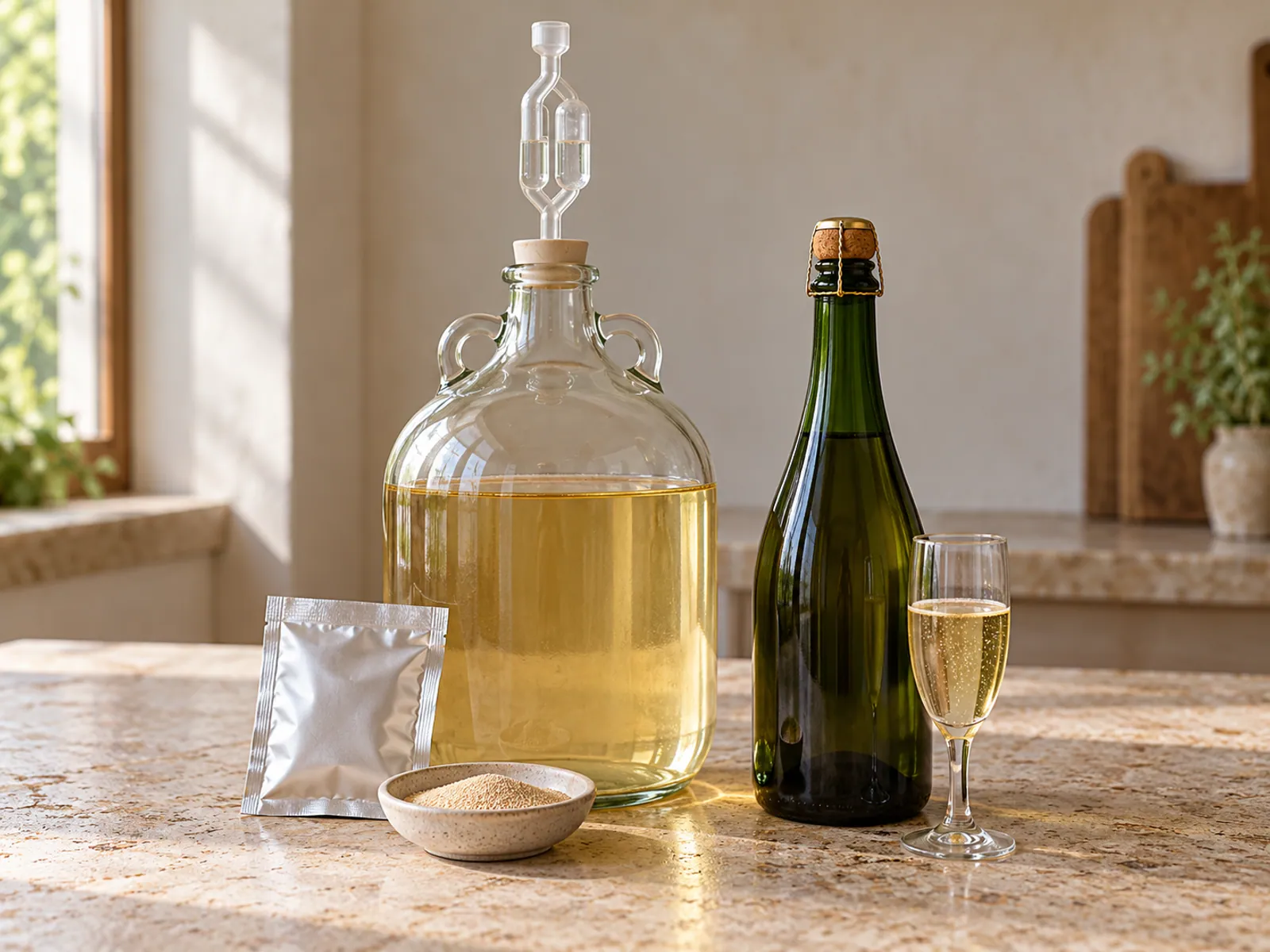
Lalvin EC-1118, sold as “Prise de Mousse”, is the workhorse dry yeast of home winemaking. It was selected for Champagne, where it has to ferment a second time inside the bottle under pressure and high alcohol, which is why it is so tolerant and so reliable. It adds very little flavour of its own, ferments almost anything to dryness, and is the standard choice for rescuing a stalled batch.
EC-1118 specs
~18% alcohol tolerance
10–30°C fermentation range (50–86°F)
5 g one packet for up to ~23 L / 5 gal
| Property | EC-1118 |
|---|---|
| Species | Saccharomyces cerevisiae (bayanus type) |
| Flavour | Neutral, clean, dry |
| Nitrogen demand | Low |
| Foam | Low |
| Competitive (killer) factor | Yes: it can suppress other yeasts in the same must |
| Typical uses | Dry and sparkling wines and meads, cider, fruit wines, restarting stuck ferments |
Related calculator
Mead Nutrient Calculator
Calculate TOSNA and BOMM nutrient additions for healthy yeast fermentation. Enter batch size and OG to get your schedule.
When to choose EC-1118
Strong or dry meads and wines it ferments high-gravity musts that would stall a 14% yeast.
Sparkling wine, mead and cider it is built for bottle fermentation under pressure.
Unreliable conditions its wide temperature range and low nutrient needs make it forgiving.
Stuck fermentations the standard restart yeast once you have fixed the cause.
When not to use it If you want a fruity, aromatic or naturally sweet mead, EC-1118 can strip delicate honey aromas and ferment past your target. Choose 71B, D47 or a sweet mead yeast instead.
How to use it
- 1Rehydrate Sprinkle the yeast into about 50 ml of 35–40°C water, leave 15–20 minutes, then stir.
- 2Temper Add a little must to the yeast slurry to bring it within about 10°C of the batch temperature.
- 3Pitch and feed Stir it into the must. For mead, follow a staggered nutrient schedule even though EC-1118 is not demanding.
- 4Ferment cool Around 15–20°C gives the cleanest flavour. Expect a vigorous start within a day.
Compare it with other strains in the yeast strain chart and the best yeast for mead guide. To estimate the strength it will reach, use the ABV calculator.