Core equation
Gravity drop multiplied by 131.25 gives the ABV estimate.
Brewing · Calculator
Enter OG and FG — or Brix — to estimate alcohol by volume for beer, wine, mead, and cider, with attenuation, strength band, and calories, all live as you type.
Live calculator · updates as you type
ABV uses the standard hydrometer formula: (OG − FG) × 131.25. Brix mode applies a refractometer correction for post-fermentation readings. Real ABV varies slightly by yeast, temperature, and calibration.
Beer · estimated strength
What to do next
Based on your OG of 1.050 and FG of 1.010.
Free printable
A batch card made from your numbers, to save as a PDF or receive by email:
| Style | Typical OG | Typical FG | ABV | Notes |
|---|---|---|---|---|
| Light lager | 1.028–1.040 | 0.998–1.008 | 3–4.5% | Crisp, low-body, quick turnaround |
| Pale ale / IPA | 1.045–1.070 | 1.010–1.018 | 4.5–7.5% | Most common homebrew range |
| Stout / porter | 1.045–1.075 | 1.010–1.022 | 4–7% | Roasty, some residual body |
| Double IPA | 1.070–1.090 | 1.008–1.016 | 8–10% | High gravity, dry finish |
| Barleywine | 1.090–1.120 | 1.018–1.030 | 9–12% | Big, sweet, needs aging |
ABV guide
Reliable ABV starts with reliable readings. This guide shows how to capture OG and FG, correct Brix, read attenuation, and hit the right strength for beer, wine, mead, or cider.
ABV = (OG − FG) × 131.25 . Change readings live in the calculator below.
Gravity drop multiplied by 131.25 gives the ABV estimate.
Beer, wine, mead, and cider with style-specific reference tables.
Confirm a stable FG over 2 to 3 days before packaging.
ABV = (OG − FG) × 131.25OG and FG are specific gravity values. A bigger drop means more sugar converted and a higher ABV estimate. The same formula works for beer, wine, mead, and cider — only the typical gravity range differs.
The standard estimate is ABV = (OG − FG) × 131.25. Specific gravity tracks dissolved sugar concentration, and fermentation converts that sugar into ethanol and carbon dioxide. As gravity falls, alcohol rises, so the size of the drop maps directly onto alcohol content.
This method is fast and is the reference most homebrewers use. It is still an estimate — a slightly different multiplier and more complex equations exist for very high-gravity worts and wines — but for beer, cider, and most wine it is accurate enough for recipe tuning, batch logs, and packaging decisions.
OG = 1.050 and FG = 1.010Gravity drop = 0.040ABV = 0.040 × 131.25 = 5.25%Pick your beverage first — beer, wine, mead, or cider. That sets sensible default readings and the reference table, but the alcohol maths is identical for all four. Then choose your measurement mode: specific gravity if you use a hydrometer, or Brix if you use a refractometer.
Enter your original gravity and final gravity and the tool instantly returns estimated ABV, apparent attenuation, gravity drop, a strength band, and an approximate calorie count per serving. Use those numbers to decide whether fermentation is still active, near its terminal gravity, or ready to package.
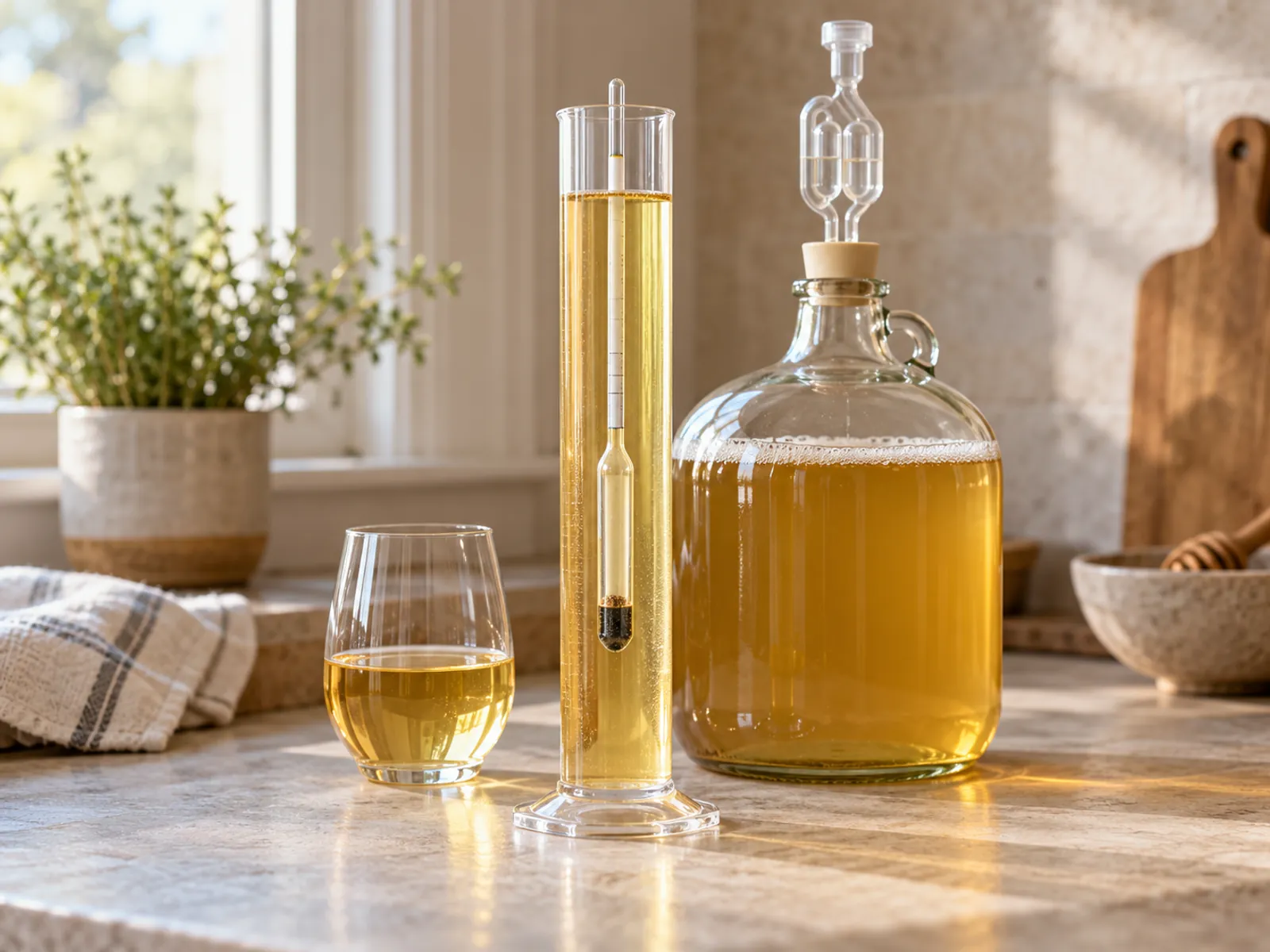
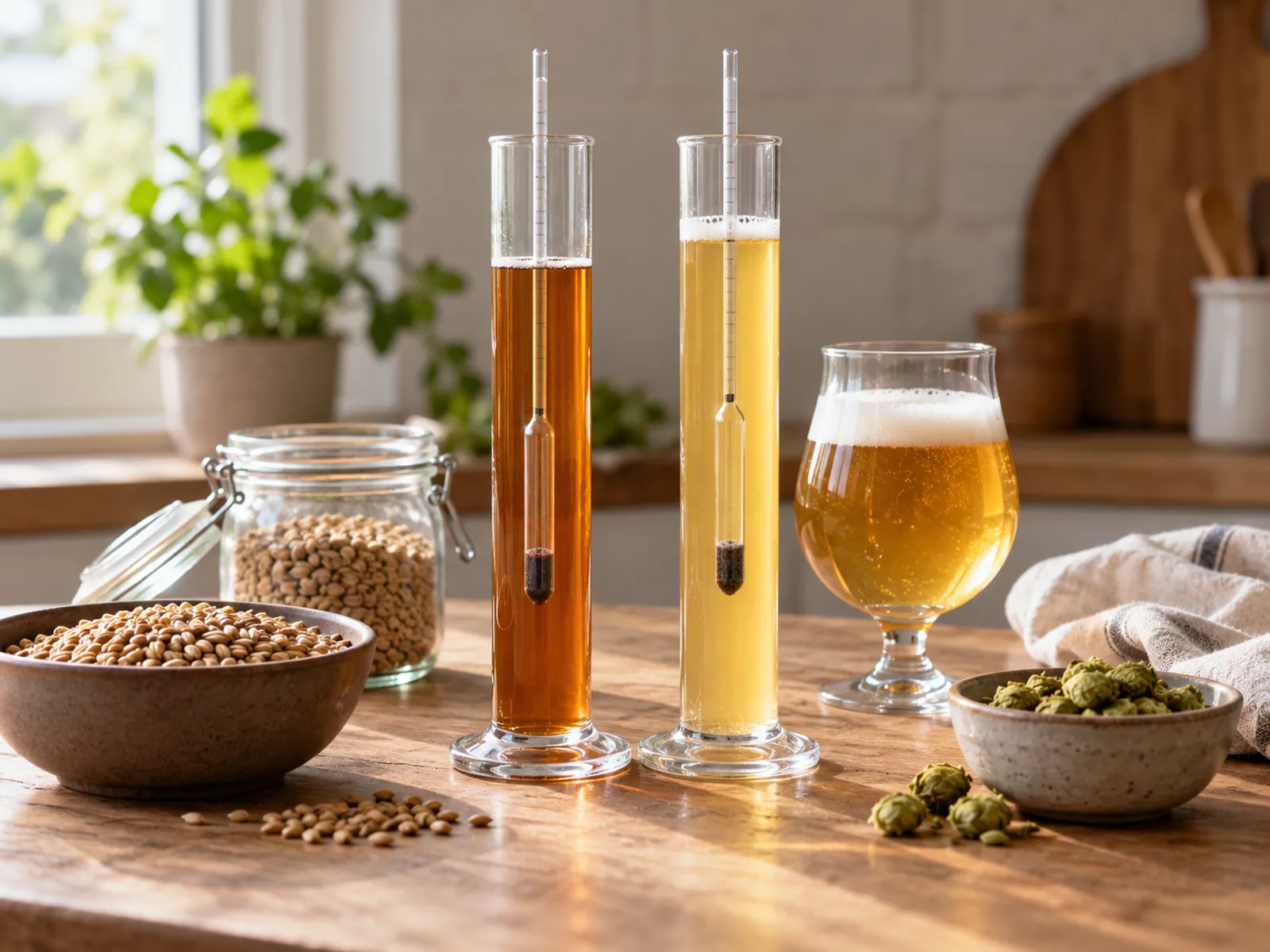
Measure original gravity after all sugar is fully dissolved and mixed, but before pitching yeast. Pull a sample into a test jar, spin the hydrometer to shed bubbles, and read at the base of the meniscus. Note the sample temperature, since hydrometers are calibrated to a specific reference temperature.
Measure final gravity only once fermentation appears to slow, then confirm with a repeat reading two to three days later. If the number holds steady, fermentation is functionally done. If it is still falling, the yeast are still working — do not package a beer, wine, or cider that is still dropping gravity unless you are deliberately conditioning in a pressure-rated vessel.
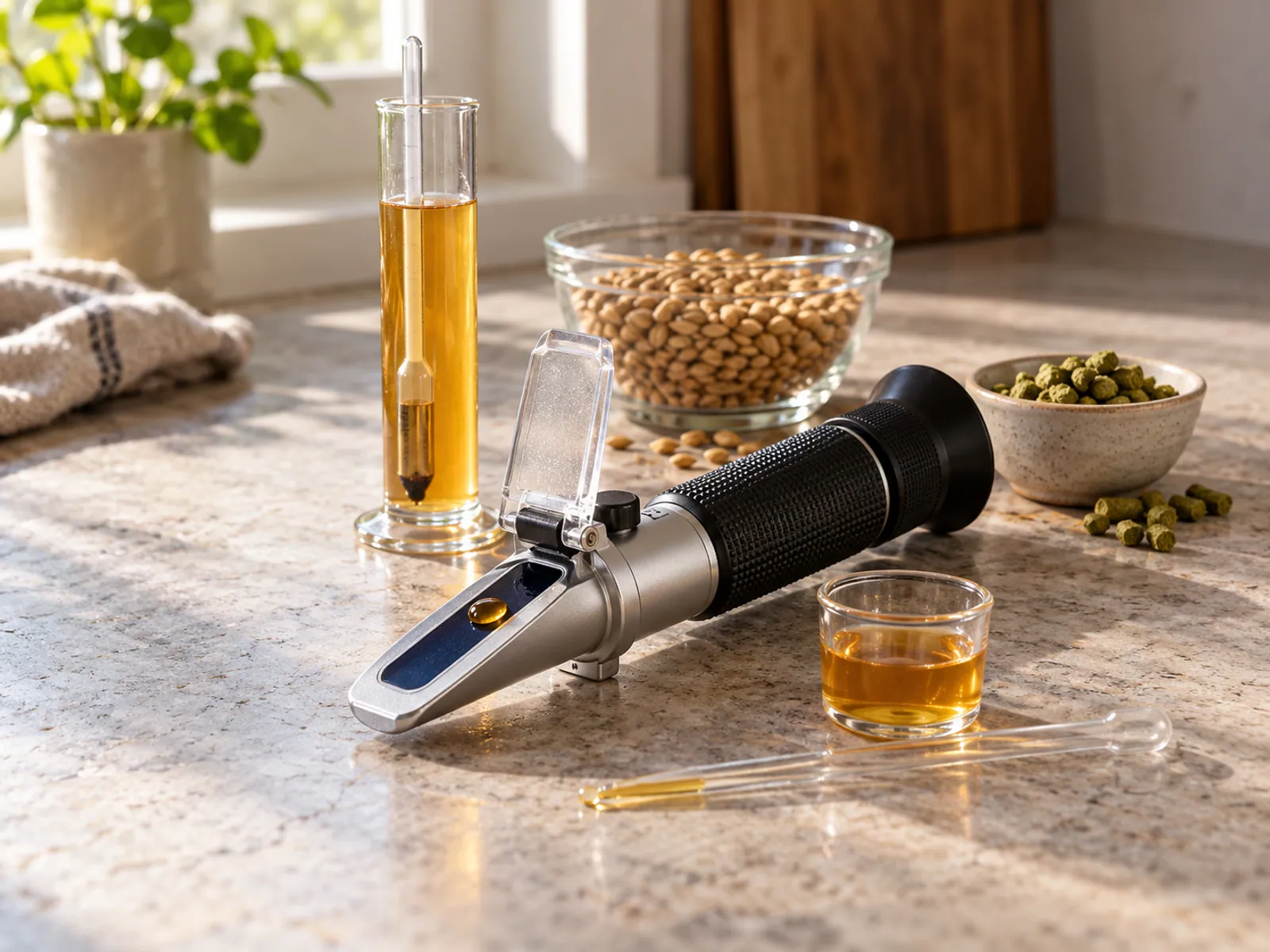
Refractometers are excellent before fermentation, but once alcohol is present a raw Brix reading no longer represents sugar concentration on its own. That is why fermented Brix must be corrected using both the original and current Brix values. Skip the correction and your FG — and therefore ABV — will be wrong.
Use Brix mode when you do not have hydrometer readings for the same batch stage. Many brewers log refractometer readings during active fermentation for convenience, then take a final hydrometer reading to confirm terminal gravity before packaging.
The formula does not change between beverages, but the typical starting gravity does. Beer and cider usually begin in the 1.045–1.070 range and finish 4–8% ABV. Wine starts higher, often 1.080–1.110, and finishes 11–14% or more. Mead spans the widest range — from light hydromels at 1.035 to sack meads above 1.120.
The reference table in the calculator updates to the beverage you select, so you can sanity-check your readings against common styles. If your gravity sits far outside the listed range, re-check your measurement before trusting the ABV number.
Apparent attenuation is the proportion of fermentable sugar consumed. High attenuation usually means less residual sugar and a drier, thinner-bodied result; low attenuation leaves more sweetness and body. Beers often land 70–80%, while wines and dry ciders push higher. Mead attenuation varies widely — a traditional sweet mead may attenuate only 60–70%, while a dry mead ferments out above 90%.
Treat attenuation as a process signal rather than a flavour guarantee. Two beers can both attenuate near 80% yet taste different depending on mash temperature, acidity, and carbonation. Read it alongside tasting notes and your gravity log rather than in isolation.
Session beers target 3–4.5% for easy drinking; standard ales and lagers land 4.5–6%; strong ales, IPAs, and barleywines run 8–12%. Dry ciders usually finish 6–8%. Table wines commonly target 11–14%. Mead covers the broadest range: hydromels at 4–8%, traditional meads at 10–14%, and sack meads at 14–18%.
Set your target from the style you want, your yeast's alcohol tolerance, and your timeline. Higher ABV is not automatically better — it lengthens conditioning time and can amplify fusel heat if the yeast is stressed. Mead in particular benefits from aging: a high-gravity sack mead needs months to mellow. Beginners often get cleaner results aiming for the middle of a style's range and prioritising healthy fermentation.
FAQ
Common questions about OG, FG, attenuation, and refractometer readings for beer, wine, mead, and cider.
Calculators and guides for your next step.