Common ratio
About 3.1 L/kg. Easy to stir and holds temperature well.

Brewing · Calculator
Enter your grain, ratio and target mash temperature to get the strike water temperature and volume for an all-grain mash.
Live calculator · updates as you type
Uses the standard single-infusion formula. Leave tun heat loss at 0 for a preheated or well-insulated mash tun; add 1–3°C (2–5°F) for a cold cooler or kettle that you do not preheat. Check the mash after stirring and adjust with hot or cold water.
Strike water
What to do next
For 10.0 lb of grain at 152 °F.
Free printable
A batch card made from your numbers, to save as a PDF or receive by email:
| Target mash | Strike water | Body |
|---|---|---|
| 148°F (64.4°C) | 158.7°F (70.4°C) | Dry, light |
| 150°F (65.6°C) | 160.9°F (71.6°C) | Balanced |
| 152°F (66.7°C) | 163.2°F (72.9°C) | Balanced |
| 154°F (67.8°C) | 165.5°F (74.1°C) | Balanced |
| 156°F (68.9°C) | 167.7°F (75.4°C) | Full, sweet |
Mash in on target
Strike water has to start hotter than the mash because the cooler grain pulls the temperature down. The calculator does the arithmetic; the guide below covers ratios, mash temperatures and what to do when you miss.
About 3.1 L/kg. Easy to stir and holds temperature well.
67°C gives a medium body; go lower for drier, higher for fuller.
For 152°F at 1.5 qt/lb with grain at 68°F (about 73°C for 67°C).
Tw = (0.2 / r)(T2 − T1) + T2US units: r in qt/lb, temperatures in °F. Metric: replace 0.2 with 0.41, r in L/kg, temperatures in °C. T1 is the grain temperature, T2 the target mash temperature.
Choose US or metric units, then enter your grain weight, the water-to-grain ratio you mash at, the temperature of your crushed grain (usually room temperature), and the mash temperature you want to hold.
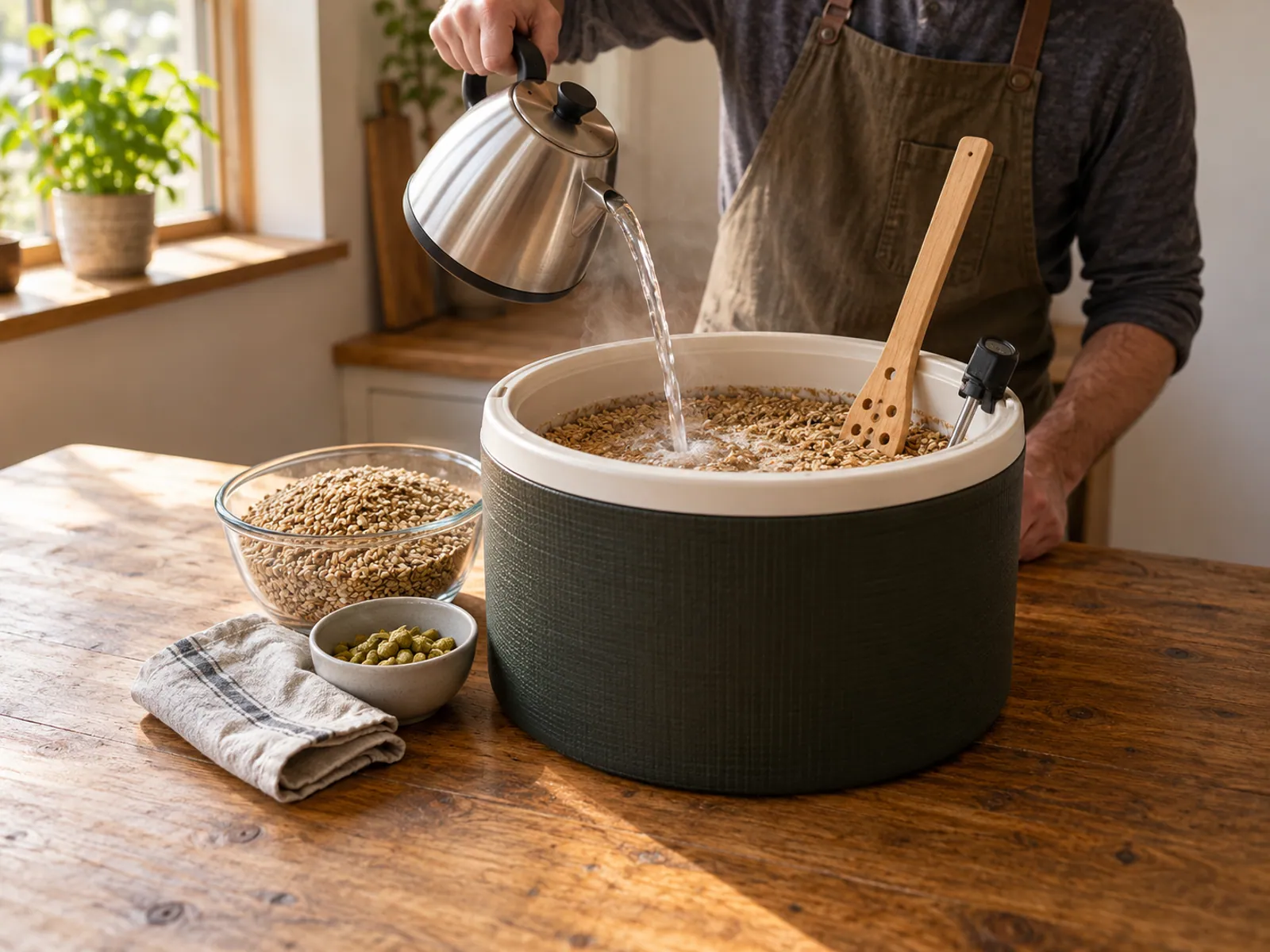
The calculator returns how hot to heat the strike water and how much of it you need. Heat the water a degree or two above the number, add it to the tun, let it settle to the strike temperature, then stir in the grain.
10 lb grain at 68°F, 1.5 qt/lb, target 152°FTw = (0.2 / 1.5)(152 − 68) + 152 = 163.2°FWater = 10 × 1.5 = 15 qt (3.75 gal)A thicker mash (1.0–1.25 qt/lb) leaves more water for sparging; a thinner one (1.75–2 qt/lb) is easier to stir and suits brew-in-a-bag and recirculating systems. Most brewers sit around 1.25–1.5 qt/lb.
Mash temperature decides how fermentable the wort is, which sets the body of the finished beer.
The formula assumes the mash tun does not absorb heat. A preheated or well-insulated tun is close to that. A cold cooler or kettle pulls a few degrees out of the mash, so add 1–3°C (2–5°F) in the tun heat-loss field, or preheat the tun with hot water first.
Stir thoroughly and read again after a minute. Too hot: stir in cold water or a few ice cubes. Too cold: add near-boiling water a little at a time. Record the miss and adjust the heat-loss value for next brew day.
FAQ
Calculators and guides for your next step.