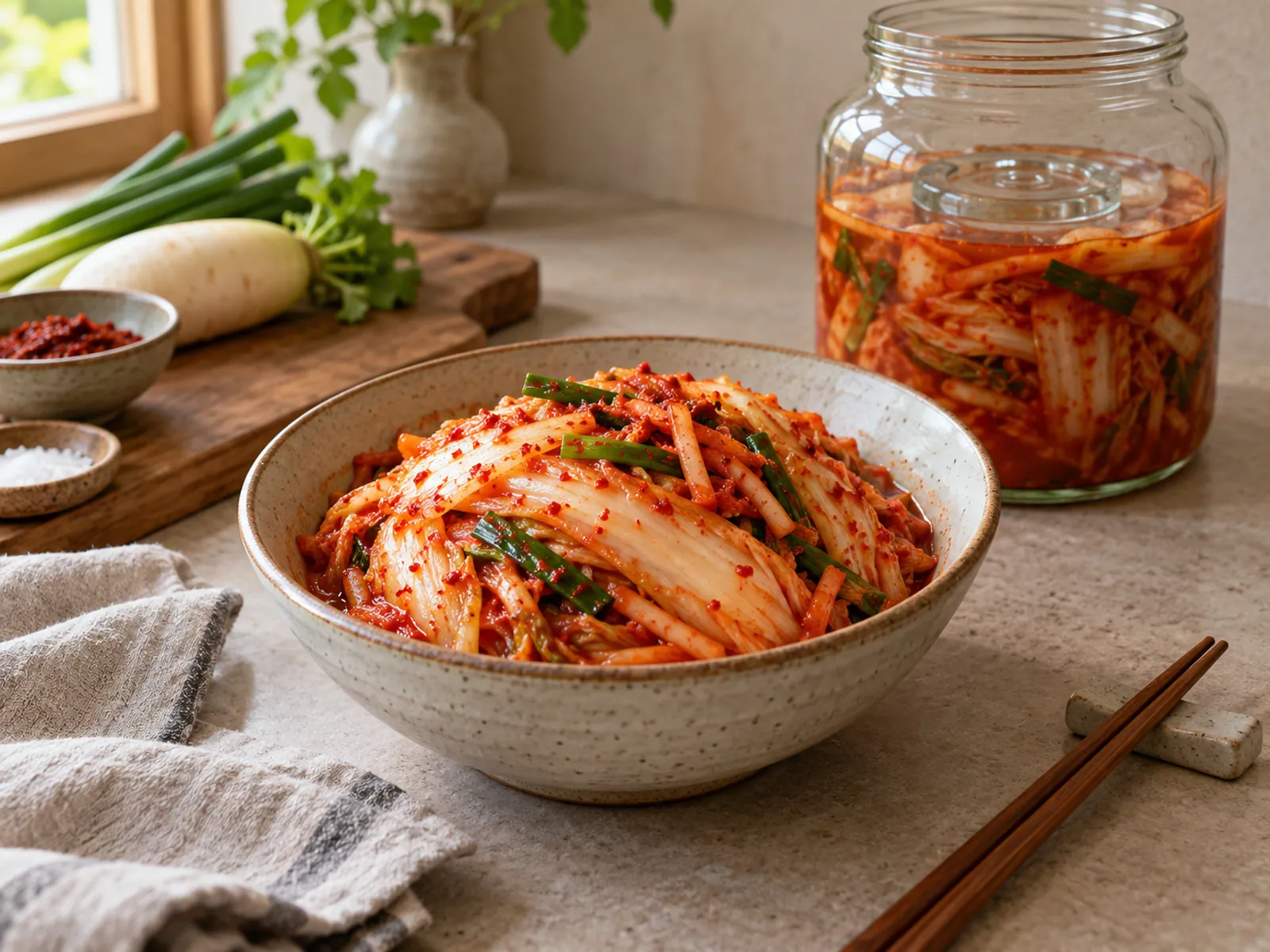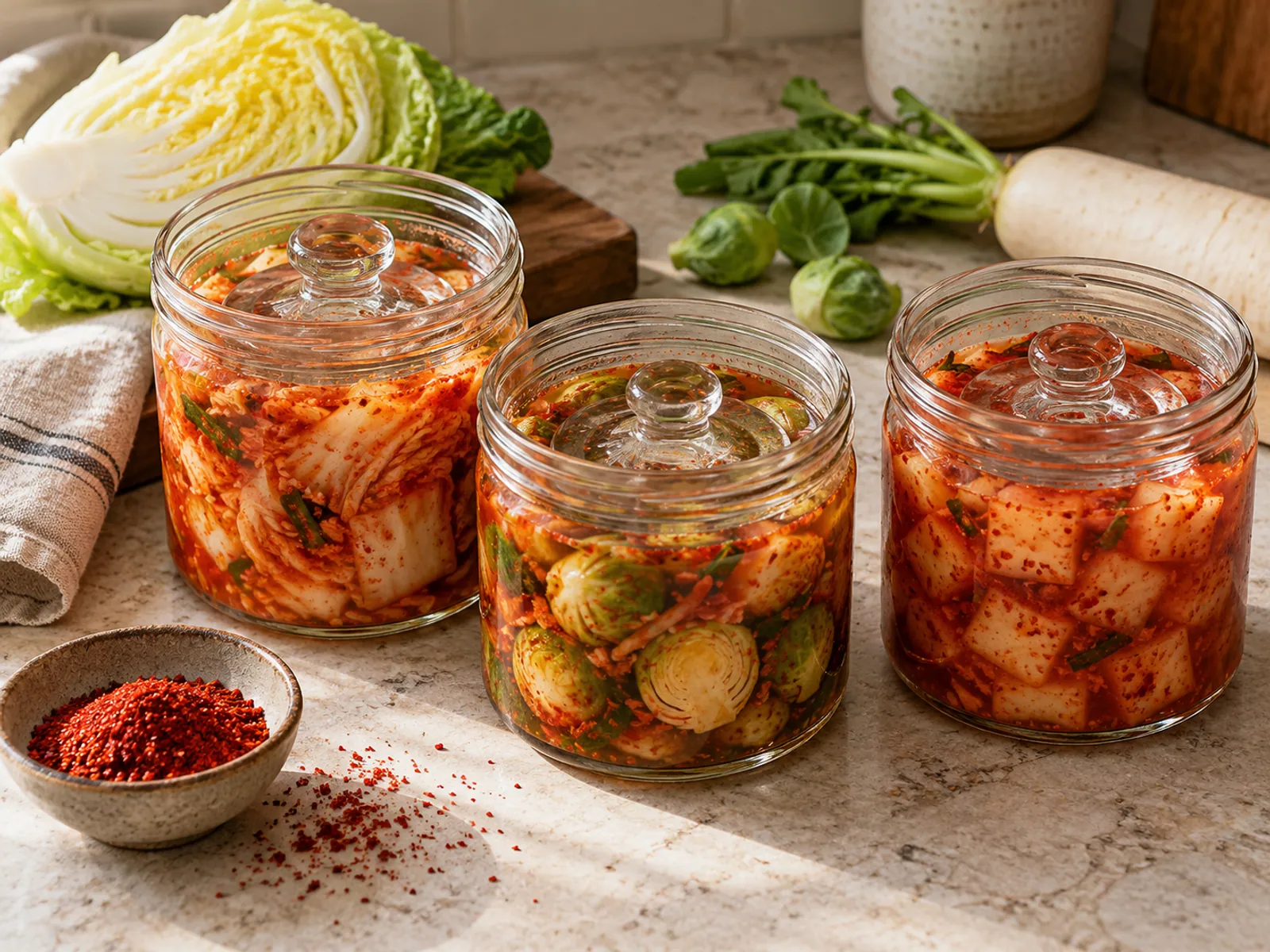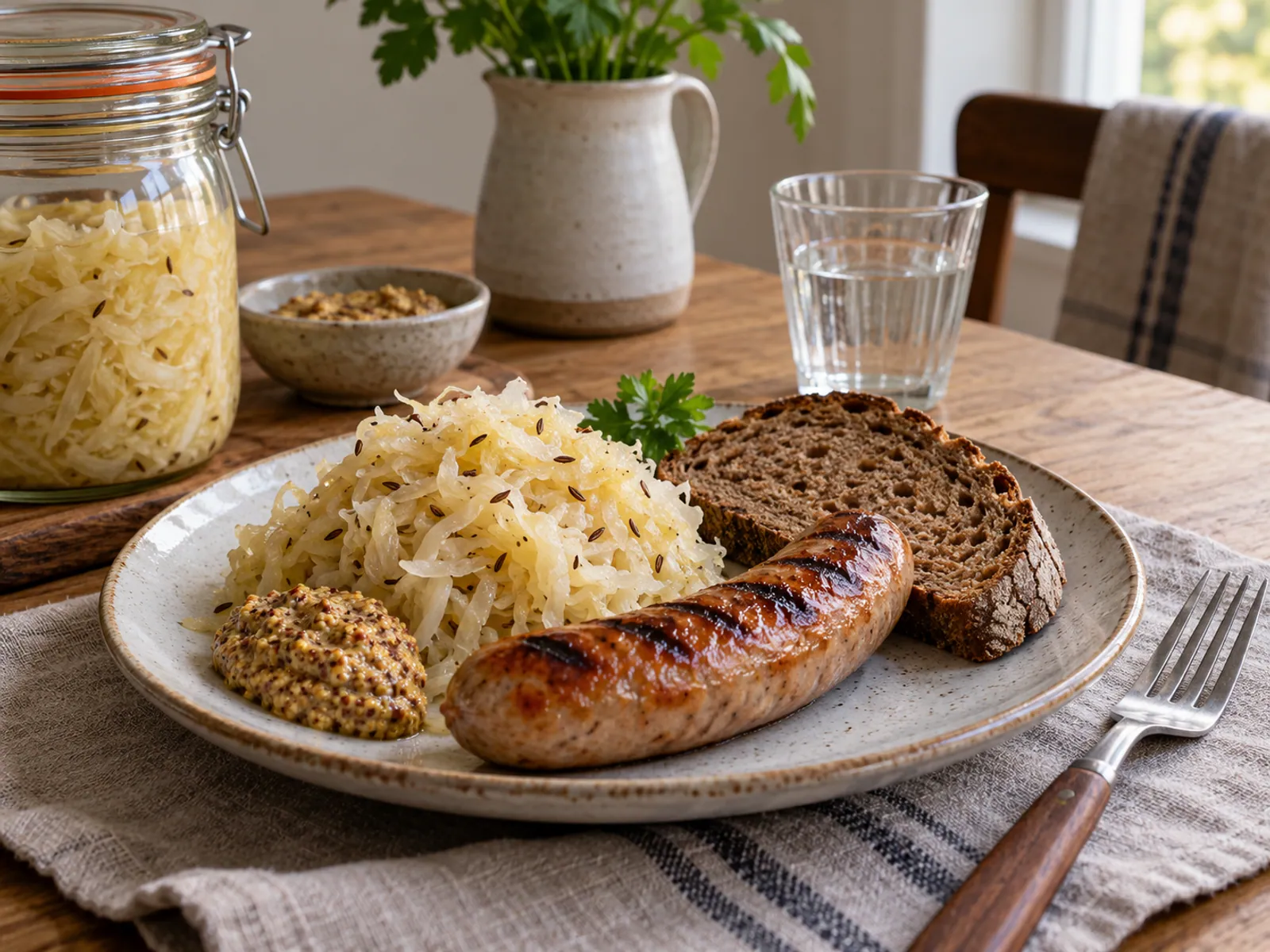
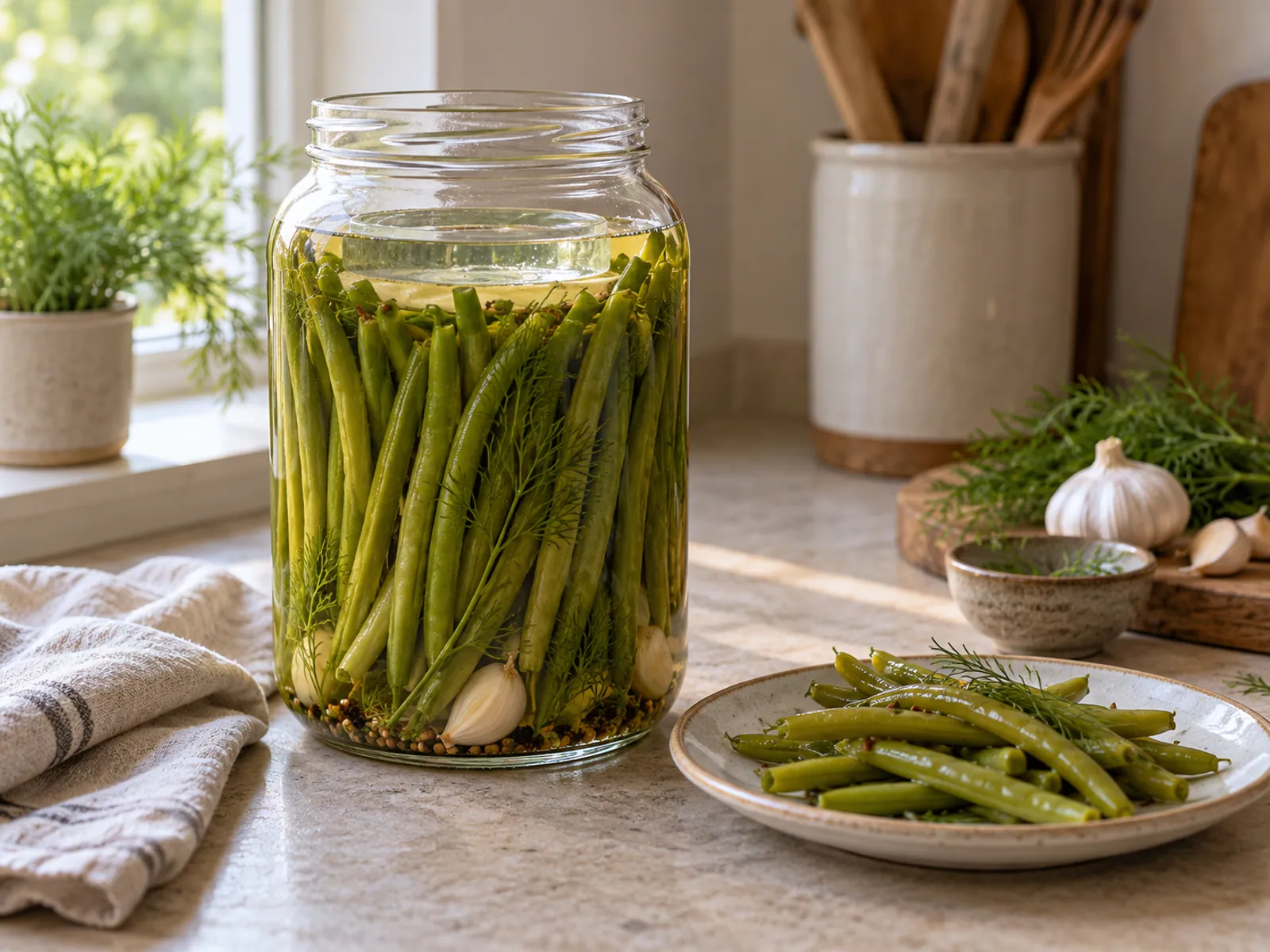
Fermented green beans, often called dilly beans, are the crunchiest pickle you can make from the garden. Whole beans stand upright in the jar with garlic and dill, sour for a week or two in brine, and come out snappy and tangy. They are the fermented cousin of the vinegar dilly bean, with live cultures and a rounder flavour.
Fermented green beans recipe
- 1Trim the beans Snap or cut off the stem ends of about 450 g of fresh, firm green beans. Trim them to fit upright in your jar with 2–3 cm of headspace.
- 2Flavour the jar Add 2–3 garlic cloves, a head or a few sprigs of dill, a pinch of chilli flakes and, for crunch, a grape, oak or horseradish leaf.
- 3Pack upright Stand the beans vertically and pack them tightly so they hold each other below the brine line.
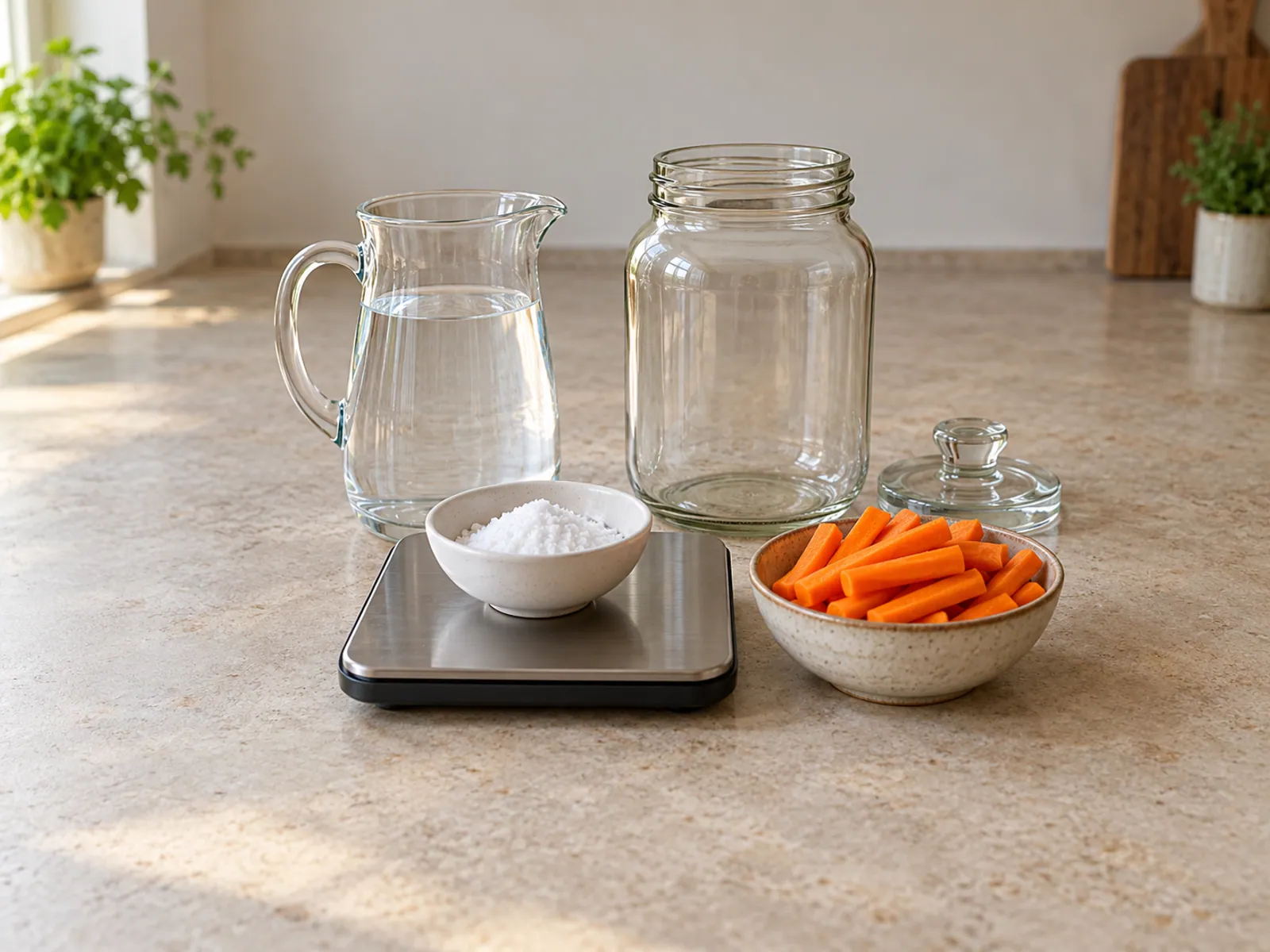
- 4Cover with brine Dissolve 30–35 g of non-iodized salt per litre of water. For 500 g water, that calculation gives 15–17.5 g salt; the amount of water needed depends on the packing. Cover the beans completely.
- 5Ferment and chill Ferment at 18–22°C with an airlock or loose lid. From day 7, taste a bean; refrigerate when it is sour through but still snaps.
Keeping them crunchy
Watch for
- Fuzzy or coloured mould, slime, or a rotten smell Discard the batch.
- Color alone cannot identify a surface film. Discard fuzzy growth or a batch whose condition is uncertain; do not taste it to decide.
For cucumbers done the same way, see how to make crunchy pickles. More vegetables are in best vegetables to ferment and fermented vegetables A–Z.
Choosing beans and trimming them for the jar
Choose young, firm beans with no decay or damaged patches. Very mature beans have a fibrous seam and large seeds: fermentation can change flavor, but it will not turn a stringy bean into a tender one. Choose similar sizes so the finished serving has a consistent bite.
Whole beans pack neatly in a tall jar and make a useful snack or garnish. Shorter pieces fit smaller jars and are easier to add to salads. Trim to accommodate the weight, liquid coverage and headspace your method requires. Cut pieces that fit your container rather than forcing a lid down on beans that are too tall.
Beans can float or shift as gas develops. Packing them upright helps, but it does not replace a suitable weight. Check that short pieces, garlic and dill remain below the brine too. If an ingredient keeps escaping around the weight, adjust the fresh packing arrangement instead of assuming the visible bean tips are the only exposed food.
Related calculator
Fermentation Brine Calculator
Calculate salt using vegetables plus water, water only, or dry vegetable weight. Match the percentage and basis in your tested recipe.
Brine quantities for a small batch
The 3–3.5% water-based brine described on this page means 3–3.5 g salt per 100 g water. It is not a percentage of the jar’s capacity or of the beans alone. For a method calling for that range, the arithmetic is:
- 250 g water: 7.5–8.75 g salt.
- 500 g water: 15–17.5 g salt.
- 750 g water: 22.5–26.25 g salt.
Use the exact concentration specified by the recipe you follow. These examples clarify the denominator; they are not new independently tested recipes. A densely packed quart jar and a loosely packed quart jar will need different amounts of brine, even though their labels show the same capacity.
Dissolve the salt before pouring. Make enough correctly mixed brine to provide the recipe’s required coverage and keep spare brine separate from produce. Do not add extra salt directly to the jar simply because it took less water than expected. Compare dry salt and water-based calculations if you are also making sauerkraut.
Free Fermentation Salt Reference Card (printable PDF)
A printable PDF companion for the brine & pickling calculators and guides.
What to check when a bean batch disappoints
Dilly beans at the table and in the fridge
Use fermented beans as a sharp contrast to potatoes, rich sandwiches or a cheese plate. Chop a serving into a bean salad, or serve whole beans as a pickle alongside lunch. Vinegar dilly beans can look similar but use a different preservation method; do not transfer a canning time from a vinegar recipe to this ferment.
Use clean utensils, keep the remaining beans submerged and follow the method’s refrigeration and storage instructions. Label the jar so you know when it was prepared and refrigerated. Avoid promising a fixed multi-month shelf life without a corresponding validated recipe and storage history.
For the process principles behind brine, temperature and submersion, see University of Minnesota Extension’s fermentation guidance. For questions shared with other vegetables, continue to the fermentation FAQ.