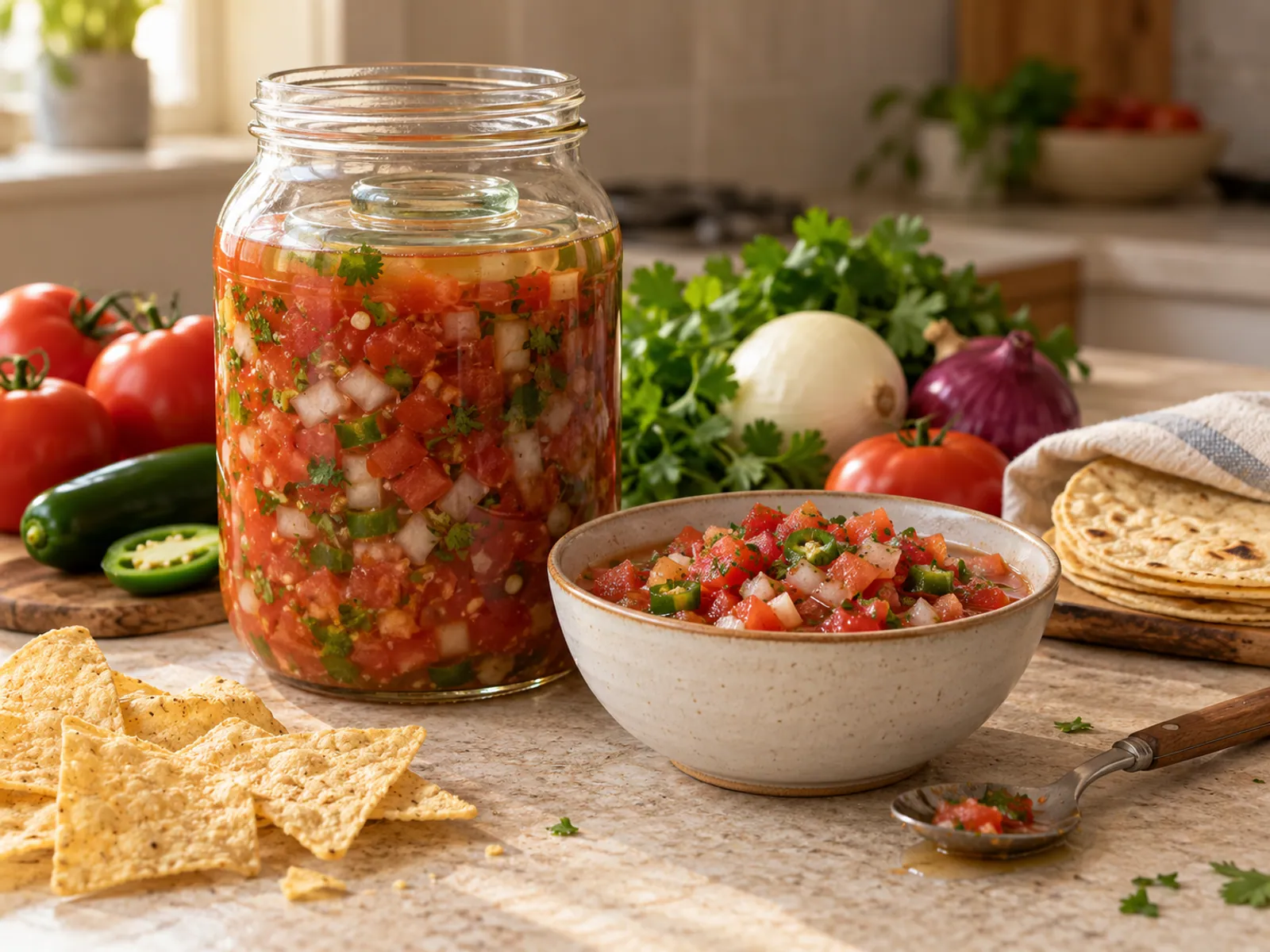
Fermented salsa takes the same fresh ingredients — tomatoes, onion, jalapeños, garlic, cilantro — and runs them through a lacto-fermentation that adds tang, complexity, and a shelf life measured in weeks instead of days. The process is the same as making sauerkraut: salt the vegetables, pack them down, and let the Lactobacillus bacteria do the work.
Fermented salsa recipe
- 1Chop everything Dice the tomatoes, onion, jalapeños, and garlic. Roughly chop the cilantro. Put everything in a large bowl.
- 2Salt and mix Weigh the total vegetables. Calculate 2% of that weight in salt (e.g., 500g vegetables = 10g salt). Add the salt and mix thoroughly. Let it sit for 10 minutes — the salt will draw liquid from the tomatoes.
- 3Pack into a jar Transfer the salsa to a clean wide-mouth glass jar, pressing down firmly with a spoon or muddler. The liquid drawn out by the salt should rise to cover the solids. If not, add a small amount of 2% salt water to top it up.
- 4Keep submerged The vegetables must stay below the liquid surface. Use a fermentation weight, a small zip-lock bag filled with brine, or a cabbage leaf pressed on top. Cover the jar loosely — do not seal tightly, as CO₂ needs to escape.
- 5Ferment 2–5 days Leave at room temperature. You will see bubbles within 24 hours — this is normal and means fermentation is working. Taste after 2 days. When it is tangy enough for your liking, move it to the fridge.
Tips
Watch for
- Keep the salsa submerged — anything above the brine line can grow mould.
- A pale surface film cannot be identified by color alone. If growth is fuzzy, unusual or uncertain, discard the batch rather than tasting it.
- If the salsa smells putrid (not just tangy), is slimy, or has coloured mould, discard it — usually caused by insufficient salt or contamination.
Variations
Related calculator
Fermentation Brine Calculator
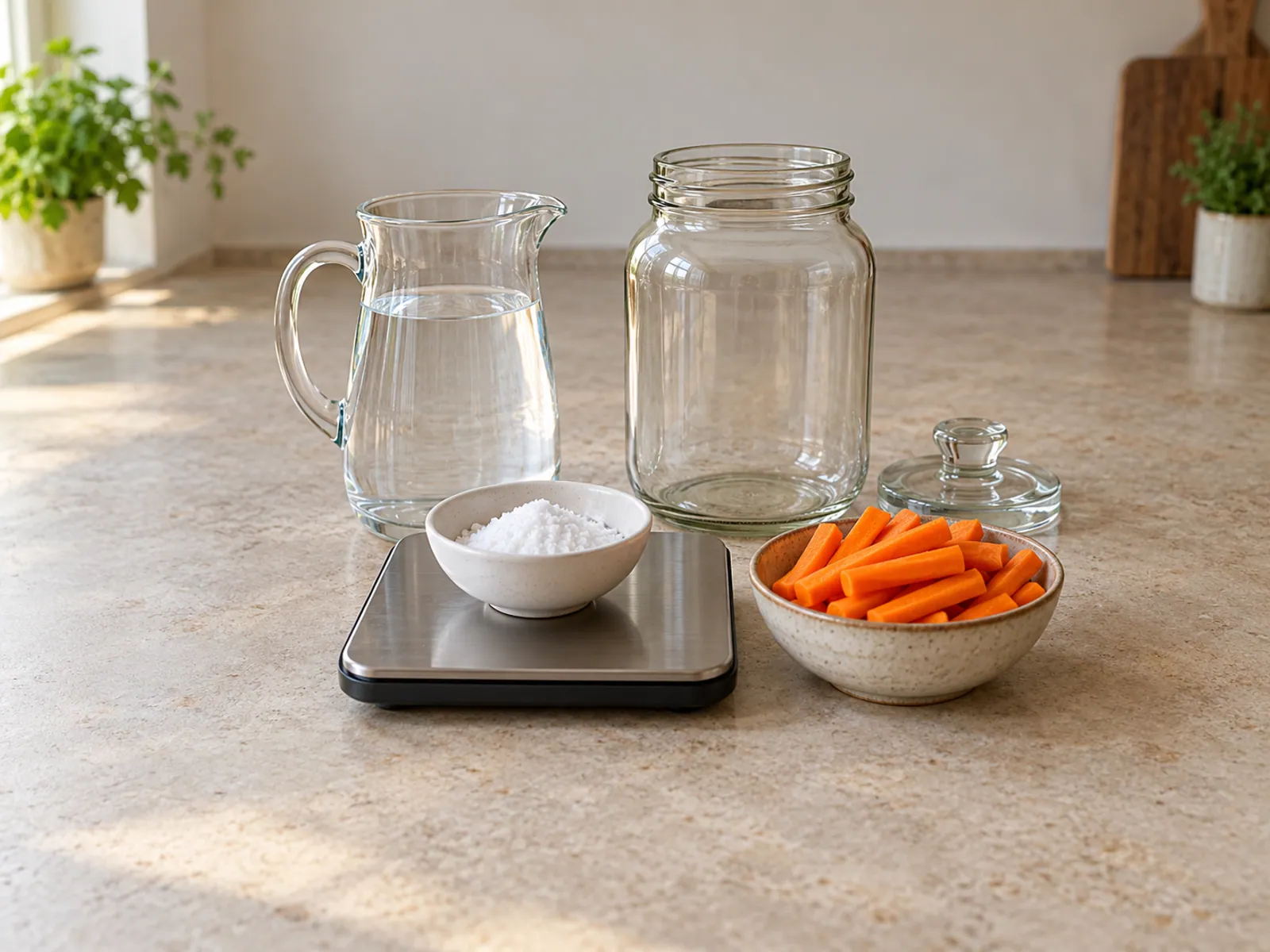
Calculate salt using vegetables plus water, water only, or dry vegetable weight. Match the percentage and basis in your tested recipe.
Fermented salsa and pico de gallo: choosing the texture
Pico de gallo is a chopped salsa, usually made with fresh tomato, onion, chilli and cilantro. “Fermented pico” describes that chunky preparation after fermentation; it does not need a separate fermentation method or its own page. The useful difference is texture: an evenly diced mixture gives distinct bites, while crushed or blended tomatoes produce a sauce.
Choose firm, ripe tomatoes and remove damaged areas before preparation. Cut the onion and chilli smaller than the tomato so one bite is not dominated by a raw chunk. Keep pieces consistent within each ingredient. Avoid blending first if you want recognizable pico-style pieces: fermentation will soften them further, and blending later cannot restore their structure.
Tomatoes release liquid after salting. Keep that liquid during fermentation unless your recipe specifically directs otherwise. Draining a salted mixture and topping up with plain water changes the salt distribution. For serving, lift a portion out with a clean spoon and let that portion drain; leave the main batch in its original liquid. Add fresh cilantro or a squeeze of lime to the serving portion if you want a brighter finish. Those finishing additions do not make a suspect ferment safe.
Fresh pico is the better choice when you want a crisp, just-chopped topping immediately. Fermented salsa suits tacos, beans and grain bowls when you want a sourer condiment. Make the choice for flavor and texture, rather than assuming every salsa becomes better through fermentation.
Free Fermentation Salt Reference Card (printable PDF)
A printable PDF companion for the brine & pickling calculators and guides.
How to weigh a salsa batch without guessing
Weigh every prepared ingredient included in the recipe’s vegetable base: tomato, onion, chilli, garlic and herbs. “Two peppers” is a flavor description, not a reliable weight. Tare the bowl before adding ingredients and record the final total before adding salt.
For an illustration of the existing recipe’s 2% vegetable-weight calculation, 400 g tomato + 80 g onion + 15 g chilli + 5 g garlic gives a 500 g base, requiring 10 g salt. If herbs bring that total to 510 g, the arithmetic becomes 10.2 g. These numbers explain the calculation; they do not validate a substituted ingredient list or a shelf-stable preservation process.
Use the fermentation brine calculator when comparing a dry-salted salsa with a poured-brine recipe. A percentage based only on added water is a different calculation. Do not enter the full jar volume as though it were the weight of your chopped ingredients.
Watery salsa, soft tomatoes and serving uses
Keep the finished batch refrigerated, use a clean utensil and follow the storage instructions of the method you used. A closed lid is not evidence of safe canning. A household pH reading, bubbles or pleasant sourness alone does not turn an improvised salsa into a validated shelf-stable product.
Fermentation and canning are different methods
Oregon State Extension’s food-preservation publications include fermentation resources and separate tested salsa-canning recipes. If you want pantry storage, choose a tested canning recipe and follow it exactly; do not can this live-ferment preparation by borrowing processing times from another salsa.