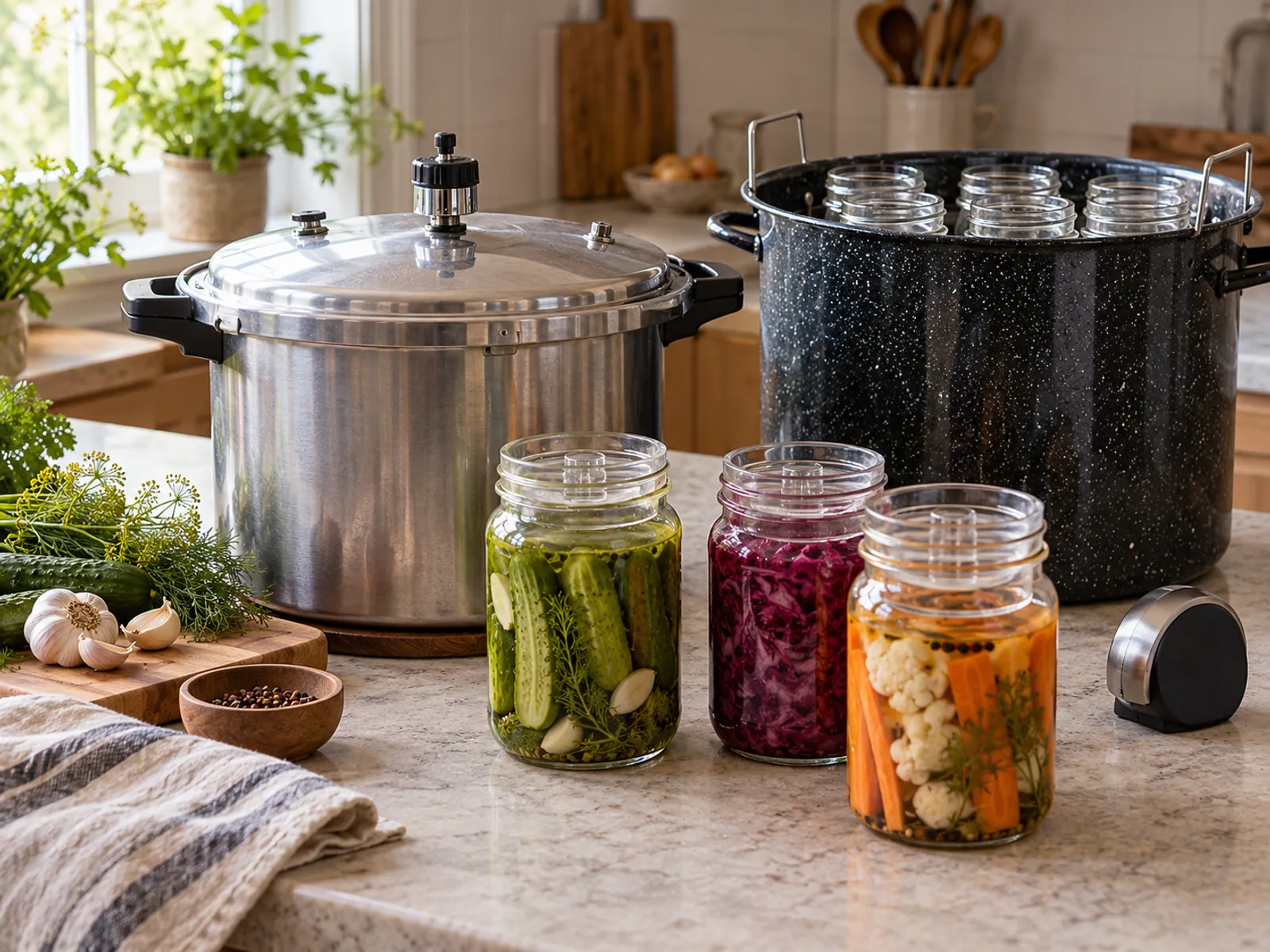
Canning floor
Minimum vinegar to water for anything you process and shelf-store.

Brine & Pickling · Calculator
Vinegar, water, and salt for any batch size. Canning-safe mode holds the 1:1 acid floor; quick-pickle mode opens the ratio up to taste.
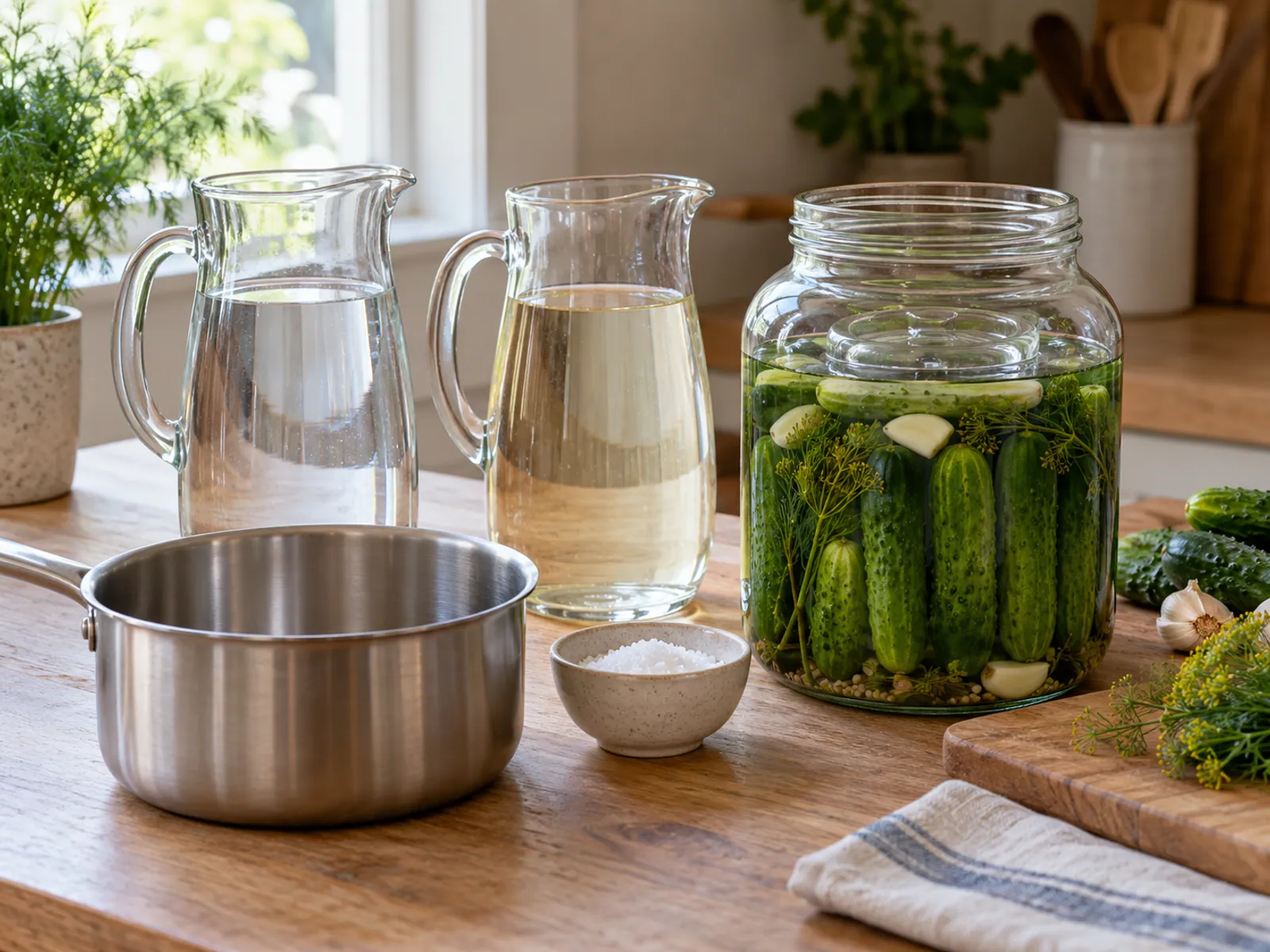
Live calculator · updates as you type
Ratios assume vinegar at 5% acidity — the standard for supermarket white, cider, and white wine vinegar. Canning-safe mode locks the vinegar share at or above half the liquid. Salt is pickling or canning salt at about 19 g per tablespoon; 1 to 3 tablespoons per quart is the usual range and it seasons rather than preserves.
Mix this brine
Shelf-stable pickles processed in a boiling-water canner. Use 5% acidity vinegar and never dilute below 1 part vinegar to 1 part water — that ratio is the safety floor, not a taste preference.
What to do next
For 4.0 cup of brine at standard 1 : 1.
Free printable
A batch card made from your numbers, to save as a PDF or receive by email:
| Pickle | Vinegar : water | Salt | Notes |
|---|---|---|---|
| Dill cucumber spears (canned) | 1 : 1 | 1½ tbsp / qt | The standard shelf-stable dill brine. |
| Bread-and-butter (canned) | 1 : 1 | 1 tbsp / qt | Add sugar separately for the sweet-sour balance. |
| Pickled beets / peppers (canned) | 1.5 : 1 | 1 tbsp / qt | Extra vinegar suits denser, sweeter vegetables. |
| Deli-sharp (canned) | 2 : 1 | 2 tbsp / qt | Vinegar-forward and firmly on the safe side. |
| Fridge quick pickles | 1 : 2 to 1 : 1 | 1–2 tbsp / qt | Not shelf-stable — cold storage only. |
Ratios follow the National Center for Home Food Preservation minimum of at least equal parts 5% vinegar and water for canned pickles. Always process shelf-stable pickles using a tested recipe and the processing time for your altitude.
Pickling ratio guide
The ratio behaves completely differently depending on where the jar ends up. This guide covers the canning floor, the freedom you get in the fridge, and how much salt actually belongs in the pot.
Anything you process and store on a shelf needs at least 50% vinegar at 5% acidity.
Minimum vinegar to water for anything you process and shelf-store.
Acidity on the label. Below this, the ratio no longer means anything.
Flavour and texture, not preservation — adjust this one to taste.
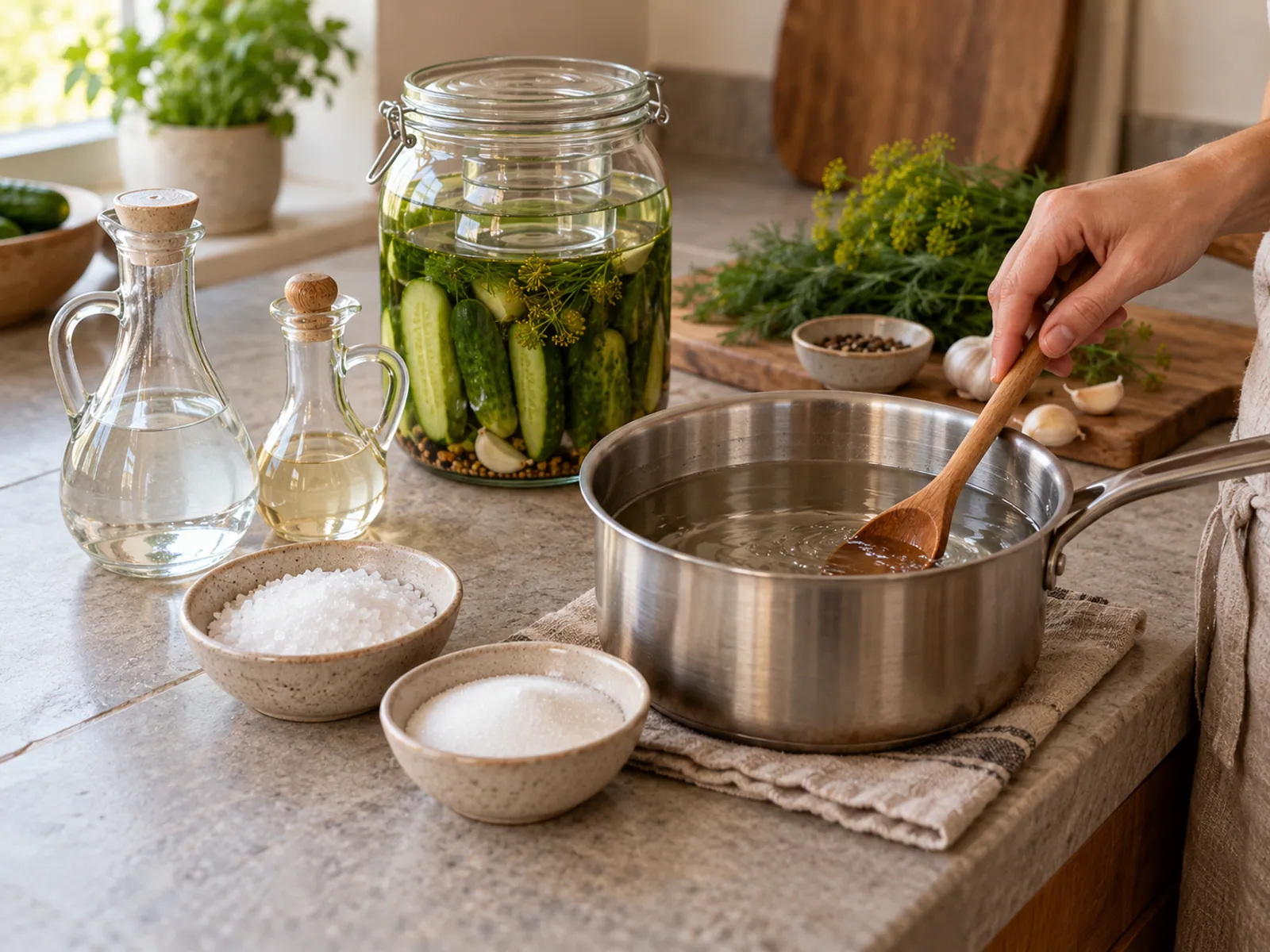
vinegar ≥ water, at 5% acidity4 cups of standard brine is 2 cups vinegar, 2 cups water, and about 1½ tablespoons of pickling salt. Add vinegar to go sharper; never add water to go milder.
Pick whether the pickles are going in a canner or in the fridge, choose the vinegar-to-water ratio you want, then enter how much brine you need. The calculator splits that volume into cups of vinegar and cups of water, adds the salt in both tablespoons and grams, and shows the millilitre figures alongside for anyone working by weight.
Canning-safe mode is the important one. It only offers ratios at or above equal parts vinegar and water, so you cannot accidentally build a brine that is too dilute to hold on a shelf. Switch to quick mode and the milder 1:2 option appears, because a refrigerator pickle is a matter of taste rather than a matter of safety.
Standard 1 : 1 → 2 cups vinegar, 2 cups waterSharp 1.5 : 1 → 2.4 cups vinegar, 1.6 cups waterSalt at 1½ tbsp per quart → about 1½ tbsp totalIf a pickle is going to be processed in a boiling-water canner and then stored at room temperature, the acid in the jar is what keeps it safe. The National Center for Home Food Preservation sets the working minimum at equal parts 5% acidity vinegar and water. Below that, the finished pH can drift out of the range where boiling-water processing is enough.
This is why the ratio is not a taste dial in canning mode. You can always go more sour than 1:1 — a 1.5:1 or 2:1 brine is perfectly safe and suits denser vegetables like beets and peppers. You simply cannot go the other way. If the result is sharper than you like, add sugar or switch to a mellower 5% vinegar instead of adding water.
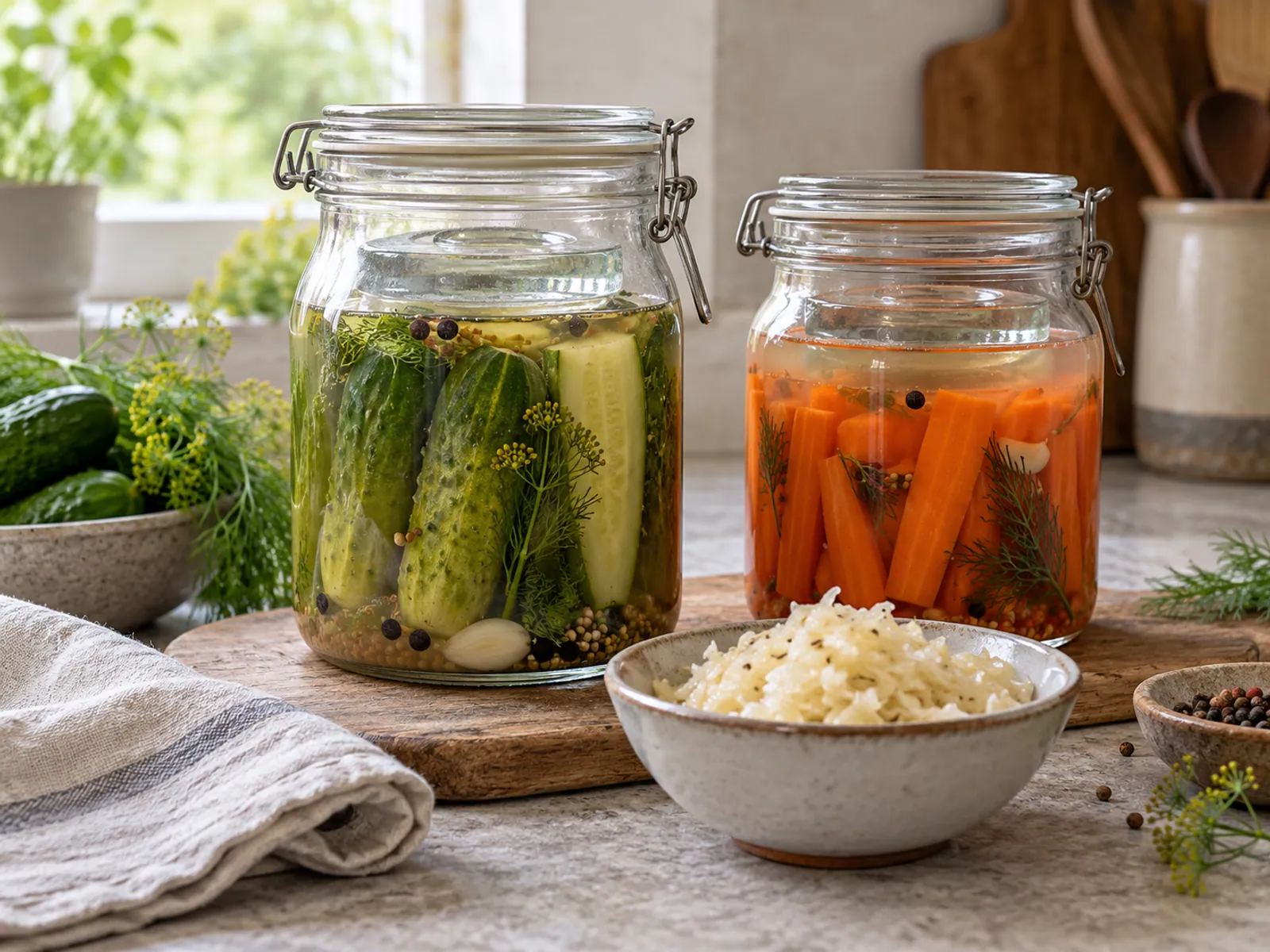
A quick or refrigerator pickle is never processed for shelf storage, so cold temperature and a short life span do most of the preserving work. That frees the ratio up entirely: 1:2 gives a gentle, cucumber-forward pickle, 1:1 is the reliable middle, and 2:1 lands sharp and deli-like.
The trade-off is storage. Quick pickles keep for a few weeks in the fridge and no longer, and they must never move to a cupboard. If you want the same jar to sit on a shelf through winter, build it in canning mode and process it using a tested recipe.
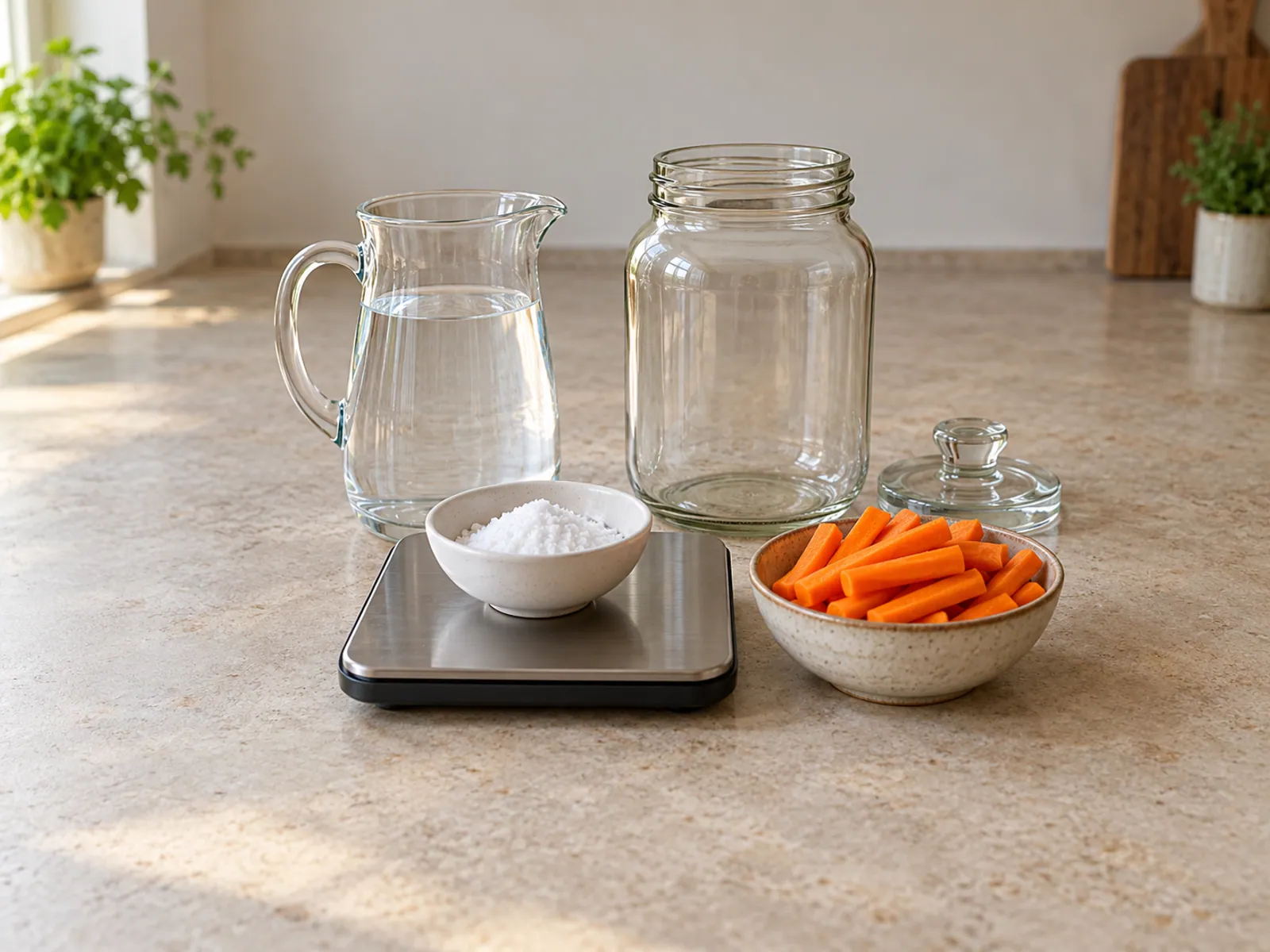
In a vinegar pickle the salt is seasoning and texture, not preservation — the acid handles that. One to three tablespoons of pickling salt per quart of brine covers virtually every recipe, and about a tablespoon and a half is a sensible default. Push toward three for a sharper, deli-style pickle, or down toward one for a sweeter bread-and-butter jar.
Use pickling or canning salt where you can. It is pure sodium chloride with no iodine and no anti-caking agents, so the brine stays clear and the vegetables keep their colour. Kosher salt is fine if it has no additives, but weigh it rather than measuring by volume — the calculator gives the gram figure so a brand switch does not quietly change the recipe.
The number that matters is the acidity percentage on the label, and for pickling it needs to be 5%. Supermarket white distilled, apple cider, and white wine vinegars almost always are. White distilled is neutral and keeps pale vegetables bright; cider vinegar brings a rounder, fruitier note but can darken the jar slightly.
Skip homemade vinegar and any bottle without a stated acidity for anything you plan to can, because there is no way to verify the strength. And never dilute a 5% vinegar down before measuring — the ratio in this calculator already assumes full-strength vinegar going into the pot.
Brine volume is the easiest thing to get wrong on a big canning day. A rough working figure is about a cup and a half of brine per quart jar of packed vegetables, though it varies with how tightly you pack and how chunky the cut is. Mixing a little extra is always cheaper than running out halfway through filling jars.
Because the ratio is proportional, scaling is simply a matter of changing the volume in the calculator — the vinegar, water, and salt all move together. Switch the unit to quarts or litres for a large batch, and use the gram figure for salt if you are weighing rather than scooping.
FAQ
Common questions about vinegar-to-water ratios, salt, and what changes when a jar goes on a shelf.
One printable reference card — vinegar-to-water ratios by pickle, the canning-safe floor, and salt per quart.
Calculators and guides for your next step.