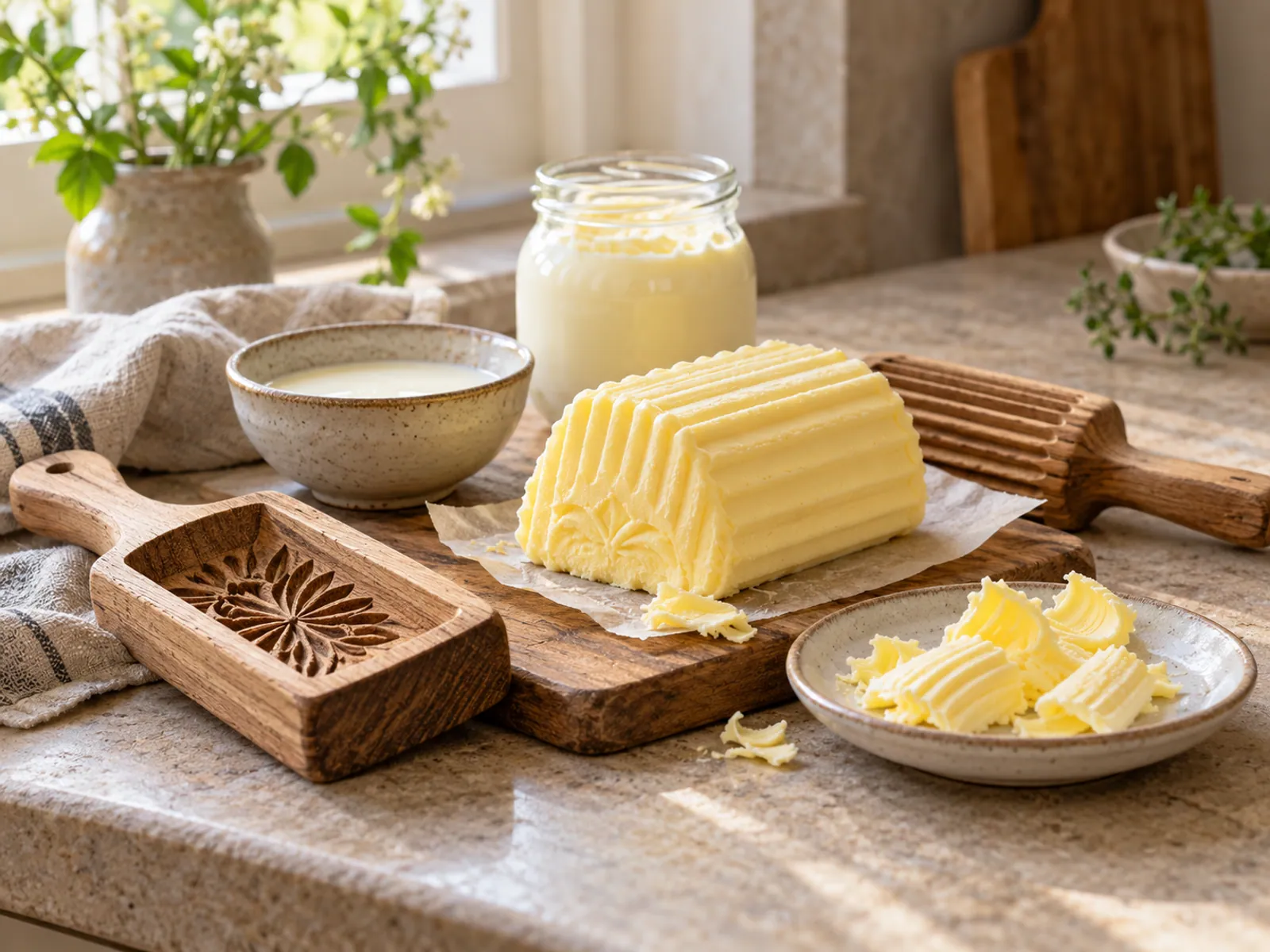
Cultured butter is cream that has been fermented with live bacteria, then churned. The fermentation step adds the tangy, complex flavour that makes European butter taste different from American sweet cream butter. Making it at home takes about 30 minutes of active work and produces butter that is genuinely better than anything in a shop.
What you need
500ml Heavy cream
3 tbsp Cultured buttermilk
½–1 tsp Fine salt
Equipment: a food processor, stand mixer with whisk, or a jar and strong arms. Fine-mesh strainer. Bowl of ice water for washing.
Method
- 1Culture the cream Pour the cream into a clean glass jar. Stir in 3 tablespoons of cultured buttermilk (or 2 tablespoons of plain yogurt with live cultures). Cover loosely and leave at room temperature (20–24°C / 68–75°F) for 12–24 hours.
- 2Check for tang After 12 hours, the cream should have thickened slightly and smell tangy — like crème fraîche. Taste it: it should be pleasantly sour. If it is still bland, give it more time. Once it tastes right, chill it in the fridge for at least 1 hour — cold cream churns faster.
- 3Churn Pour the chilled cultured cream into a food processor and run it. It will go through stages: liquid → whipped cream → grainy → suddenly splits into butter clumps and liquid buttermilk. This takes 3–5 minutes. In a stand mixer with the whisk, drape a towel over the bowl to catch splashes — it takes 5–8 minutes.
- 4Drain the buttermilk Pour everything through a fine-mesh strainer. Save the buttermilk — it is excellent for baking. Press the butter against the strainer to squeeze out as much liquid as possible.
- 5Wash the butter This is the critical step. Put the butter in a bowl of ice water and knead it with your hands or a spatula, pressing and folding. The water will turn milky. Drain and replace with fresh ice water. Repeat 3–4 times until the water stays clear. This removes residual buttermilk that would cause the butter to spoil quickly.
- 6Season and shape Knead in salt to taste — start with ½ tsp per 500ml of cream. Shape into a log or block, wrap tightly in baking paper or cling film, and refrigerate.
Culture options
Cultured buttermilk The easiest option. Use any brand with "live active cultures" on the label — 2–3 tbsp per 500ml cream. Widely available.
Plain yogurt Use 2 tbsp of plain, unsweetened yogurt with live cultures. Works well and gives a slightly different tang than buttermilk.
Mesophilic starter A cheese-making starter culture (Lactococcus strains) gives the most authentic cultured butter flavour. Follow the sachet instructions for dosing. Available online.
Tips for the best results
Use high-fat cream 35–40% fat produces more butter per volume. Double cream or whipping cream both work. Avoid UHT (ultra-pasteurised) if possible — it cultures more slowly.
Chill before churning cold cream separates into butter and buttermilk much faster. Warm cream just whips endlessly.
Wash thoroughly unwashed butter spoils in days. Keep washing in ice water until the water runs completely clear. This is the single most important step for shelf life.
Add flavours after washing mix in herbs, garlic, honey, or sea salt after the butter is washed and drained. Compound cultured butter is exceptional.
Watch for
- Do not use ultra-pasteurised cream with "no live cultures" buttermilk — the cream has been heat-treated and the buttermilk has none of the bacteria needed for culturing.
- Do not culture longer than 24 hours in warm weather — above 26°C the cream can develop off-flavours or go rancid.
- If the cultured cream smells cheesy or rancid rather than tangy, discard it and start fresh. This usually means it was too warm or contaminated.
What to expect
~200g Butter yield
~250ml Buttermilk yield
2–3 weeks Fridge life
6+ months Freezer life