Non-alcoholic line
Below this, kombucha sells as a soft drink; above it, it's alcoholic.
Kombucha · Calculator
Estimate your kombucha's ABV from sugar, time, temperature, and second fermentation — and see whether it stays under the 0.5% non-alcoholic line, live as you type.
Live calculator · updates as you type
This is a modelled estimate, not a lab measurement. Real kombucha alcohol varies with your specific culture, yeast balance, oxygen exposure, and bottling. Home brews commonly land between 0.5% and 3% ABV.
Estimated alcohol content
What to do next
Your estimate, step by step. Every number comes from your settings above.
Free printable
A batch card made from your numbers, to save as a PDF or receive by email:
| Brew | Sugar | Fermentation | ABV | Notes |
|---|---|---|---|---|
| Commercial (soft drink) | controlled | filtered / capped | < 0.5% | Kept non-alcoholic by law |
| Standard home F1 | ~70 g/L | 7–14 days, ~24°C | 0.5–1% | Open jar, bacteria limit alcohol |
| Long / warm F1 | 80–100 g/L | 14+ days, 27°C+ | 1–2% | More sugar eaten, more alcohol |
| Sealed 2F | residual sugar | +3–7 days sealed | 1–3% | Oxygen-limited, alcohol accumulates |
| Hard kombucha | boosted + yeast | extended, sealed | 3–8%+ | Added sugar/yeast; brewed for alcohol |
Alcohol guide
Kombucha's alcohol is low but real. This guide shows where it comes from, why a sealed second fermentation raises it, what pushes it higher, and how to keep your brew under the 0.5% line.
Sealing a brew for 2F is what pushes alcohol past 0.5% . Model yours live below.
Below this, kombucha sells as a soft drink; above it, it's alcoholic.
Where most homemade kombucha lands, before hard-kombucha methods.
Cutting off oxygen lets alcohol build instead of turning to acid.
ABV = leftover ethanolYeast turn sugar into ethanol; bacteria turn ethanol into acid when oxygen is present. Your alcohol is whatever the bacteria didn't oxidise — which is why sealing the brew raises it and an open jar keeps it low.
Kombucha is a two-stage microbial process. The yeast in your SCOBY ferment sugar into ethanol and carbon dioxide, and the acetic-acid bacteria then oxidise that ethanol into the organic acids that give kombucha its tang. Alcohol is an intermediate, not a dead end.
That is why a healthy open fermentation stays low in alcohol: as fast as the yeast make ethanol, the bacteria — with plenty of oxygen at the surface — convert most of it to acid. The alcohol you end up with is whatever the bacteria did not manage to oxidise.
Sugar → (yeast) → ethanol + CO₂Ethanol → (bacteria + oxygen) → acetic acidLeftover ethanol = your ABVThe single biggest lever on kombucha alcohol is whether the brew is open or sealed. During first fermentation the jar is covered with breathable cloth, so oxygen keeps the bacteria oxidising ethanol and alcohol stays low.
Second fermentation flips that. Once you bottle and seal the kombucha to trap carbonation, oxygen runs out. The bacteria slow down, the yeast keep fermenting residual sugar, and alcohol accumulates instead of being converted away. A sealed 2F is the stage most likely to nudge a brew over the 0.5% line.
Commercial kombucha sold as a soft drink is filtered or controlled to stay under 0.5% ABV. Ordinary homemade first-ferment kombucha usually lands around 0.5–1%. Longer or warmer brews reach 1–2%, and a sealed second fermentation can push 1–3%.
Hard kombucha is a different animal: it is deliberately brewed with extra sugar and a champagne or ale yeast, and sealed, to reach 3–8% or more. If you are not adding yeast and sugar on purpose, you are almost always in the low-single-digit range.
More starting sugar gives the yeast more to convert. Higher temperatures speed yeast activity. Longer fermentation gives more time for alcohol to build. A yeast-dominant culture (lots of brown strands) produces more ethanol than a bacteria-heavy one.
Above all, sealing the brew — for a second fermentation or an over-long bottle conditioning — removes the oxygen the bacteria need to keep alcohol in check. Stack several of these together (sweet, warm, long, sealed) and a normally gentle kombucha can climb past what you would expect.
To keep kombucha firmly in soft-drink territory, ferment for a shorter time, keep the first fermentation open so bacteria can oxidise ethanol, use a bit less starting sugar, and avoid long sealed second fermentations. Cooler temperatures also slow alcohol production.
When you do a second fermentation for fizz, keep it short and refrigerate as soon as the kombucha is carbonated — cold nearly stops the yeast, freezing the alcohol level where it is. The longer a sealed bottle sits warm, the more alcohol it makes.
The reason 0.5% matters is regulatory: in the US and many other markets, a beverage under 0.5% ABV can be sold as non-alcoholic, while anything at or above it is regulated as an alcoholic product. This is exactly why commercial kombucha producers filter, pasteurise, or otherwise control alcohol.
For a home brewer the line is less about law and more about awareness. If you avoid alcohol, are pregnant, are serving kombucha to children, or simply want to know, it is worth understanding that homemade kombucha routinely crosses 0.5% — especially after a sealed second ferment.
This calculator is a model. It is useful for understanding how your choices move the alcohol up or down, and for a reasonable ballpark, but it cannot know your exact culture balance or oxygen exposure. Treat the number as an estimate with a range.
For a genuinely accurate reading you need a measurement, and kombucha is tricky because its low alcohol and high acidity defeat a simple hydrometer. Home options include an ebulliometer or an alcohol test kit designed for low-ABV drinks; a lab test is the gold standard when the number really matters.
FAQ
Common questions about how much alcohol is in kombucha and how to control it.
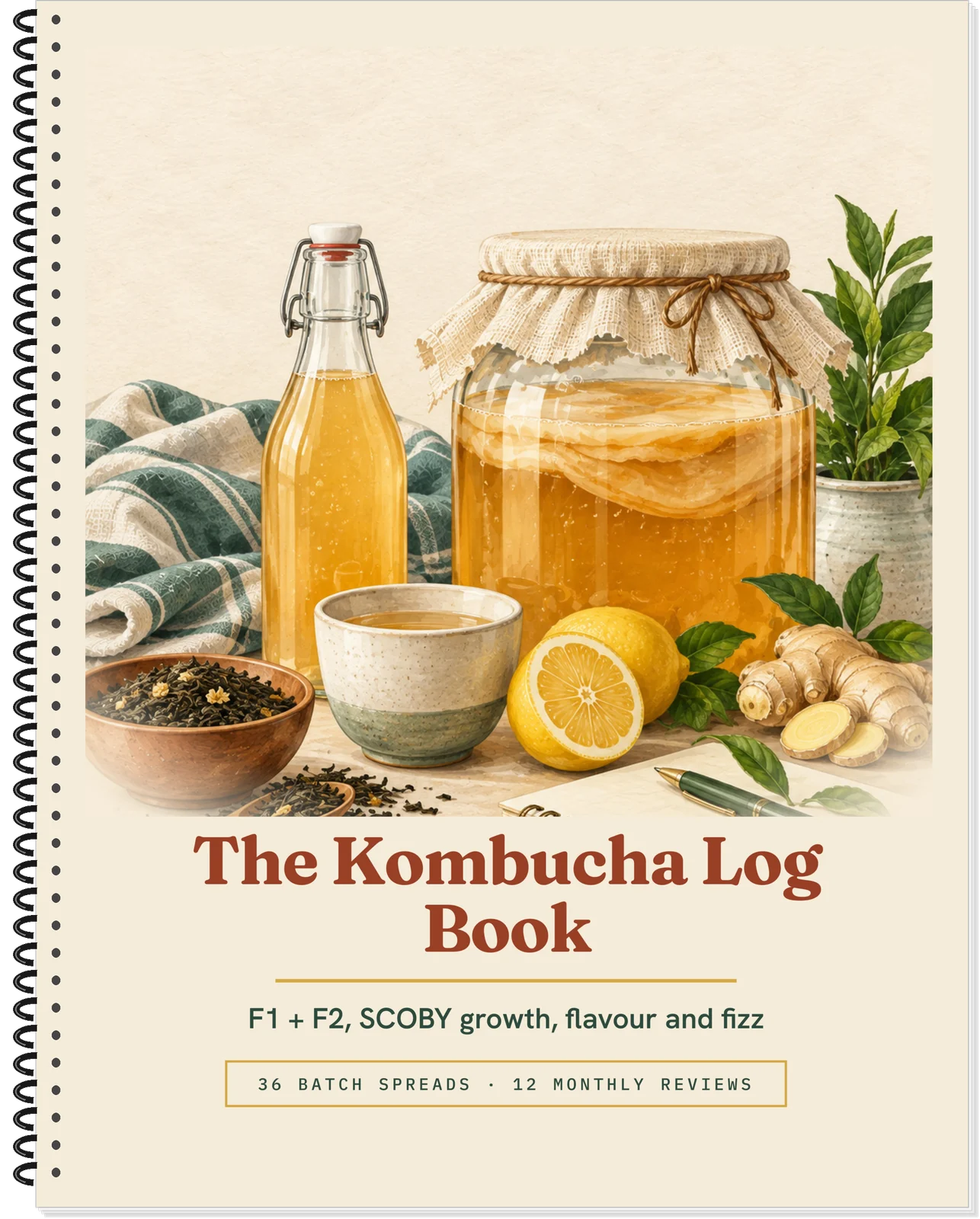
Printed book · Delivered to you
A spiral-bound book delivered to your door, ready to write in. F1 and F2 notes, together in a spiral-bound book.
Digital download · Print at home
Download the files and print your own copy. No book is shipped. Sweet tea, timing and fizz, worked out.
Keep the kombucha reference alongside your next batch.
Calculators and guides for your next step.