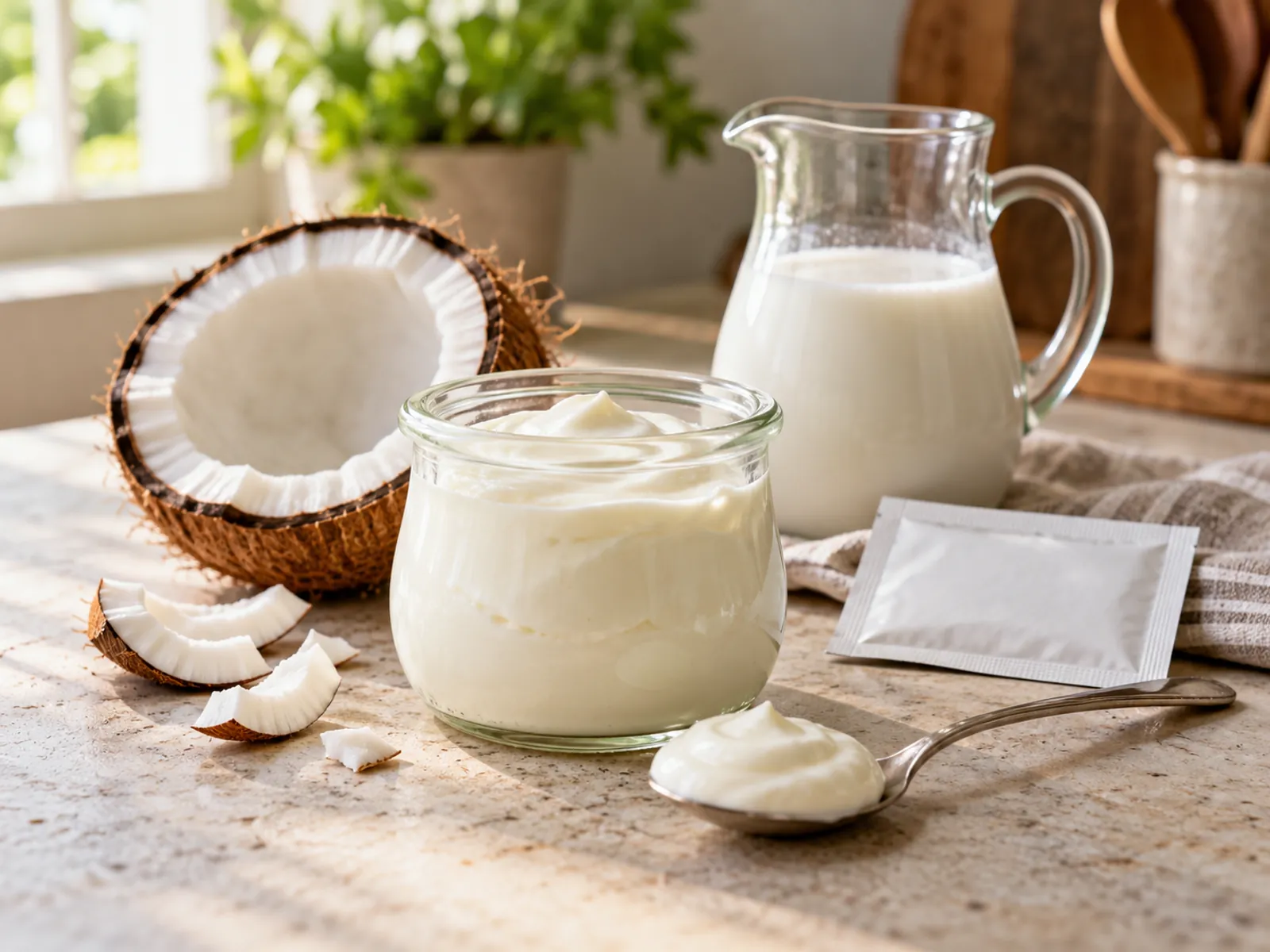
Fermented coconut yogurt is dairy-free yogurt made by culturing coconut milk with probiotic bacteria — the same ones used in regular yogurt. The bacteria ferment the sugars in the coconut milk, producing lactic acid (which gives the tang) and thickening the texture. The result is creamy, tangy, and full of live cultures.
What you need
Equipment: a clean glass jar, a way to keep it warm (yogurt maker, oven with the light on, Instant Pot on yogurt setting, or a warm spot in your kitchen).
Method
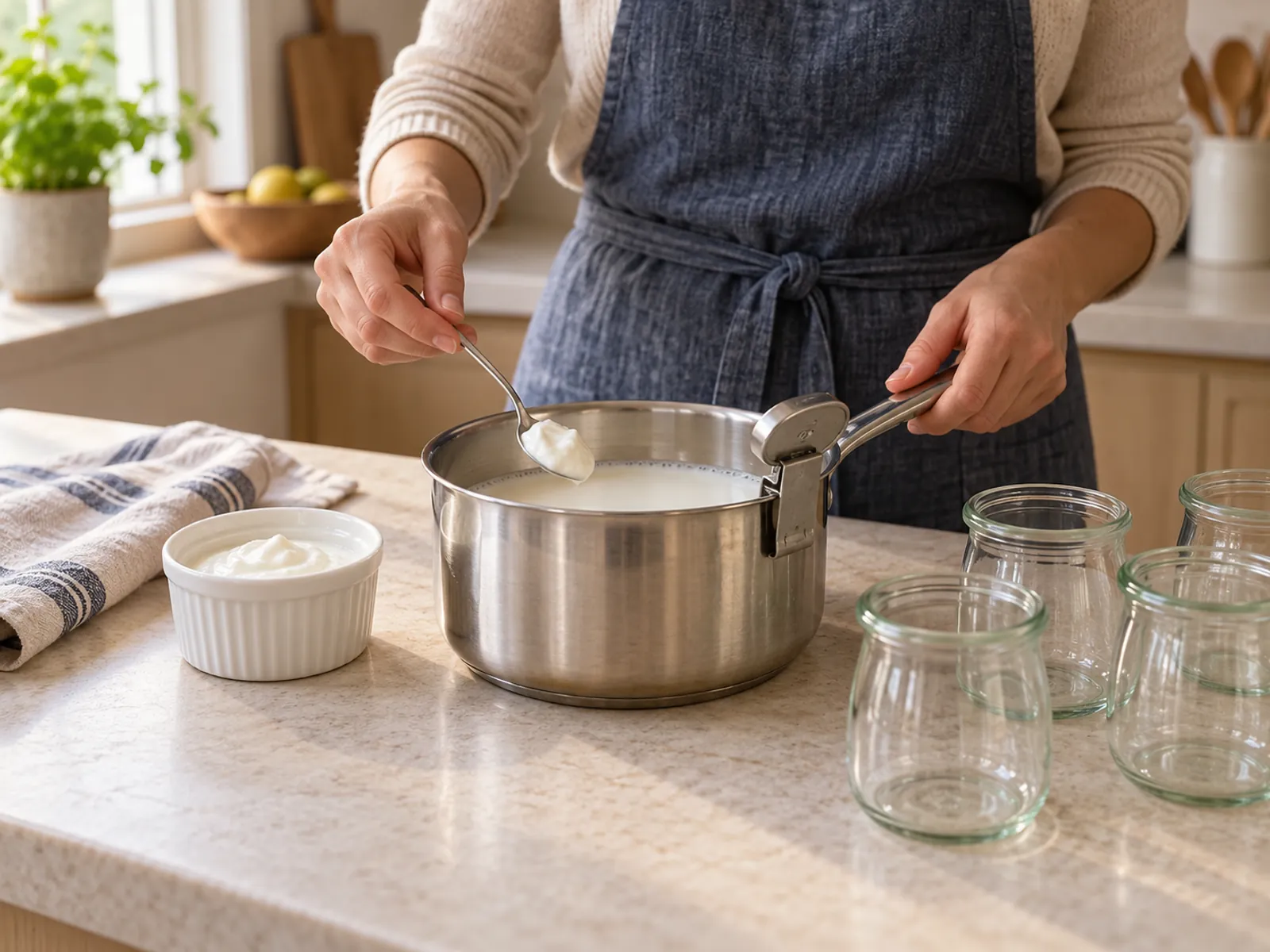
- 1Heat the coconut milk Pour the full can of coconut milk into a saucepan. If using tapioca starch, whisk it in now. Heat gently to 80°C (175°F), whisking occasionally, to dissolve everything and pasteurise. If not using starch, you can skip heating — just make sure the milk is at room temperature or slightly warm.
- 2Cool to culturing temperature Let the coconut milk cool to 40–43°C (105–110°F). This is warm to the touch but not hot. Too hot kills the probiotic bacteria.
- 3Add the cultures Open the probiotic capsules and sprinkle the powder into the warm coconut milk. Whisk gently until fully dissolved. Or stir in 2–3 tablespoons of plain store-bought coconut yogurt.
- 4Ferment Pour into a clean glass jar. Cover loosely (the bacteria need some air exchange). Keep at 38–43°C (100–110°F) for 12–24 hours. A yogurt maker holds this temperature automatically; an oven with just the light on sits around 35–40°C.
- 5Check and refrigerate After 12 hours, check — it should smell tangy and have thickened. If you want more tang, go longer. Once it tastes right, seal the jar and refrigerate for at least 4 hours. It thickens further as the coconut fat sets in the cold.
Related calculator
Yogurt Starter Calculator
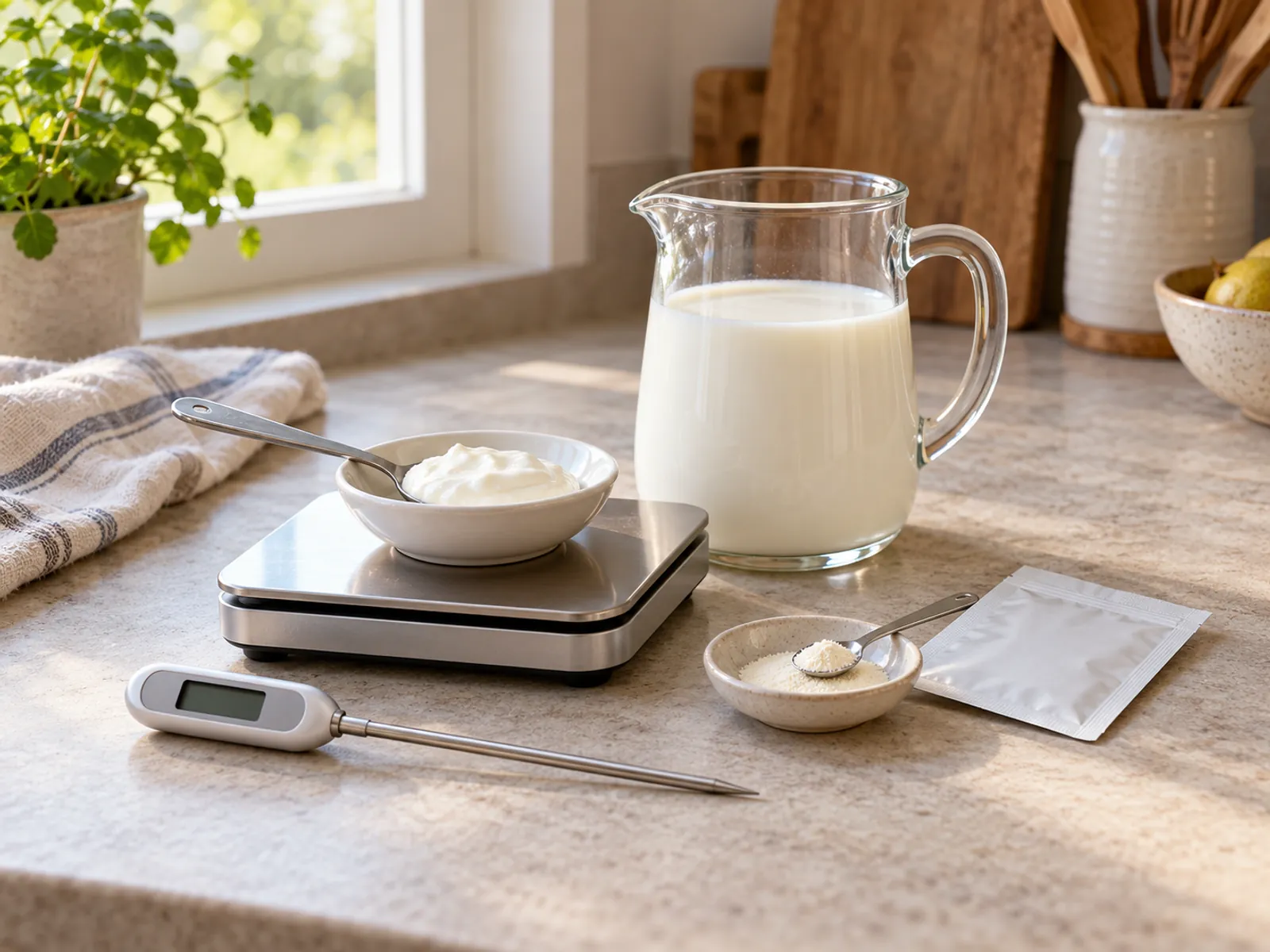
Calculate how much yogurt starter culture you need per litre or gallon of milk. Works with freeze-dried and fresh cultures.
Troubleshooting
Watch for
- Never add cultures to hot coconut milk — above 46°C (115°F) kills the bacteria.
- Avoid coconut milk with preservatives — potassium sorbate and sodium benzoate inhibit bacterial growth.
- If the yogurt smells off (not tangy but putrid), has pink or coloured spots, or fizzes aggressively, discard it and start fresh.
Free Yogurt Starter Log (printable PDF)
A printable PDF companion for the yogurt calculators and guides.
Flavouring ideas
Flavour after fermentation, not before — sugar and fruit can interfere with the cultures during fermentation.