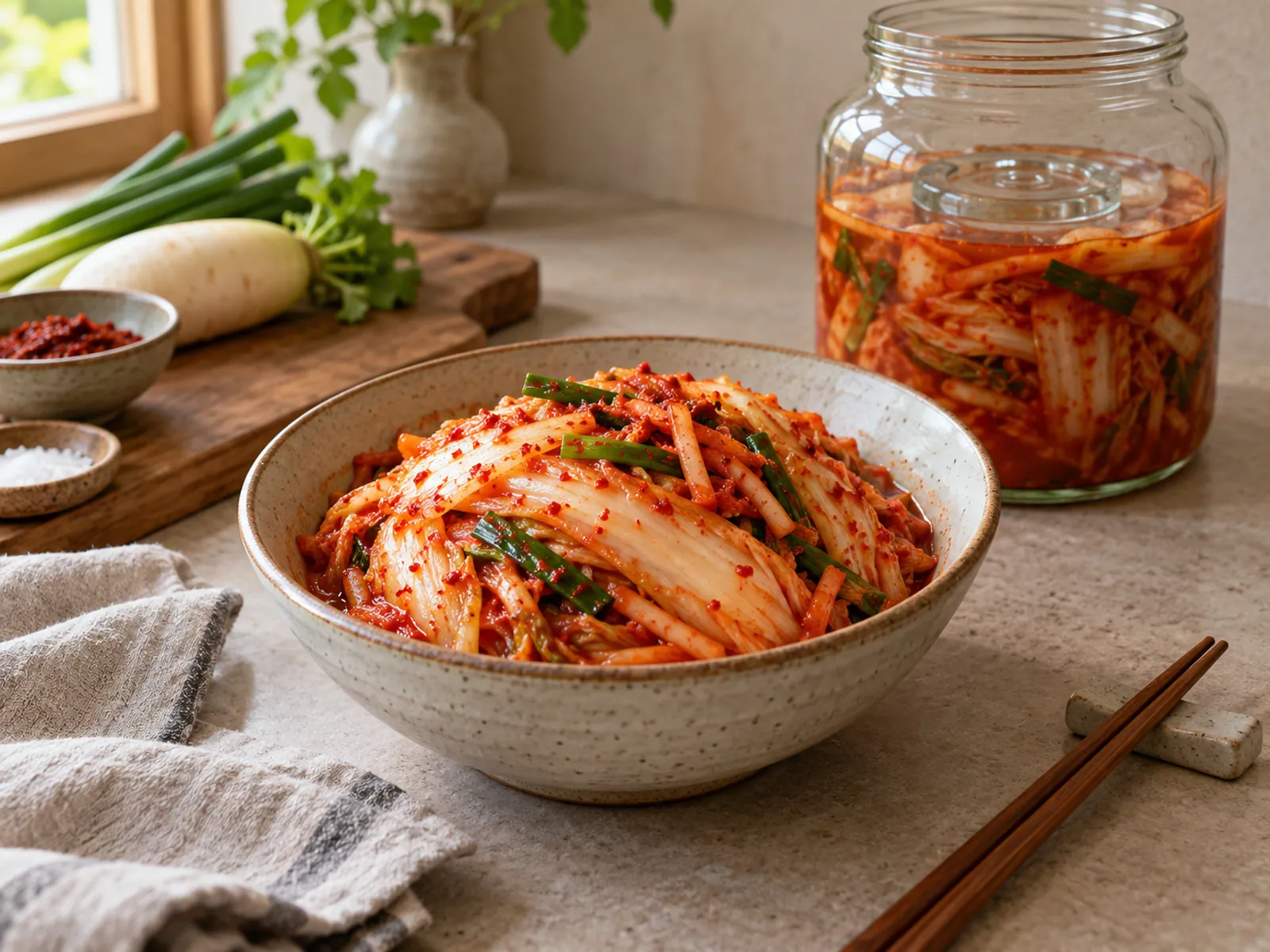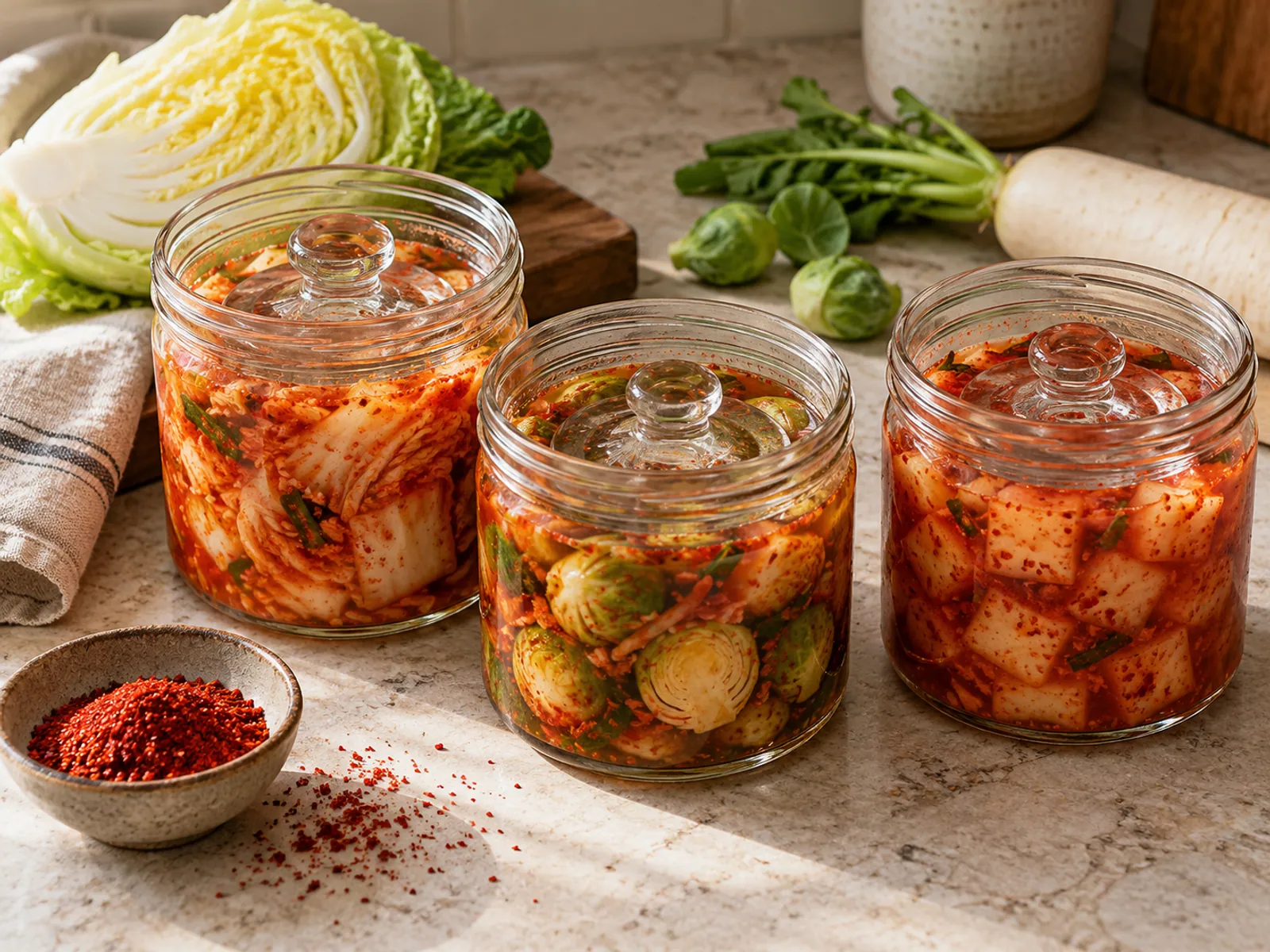
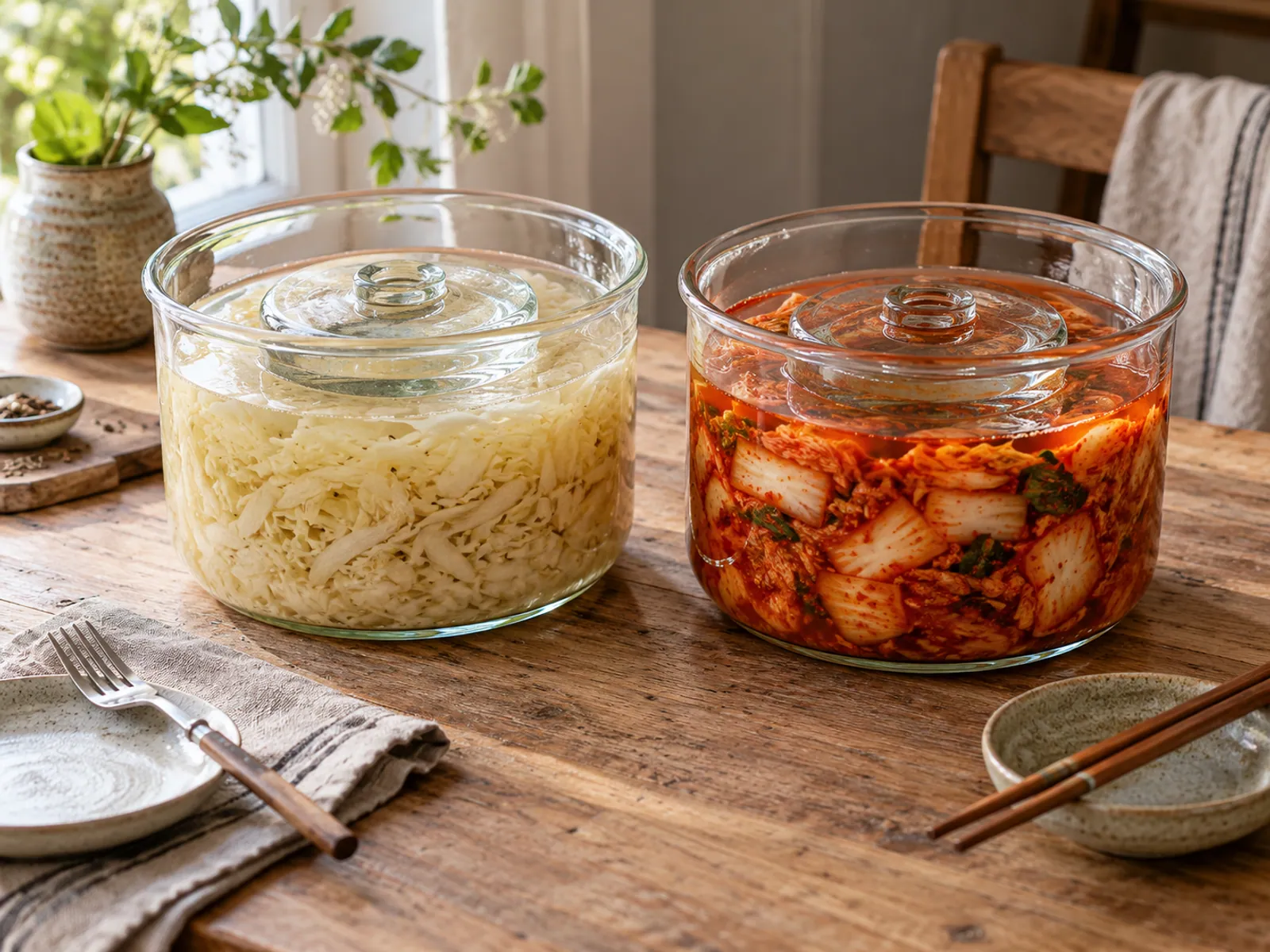
Sauerkraut and kimchi are the two most famous fermented cabbages, and they are built on the same process: salt draws water out of the cabbage, lactic acid bacteria multiply, and the cabbage sours. Everything else, from the type of cabbage to how it is salted and seasoned, is different, which is why one tastes clean and sour and the other spicy and savoury.
Sauerkraut vs kimchi side by side
| Sauerkraut | Kimchi (baechu-kimchi) | |
|---|---|---|
| Origin | Central and Eastern Europe | Korea |
| Cabbage | Green or red head cabbage, finely shredded | Napa cabbage, quartered or cut into pieces |
| Salting | Dry salt, about 2% of cabbage weight, massaged until it releases brine | Soaked in strong brine or salted for hours, then rinsed |
| Seasoning | Salt; optional caraway, juniper, dill | Chilli flakes (gochugaru), garlic, ginger, scallion, often fish sauce or salted shrimp |
| Other vegetables | Usually none | Daikon, carrot, scallion |
| Ferment time | 2–6 weeks at room temperature | 1–5 days at room temperature, then slowly in the fridge |
| Flavour | Clean, sour, tangy | Spicy, garlicky, savoury, effervescent |
| Texture | Soft, fine shreds | Crunchy pieces |
How the methods differ
The salting step is the biggest practical difference. Sauerkraut stays in its own salty juice for the whole ferment. Kimchi’s cabbage is salted, rinsed and seasoned, so the final salt level depends more on the paste.
Taste and how to use them
Free Fermentation Salt Reference Card (printable PDF)
A printable PDF companion for the brine & pickling calculators and guides.
Which should you make first?
Make sauerkraut first if you are new to fermenting: two ingredients, almost nothing to get wrong, and it teaches the salt-and-submerge method every vegetable ferment uses. Make kimchi first if you want something ready to eat within a week and you love heat and garlic.
Go deeper with what is sauerkraut, sauerkraut recipe variations, kimchi explained and kimchi recipes. For the gut-health side, see probiotics in sauerkraut and kimchi.