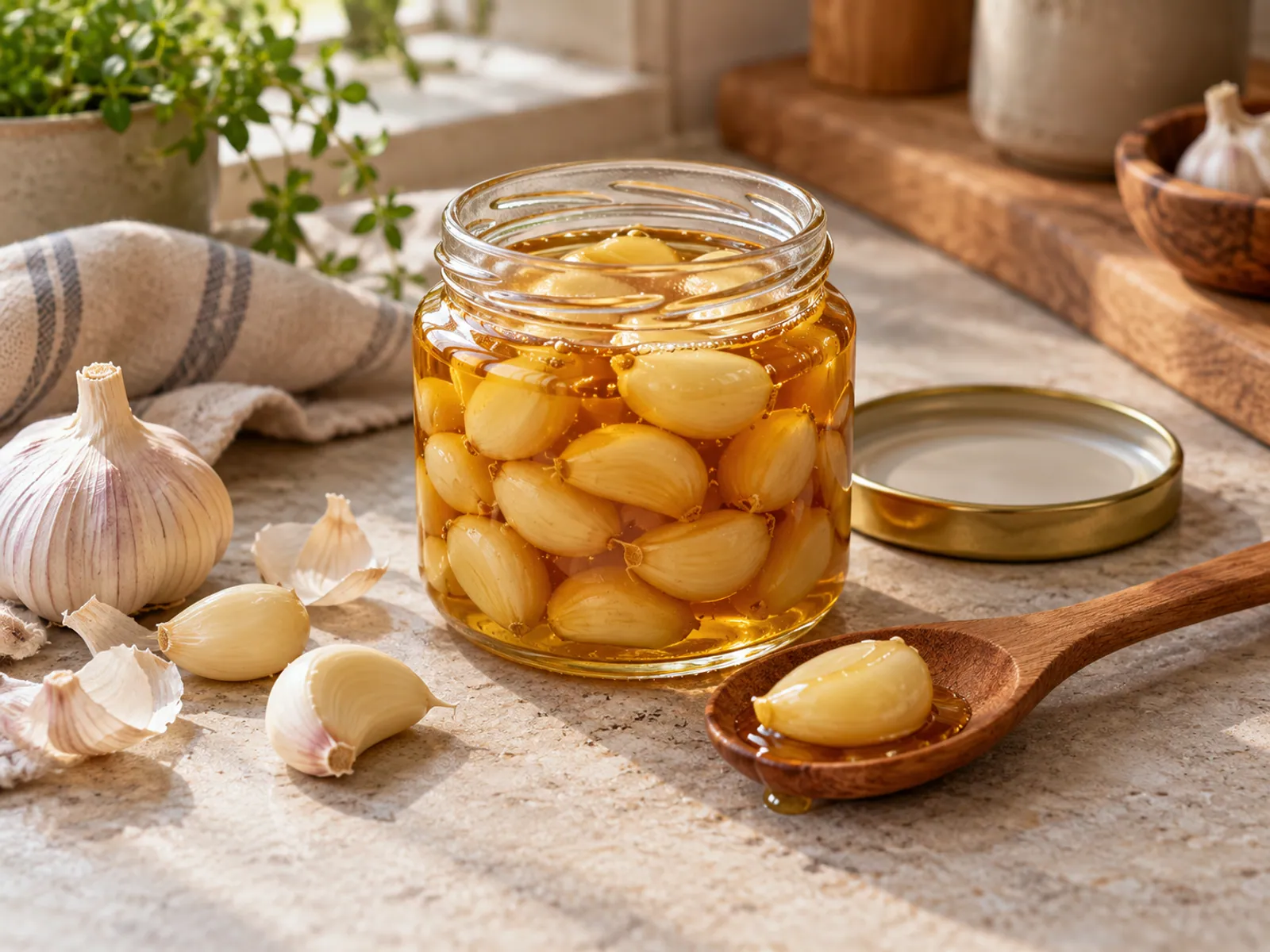
Garlic, ginger and chilli all pair well with honey. The culinary appeal is easy to understand: sweetness softens a sharp aromatic or hot ingredient and makes a useful glaze or table condiment. The question is whether leaving fresh ingredients submerged in honey at room temperature is a reliably established home preservation method.
For garlic honey, the current Extension guidance reviewed here says no. That changes the advice on this page: it does not offer the month-long room-temperature recipe, vinegar shortcut or blanket storage assurance that previously appeared here. You can still explore the flavors without treating an improvised jar as a validated ferment.
Why there is no room-temperature jar recipe here
Oregon Extension’s June 2026 response on garlic in honey advises against the practice because there are significant safety questions and insufficient data to demonstrate consistently safe results. A popular recipe, an attractive photograph or a successful-looking previous batch does not fill that gap.
The distinction matters when comparing sources. A recipe publisher may report personal experience; a process-specific food-safety recommendation needs evidence about the formulation and method. Neither a general explanation of fermentation nor evidence about honey on its own validates a mixture of honey and fresh garlic.
This does not mean honey can never be used in fermentation. Mead is a different process involving a specified honey-and-water mixture and yeast. Likewise, using honey as one ingredient in a separate, fully specified condiment recipe is different from submerging fresh vegetables in a jar of honey.
What bubbles and thinning honey can tell you
A mixture can change visibly without those changes establishing its safety. Bubbles, thinner honey, floating cloves and changes in flavor are observations, not a substitute for a validated preparation and storage method. A month on the counter is not a safety milestone.
Do not use an absence of bubbles as a reason to crush more garlic, warm the jar, add an old starter or leave it longer. Those interventions change the preparation without resolving the evidence gap. Equally, a lively jar is not proof that the desired organisms have made the food safe throughout.
Keep the same distinction when reading a pH discussion: acidity can matter to a process, but a measurement alone does not establish every required control. A strip dipped into one part of a thick, uneven mixture is not a complete process assessment.
Why vinegar, raw honey and refrigeration are not fixes
Extension’s explanation of garlic fermentation identifies variation in honey acidity and changes to water activity when garlic and honey are combined. It also explains why pH-strip testing is inadequate for the reassurance often offered by online recipes.
Watch for
- An unspecified spoonful of vinegar is not a validated acidification method.
- Using raw honey or turning the jar daily does not establish a safe preservation process.
- Refrigerating later does not undo an earlier unsafe process. Do not try to rescue a questionable batch by tasting or cooking it.
A commercial product is a separate decision. Choose a reputable product with clear intended use and storage directions, and follow those directions rather than transferring a blog’s room-temperature storage advice to it. A product labeled garlic honey also need not be fermented at all.
Jalapeño honey and ginger honey need separate answers
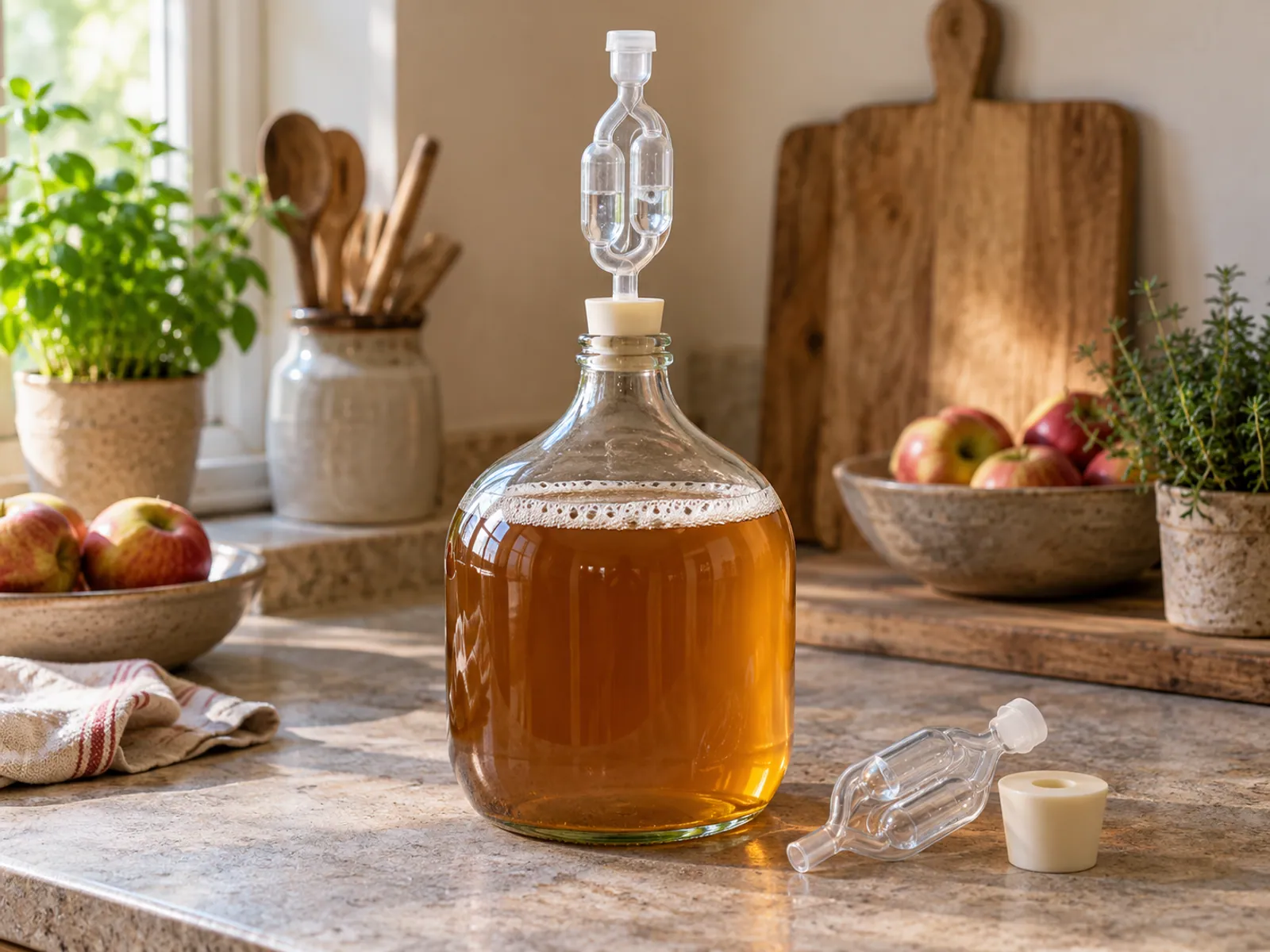
Extension’s response about peppers in honey reports that science-based recipes for safely fermenting that mixture are not available in the cited guidance. Jalapeños are not an approved workaround for garlic. Adding an airlock solves a gas-management question, not the missing process validation.
For fresh ginger in honey, the reviewed sources do not establish a complete validated home fermentation method. That is a limit of this review, rather than a claim that ginger and garlic have identical properties. Do not copy a garlic timeline, vinegar quantity or storage window into a ginger recipe and call it verified.
These questions belong together on this existing page because readers are deciding between similar honey-jar ideas. Separate thin pages for each aromatic would repeat the same unresolved recipe premise rather than help you choose a sound method.
Get the flavors as fresh serving mixtures
If your goal is flavor rather than preservation, prepare a small serving when you need it. These are table mixtures, not jars to leave fermenting, and they should not be given the storage life of plain honey.
Keep utensils clean and make only what the meal needs. Follow an established recipe if you want a sauce to prepare ahead. For a different garlic fermentation process, see garlic in brine; its instructions do not apply to honey. For fermented condiments with published formulas, see mustard and ketchup.
Sources and the limits of this review
The three Extension responses linked above address garlic-honey safety, ingredient variability and peppers in honey. Their conclusions support declining to publish an unverified home jar method. They do not establish a storage period for a new recipe or demonstrate that every commercial preparation has the same formulation.
If you have already made a jar and need advice about its history, contact a qualified local food-preservation service with the ingredients, quantities, time and storage conditions. An online photograph or an appealing aroma cannot resolve that assessment.