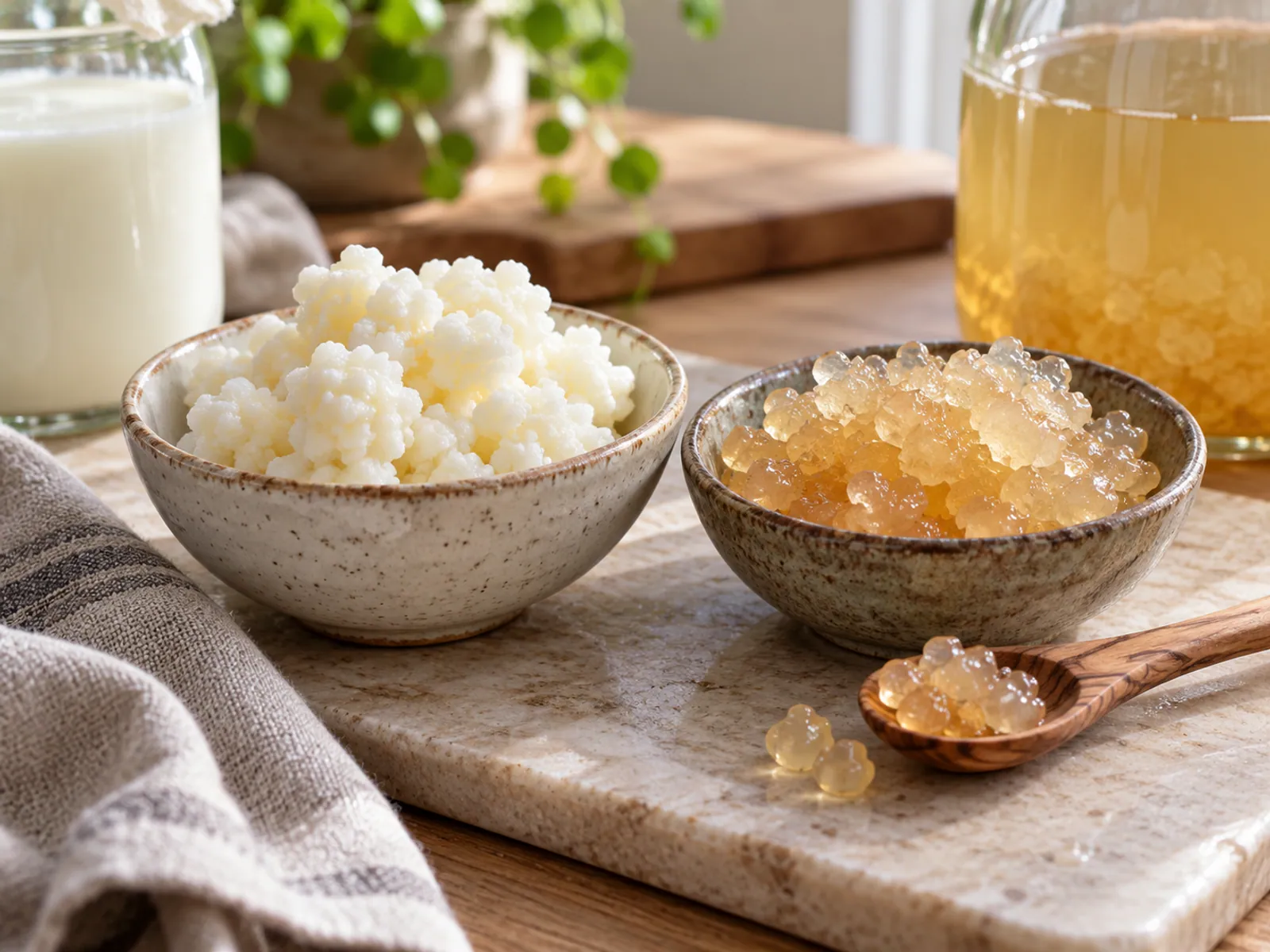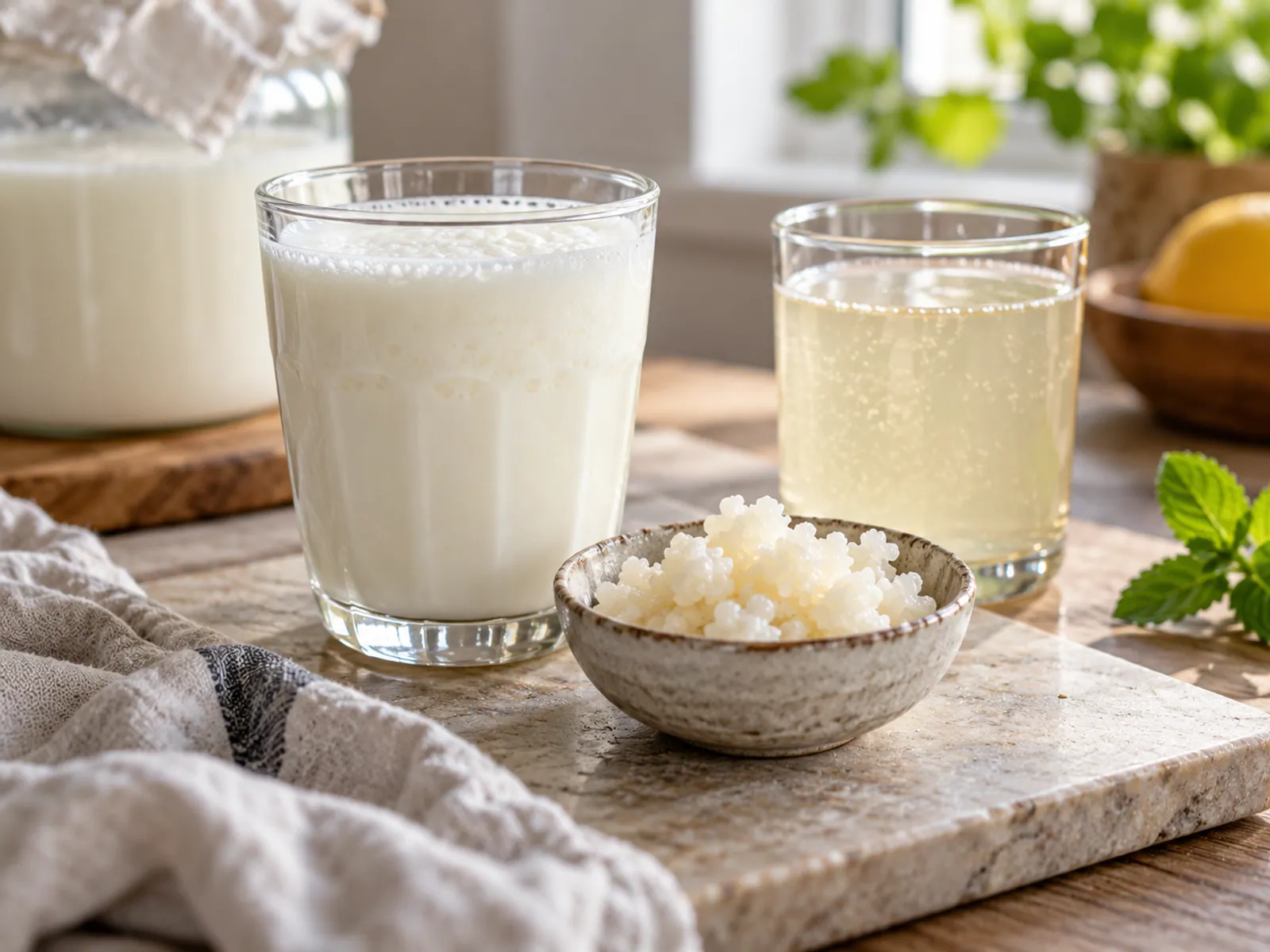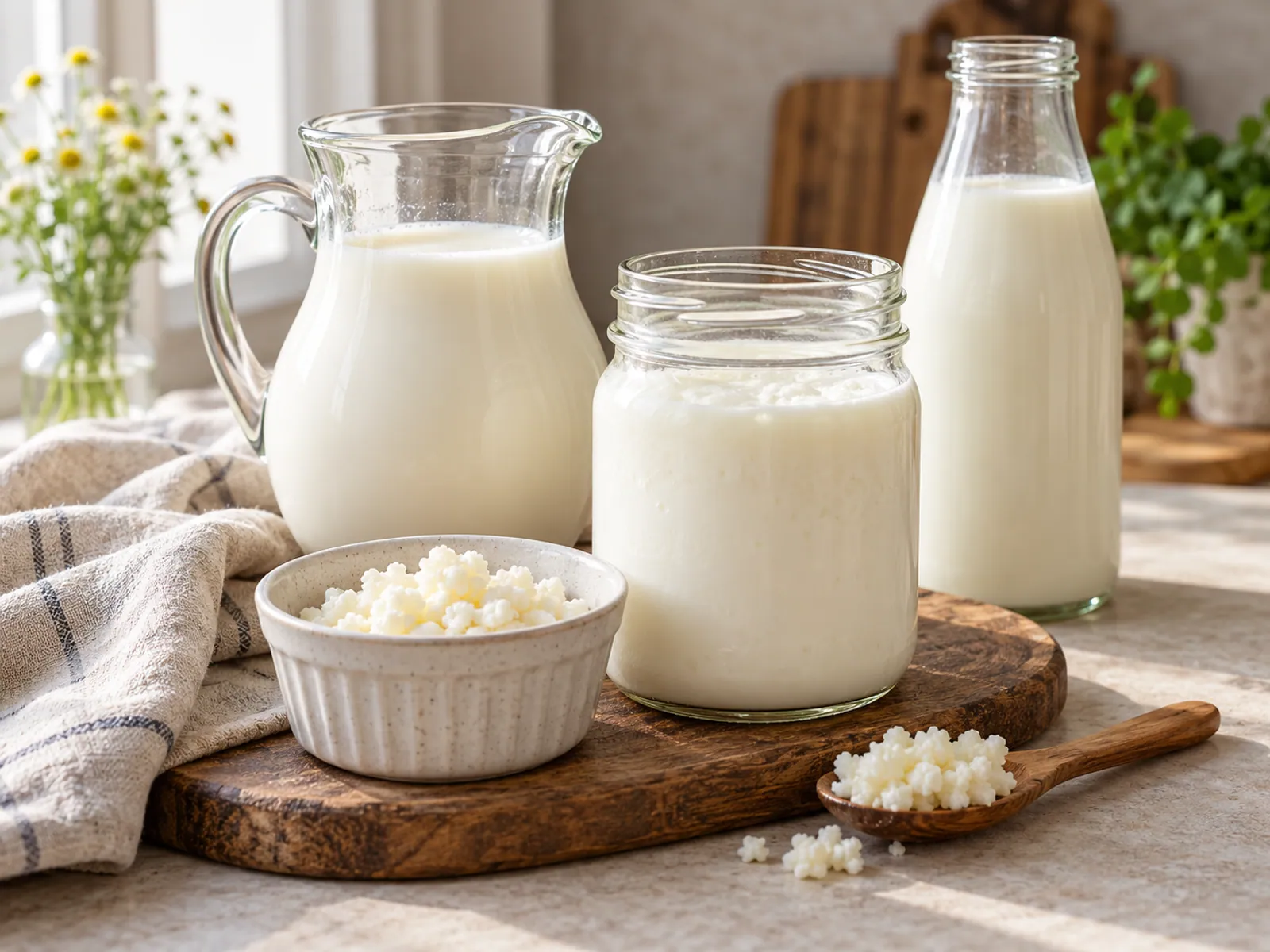
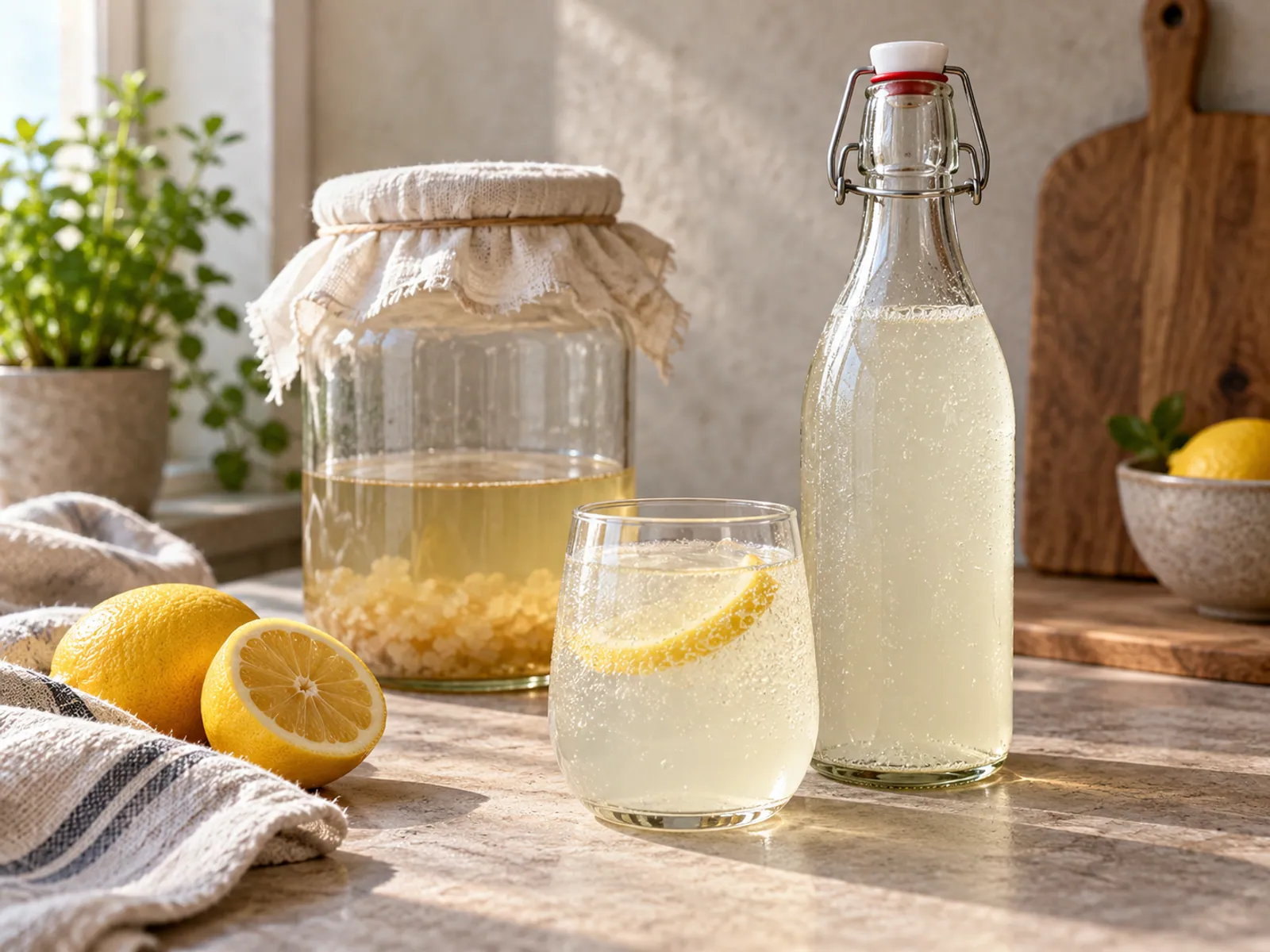
Water kefir is a fermented sugar-water drink made with water kefir grains. It may be lightly sparkling after the first ferment and can build stronger carbonation in a sealed second ferment. Timing and alcohol vary, so treat recipe, temperature, and pressure as variables to record rather than promises.
What you need
Equipment: a wide-mouth glass jar (1 litre+), a breathable cover (cloth, coffee filter, or paper towel + rubber band), a fine-mesh strainer (not metal if possible), and swing-top bottles for the second fermentation.
First fermentation
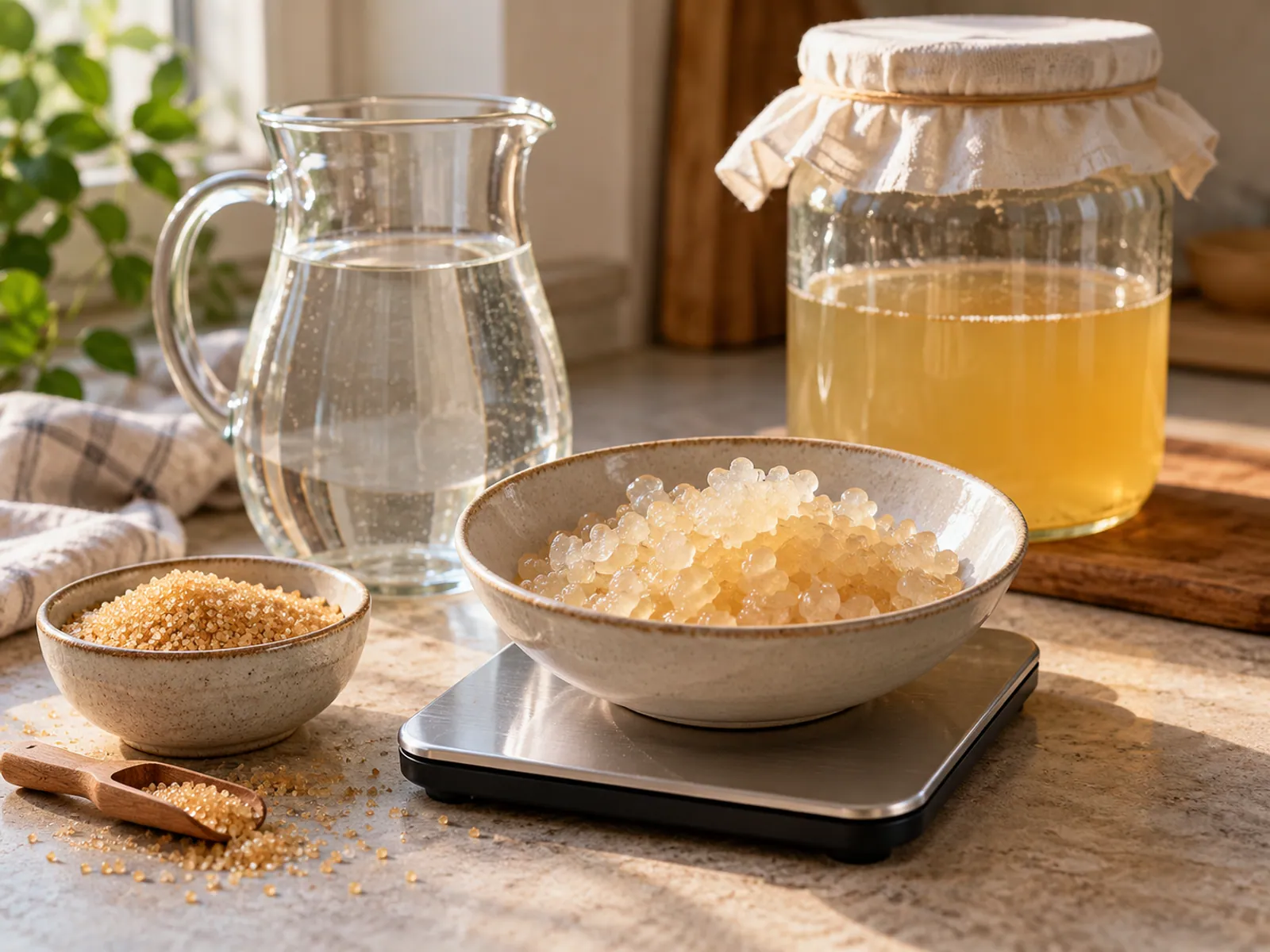
- 1Dissolve the sugar Dissolve 55g sugar in a small amount of warm water, then add cool water to make 1 litre total. The water must be cool before the grains go in.
- 2Assess the mineral profile Refined sugar in very soft water may need modest mineral support. Hard water or whole sugar may need none. Change one variable at a time and avoid automatic additions.
- 3Add the grains Add 60g of wet, drained water kefir grains. That is roughly 4–5 tablespoons, but grain volume varies, so use a scale for repeatable batches.
- 4Start checking at 24 hours Many home batches run 48–72 hours, while traditional methods may take 2–4 days. Look for reduced sweetness, light acidity, visible activity, and a clean aroma.
- 5Strain Pour the liquid through a fine-mesh strainer into a clean jar or bottles. The grains stay in the strainer — add them to fresh sugar water to start the next batch immediately.
Second fermentation (for fizz and flavour)
The second fermentation is where water kefir gets its fizz and flavour. The grains are already out — you are just bottling the strained liquid with something for the residual cultures to feed on.
- 1Add flavouring Pour the strained water kefir into swing-top bottles, filling to about 80% (leave headspace for CO₂). Add flavouring — fruit juice, fresh or frozen fruit, ginger, herbs, or a combination.
- 2Seal only in pressure-rated bottles The sealed environment traps CO₂. Added fruit, juice, ginger, or sugar can make pressure rise unpredictably.
- 3Chill before opening Monitor closely, refrigerate once carbonated, and open cold and slowly over a sink, away from your face. No burping schedule guarantees safety.
Watch for
- Use only bottles manufactured for carbonation; avoid decorative glass, square bottles, and ordinary jars.
- Fruit, juice, ginger, and added sugar can accelerate pressure production.
- Sealed fermentation can increase both pressure and alcohol. Chill before opening and keep the bottle away from your face.
Related calculator
Water Kefir Calculator
Keep grains at 60 g/L and calculate light, standard, or rich sugar water for any batch size.
Flavouring ideas
Free Kefir Ratio Reference Card (printable PDF)
A printable PDF companion for the kefir calculators and guides.