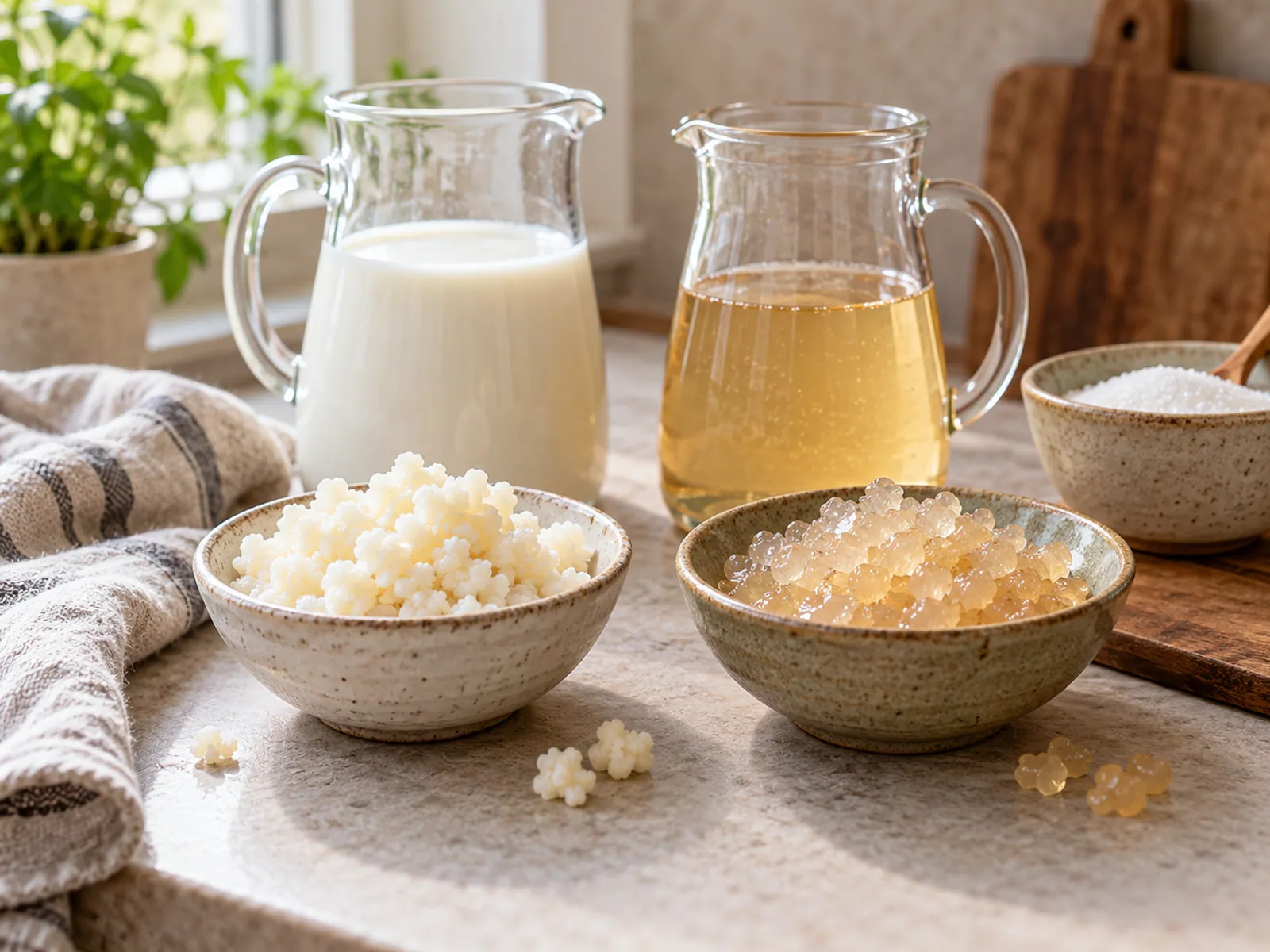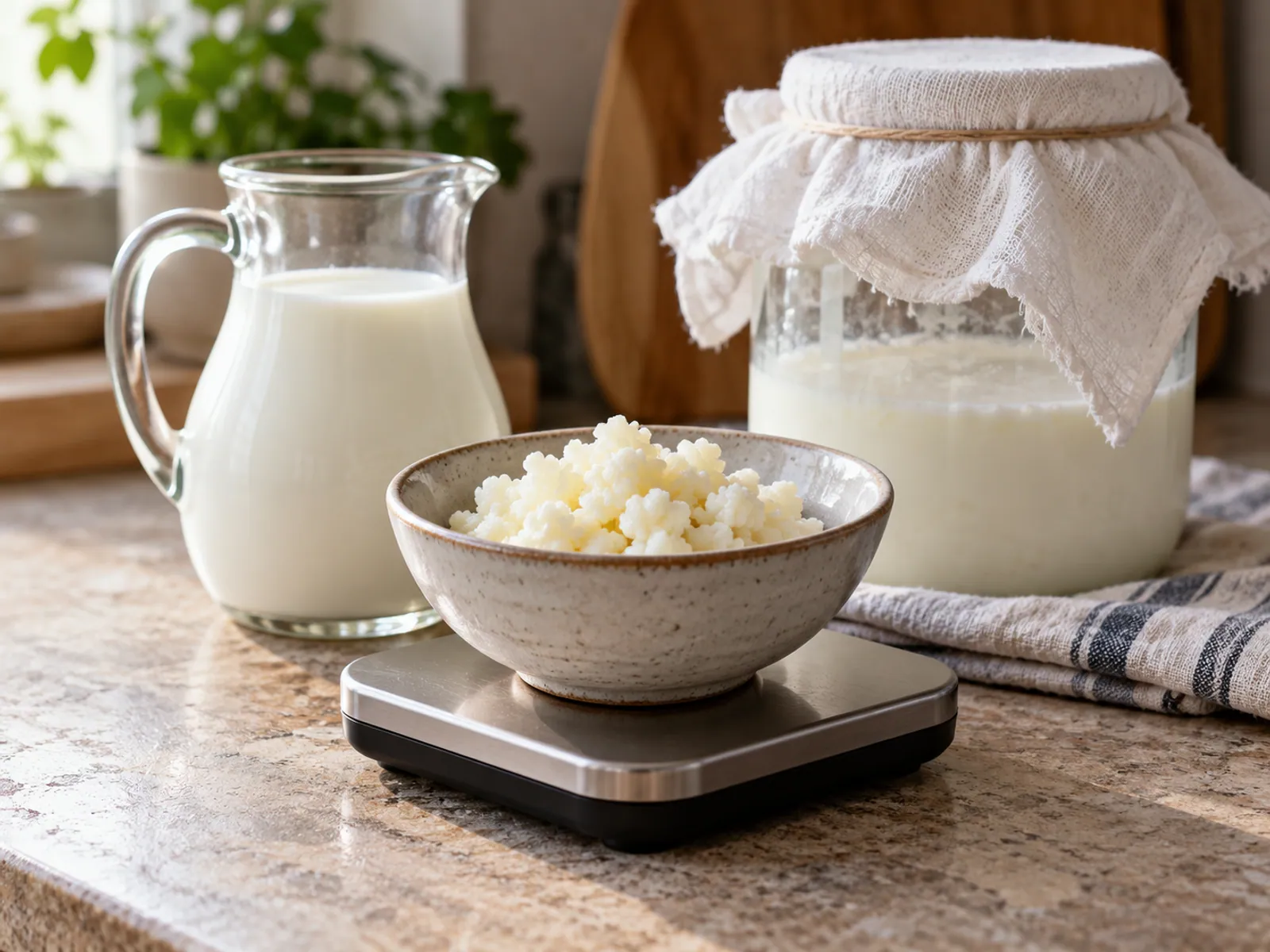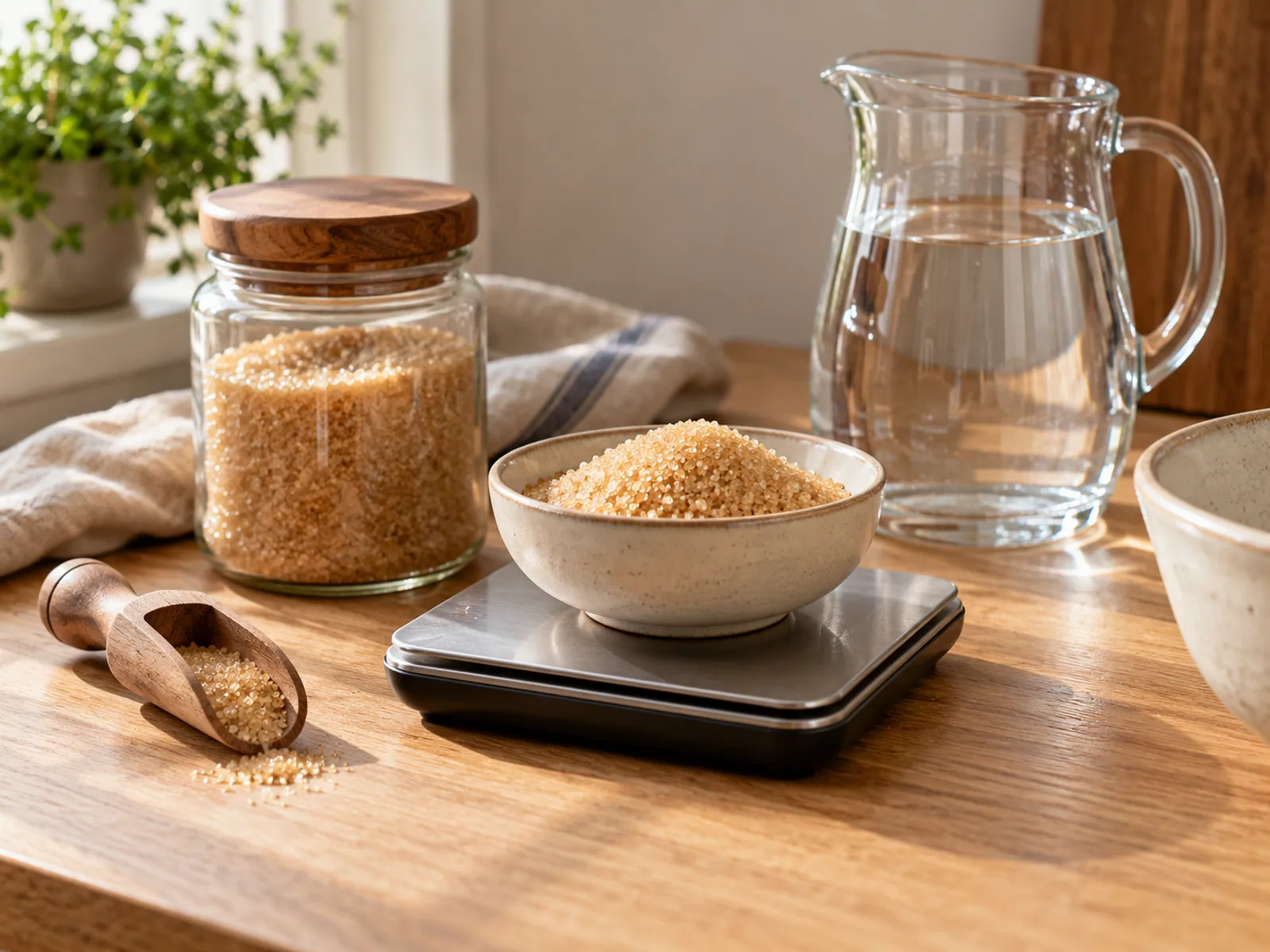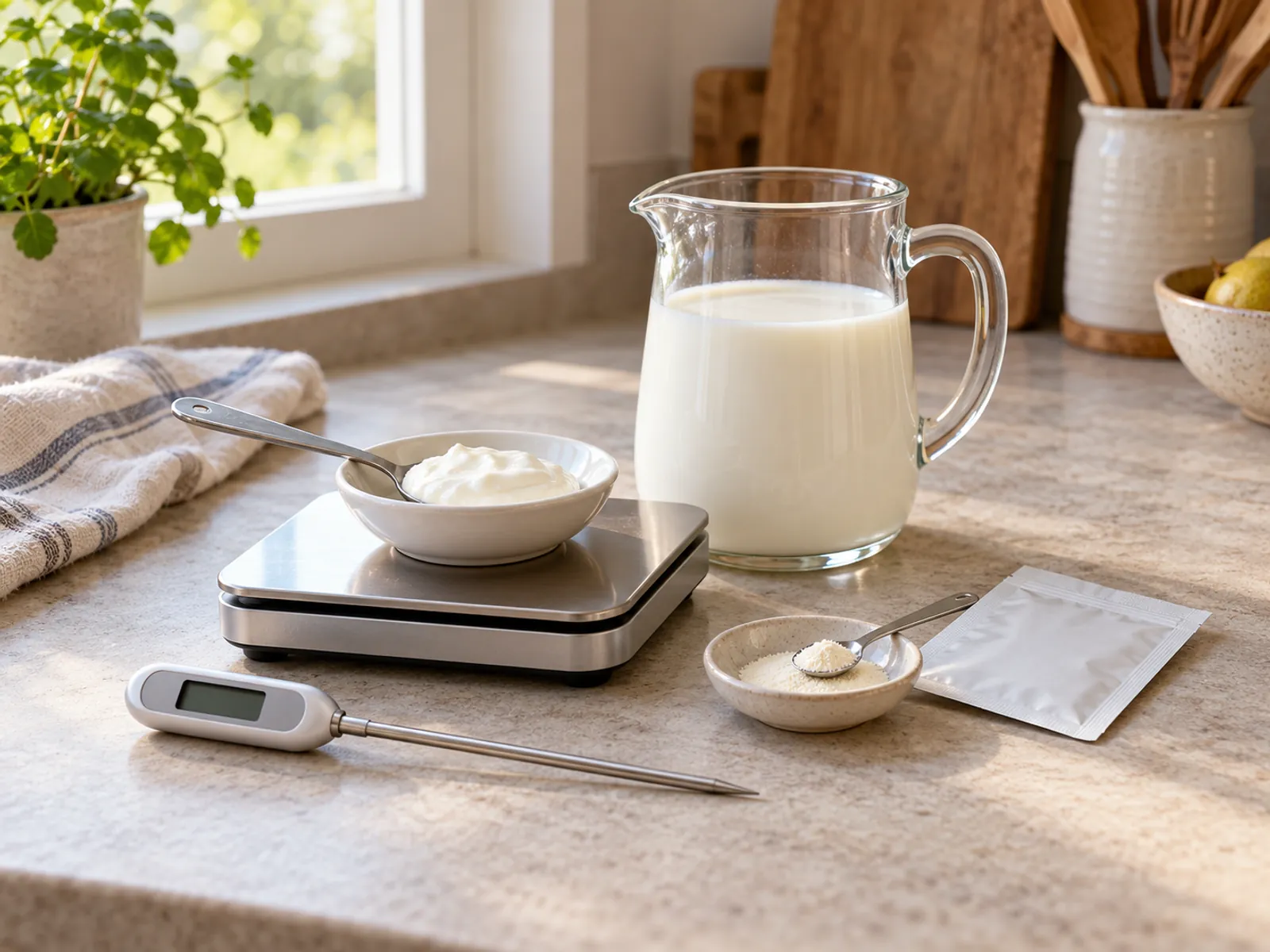
Grains
A practical fixed home dose within a wider traditional range.

Kefir · Calculator
Keep grains fixed, choose a sugar load, and use temperature and observation to guide the ferment.
Live calculator · updates as you type
Sugar and drained grains
The reference range used for the calculator check windows.
What to do next
For 1.00 L of water kefir.
Free printable
A batch card made from your numbers, to save as a PDF or receive by email:
Start checking at 24 hours. Many home recipes run for 48–72 hours, while traditional processes may take 2–4 days. Culture activity, grain dose, sugar, water chemistry, temperature, and recipe all affect timing.
Use reduced sweetness, light acidity, visible activity, and the absence of mould or objectionable odours—not pH alone.Refined sugar is low in minerals. Whether the batch needs support depends on the water.
Run a standard batch first and change only one variable if activity is weak.Water kefir naturally produces alcohol. The amount varies with culture, sugar, temperature, time, oxygen exposure, and sealed second fermentation. Home water kefir is not guaranteed to be alcohol-free.
Use bottles manufactured for carbonation; avoid decorative glass, square bottles, and ordinary jars. Added fruit, juice, ginger, or sugar can accelerate pressure. Refrigerate before opening, open slowly over a sink and away from your face, and never treat a fixed time or burping schedule as a pressure guarantee.| Level | Sugar | Grains | Timing |
|---|---|---|---|
| Light | 45 g/L | 60 g/L | Check 24 h |
| Standard | 55 g/L | 60 g/L | Check 24 h |
| Rich | 70 g/L | 60 g/L | Check 24 h |
The 60 g/L grain dose is a practical home convention within a broader traditional range, not a uniquely validated optimum.
Separate grains from sugar
The old model changed grain load to chase flavour. This model keeps the culture dose stable and changes sugar independently, making batch comparisons clearer.
A practical fixed home dose within a wider traditional range.
Light, standard, and rich grams of sugar per litre.
An observation point—not a universal finish time.
litres × dose = gramsFor each litre, use 60 g drained grains and multiply by 45, 55, or 70 g sugar according to the selected sugar level.
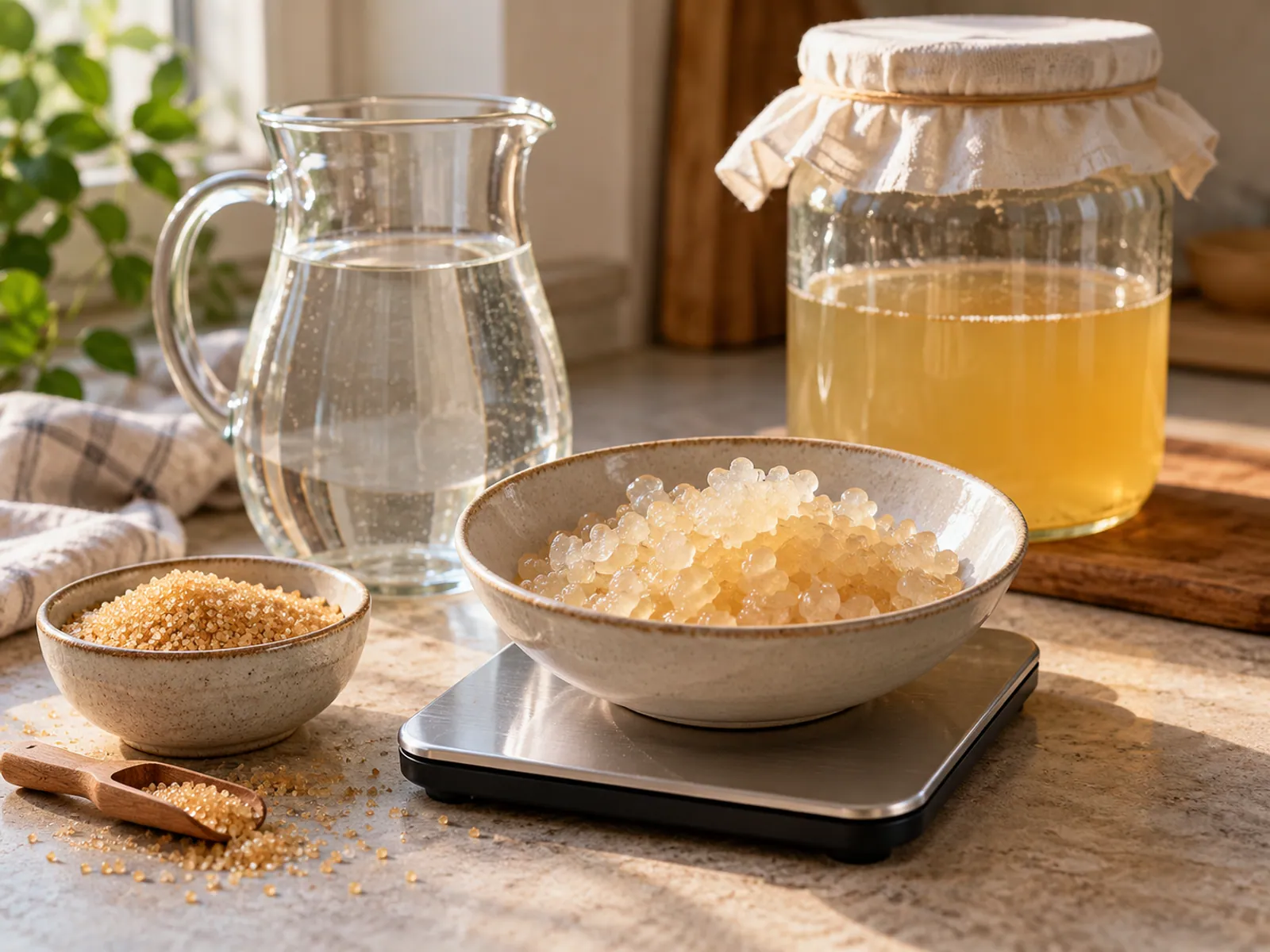
The calculator uses 60 g of drained water-kefir grains per litre. That is a practical home convention inside a broader traditional range, not a uniquely validated optimum.
Keeping the grain dose fixed makes the sugar choice easier to interpret. When grains multiply, increase the water volume or remove the surplus so the dose does not drift.
Light uses 45 g/L, standard uses 55 g/L, and rich uses 70 g/L. More starting sugar does not guarantee faster fermentation, more fizz, or a sweeter finished drink.
Treat the three levels as controlled starting points. Compare batches using the same grain dose, temperature, and timing before deciding which suits your culture.
Many home batches take 48–72 hours, and traditional descriptions can extend to two to four days. The useful endpoint combines reduced sweetness, light acidity, visible activity, a clean aroma, and your previous batch record.
Do not rely on pH alone, and do not promise that every culture will finish inside one fixed window.
Refined sugar in very soft or distilled water may leave the culture short of minerals. Whole sugar or mineral-rich water may already supply enough.
Start without piling on additions. If performance stays weak, adjust one variable modestly. Too much molasses, mineral powder, or shell can be as disruptive as too little.
Below 18°C is cold and may stall. 18–20°C is cool, 21–23°C is the standard band, 24–26°C is warm, and above 26°C is hot enough to demand closer checks.
Temperature changes speed and flavour, but it cannot provide an exact completion clock.
Homemade water kefir can contain alcohol, and no universal ABV applies to every method. Longer, warmer, or sealed fermentation can change the result.
For a second ferment, use only carbonation-rated bottles, leave appropriate headspace, chill promptly when carbonated, and open cold with care. Burping does not guarantee that a bottle cannot over-pressurise.
FAQ
Quick answers on grain doses, timing, and what changes a batch.
Keep the milk-grain protocols, water-kefir sugar levels, check windows, and batch notes in one printable quick-reference sheet.
Calculators and guides for your next step.