
Water kefir and milk kefir are cousins: both are made by dropping living kefir grains into a liquid and letting them ferment. But they use two different grains that eat two different foods, and the drinks they produce could hardly be more different — one a creamy cultured dairy, the other a light fizzy soda. Here’s how they compare and how to pick.
Water kefir vs milk kefir at a glance
| Milk kefir | Water kefir | |
|---|---|---|
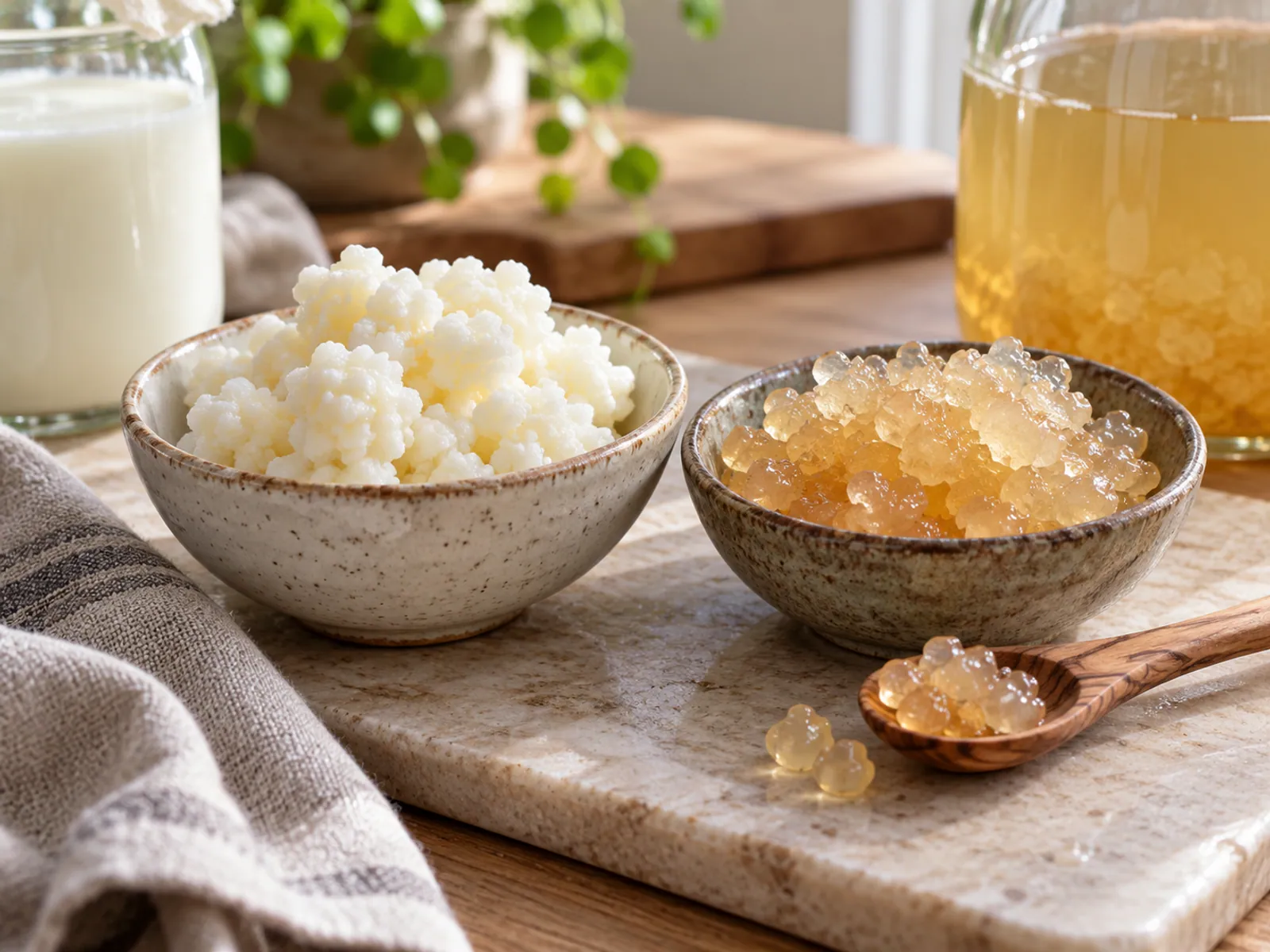
| Grains | Soft, white, cauliflower-like | Small, translucent crystals (tibicos) |
| Feeds on | Dairy milk (lactose) | Sugar water, about 45–70 g sugar per litre |
| First ferment | Check at 18–24 hours at 21–23°C | Check at 24 hours; often 48–72 hours |
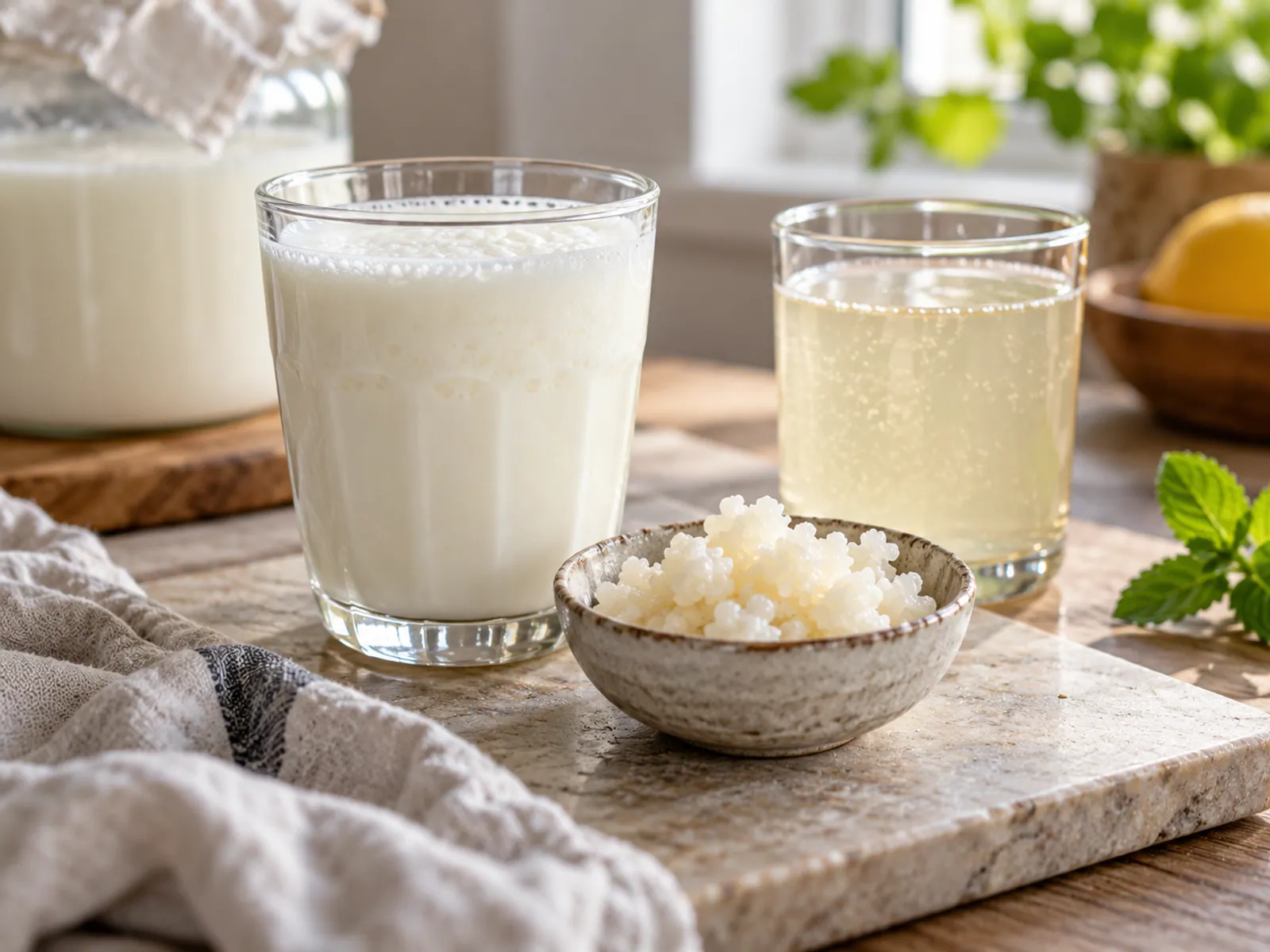
| Taste | Creamy, tangy, like drinkable yogurt | Light, fizzy, like a mild soda |
| Nutrition | Keeps the milk’s protein and calcium | Dairy-free; some sugar remains |
| Good for | Breakfast, smoothies, dressings | A fizzy soft-drink swap, fruit second ferments |
To set the grain-to-liquid amounts for either, use the kefir ratio calculator.
What each one is
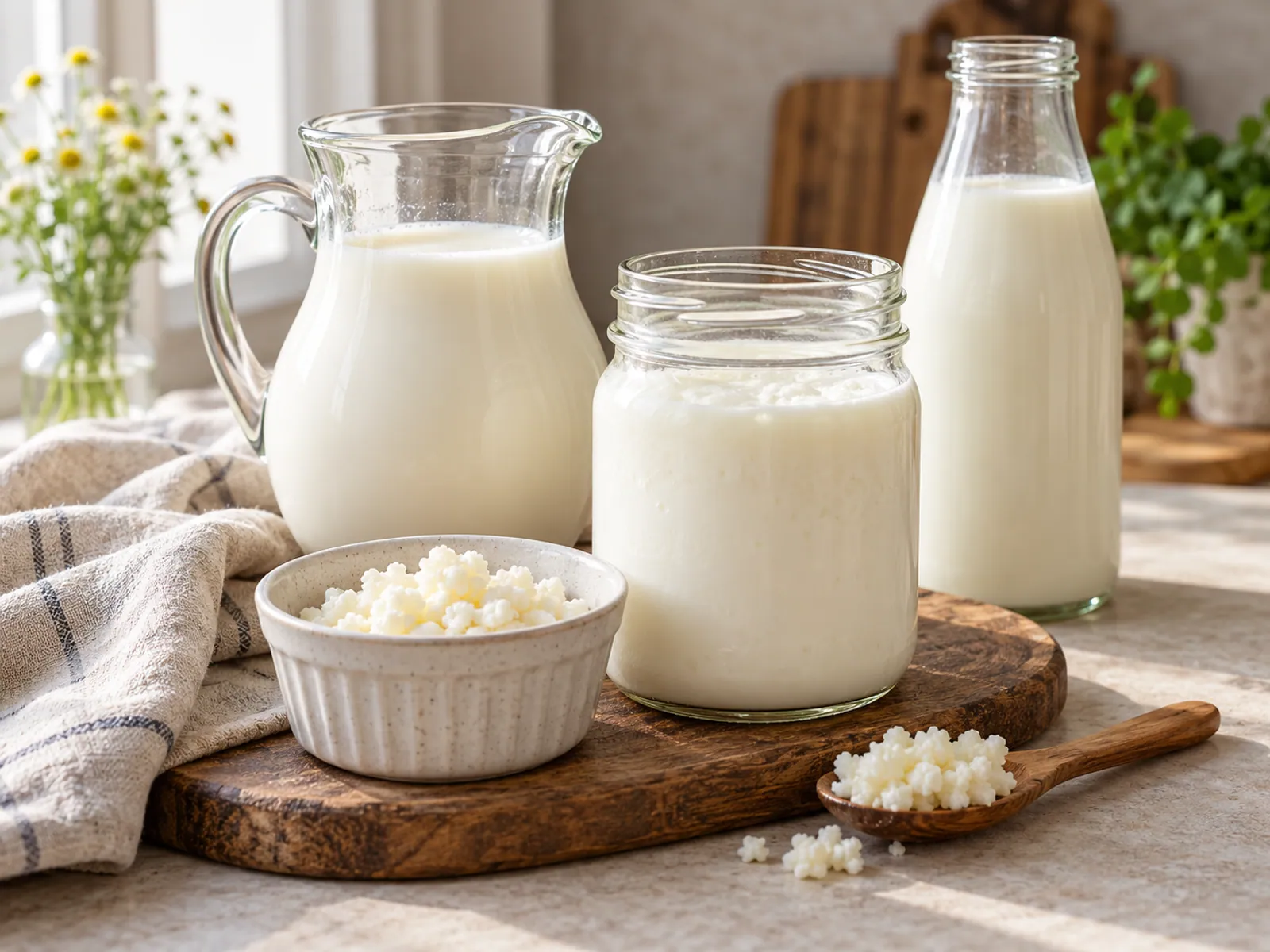
Milk kefir is made with milk kefir grains — soft, white, cauliflower-like cultures — added to dairy milk. At 21–23°C, the website’s standard 50 g/L protocol uses an 18–24-hour check window; the batch signals and pH endpoint determine when it is finished.
Water kefir is made with water kefir grains, also called tibicos — smaller, translucent crystals — added to sugar water. Start checking at 24 hours; many home batches run 48–72 hours and traditional processes may take 2–4 days. A sealed second ferment retains more carbonation but also creates pressure.
The food source: lactose vs sugar
This is the core difference and it drives everything else. Milk kefir grains use nutrients in dairy milk. Water kefir grains ferment sugar dissolved in water. Extra mineral supplementation is not automatic: water chemistry and sugar choice matter, and too much supplementation can also stress the culture.
Taste and texture
If you’ve only had one, the other will surprise you. Milk kefir is thick and creamy with a pronounced tang — think pourable yogurt with a gentle fizz. Water kefir is thin and refreshing, mildly sweet, and noticeably effervescent, especially after a flavored second fermentation with fruit or juice.
Water kefir can retain substantial carbonation after a sealed second ferment; its open first ferment may show only light activity. Use bottles manufactured for carbonation, chill before opening, and open slowly away from your face. Milk kefir may carry a faint natural sparkle.
Free Kefir Ratio Reference Card (printable PDF)
A printable PDF companion for the kefir calculators and guides.
Cultures and ingredients
Both are living mixed cultures of bacteria and yeast, but their exact composition varies by grain source and conditions. The ingredient difference is more useful for choosing between them than an unsupported promise about strain counts or health effects.
Neither is simply “better.” Choose milk kefir for a cultured dairy drink or water kefir for a lighter, potentially dairy-free ferment, and treat either as food rather than a medical treatment.
How the grains look and behave
The grains themselves are easy to tell apart. Milk kefir grains are soft, springy, and white-to-cream, like small cauliflower florets. Water kefir grains are firmer, smaller, and translucent, like pale crystals — which is why they’re also called crystals or tibicos.
Both grow and multiply as they ferment, so either culture pays you back with a growing surplus you can share, store, or scale up. For the full breakdown of what grains are made of, see what are kefir grains. If you want to source water kefir grains yourself, see our water kefir grains guide.
Which should you make?
Choose based on the drink you actually want and your diet, not on which is “best.” If you are weighing kefir against yogurt too, see kefir vs yogurt.