Milk standard
A 1:20 grain-to-milk starting point with an 18–24 hour check window.

Kefir · Calculator
Size grains, sugar, check windows, and scale-up volume without treating milk and water kefir as the same ferment.

Live calculator · updates as you type
Use drained grains
The reference range used for the calculator check windows.
What to do next
For 1.00 L of milk kefir.
Free printable
A batch card made from your numbers, to save as a PDF or receive by email:
1 L uses 50 g grains.
Grams are canonical. Grain tablespoons are only an approximate 12–15 g range.The practical baseline for an active culture at ordinary room temperature.
Temperature changes the pace; sensory signs and batch history matter more than a promised finish time.Use pasteurized milk. If measured, finish below pH 4.6; discard a batch that does not acidify within 36 hours.
Do not use taste alone to judge a failed milk ferment.| Culture | Setting | Grains | Sugar / check |
|---|---|---|---|
| Milk | Slow | 33 g/L | 24–30 h |
| Milk | Standard | 50 g/L | 18–24 h |
| Milk | Fast | 100 g/L | 12–18 h |
| Water | Light | 60 g/L | 45 g sugar/L |
| Water | Standard | 60 g/L | 55 g sugar/L |
| Water | Rich | 60 g/L | 70 g sugar/L |
Free to embed
Get the code and simple setup instructions by email.
Kefir Ratio Calculator embed code
Two cultures, two models
Kefir ratios drift as grains grow. Weigh the culture, use the correct model, and record temperature and timing so the next batch starts from evidence rather than guesswork.
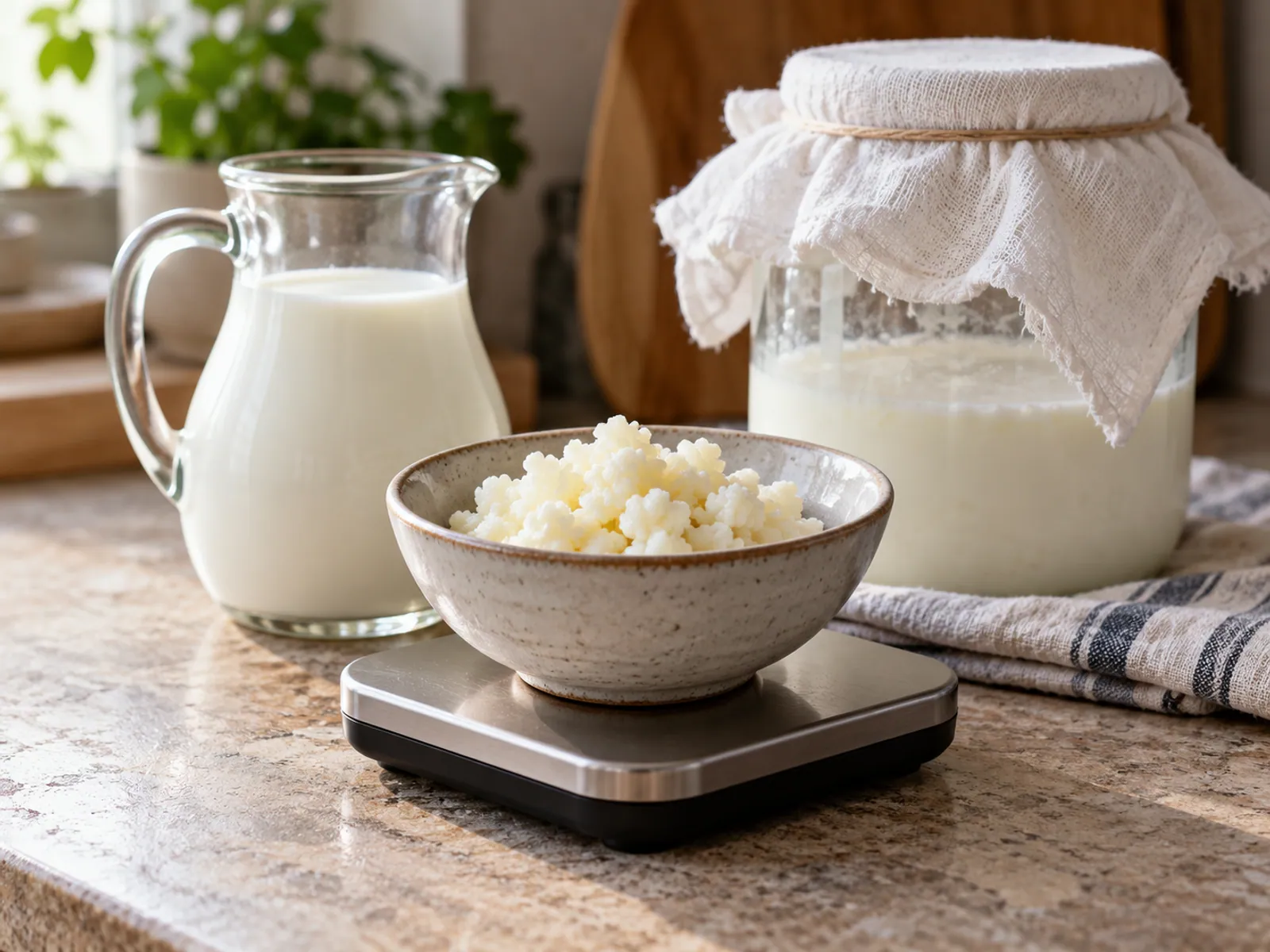
A 1:20 grain-to-milk starting point with an 18–24 hour check window.
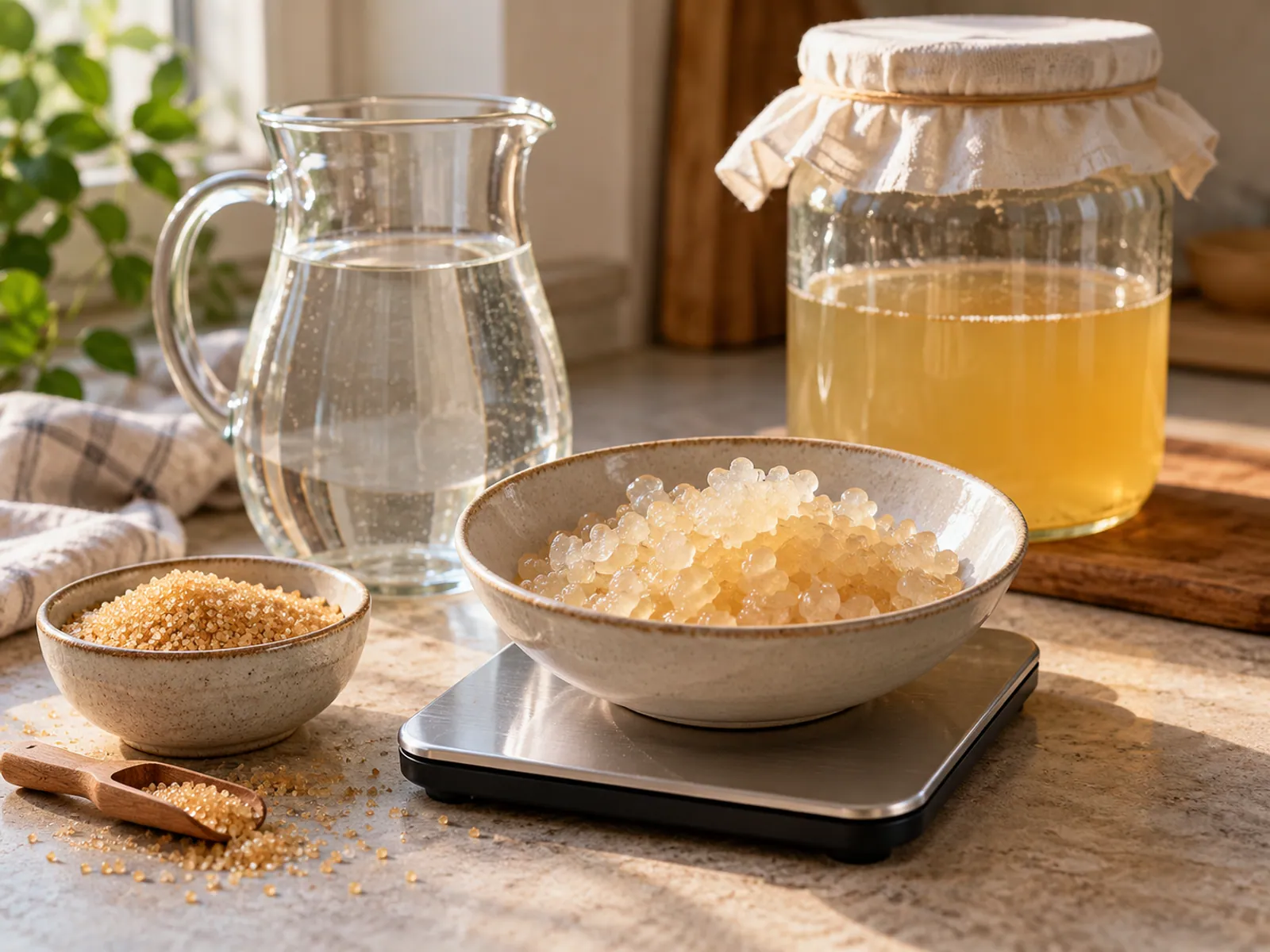
60 g grains plus 55 g sugar per litre; change sugar, not grain dose.
A tablespoon of drained grains varies, so grams remain the primary measure.
grains ÷ g/L = litresIf your grains double, increase the liquid to preserve the chosen dose. For water kefir, sugar is then calculated from the same new liquid volume.
Milk and water kefir are different cultures. They use different food sources and should not share one ratio model. Choose the culture first, then size the batch.
For milk kefir, the control is grain load and pace. For water kefir, this calculator holds grains at 60 g/L and lets you select the sugar load separately.
Slow uses about 33 g grains per litre and begins checking around 24–30 hours. Standard uses 50 g/L and checks around 18–24 hours. Fast uses 100 g/L and checks around 12–18 hours.
These are process protocols, not sourness promises. A long warm batch can taste sharper than a short cool one even when the starting ratio is identical.
At the standard 50 g/L milk-kefir dose, this is how much drained grain each amount of milk takes. A tablespoon of drained grains weighs roughly 12–15 g, so spoon figures are estimates; weigh when you can.
Keep drained grains at 60 g/L as a practical starting convention. Choose light sugar at 45 g/L, standard at 55 g/L, or rich at 70 g/L.
Begin checking around 24 hours. Many home batches take 48–72 hours, while traditional descriptions often span two to four days.
Below 18°C activity may be slow or stalled. From 18–20°C expect a cooler, slower ferment; 21–23°C is the standard band; 24–26°C is warm and faster; above 26°C needs closer observation.
The calculator deliberately avoids an exact finish clock because culture activity and ingredients can move timing substantially.
Weigh the drained grains, divide by the selected grams-per-litre dose, and the result is the litres that preserve the same starting ratio. This prevents a growing culture from silently making every new batch faster.
For example, 100 g milk-kefir grains support 2 L at the standard 50 g/L protocol. The same 100 g of water-kefir grains support about 1.67 L at 60 g/L.
Use pasteurized milk. If you measure milk kefir, a finished pH below 4.6 is the safety target; treat a batch that does not cross that threshold within 36 hours as failed.
Water kefir can contain variable alcohol. A sealed second ferment can build dangerous pressure, so use carbonation-rated bottles, chill promptly, and open carefully. A burping schedule is not a guarantee against breakage.
FAQ
Quick answers on grain doses, timing, and what changes a batch.
Keep the milk-grain protocols, water-kefir sugar levels, check windows, and batch notes in one printable quick-reference sheet.
Calculators and guides for your next step.