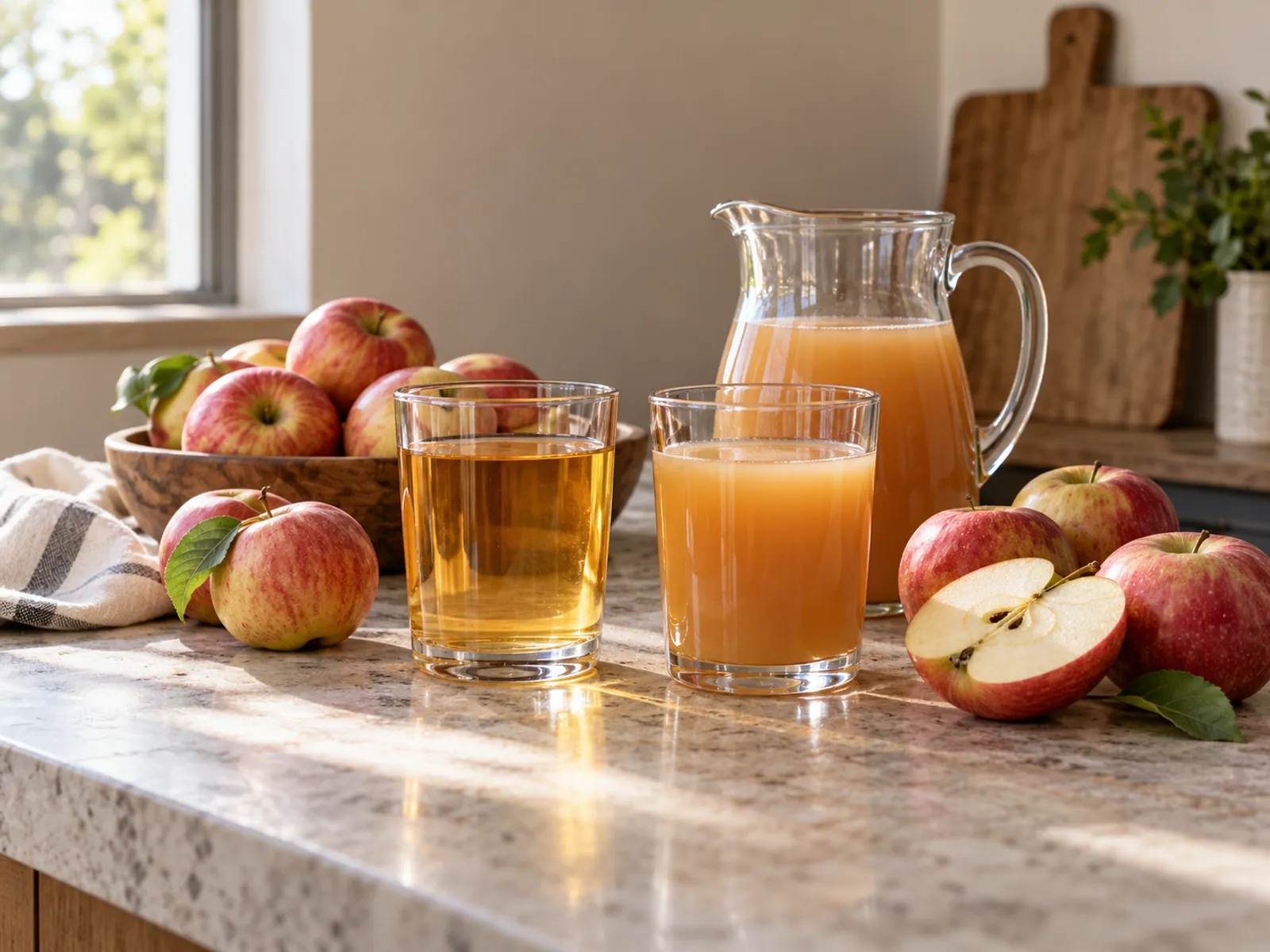
Apple juice and apple cider start from the same fruit — the difference is how far the juice is processed, and which country you’re standing in when you name it. For a home brewer, that distinction barely matters: what matters is buying 100% apple with no fermentation-stopping preservatives. Here’s how the two compare, how to swap them, and how to turn a jug of juice into hard cider or cyser.
Apple juice vs apple cider: the real difference
In the United States, the split is about processing, not alcohol. Both drinks are non-alcoholic — one is just closer to the raw pressed fruit than the other.
The line is blurry in the store — some “cider” is pasteurized and some “juice” is cloudy — so always read the ingredients rather than trusting the label word.
US vs UK: why 'cider' can mean alcoholic
The same word points at two very different drinks depending on the country, which is a common source of confusion in recipes and forums.
Can you brew hard cider from store-bought juice?
Yes — this is one of the easiest ways to start brewing, and cheap supermarket juice makes perfectly good hard cider. The single rule is that the juice must be able to ferment, which comes down to what’s in it. Buy 100% apple juice with nothing added that’s designed to kill or inhibit yeast.
Watch for
- Potassium sorbate — a preservative that stops yeast reproducing; fermentation will stall or never start
- Sodium benzoate (and benzoic acid) — an antimicrobial that inhibits yeast the same way
- Juice labelled "not from concentrate" but with added sorbate/benzoate — still will not ferment
- "Apple drink," "cocktail," or "-ade" — often watered down with added sugar and flavouring, not 100% apple
Ascorbic acid (vitamin C) and citric acid are fine — they’re antioxidants, not fermentation inhibitors. Pasteurization is also fine: heat pasteurization kills microbes at the time but leaves nothing behind to stop the yeast you pitch later. The only true dealbreakers are the sorbate and benzoate preservatives.
The full step-by-step, from juice to bottle, is in how to make hard cider.
What to look for on the label
Turn the bottle around and read the ingredients before you buy. A brew-ready juice is short and boring on the label.
Cloudy, preservative-free juice or fresh cider gives the most apple character. Clear filtered juice ferments just as reliably and is usually the cheapest per litre. Whichever you pick, once it has fermented you can cold crash the finished cider to drop the yeast and haze for a brighter glass.
Substituting one for the other
Whether you can swap juice for cider depends on what you’re making. The two are close, but not identical.
What is cyser?
Cyser is mead made by fermenting honey with apple juice or cider instead of water. The honey raises the starting gravity, so it finishes around 9–14% ABV rather than the 5–7% of plain hard cider. The full 1-gallon recipe, honey amounts and yeast choice are on the cyser recipe page.
Common mistakes to avoid
Most failed first batches come down to a handful of avoidable errors — nearly all about ingredients or sanitation rather than skill.
Watch for
- Buying juice with sorbate or benzoate — it simply will not ferment, and there is no rescue
- Skipping sanitation — an off, vinegary batch is almost always contamination
- Boiling the honey — it strips out the aroma that makes cyser worth making
- Bottling before fermentation finishes — trapped CO2 in sealed bottles can build up and cause bottle bombs
- Drinking it too young — both hard cider and cyser taste raw for the first few weeks and improve with a month or two of aging