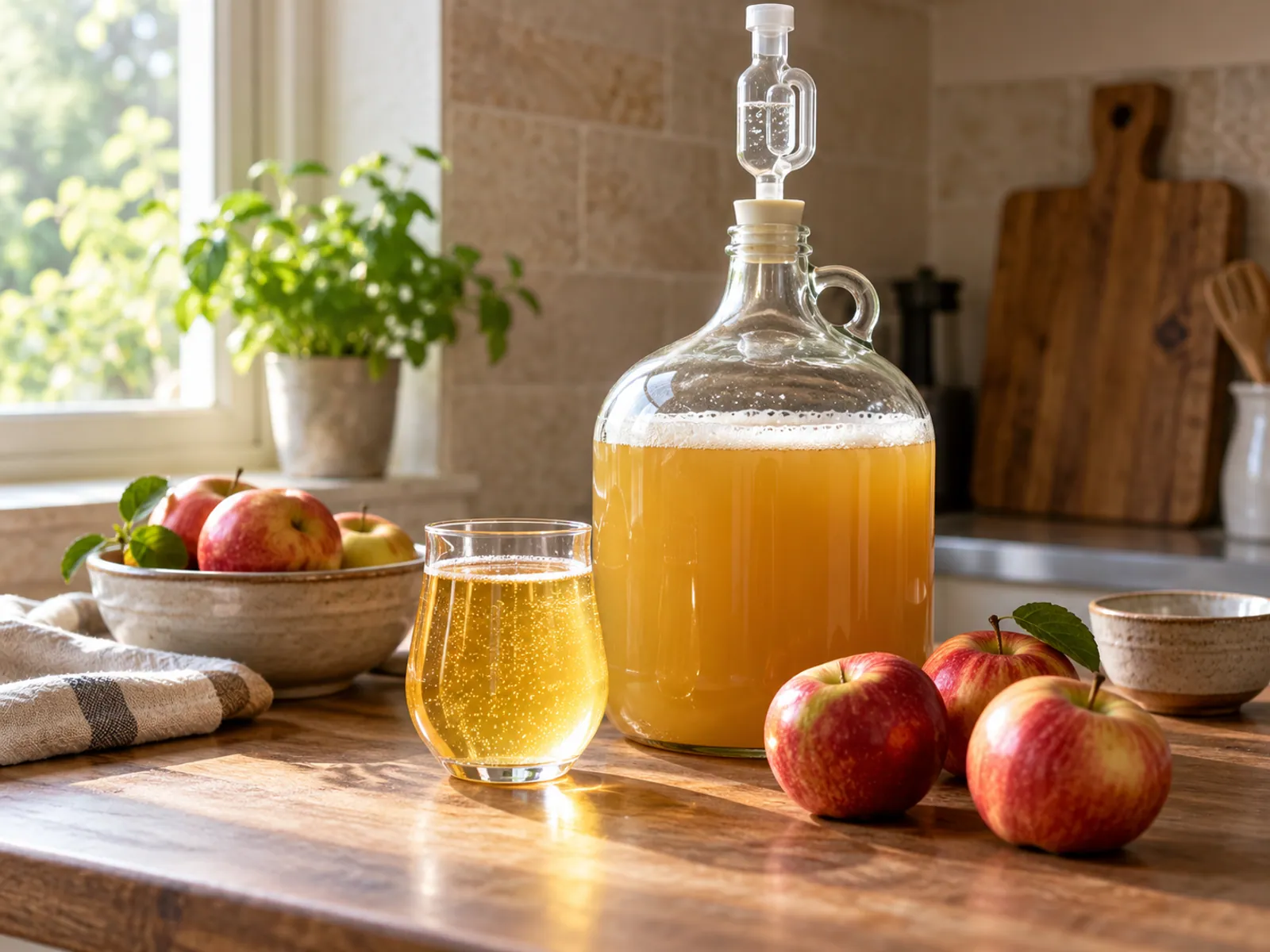
Hard cider is the simplest alcoholic drink to make at home. The apple juice already has all the sugar, acid and flavour it needs; you add yeast, keep air out, and wait. With good juice and a clean, cool fermentation, a gallon of supermarket juice becomes a crisp, dry cider in about a month. If you are unsure which “cider” is which, see apple juice vs apple cider.
What you need
How to make hard cider
- 1Sanitise Sanitise everything that touches the juice: jug, funnel, airlock, hydrometer.
- 2Prepare the juice Pour the juice into the jug, leaving 5–8 cm of headspace. For fresh unpasteurized juice, add a crushed Campden tablet and wait 24 hours before adding yeast, or skip it to ferment on the wild yeast. Stir in yeast nutrient and pectic enzyme if using.
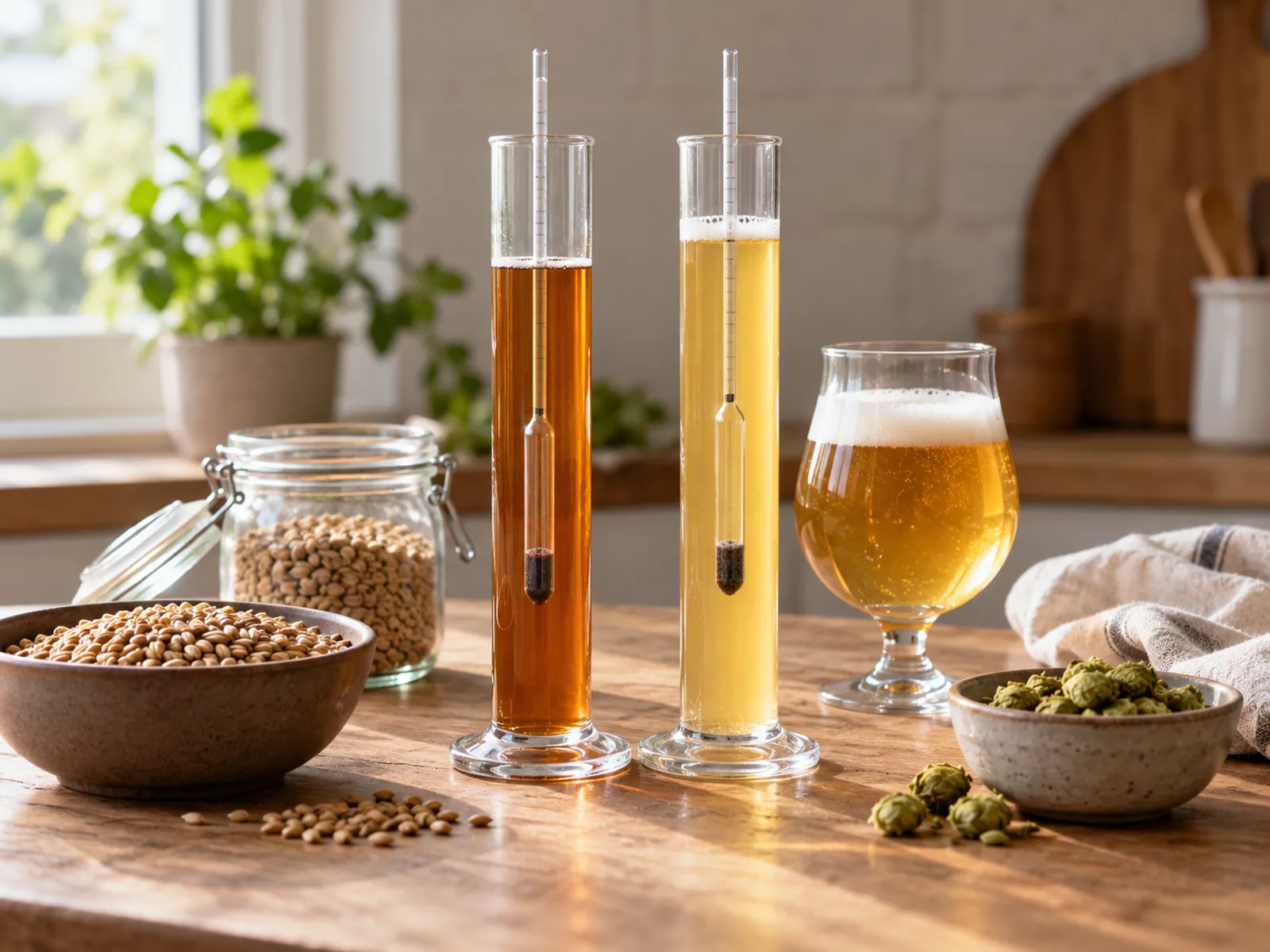
- 3Take a gravity reading Float the hydrometer in a sample and note the original gravity. Most apple juice reads 1.045–1.055.
- 4Pitch the yeast Sprinkle the yeast on top, or rehydrate it first in a little warm water. Fit the airlock.
- 5Ferment Keep at 15–20°C, out of the light. Bubbling starts within a day or two and slows over 1–3 weeks. Cooler temperatures keep more apple aroma.
- 6Check it is finished When the gravity is at or just below 1.000 and stays the same for three days, fermentation is done.
- 7Rack and clear Siphon the cider off the yeast sediment into a clean jug, top up to limit air space, refit the airlock, and leave 2–4 weeks to clear.
- 8Bottle For sparkling cider, add priming sugar (about 6–7 g of sugar per litre for a medium fizz), bottle, and leave at room temperature for 2 weeks before chilling. For still cider, bottle without sugar.
Related calculator
ABV Calculator (Beer, Wine & Cider)
Estimate alcohol by volume from original and final gravity for beer, wine, and cider. Works with specific gravity or Brix, with attenuation and calories.
Choosing a yeast
All the options side by side are in the yeast strain chart.
Carbonation and sweetness
Watch for
- Never add ordinary sugar or juice to unstabilised cider and seal it. The yeast restarts and bottles can burst.
- Rotten-egg smell during fermentation is usually temporary. Use yeast nutrient next time.
- A vinegar smell means air and acetic acid bacteria got in. Keep jugs topped up and airlocks filled.
A cider that has turned to vinegar is not wasted: carry on and make apple cider vinegar. For a stronger apple drink made with honey, see the cyser recipe.