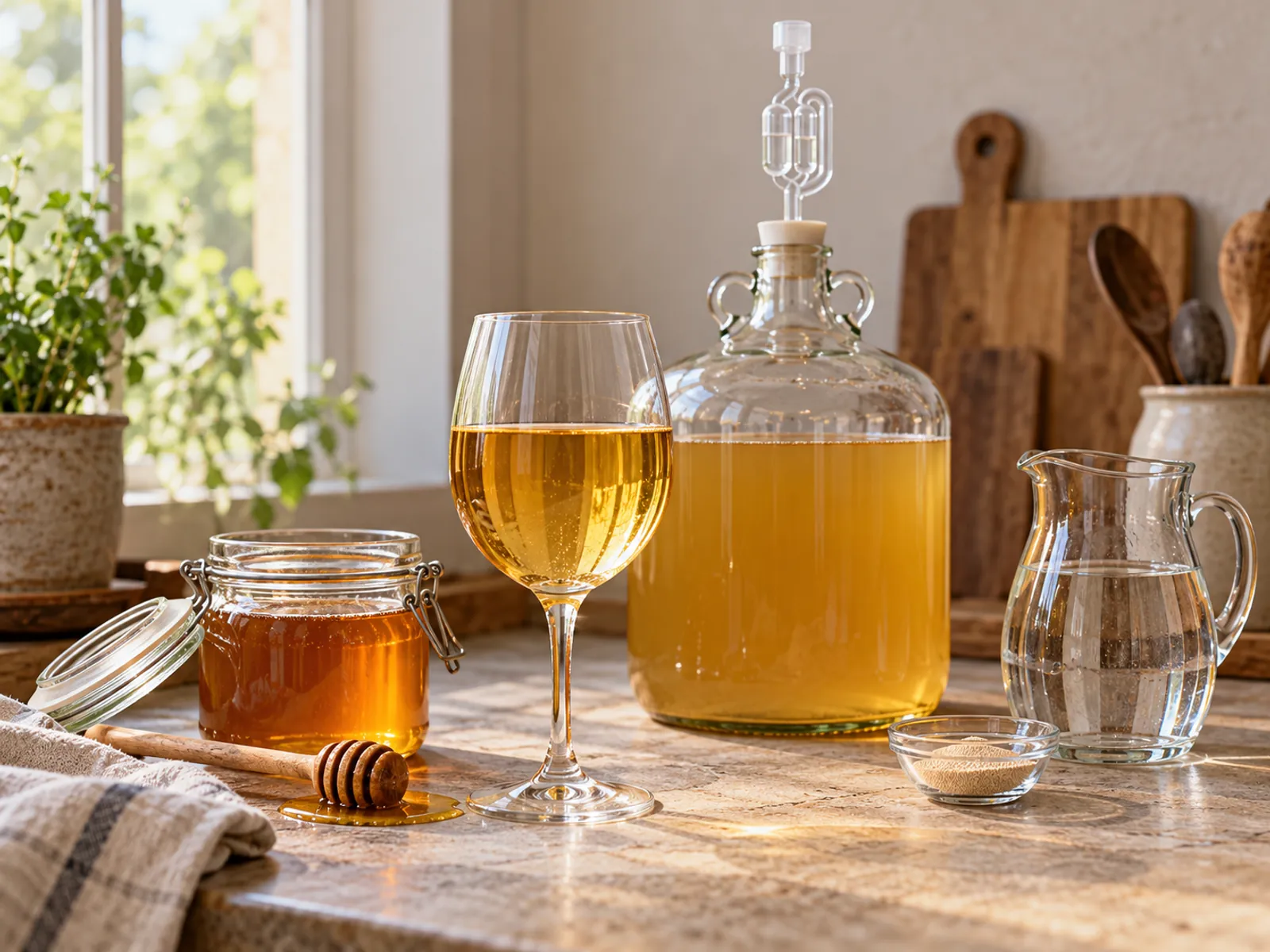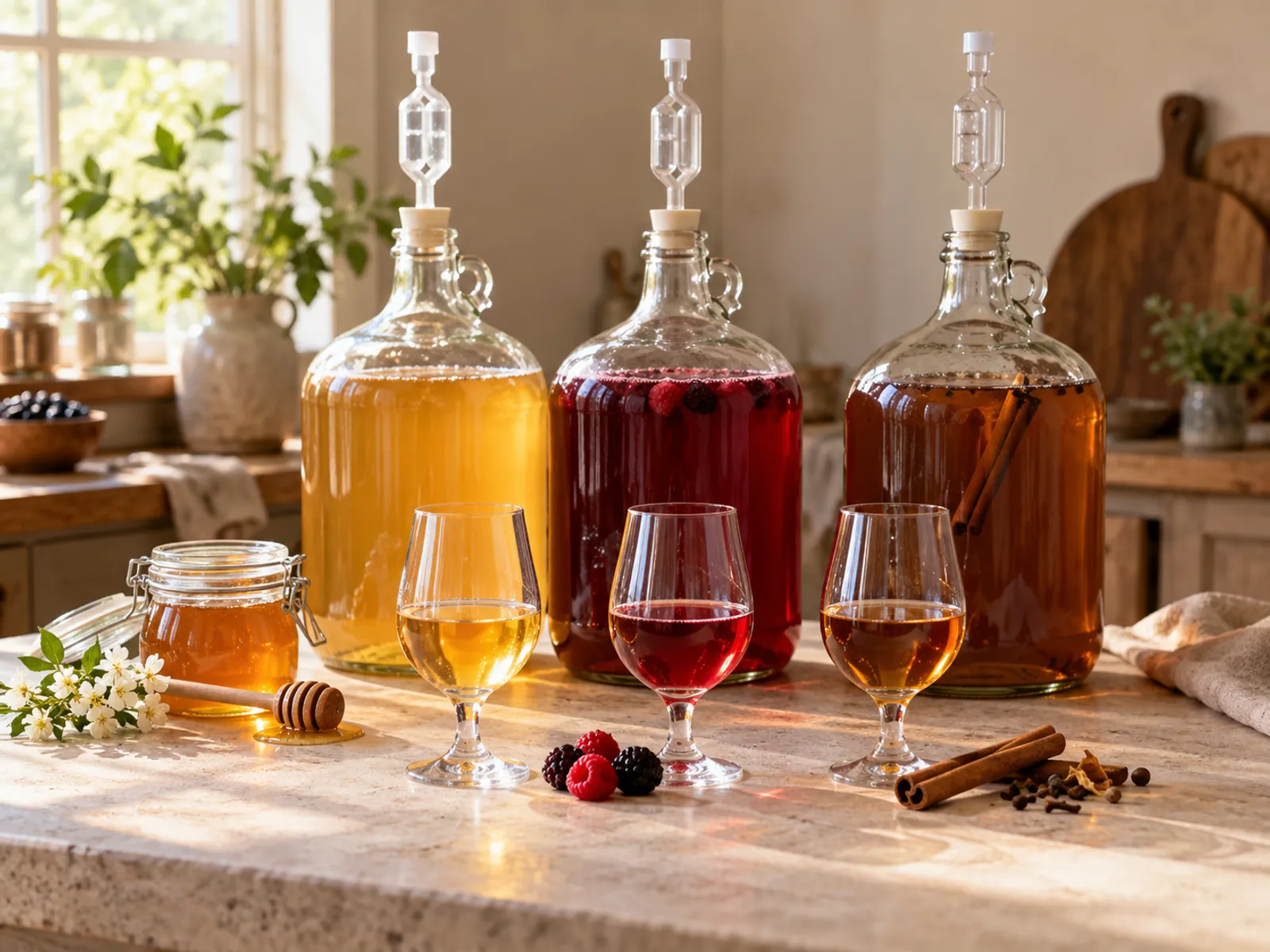
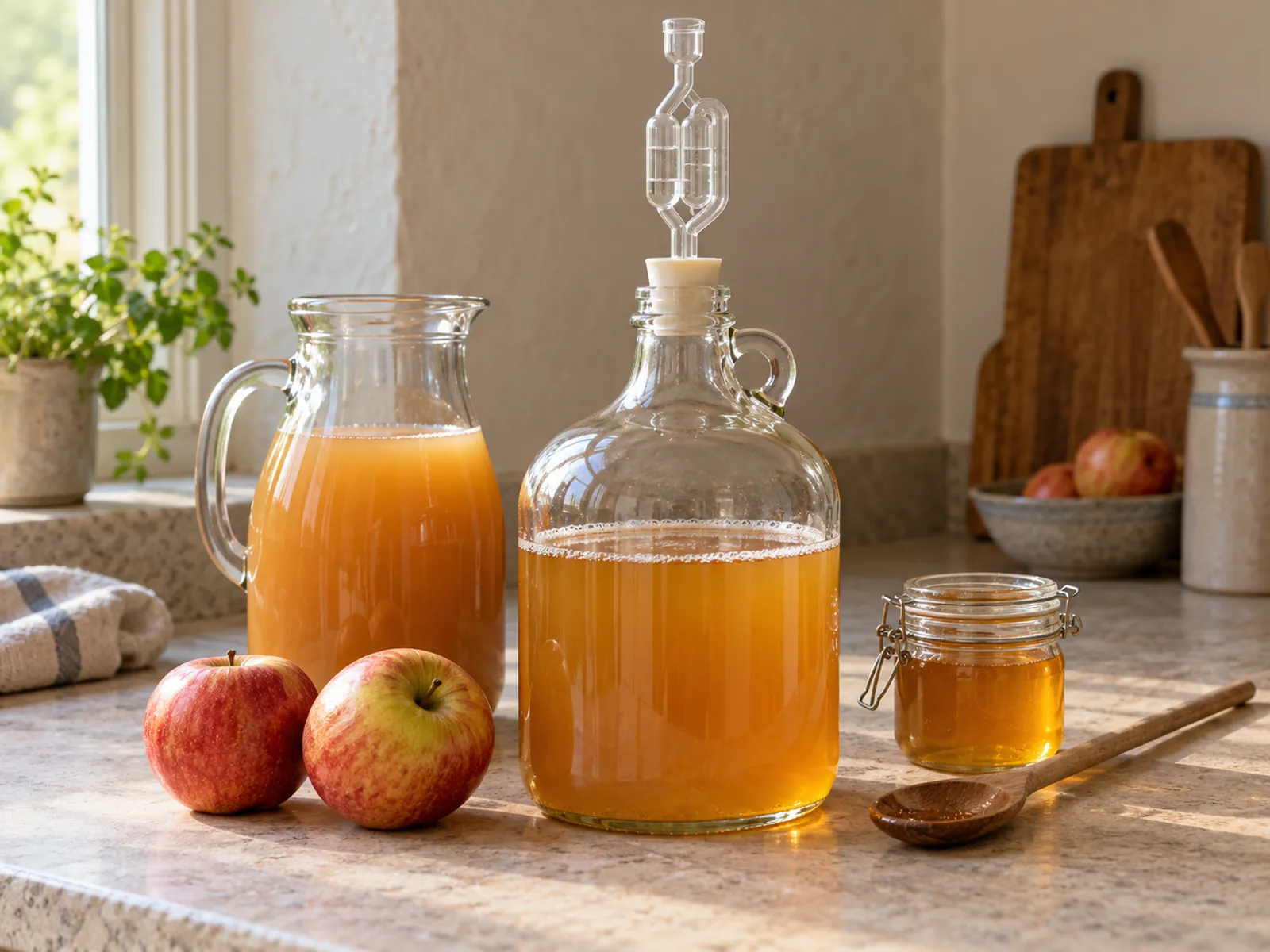
Cyser is mead made with apple juice in place of water. Because the juice already carries sugar, a modest amount of honey pushes it well past hard-cider strength, and the result sits between cider and mead: unmistakably apple, with the fuller body and floral aroma that honey brings. It is one of the most forgiving meads to make and one of the most crowd-pleasing to drink.
Cyser at a glance
Apple juice on its own usually starts around 1.045–1.050. Every pound of honey per gallon adds about 35 gravity points, so the honey is what sets the strength:
| Honey per US gallon of juice | Approx. starting gravity | Approx. ABV (dry) | Style |
|---|---|---|---|
| 1 lb (450 g) | ~1.075 | ~9–10% | Light, cider-like |
| 2 lb (900 g) | ~1.090–1.100 | ~12–13% | Classic cyser |
| 3 lb (1.35 kg) | ~1.115–1.125 | ~14% and sweet | Strong, dessert-style |
Always take a hydrometer reading after mixing, because juice sugar varies by apple and brand. The mead ABV calculator turns your starting and final gravity into the exact strength.
Ingredients for a 1-gallon cyser
Watch for
- Check the label Potassium sorbate or sodium benzoate in the juice will stop the yeast from fermenting.
- Leave some headspace in the fermenter. Cyser can foam in the first few days.
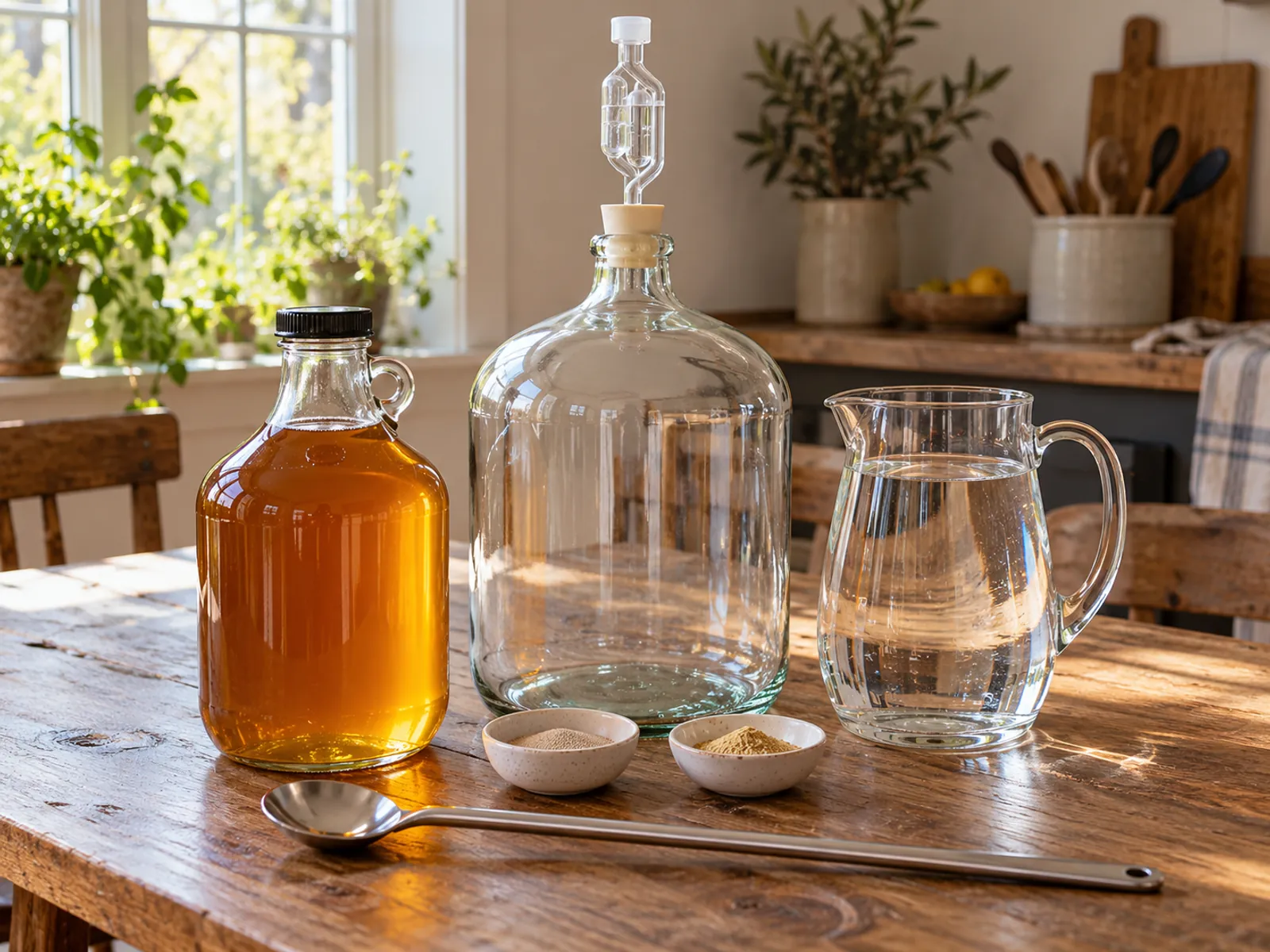
Related calculator
Mead Recipe Calculator
Enter batch size, target ABV, sweetness, and yeast to get a full mead recipe — honey, water, OG/FG, nutrients, and yeast amounts.
How to make cyser, step by step
- 1Sanitize Clean and sanitize the fermenter, airlock, spoon and anything else the juice will touch.
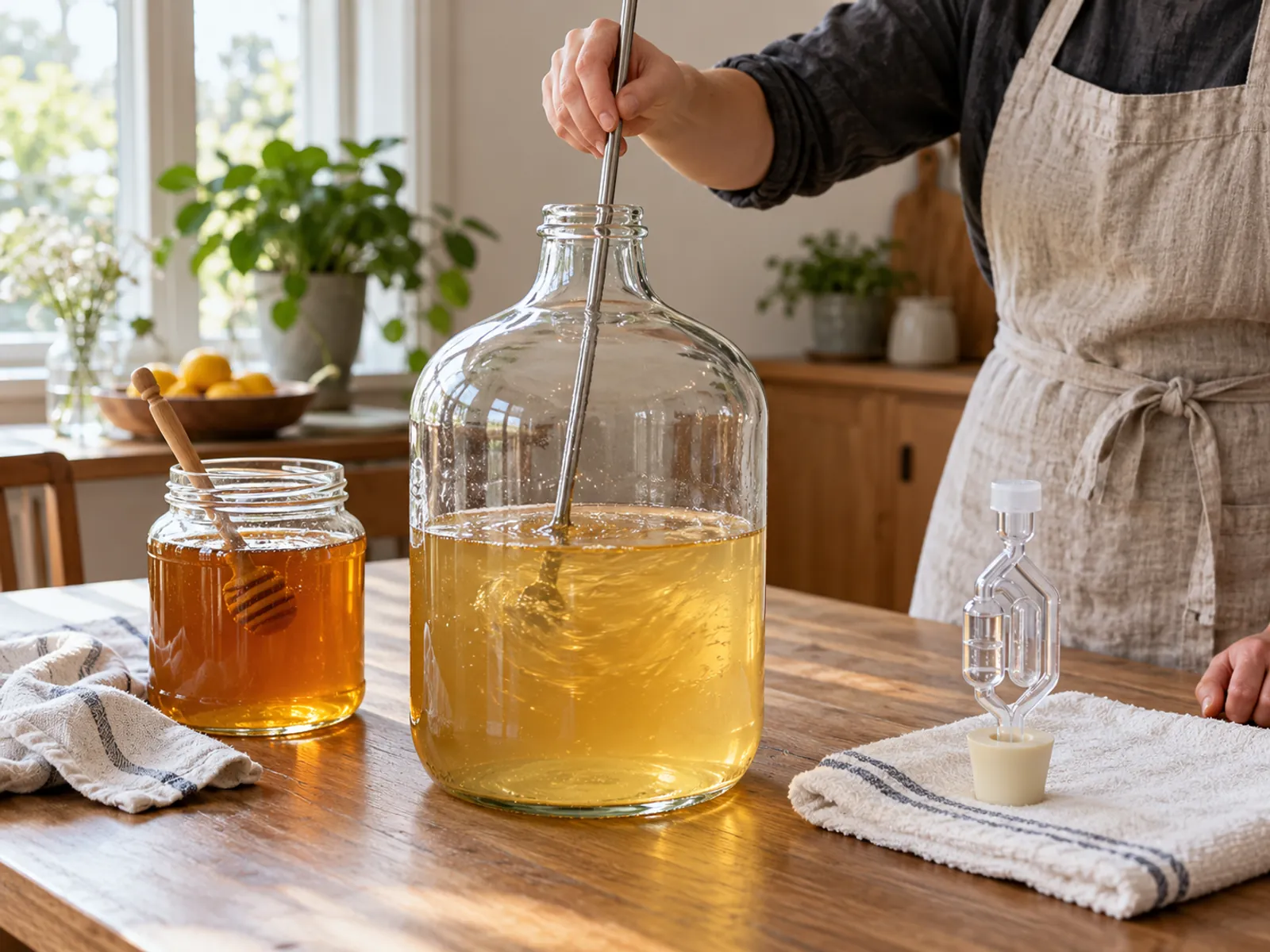
- 2Dissolve the honey Gently warm about 1 litre of the juice and stir in the honey until it dissolves. Do not boil it; heat drives off the aroma. Let it cool to room temperature.
- 3Combine and measure Pour the honey mix and the rest of the juice into the fermenter, leaving headspace. Take a hydrometer reading and write it down; you need it to work out ABV later.
- 4Pitch yeast and nutrient Rehydrate the yeast as the packet directs and stir it in with the first nutrient addition. Fit the airlock.
- 5Feed and ferment Add the remaining nutrient in stages over the first few days, swirling to release CO₂. Keep the cyser at 18–22°C (64–72°F) out of direct light. Bubbling slows over 3–4 weeks.
- 6Rack and age When the gravity holds steady for several days (often 0.995–1.005), siphon it off the sediment into a clean vessel. Age at least a month; three to six months is better.
Free Mead Brewing Playbook (printable PDF)
A printable PDF companion for the mead calculators and guides.
Choosing a yeast for cyser
The Lalvin 71B and EC-1118 pages cover each strain’s temperature range and tolerance, and the mead yeast guide compares the common choices side by side.
Sweetening, flavouring and bottling
Cyser is excellent semi-sweet, which means stabilizing before you add more honey; otherwise the yeast restarts in the bottle. Follow how to stabilize mead and then how to backsweeten mead.
The mead priming sugar calculator gives the priming amount for your batch size and carbonation level.
For more fruit meads, see fruit mead recipes. If you want apple without the honey, how to make hard cider covers the plain version, and apple juice vs apple cider explains which juices ferment.