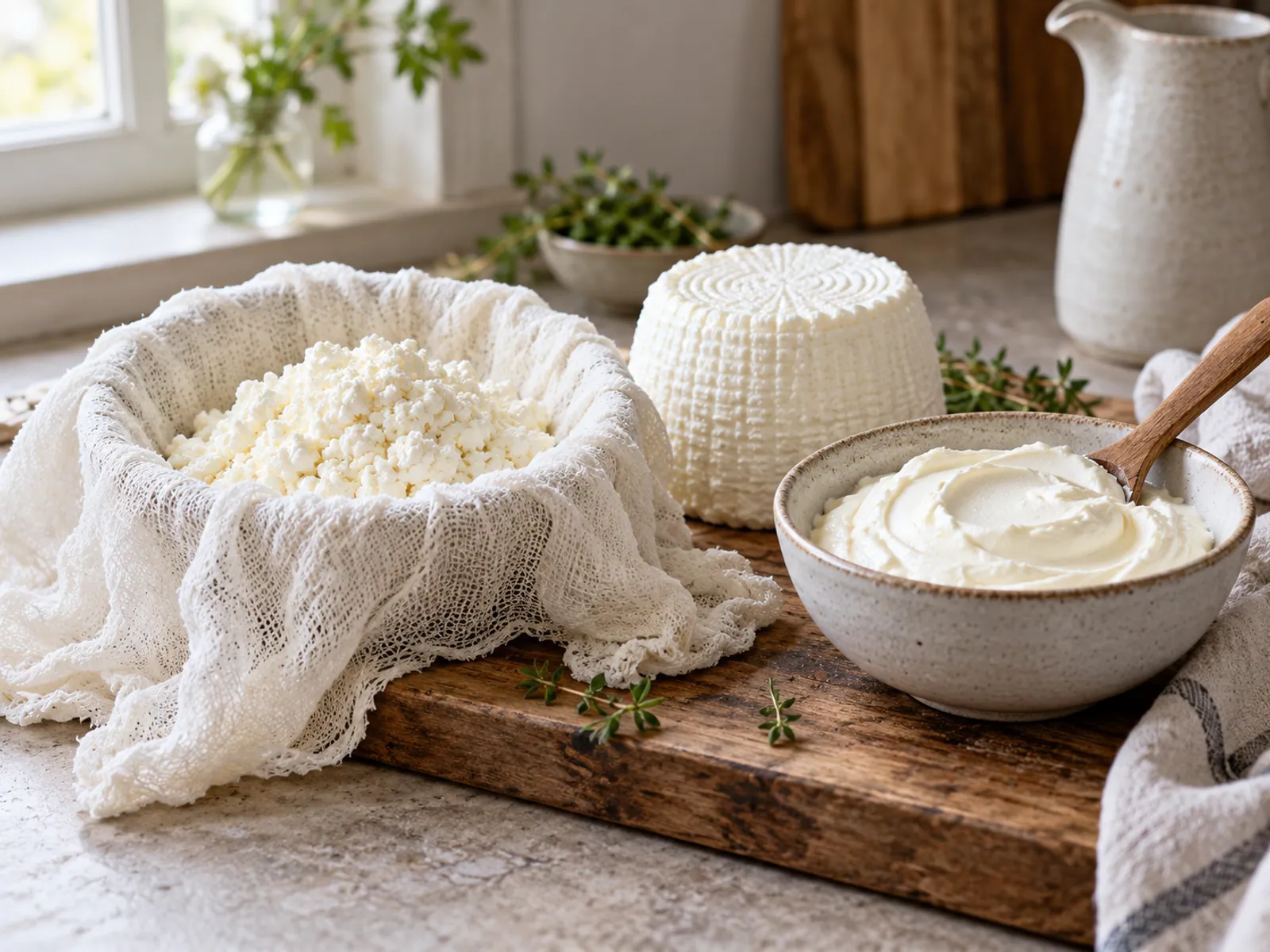
Goat milk makes some of the most rewarding feta you can produce at home: bright white, clean, and sharply tangy, with a soft crumble that shatters into salads. It behaves a little differently from sheep or cow milk — the curd is more delicate and the flavor leans mineral and citrusy — so a few adjustments in setting, draining, and salting make all the difference. This guide walks the full batch, from warming the milk to sealing blocks in brine.
What makes goat-milk feta distinct
The most obvious difference is color. Goat milk contains no beta-carotene, so the cheese comes out snowy white rather than the pale ivory of sheep’s milk. On the palate it’s tangier and more mineral-forward, with a clean lactic sharpness that develops further in brine.
Texture is the trade-off. Goat-milk curd is softer and knits less aggressively than sheep’s-milk curd, which is why traditional feta is prized for its firm, sliceable body. Handle goat curd gently, drain it a little longer, and salt it properly and you’ll get a cheese that holds its shape but still crumbles cleanly.
Milk, cultures, and gear
Start with 4 liters (about 1 gallon) of good goat milk, whole and not ultra-pasteurized. Raw or gently pasteurized milk gives the best set. You’ll also need mesophilic starter culture, liquid rennet, optional lipase powder, calcium chloride if your milk is store-bought and pasteurized, and non-iodized salt for salting and brine.
Feta molds are the one piece of dedicated gear worth buying — perforated square or round molds sized for a home batch. More on why they matter below.
The full recipe, step by step
- 1Warm the milk Gently heat 4 L (1 gal) goat milk to 30–32°C (86–90°F), stirring so it warms evenly. Don't rush it over high heat — scorched goat milk carries an off flavor.
- 2Add culture (and optional lipase) Sprinkle mesophilic starter over the surface, let it rehydrate 2–3 minutes, then stir in. For a sharper, more classic tang, add a pinch of kid/lamb lipase (about 1/8 tsp) now. Cover and ripen 30–60 minutes at temperature.
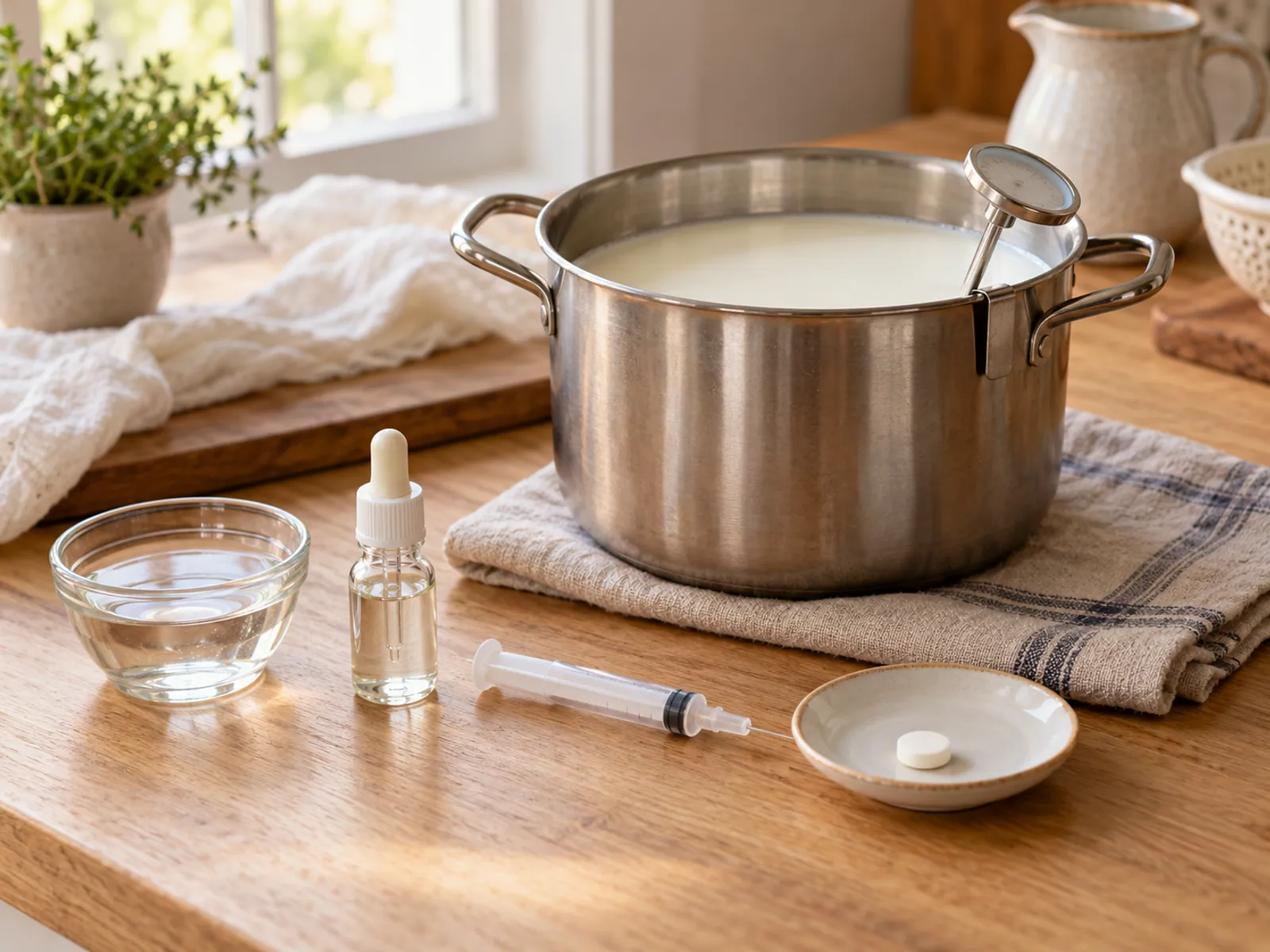
- 3Add rennet If using pasteurized milk, stir in calcium chloride (diluted in a little water) first. Dilute the rennet in ~50 ml (¼ cup) cool non-chlorinated water, stir gently into the milk for 30 seconds, then stop all motion so the curd can set undisturbed.
- 4Set and check for a clean break Cover and hold ~30–32°C for about 1 hour. The curd is ready when a knife slipped in at an angle lifts a clean, firm break with clear whey welling up.
- 5Cut the curd Cut into roughly 2 cm (¾ in) cubes. Let them rest 5 minutes, then stir very gently for 10–20 minutes to firm them slightly. Goat curd is fragile — a light hand keeps it from shattering into fines.
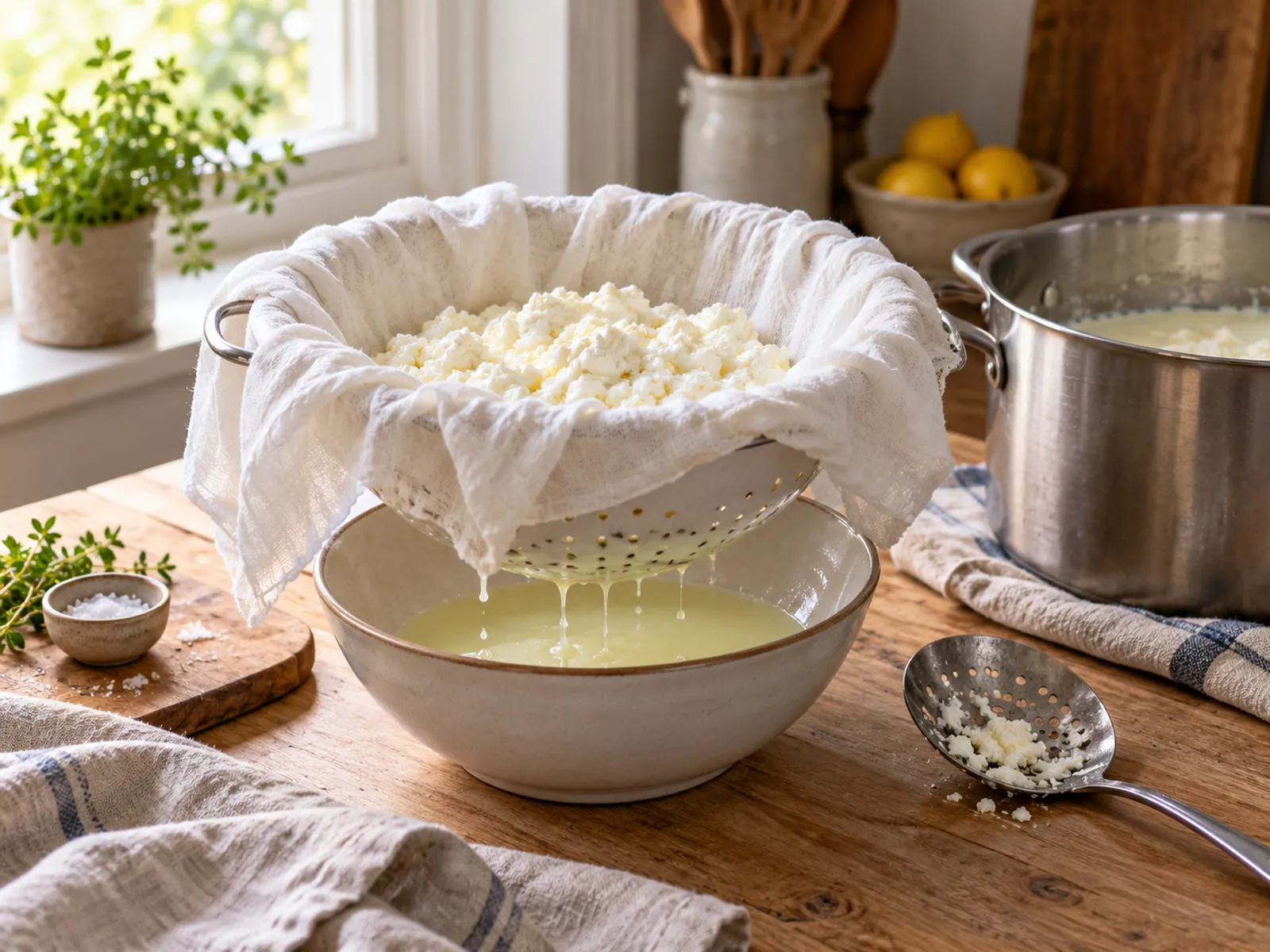
- 6Ladle into feta molds Rest the curds a few minutes so they settle, then ladle them into perforated feta molds set over a draining tray. Fill generously; they'll shrink by half as whey escapes.
- 7Drain and flip Drain at room temperature for 12–24 hours, flipping the blocks every few hours so both faces knit and the cheese firms evenly. When it holds together as a solid, sliceable block, it's ready to salt.
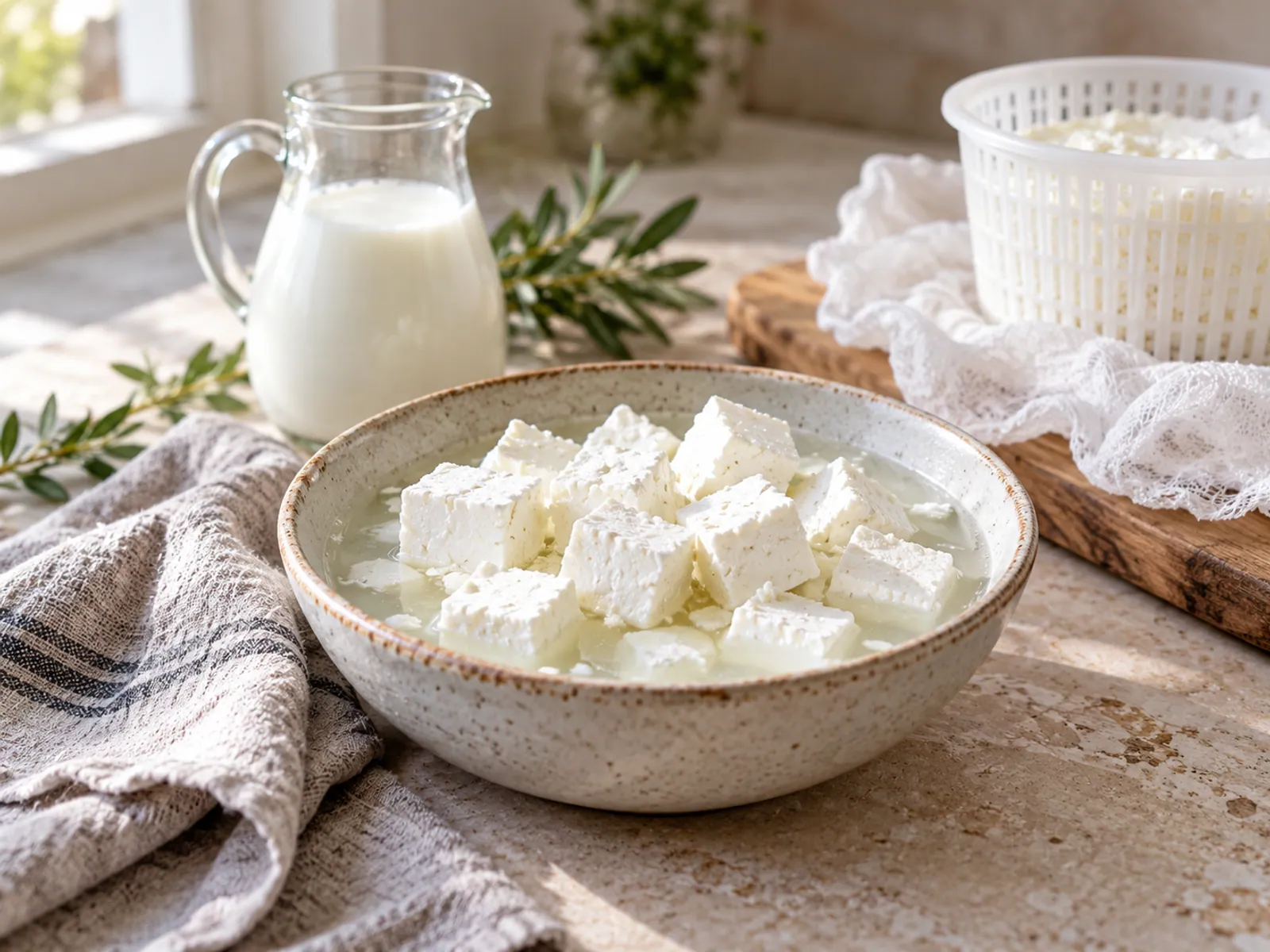
- 8Salt, then brine Dry-salt all surfaces of the blocks and rest a few hours to a day, then cut into cubes and submerge in an 8–10% salt brine for storage.
Related calculator
Rennet Calculator
How much rennet do you need for your batch? Calculate liquid, tablet, or powdered rennet for any milk volume.
Feta molds, explained
Feta molds are simply perforated containers — square or round — that let whey drain from every surface while lightly shaping the curd. That even, all-around drainage is what turns loose curds into a cohesive block you can slice into tidy squares.
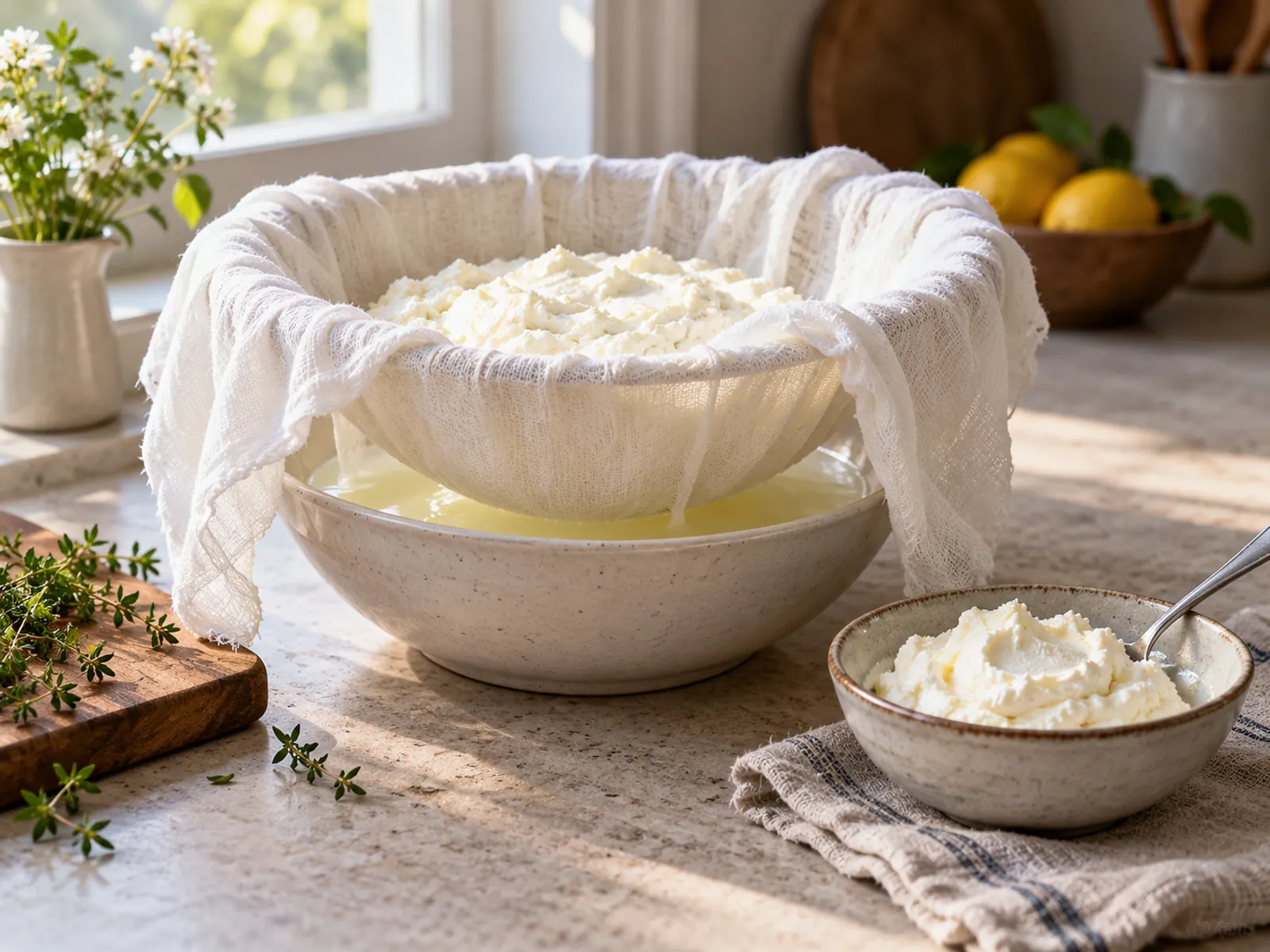
A colander works in a pinch, but it drains mostly from the bottom, so the top stays wet and the shape is irregular. For feta specifically, the molds earn their keep.
Free Cheese Rennet Reference Card (printable PDF)
A printable PDF companion for the cheese calculators and guides.
The brine: mix, store, keep
Brine does two jobs: it seasons the cheese all the way through and it preserves it. Aim for an 8–10% salt solution — around 80–100 g of non-iodized salt per liter of water (about 1/3 to 1/2 cup per quart). Cool it before adding the cheese.
A few refinements keep the surface firm rather than slimy: add a splash of the cheese’s own whey and a small amount of calcium chloride to the brine so it doesn’t leach calcium from the rind. Always keep the cheese fully submerged — a small plate or a bag of extra brine as a weight works well. Cheese left proud of the brine dries out and spoils. As it ages the feta sharpens and firms; if a piece becomes too salty, soak it in fresh water or milk for a few hours before serving. For brine strengths, calcium and vinegar amounts, and a lighter holding brine, see feta brine.
Goat vs. sheep vs. cow feta
Troubleshooting
Watch for
- Too soft or mushy Curd was cut too large, drained too briefly, or dropped into brine unsalted. Cut nearer 2 cm, drain and flip longer, and always dry-salt before brining.
- Too salty Brine was too strong or the cheese soaked too long. Move to an 8–10% brine, and freshen individual pieces in water or milk for a few hours before eating.
- Too dry or crumbly Over-drained, over-salted, or aged too long out of enough brine. Shorten the drain, ease the salt, and keep blocks fully submerged so they stay moist.
- Slippery or slimy rind Usually a saturated brine leaching calcium. Cut the salt to 8–10%, add a little calcium chloride and some whey to the brine, and keep it cold.