Soft cheese making is the gentlest introduction to cheesemaking there is. You warm milk, stir in a mesophilic culture and a few drops of rennet, leave it overnight, then drain the curd in cheesecloth until it reaches the softness you want. No press, no cave, no months of waiting. This guide covers the beginner soft cheeses, fromage blanc, quark, chevre, and labneh, the milk and culture to use, the acidify-and-drain method behind all of them, how much salt to add, and how to store the result.
What counts as a soft cheese?
Soft cheese is defined by its texture: high in moisture, spoonable or spreadable, and never pressed into a hard block. That is a different lens from fresh cheese, which is defined by age, meaning eaten young rather than ripened. The two overlap almost completely at the beginner end, because the easy soft cheeses are also unaged, but they are not the same word for the same thing.
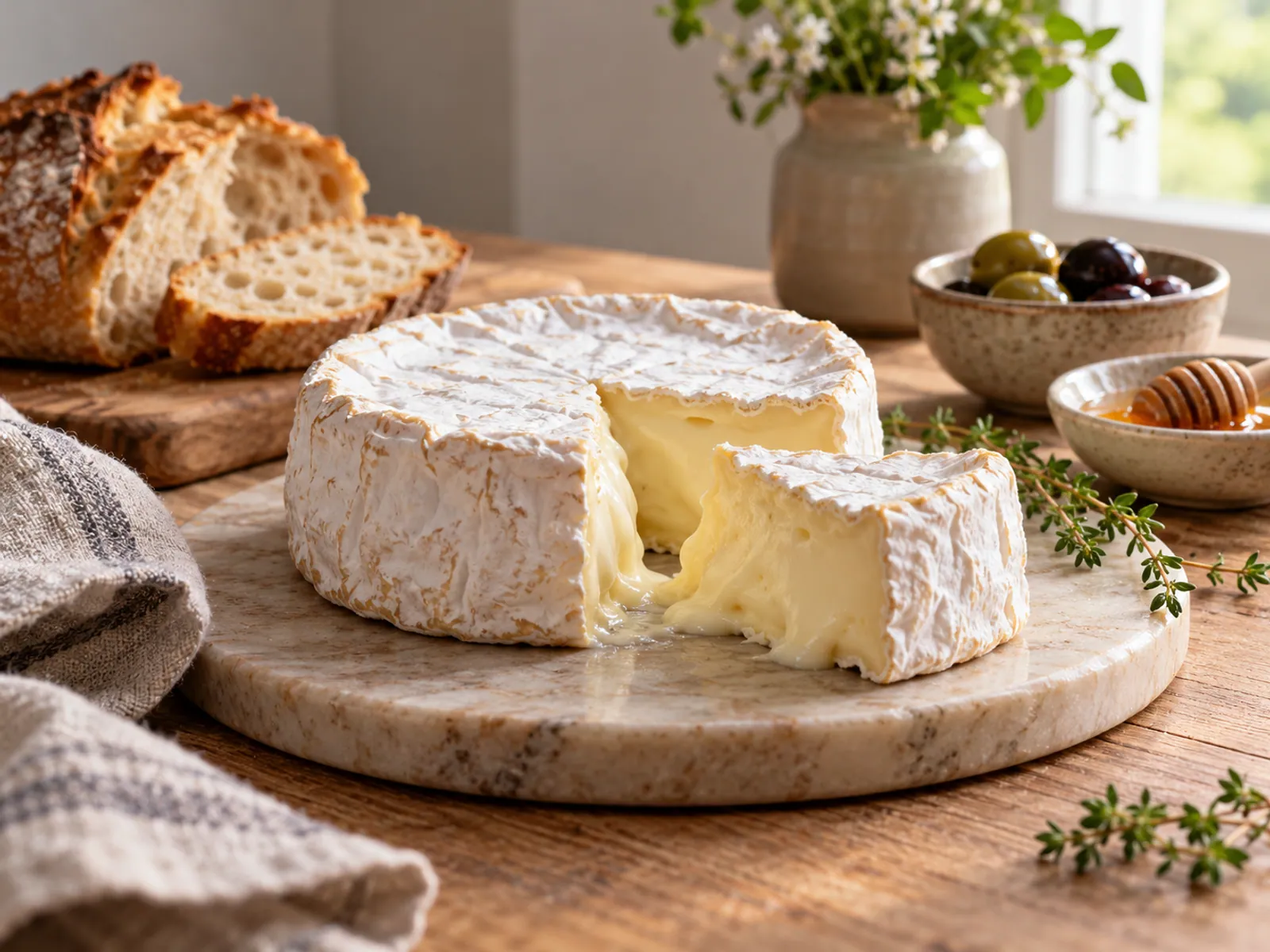
The distinction matters once you look past the basics. Brie and camembert are genuinely soft, yet they are ripened for weeks with a bloomy rind, so they are soft but not fresh. This guide stays with the simple, unaged, no-rind soft cheeses that you can make in a day of active work plus an overnight ferment. For the aged-versus-unaged angle instead, see the fresh cheese guide, and for the full picture of the craft, the wider how to make cheese at home walkthrough sets the scene.
The beginner soft cheeses
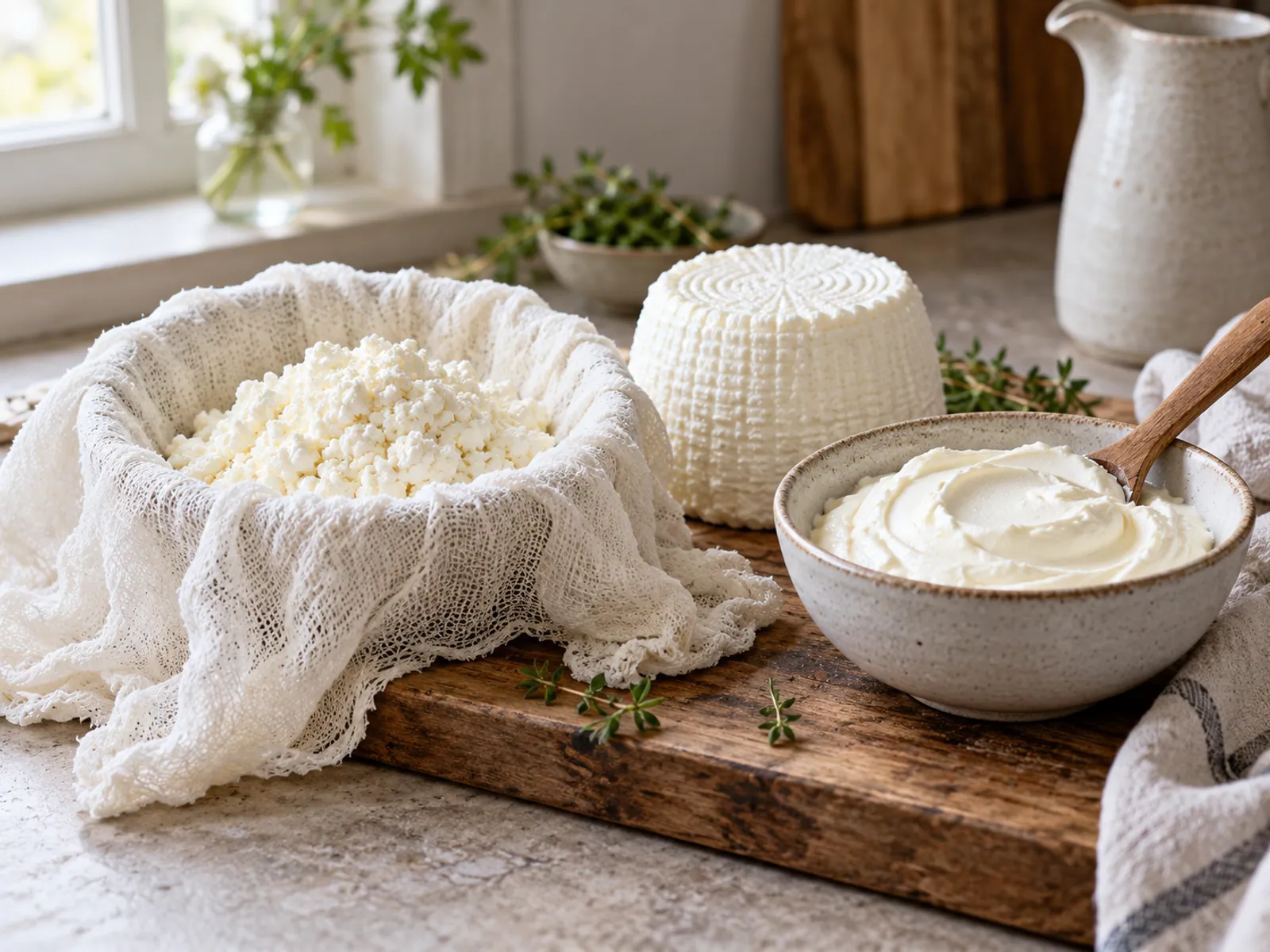
Four soft cheeses cover almost everything a beginner needs. They share a method but differ in the milk, the culture, and how hard they are drained.
| Soft cheese | How it sets | Culture | Typical time |
|---|---|---|---|
| Fromage blanc | Mesophilic culture plus a few drops of rennet | Mesophilic | About 12 hours, then a short drain |
| Quark | Mesophilic culture, rennet optional | Mesophilic | 12-18 hours, then drain to taste |
| Chevre | Mesophilic culture plus a few drops of rennet, goat’s milk | Mesophilic | 12-24 hours at room temperature |
| Labneh | Salted yogurt, strained | Thermophilic (yogurt) | Strain 12-24 hours (up to 48 for firm) |
Fromage blanc and quark are the softest and most forgiving starting points. Chevre is the classic tangy goat’s cheese and uses the same method with goat’s milk. Labneh is the odd one out: it is not cultured from scratch but strained from finished yogurt, which makes it the single easiest thing on this list. Quark has its own step-by-step how to make quark guide once you want the detail.
Choosing milk and culture
Milk is the biggest lever on your result, and the wrong carton can sink a batch before you start. Culture is the second decision, and for soft cheese it is almost always mesophilic.
Watch for
- Never use ultra-pasteurised (UHT) milk. The high heat denatures the proteins so they will not form a proper curd. Check the carton, it is the most common reason a set fails.
- Avoid pre-shredded or non-dairy milks, they contain stabilisers and cannot coagulate.
- Skim and low-fat milk will set but give a lean, dry, low-yield cheese. Whole milk is worth it.
For culture, a mesophilic starter (the room-temperature type) is standard for fromage blanc, quark, and chevre, at roughly one eighth of a teaspoon of powdered culture per gallon of milk. These cultured cheeses also take a very small rennet dose, just a few drops per gallon, to firm the curd. The cheese cultures guide explains which mesophilic starter to buy, and the rennet calculator works out the tiny dose so you do not overset the curd into something rubbery. Labneh skips both: it uses a thermophilic yogurt culture that is already in the yogurt you start from.
The acidify and drain method
Every cultured soft cheese follows the same rhythm. The bacteria acidify the milk slowly overnight, a trace of rennet firms the curd, and then draining decides the final texture.
- 1Warm the milk Bring whole milk gently to about 21-24C / 70-75F for a mesophilic culture. This is barely warm to the touch, not hot. For labneh, skip this step entirely and start from finished yogurt.
- 2Culture and add rennet Sprinkle the mesophilic starter over the surface, let it rehydrate for a minute, then stir it in. For chevre and fromage blanc, add the few drops of diluted rennet now and stir gently for about 30 seconds.
- 3Ferment undisturbed Cover and leave at room temperature for 12-24 hours. The milk sets into a soft, yogurt-like mass with a clear line of whey around the edge. That is your sign it is ready to drain.
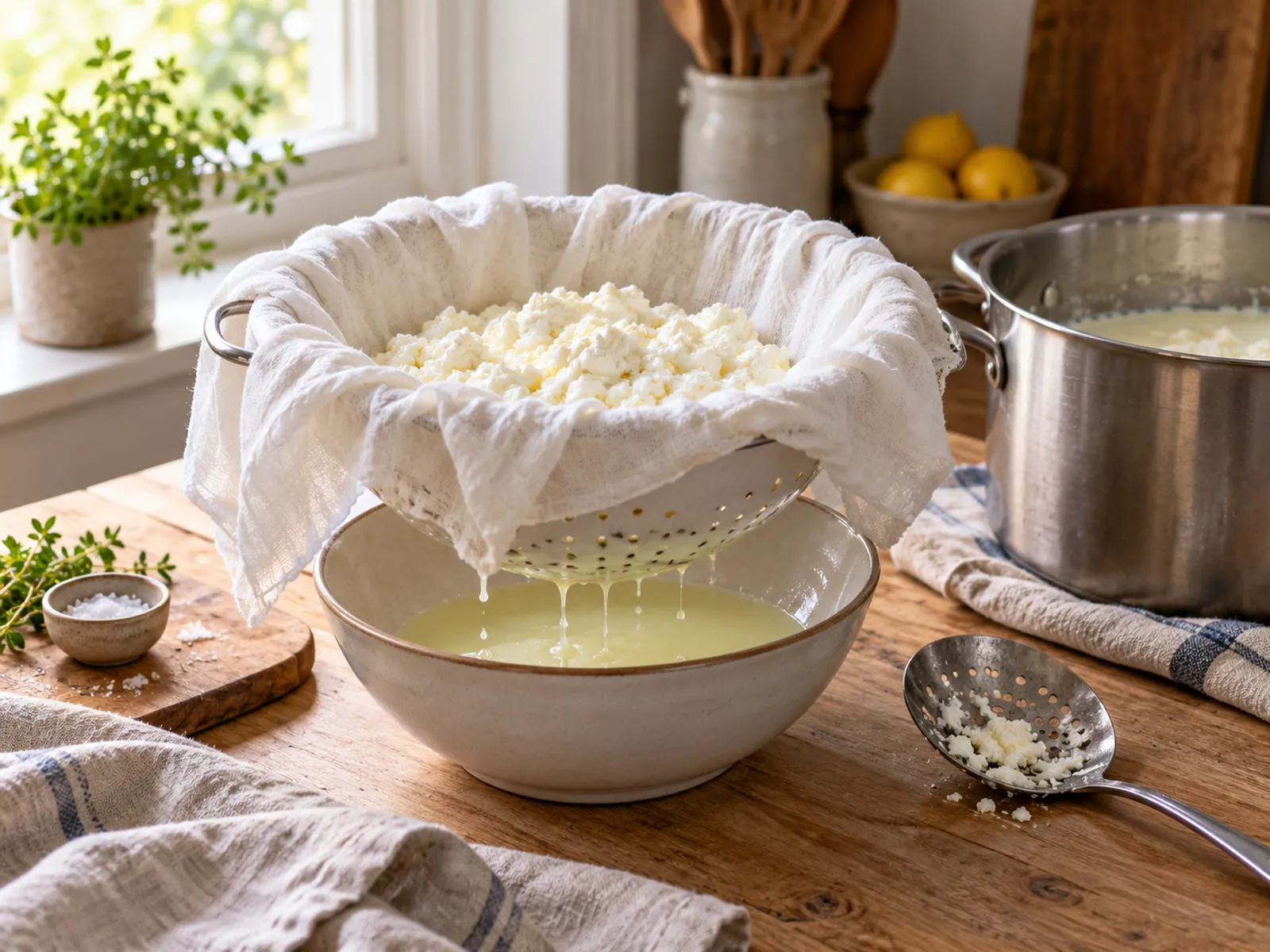
- 4Ladle into cheesecloth Line a colander with cheesecloth and gently ladle in the curd, or pour it in. Handle it softly so you keep as much curd as possible rather than breaking it into the whey.
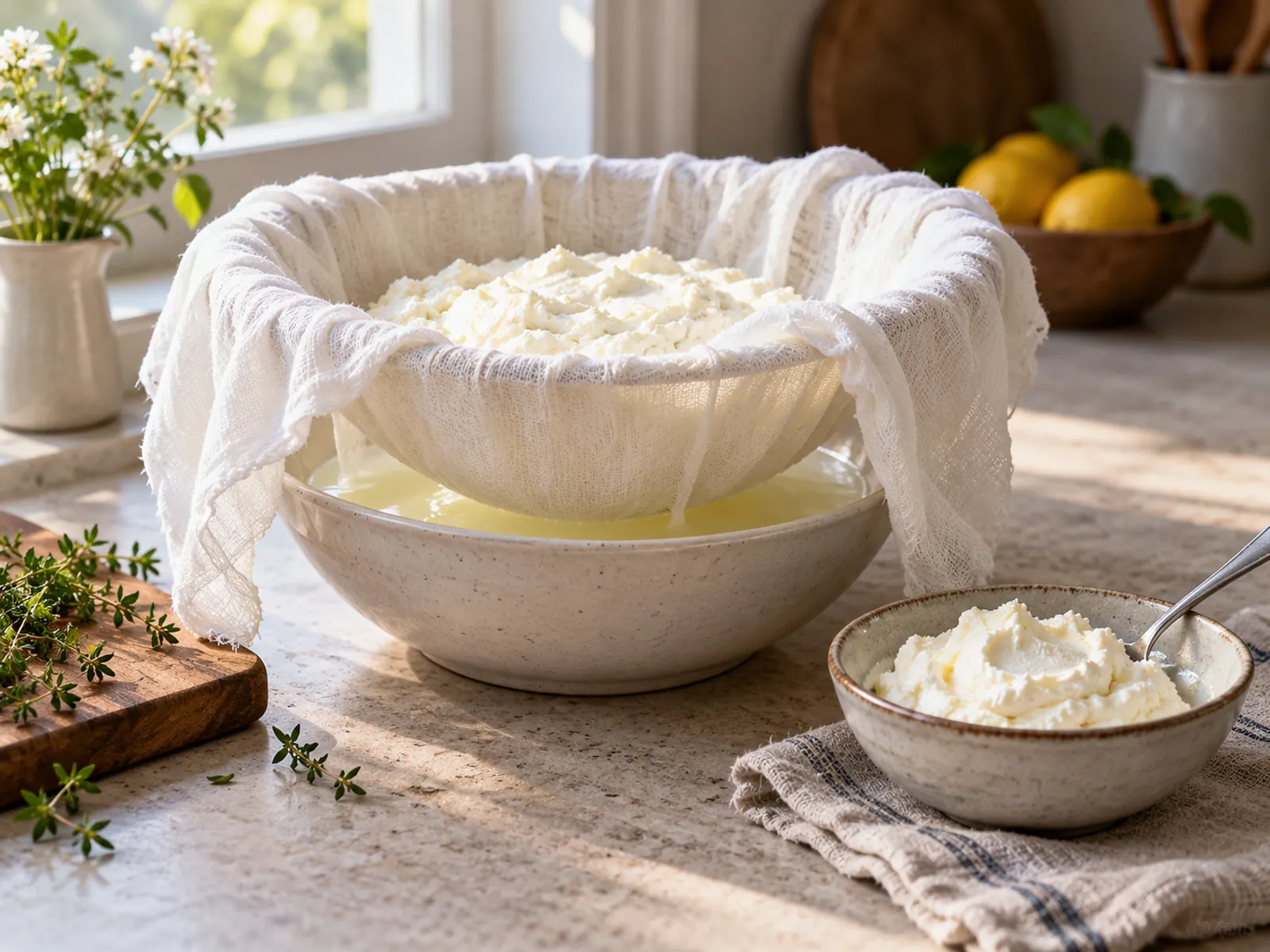
- 5Drain to the texture you want Let the whey run off. A short drain gives a loose, spreadable cheese, a long hang gives a thick, scoopable one. This step, not the recipe, sets firmness.
- 6Salt and finish Once drained, mix in salt to taste, then any herbs, garlic, or pepper. Chill before serving so it firms slightly and the flavour settles.
Save the whey from the drain step. It carries protein and can go into bread, smoothies, or soups rather than down the drain. How long you drain in step five is worth its own look:
Drain in the fridge rather than on the counter if you are hanging the cheese for more than a couple of hours, to keep it out of the danger zone for bacteria.

Related calculator
Cheese Yield Calculator
Calculate how much cheese you'll get from a given volume of milk. Covers hard, soft, and fresh cheese types.
How much cheese will your milk make?
Soft cheese is high in moisture, so it yields more than a hard cheese from the same milk, roughly 2 pounds (about 900 grams) per gallon for a typical fromage blanc or quark. The exact figure moves with milk fat and how hard you drain: a wetter cheese weighs more, a firmer strain weighs less. Use this as a planning table so you buy the right amount of milk.
| Milk | Approx. soft cheese yield | Good for |
|---|---|---|
| 2 L / ~0.5 gal | 400-500 g / ~1 lb | A single tub, first practice batch |
| 4 L / ~1 gal | 850-950 g / ~2 lb | A family batch of fromage blanc or quark |
| 8 L / ~2 gal | 1.7-1.9 kg / ~4 lb | Batch cooking, gifts, or a party spread |
| 1 kg yogurt | 400-500 g labneh | One jar of thick, strained labneh |
Yields assume whole milk and a medium drain. Skim or low-fat milk lands at the lower end, and a long strain for firm labneh takes off another 10 to 20 percent as extra whey leaves. To pin the numbers to your own recipe, the cheese yield calculator turns a milk volume into an expected cheese weight before you shop.
Free Cheese Rennet Reference Card (printable PDF)
A printable PDF companion for the cheese calculators and guides.
Salt ratios and finishing
Salt does more than season soft cheese. It draws out a little extra moisture, tightens the texture, and slows spoilage, though soft cheese is never salted heavily enough to keep for long.
Some firmer soft cheeses are finished in a light brine rather than dry-salted, which gives a cleaner surface and a more even cure. If you go that route, the fermentation brine calculator works out the exact salt-to-water ratio for a short brine soak so you do not overshoot and make the cheese harsh. For most soft cheeses, though, a simple weighed dose of salt stirred through the curd is all you need.
Storing soft cheese
Because soft cheese is high in moisture and only lightly salted, treat it like fresh dairy, not like a wedge of cheddar. It will not improve with age, so make what you will eat within a week.
Labneh keeps especially well when rolled into balls and covered in olive oil in a clean jar. The oil seals out air, and the cheese will hold for a few weeks in the fridge while it slowly firms and deepens in flavour.
Which soft cheese to make first
If this is your first soft cheese, make labneh. It needs no culture to buy and no rennet: you stir a little salt into whole-milk yogurt, tip it into cheesecloth, and hang it overnight. By morning you have a thick, tangy spread and a clear feel for how draining controls texture. Once that rhythm is natural, buy a mesophilic culture and a little rennet and step up to fromage blanc, then chevre with goat’s milk for a sharper, more classic result.
From there the same foundations carry you into the rest of the fresh and soft family. Before you shop, it helps to know how much cheese your milk will actually make so you buy the right amount and are not left with a fridge full of leftover milk.