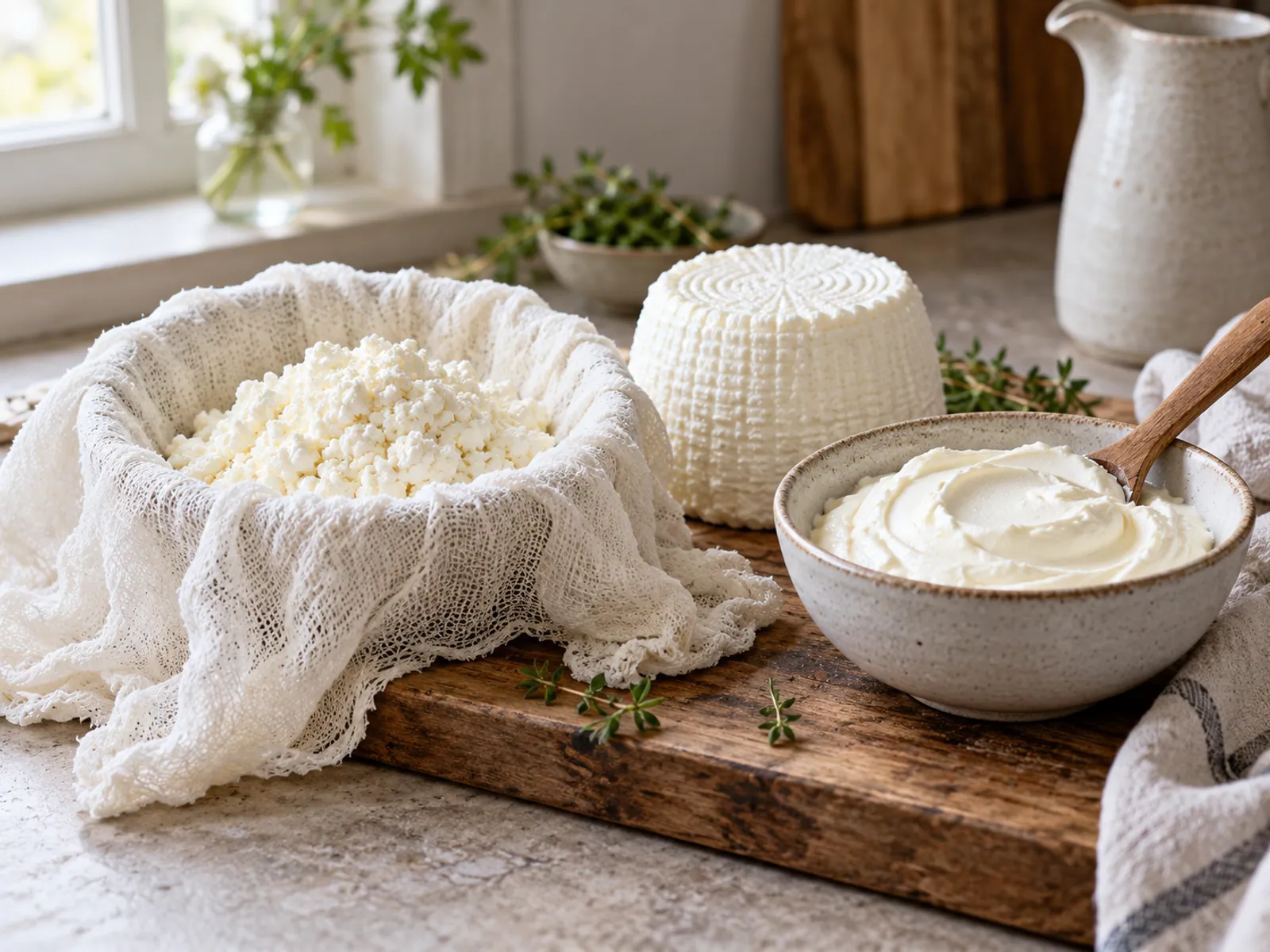
Homemade ricotta takes about half an hour and tastes far better than most tubs: soft, sweet and milky. It is the easiest cheese you can make, because there is no culture and no rennet, just hot milk, acid and a cloth to drain it. Strictly, it is not a fermented cheese; it is an acid-set fresh cheese, the same family as paneer.
Homemade ricotta recipe
85–90°C heat the milk to (185–195°F)
3 tbsp lemon juice or vinegar per litre
~190 g ricotta per litre of whole milk
1 litre whole milk pasteurized is fine; avoid ultra-pasteurized (UHT), which curdles poorly.
125 ml cream (optional) for a richer, creamier ricotta.
3 tbsp lemon juice or white vinegar or 1/2 tsp citric acid dissolved in a little water.
1/2 tsp salt optional, to taste.
- 1Heat the milk Warm the milk (and cream) with the salt in a heavy pan over medium heat, stirring so it does not catch, until it reaches 85–90°C and is just steaming with small bubbles at the edge.
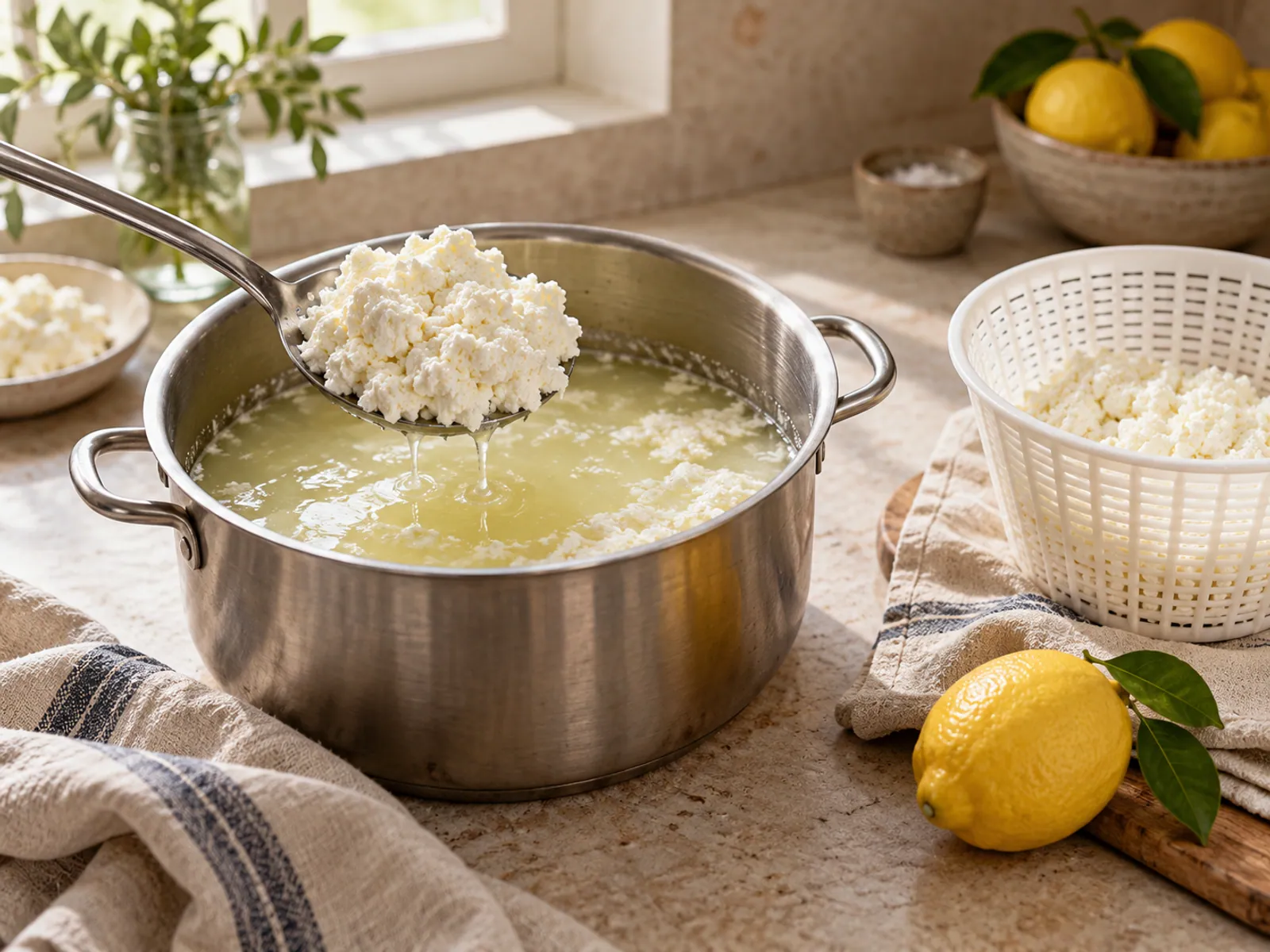
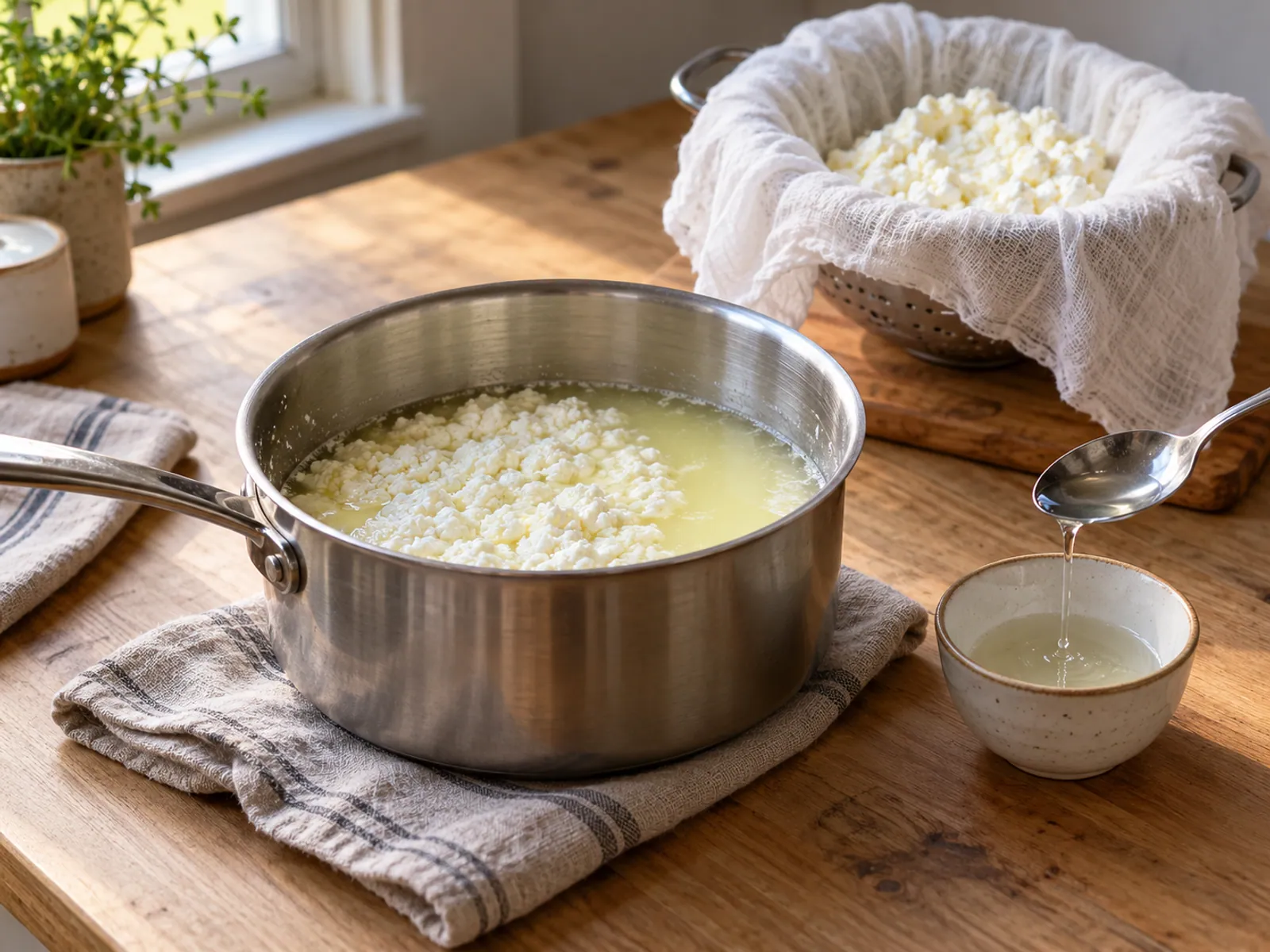
- 2Add the acid Take it off the heat, pour in the acid, and stir gently once or twice. Curds form within seconds.
- 3Rest Leave it undisturbed for 10 minutes. The whey should be clear and yellow-green; if it is still milky, add another tablespoon of acid.
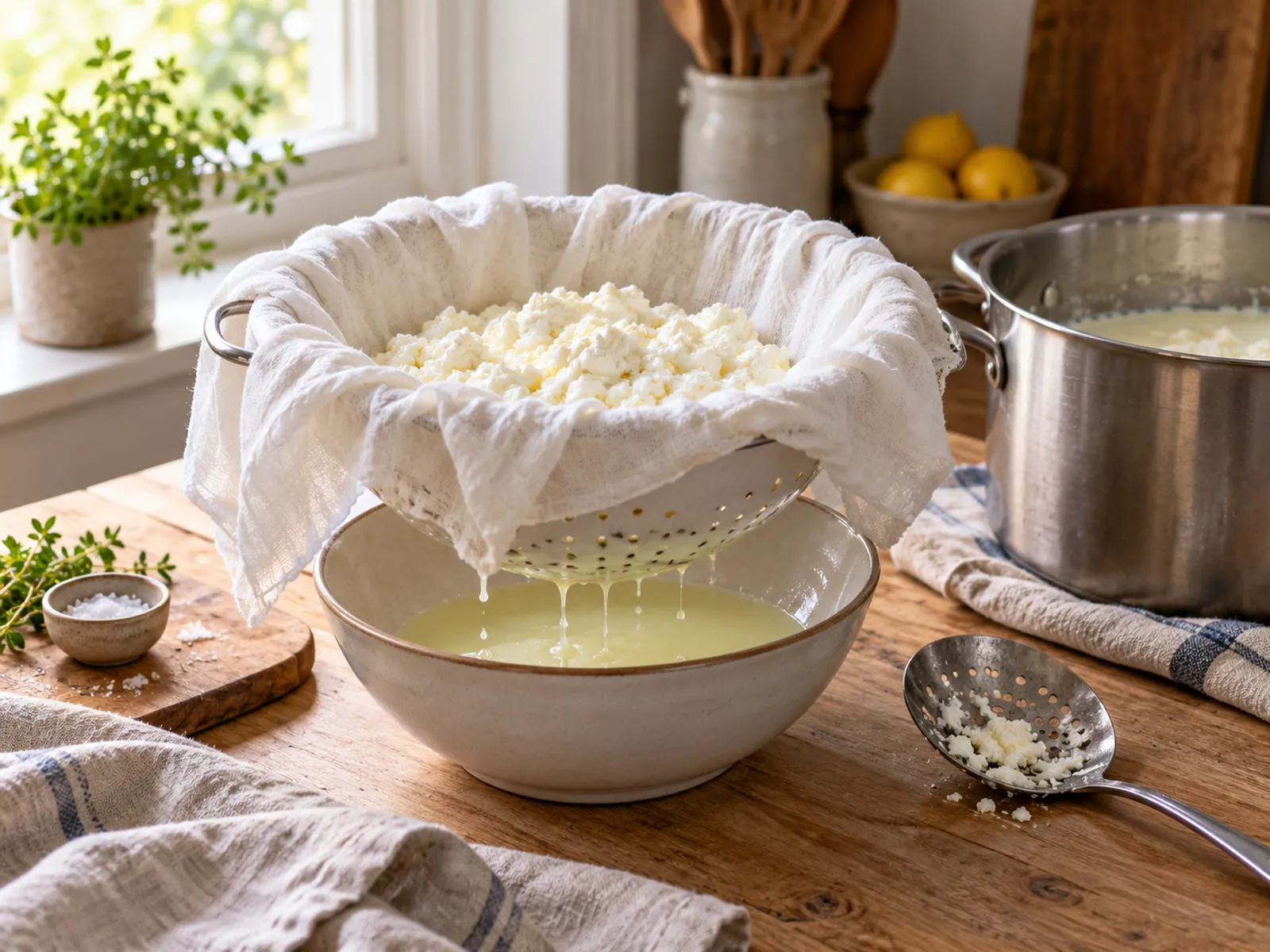
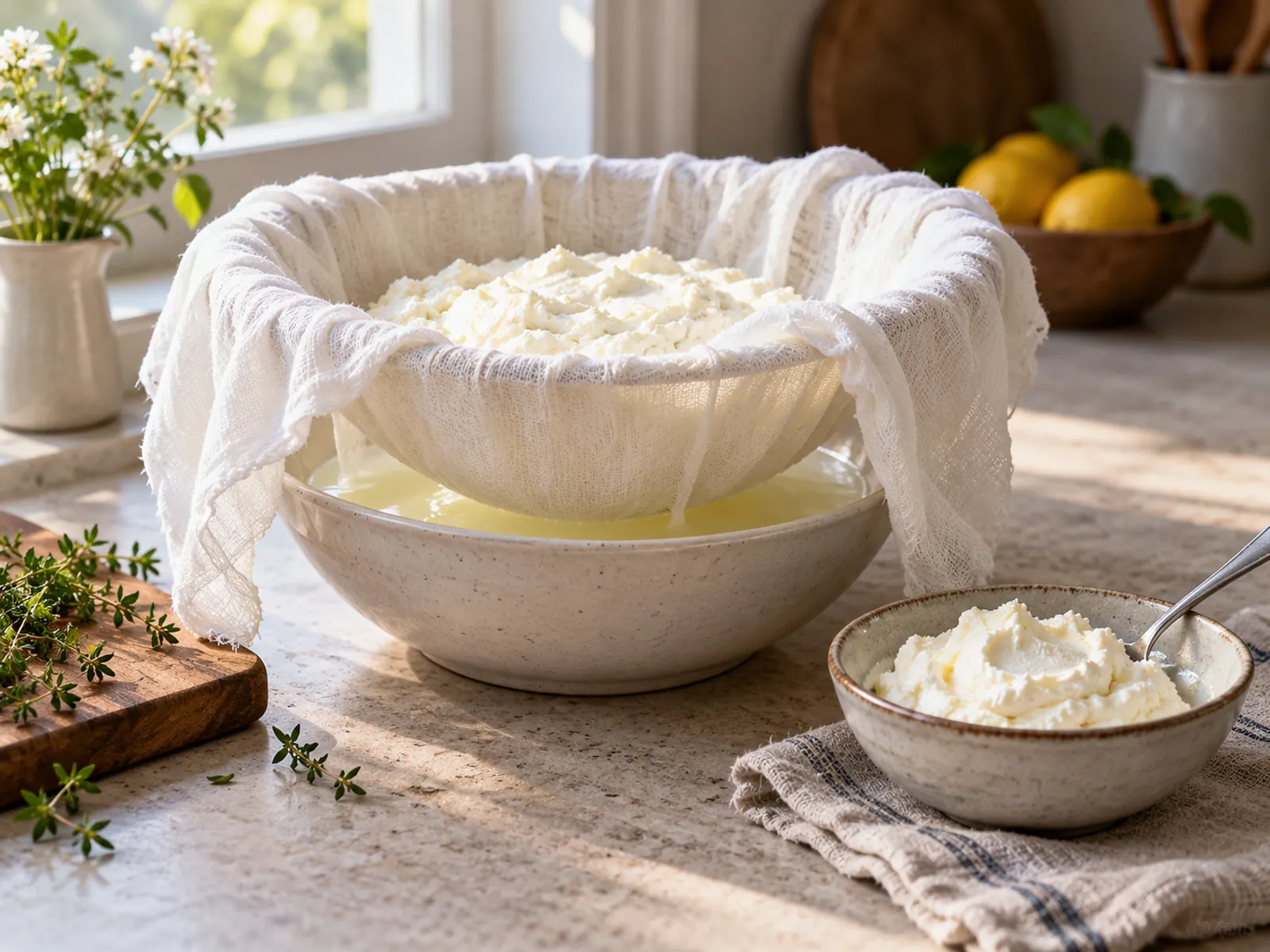
- 4Drain Ladle the curds into a colander lined with damp cheesecloth. Drain 10–15 minutes for soft, spoonable ricotta, or up to an hour for a firm one for baking.
- 5Chill Transfer to a container and refrigerate. Use within 4–5 days.
Related calculator
Cheese from Milk & Vinegar
How to make cheese from milk and vinegar: get the exact vinegar to add, the fresh-cheese yield to expect, and the whey left over.
Draining time and texture
| Drain time | Texture | Best for |
|---|---|---|
| 5–10 minutes | Very soft, wet | Spreading on toast, folding into pasta |
| 15–20 minutes | Creamy, spoonable | Lasagne, stuffed shells, dips |
| 45–60 minutes | Firm, dry | Cheesecake, ravioli filling, baking |
Free Cheese Rennet Reference Card (printable PDF)
A printable PDF companion for the cheese calculators and guides.
Whole-milk ricotta vs whey ricotta
Whole-milk ricotta The home method above. Uses fresh milk, so the yield is good (about 18–20%) and the cheese is rich.
Whey ricotta The traditional Italian method: reheat the whey left over from a rennet cheese to about 90°C with a little acid. The yield is small, roughly 3–5% of the whey, but it uses up whey that would otherwise be thrown away.
Watch for
- UHT milk rarely forms good curds. Use ordinary pasteurized or non-homogenized milk.
- Do not boil hard after adding acid; the curds turn rubbery.
- Keep the whey It is good in bread dough, smoothies and soups.
For other fresh cheeses, see how to make fresh cheese and how to make paneer. For dessert ideas, see easy cheese dessert recipes.