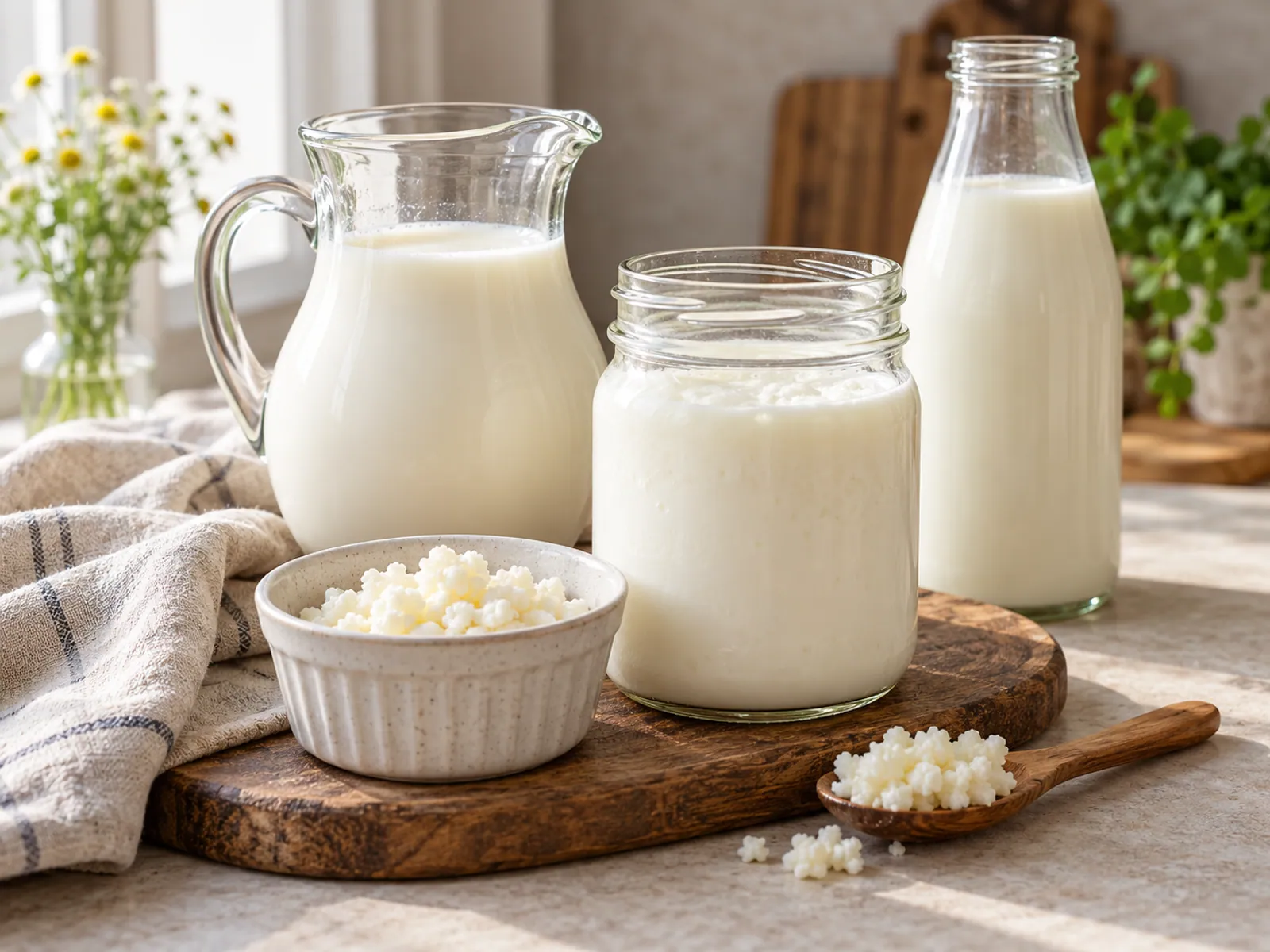
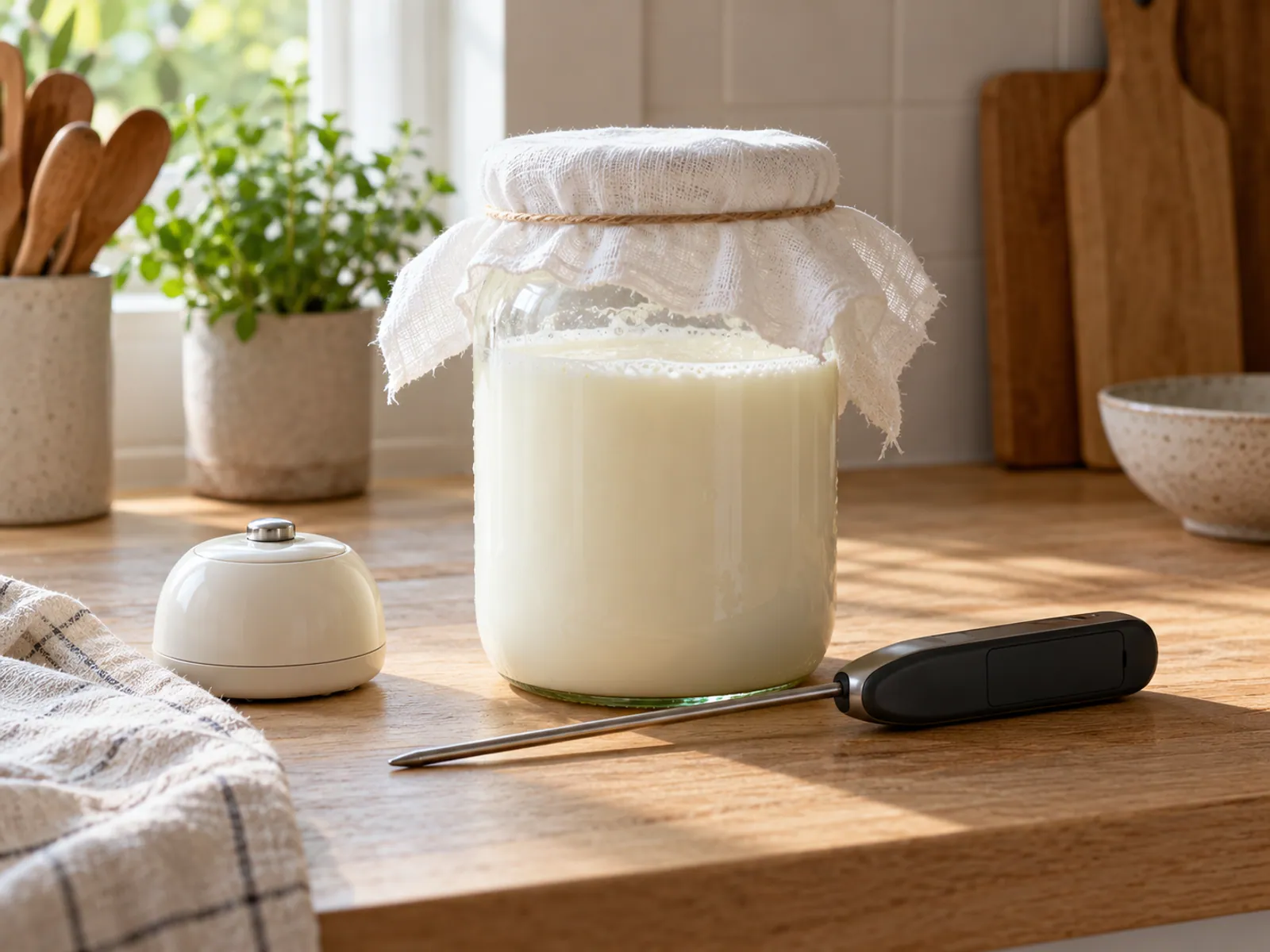
Kefir fermentation is shaped by temperature, time, grain dose, ingredients, and culture condition. A warm room usually speeds the process and a cool one slows it, but no temperature formula can promise an exact finish time. Use bands and check windows, then judge the batch itself.
The ideal temperature window
Use 21–23°C (70–73°F) as the standard reference band for both calculators. At 18–20°C fermentation is slower; at 24–26°C it is faster and needs earlier checks. Below 18°C activity may stall, while above 26°C the process becomes rapid and less predictable.
The optimal range differs slightly between milk and water kefir. This table gives the ideal (optimal) temperature for kefir grains alongside the workable range and the limits where things go wrong:
| Band | Guidance |
|---|---|
| Below 18°C / 64°F | Slow or potentially stalled |
| 18–20°C / 64–68°F | Slower; expect the long end of the window |
| 21–23°C / 70–73°F | Standard reference range |
| 24–26°C / 75–79°F | Faster; begin checking earlier |
| Above 26°C / 79°F | Rapid and less predictable |
Aim to keep your jar somewhere stable in that window. A consistent temperature is worth more than a perfect one — big swings make the timing unpredictable batch to batch.
How temperature sets the time
At 21–22°C, milk kefir uses dose-specific check windows. A slow 33 g/L protocol checks at 24–30 hours, standard 50 g/L at 18–24 hours, and fast 100 g/L at 12–18 hours.
For water kefir, start checking at 24 hours. Many home batches run 48–72 hours, while traditional processes may take 2–4 days. Use reduced sweetness, light acidity, visible activity, aroma, and batch history together; pH alone is not a completion test.
When it's too warm
Heat is a double-edged sword. It speeds things up, but past the ideal window it causes problems fast.
Watch for
- Above 26°C (79°F), fermentation becomes rapid and less predictable — move the jar cooler and check frequently
- Over-fermented kefir turns very sour or develops off, yeasty flavors
- Kefir can separate fully into curds and whey if left warm too long
In hot weather, ferment in a cooler spot and begin checking earlier than the selected protocol window. A cooler cupboard or shaded shelf is often enough; keep the grain dose tied to the protocol so batch records remain comparable.
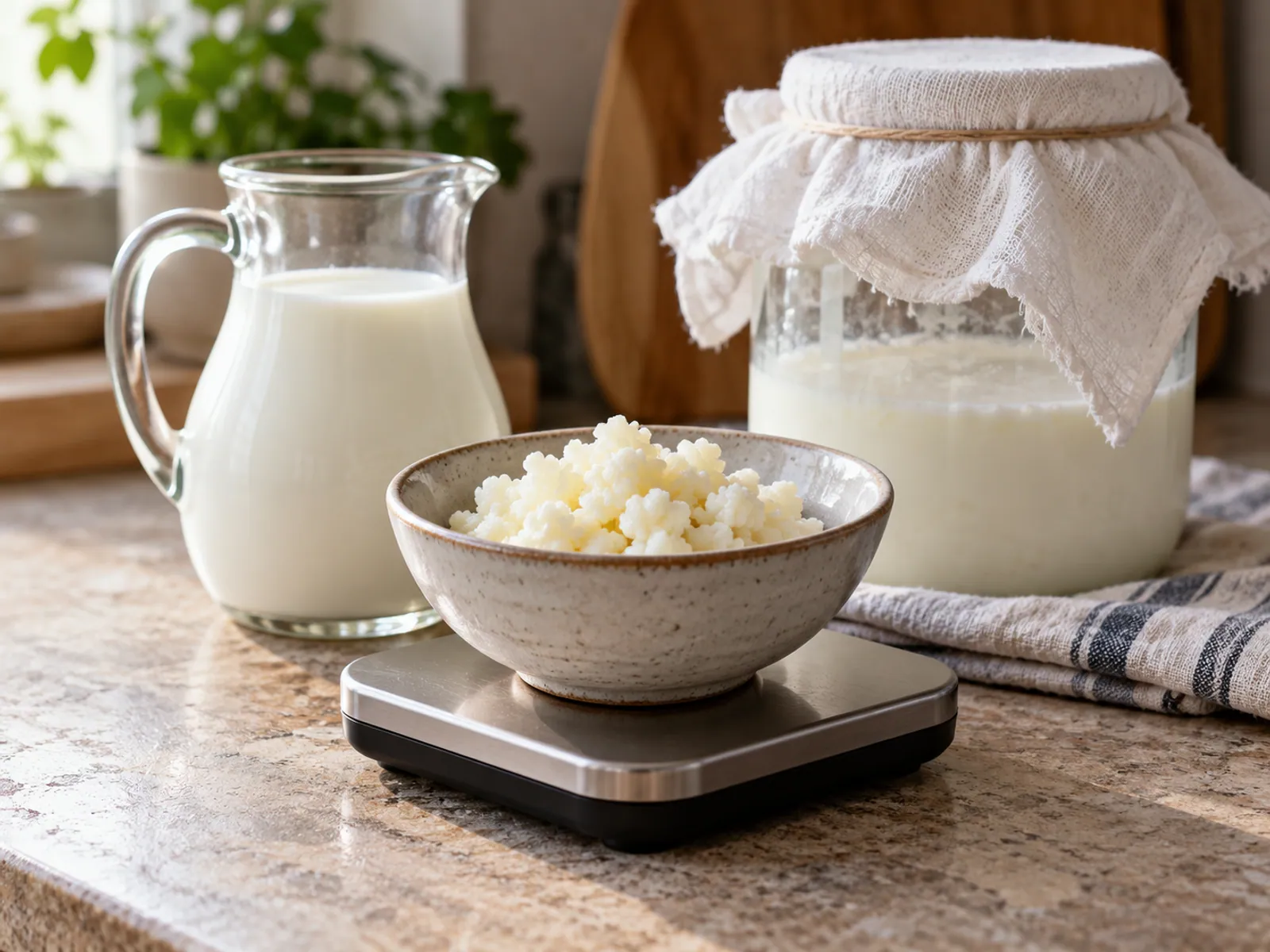
Related calculator
Milk Kefir Calculator
Choose a slow, standard, or fast milk-grain protocol with practical check windows and safety guidance.
When it's too cold
Cold can stall a batch. Below 18°C (64°F), fermentation may slow enough that the kefir stays thin and under-cultured.
- 1Find a warmer spot Move the jar on top of the fridge, near (not touching) a radiator, or into an oven with only the light on.
- 2Give it more time If you can't warm it, simply extend the ferment and check later — cool kefir just needs longer.
- 3Insulate if needed Wrapping the jar or using a warm water bath keeps the temperature steady in a cold kitchen.
Free Kefir Ratio Reference Card (printable PDF)
A printable PDF companion for the kefir calculators and guides.
How to tell when it's done
Temperature and time get you close, but your senses make the final call.
Adjusting through the seasons
The single biggest reason your kefir “changed” is usually the room temperature, not the grains. The same culture ferments faster in a warm summer kitchen and slower in winter, so a fixed number of hours won’t serve you all year.
Track your room temperature and adjust the check point: begin earlier when it is warm, later when it is cool, and use the batch signals to confirm. Keep the selected grain-to-milk protocol constant when comparing batches. If you are still building up your culture, see milk kefir grains for how the grains grow and how to keep them healthy.