Sourdough Starter Manager
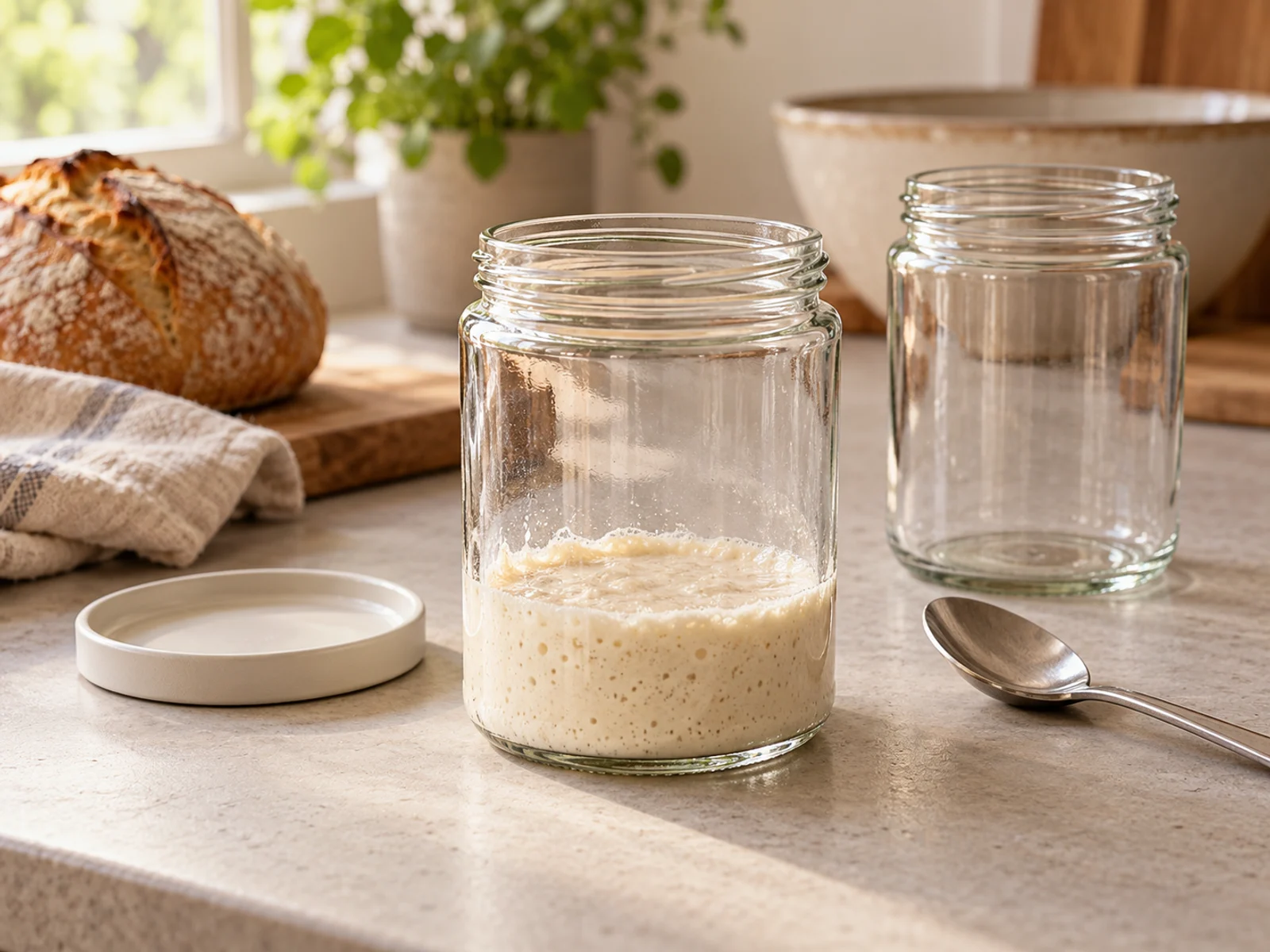
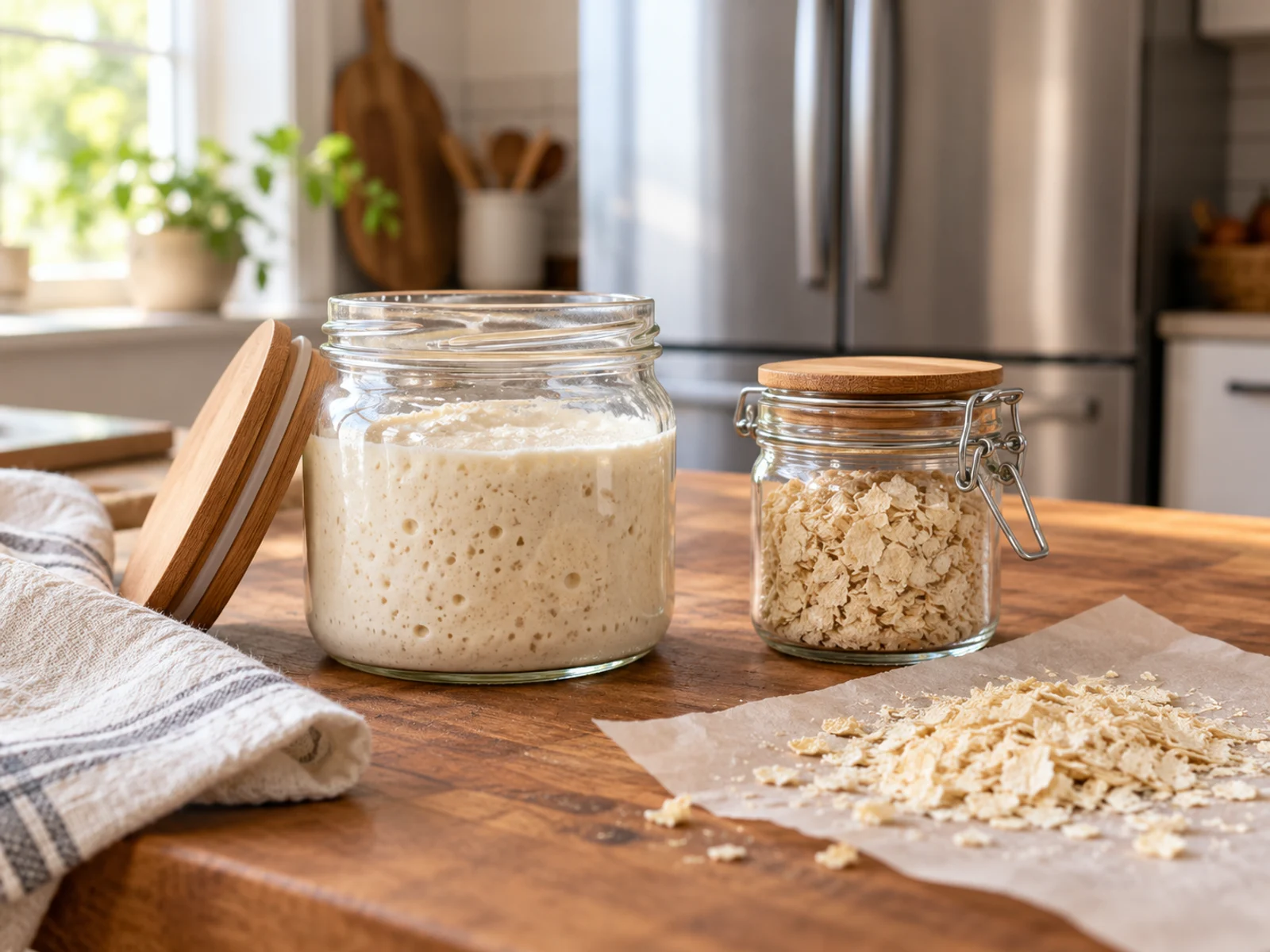
Log each feed, watch your starter rise in a 3D jar and record when it peaks. After two feeds it learns your own starter’s timing, so you know when it will be ready.
- See the rise against the clock
- Learns your starter’s peak time
- Free, no account needed
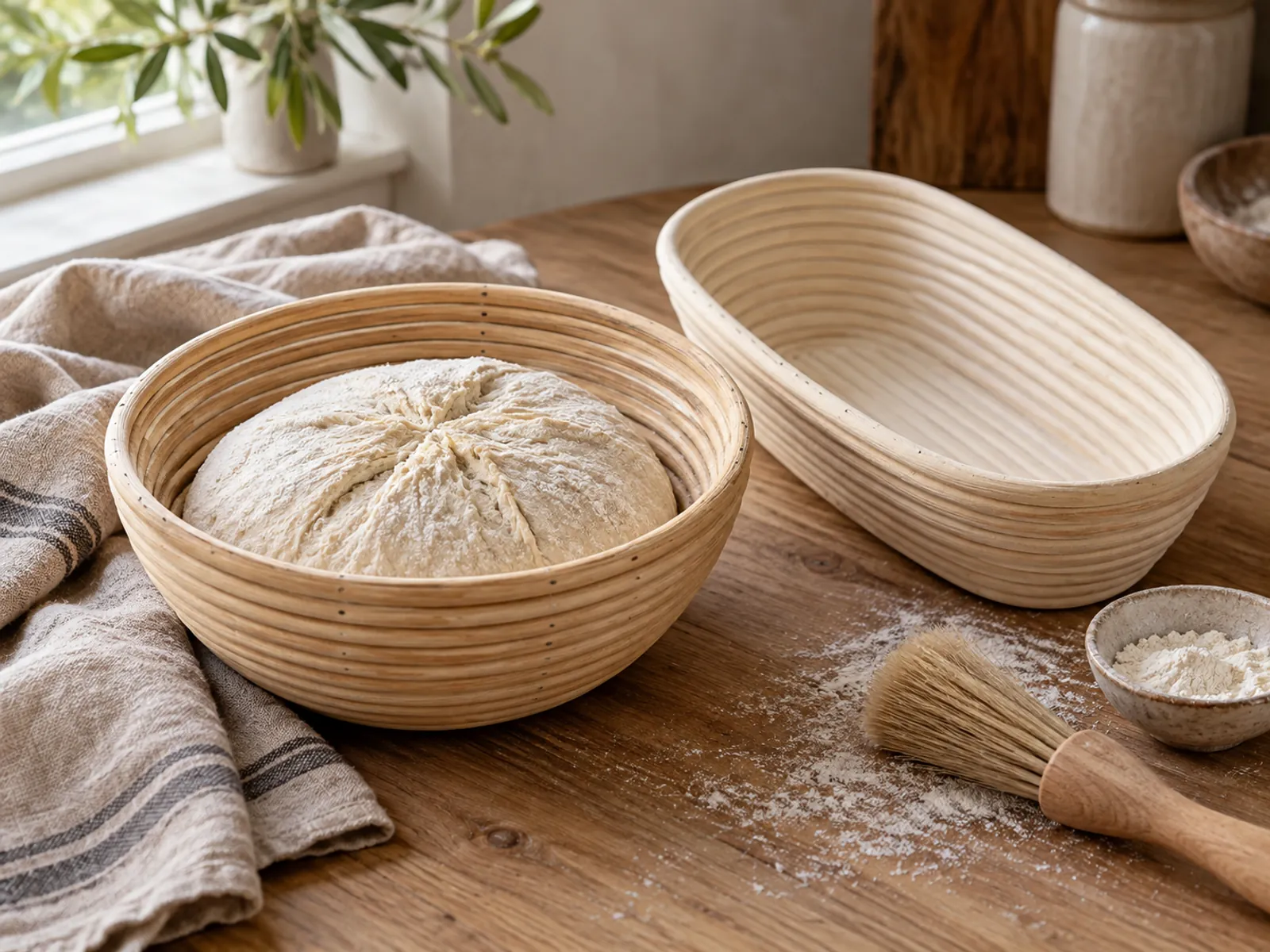
A banneton basket gives sourdough its shape during the final proof — the dough rises inside the basket, held in form by the coiled cane walls, then flips out onto a baking peel and into the oven. It is one of the most useful pieces of sourdough equipment, and one of the simplest. Here is how to choose, prepare, and use one.
Types of banneton
Choosing the right size
When in doubt, go one size up. A banneton that is slightly too large is far better than one that is too small — overfilling causes the dough to mushroom over the edges and lose its shape.
How to use a banneton
- 1Flour generously Dust the inside of the banneton heavily with rice flour. Rice flour resists moisture absorption and prevents sticking far better than wheat flour. Coat the sides and base — do not be shy with it, especially for the first few uses.
- 2Shape your dough Pre-shape and final-shape your dough into a round (for a round banneton) or an oval (for an oval one). Build good surface tension by dragging the dough toward you on an unfloured surface.
- 3Place seam-side up Set the shaped dough into the banneton with the seam (pinched side) facing up. When you flip it out later, the smooth, tensioned side will be on top — that becomes the scored, baked surface.
- 4Cover and proof Cover with a damp towel, a shower cap, or a plastic bag. Proof at room temperature for 1–2 hours, or cover tightly and cold-proof in the fridge overnight (8–16 hours).
- 5Flip and bake When ready to bake, invert the banneton onto a floured peel or a sheet of parchment paper. The dough should release cleanly. Score the top, then slide into a preheated Dutch oven or onto a baking stone.
Free Sourdough Baking Playbook (printable PDF)
A printable PDF companion for the sourdough calculators and guides.
Care and maintenance
Watch for
- Mould on a cane banneton Scrub with a stiff brush, wipe with white vinegar, and dry in direct sunlight. If it recurs, the banneton was not drying completely between uses.
- Do not put bannetons in the oven or dishwasher.
- Do not use wheat flour alone for dusting — it absorbs moisture from the dough and causes sticking. Rice flour is essential.