Sourdough Starter Manager
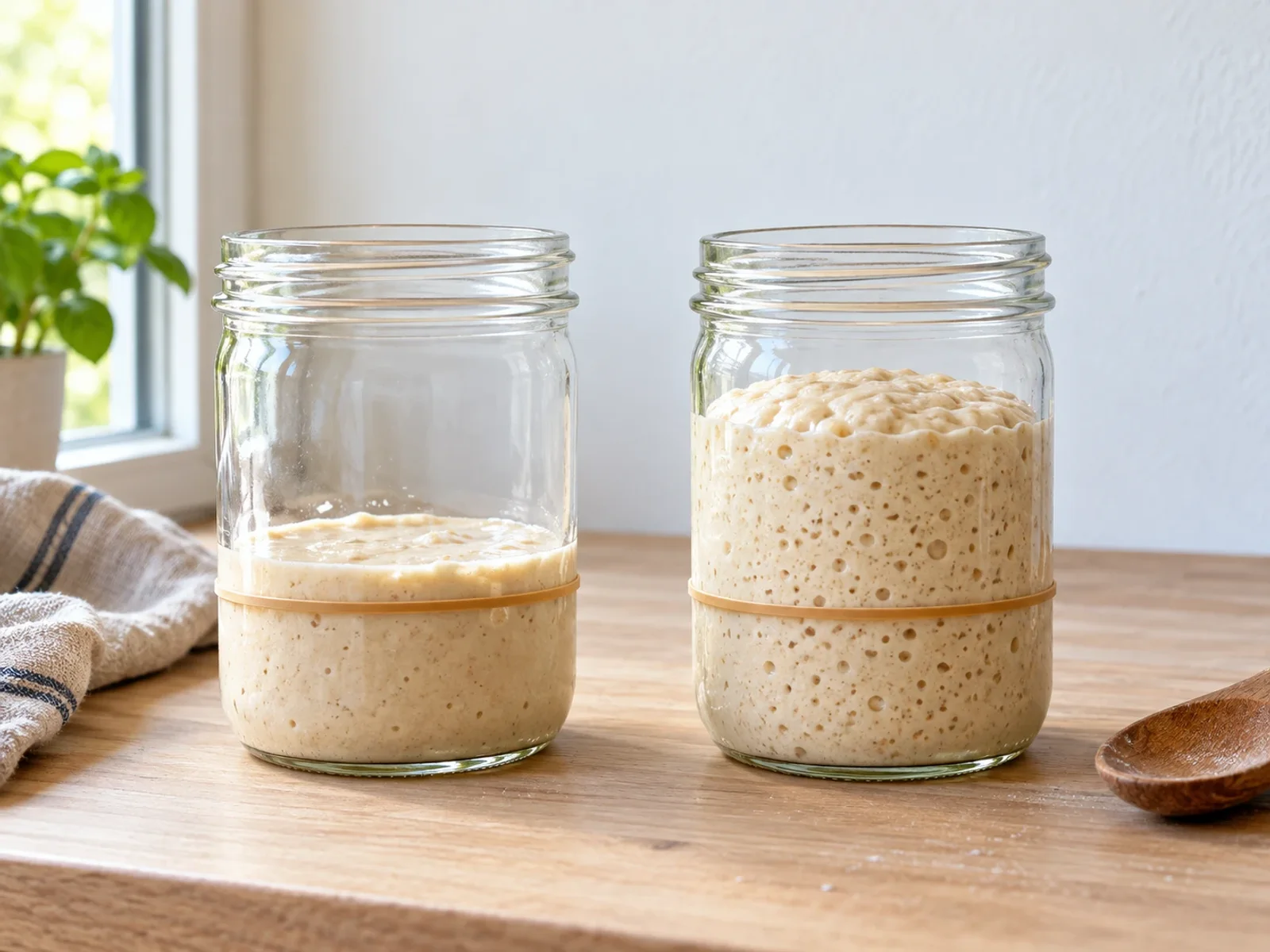
Log each feed, watch your starter rise in a 3D jar and record when it peaks. After two feeds it learns your own starter’s timing, so you know when it will be ready.
- See the rise against the clock
- Learns your starter’s peak time
- Free, no account needed
Choose storage around your baking routine
Storage is a scheduling choice. A counter culture is convenient when you bake often enough to use its regular feeds. Refrigeration reduces the maintenance burden when several days pass between bakes. Drying creates a separate reserve for a longer pause or a lost working jar.
Start with a healthy established culture, not a brand-new starter midway through its early succession. Before a long absence, separate a backup and confirm the working starter still rises reliably after feeding. Two questionable jars are not better insurance than one healthy jar and a dry reserve.
Storage methods and trade-offs
| Method | Suitable routine | Main trade-off |
|---|---|---|
| Counter | Baking daily or frequently | More regular feeding and faster changes in warm rooms |
| Refrigerator | Baking around weekly | Requires planning ahead for refreshment |
| Dried backup | Long break or insurance | Reactivation takes patience and is not guaranteed on a deadline |
| Freezer | Occasional backup option | Performance after thawing can vary; drying is often more convenient |
Treat these as workflow categories, not survival guarantees. Jar temperature, flour, hydration and the culture’s condition affect the outcome. A starter that survives cold storage may still need several refreshes before it reliably leavens a loaf.
A practical refrigerator routine
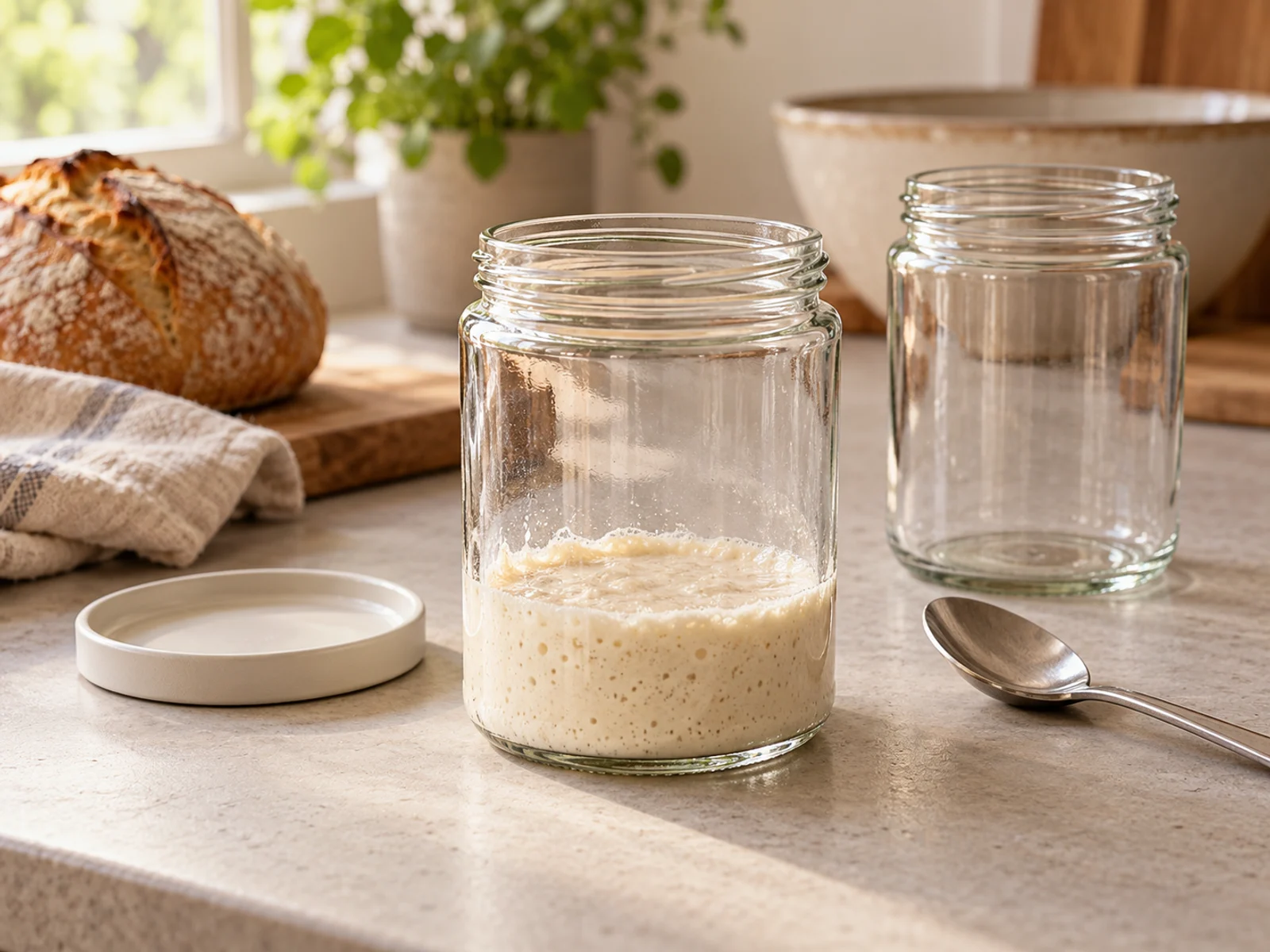
For an established 100%-hydration starter, keep a manageable amount rather than a nearly full jar. As one small maintenance example, retain 10g starter and add 20g flour plus 20g water. Mix, mark the level and cover. Allow fermentation to begin before refrigerating; do not leave it unattended in a hot room simply to reach an arbitrary hour.
Aim for a refrigerator around 4°C and use a stable location rather than the warm door. Check the jar approximately weekly in a normal home-baking routine and refresh as needed. A small rise in the refrigerator does not mean the culture has failed, and little visible rise does not mean it is ready for a dough.
The feeding calculator can size the feed and include your seed hydration. Leave expansion space. Record the feed date so you know whether the jar contains a recently refreshed culture or an older, hungry one.
Related calculator
Sourdough Starter Feeding Calculator
Exact starter, flour, water, and discard for 1:1:1, 1:5:5, or any custom feeding ratio, with a ratio chart and peak times.
Refresh before you commit to a bake
Bring out the working jar early enough to observe a feed. Inspect it for mold or abnormal colour before mixing. For an apparently healthy but hungry culture, retain a small portion and refresh at a ratio you can monitor at your actual room temperature.
Do not automatically repeat feeds every few hours while the starter remains inactive; that can repeatedly dilute a slow culture. Give it a chance to show bubbles and expansion, then use that response to choose the next feed. If it rises and falls quickly, increase the food relative to seed or move to a cooler location.
Use starter for naturally leavened bread when it repeats a predictable rise after refreshment and has enough activity for your recipe. A fixed “two feeds” rule cannot account for a weak culture, a cold jar or a long storage period. For a first bake after a long break, choose a familiar formula and keep notes.
Free Sourdough Baking Playbook (printable PDF)
A printable PDF companion for the sourdough calculators and guides.
Drying and freezing as backup methods
Spread only healthy ripe starter thinly for drying, protect it from contamination and allow it to become fully brittle before storing airtight. Residual moisture defeats the purpose. Label the flour, date and original hydration, and keep it away from heat and light. Follow the dried-starter guide for the full method.
If freezing a small backup, use a freezer-safe container with expansion space, label it, and expect that revival may be slower than the original culture. Avoid repeated freeze-thaw cycles. Preserve more than one separately stored portion if the culture has special value to you.
Neither method is a shortcut for saving a contaminated starter. Do not dry or freeze a questionable jar in the hope that storage will repair it.
Plan backwards from bread day
| Checkpoint | What to establish | If it is not ready |
|---|---|---|
| Before the break | Starter is healthy; backup is separate | Improve the routine before storing |
| First refresh after storage | Normal appearance and signs of fermentation | Allow time; do not promise a bake yet |
| Next refresh | Predictable rise at a known ratio and temperature | Continue observation and adjust temperature or feed |
| Levain build | Enough ripe starter for bread plus maintenance | Reduce the bread batch or build again |
The meaningful schedule is checkpoint-based. If the culture is not ready when you hoped to mix, move the bread schedule. Refrigeration gives flexibility, but it cannot guarantee a 9am-ready starter after any length of neglect.
Reference and next steps
For maintenance guidance see King Arthur’s sourdough maintenance guide. For long pauses see its drying method. Use our readiness guide to assess the refreshed culture, and the levain calculator to prepare the recipe quantity without emptying your maintenance jar.