New · Featured tool
Sourdough Starter Manager
Log each feed, watch your starter rise in a 3D jar and record when it peaks. After two feeds it learns your own starter’s timing, so you know when it will be ready.
- See the rise against the clock
- Learns your starter’s peak time
- Free, no account needed
Dehydrating your sourdough starter creates a shelf-stable backup that you can store for months, mail to a friend, or pack for travel. If anything happens to your live starter — neglect, contamination, a move — you can revive the dried flakes with flour and water in a few days.
How to dehydrate sourdough starter
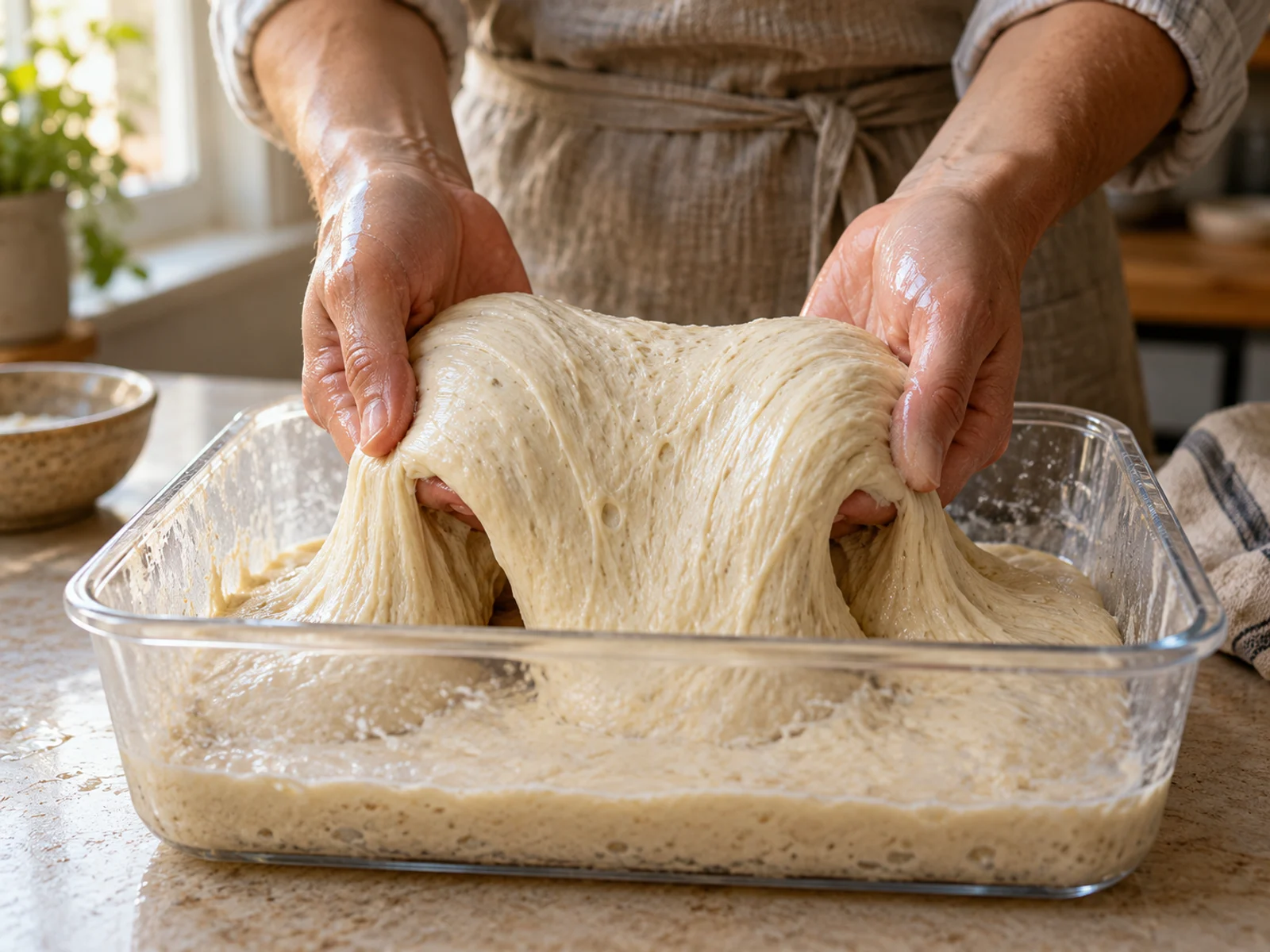
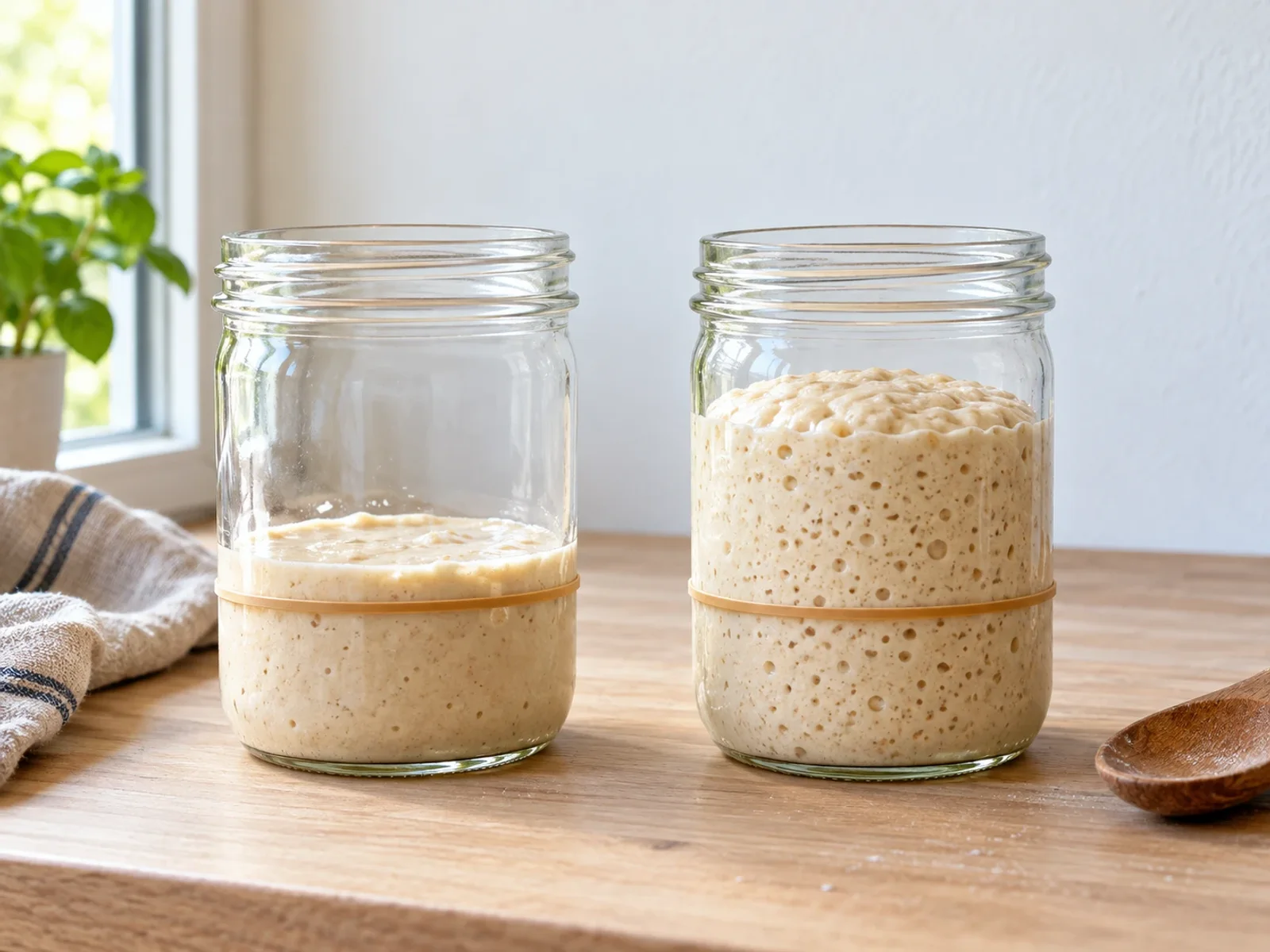
- 1Feed and wait for peak Give your starter a normal feed and let it rise to peak — doubled, domed, and bubbly. This is when the yeast and bacteria population is highest, giving the best survival rate through dehydration.
- 2Spread thin on parchment Use a spatula or the back of a spoon to spread the starter in a thin, even layer (2–3mm thick) on a sheet of parchment paper or a silicone baking mat. Thinner dries faster.
- 3Air dry Leave it at room temperature, uncovered, in a spot with decent airflow. It takes 24–48 hours depending on humidity and thickness. It is done when the sheet is completely dry, hard, and brittle — no soft or tacky spots.
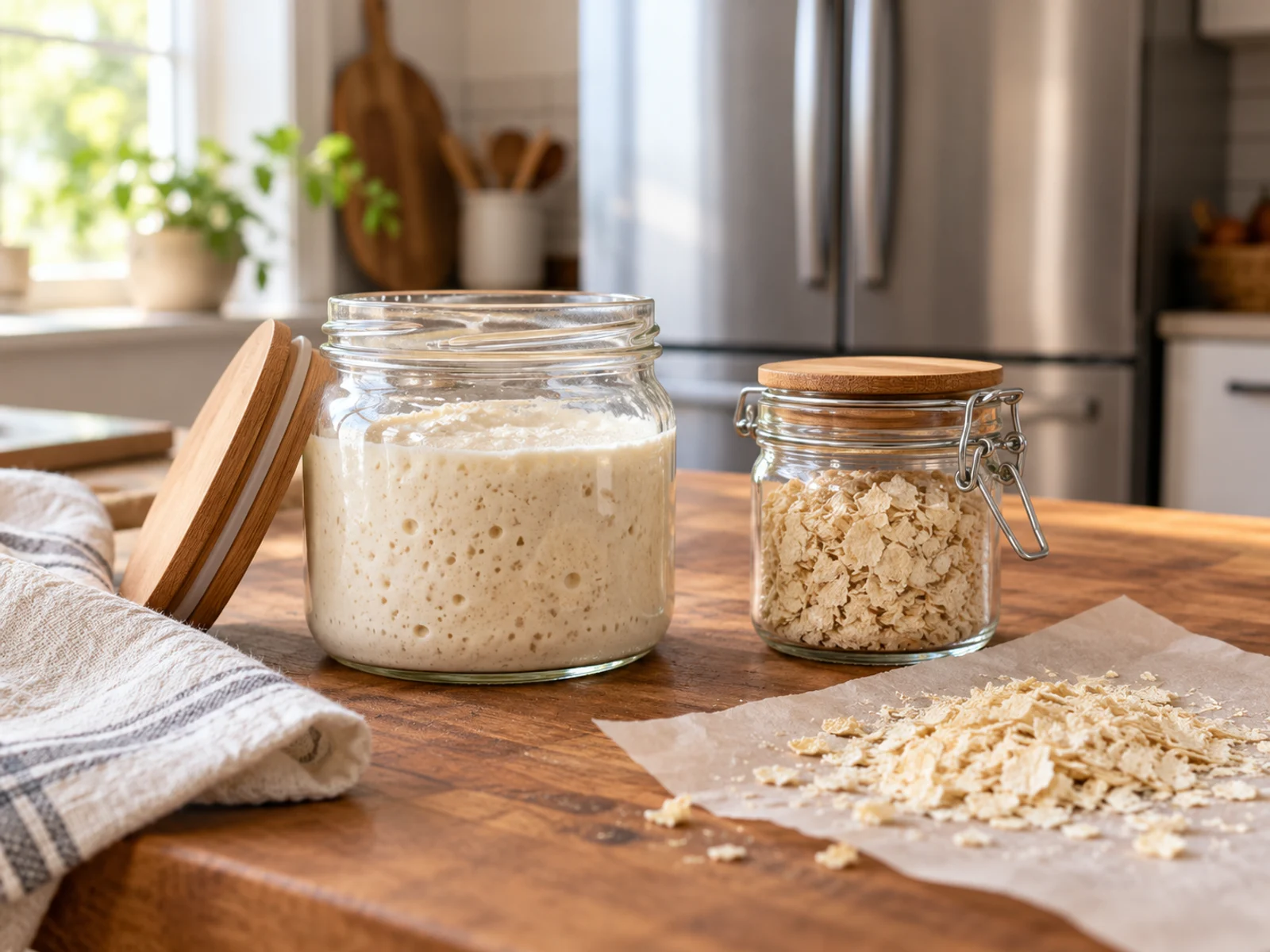
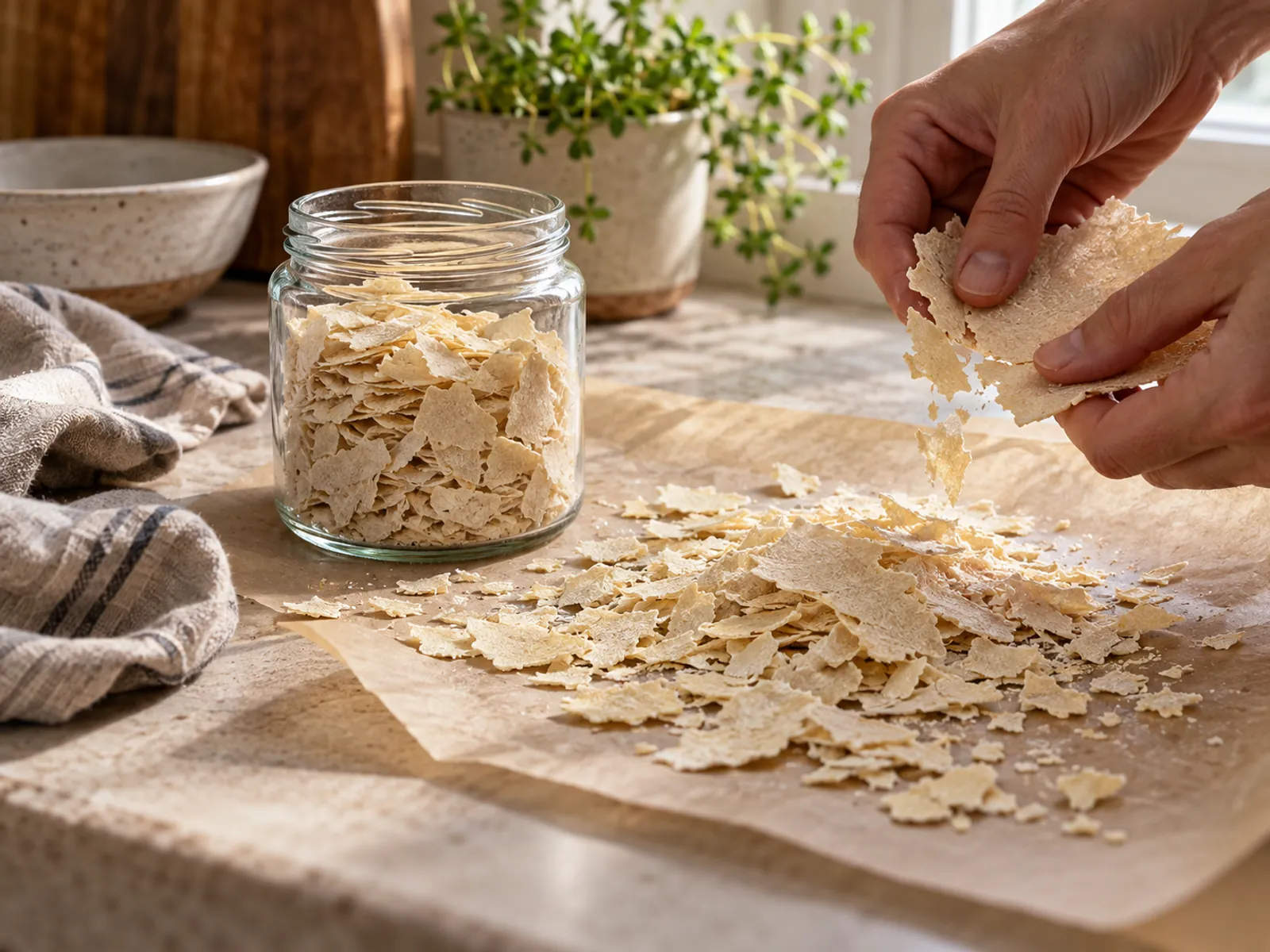
- 4Break into flakes Peel the dried starter off the parchment and break it into small flakes or chips. Some people blend it into a powder, but flakes are easier to work with and rehydrate well.
- 5Store airtight Transfer the flakes to a clean, dry glass jar or zip-lock bag. Label it with the date. Store at room temperature for up to a year, or in the freezer for longer.
How to revive dehydrated starter
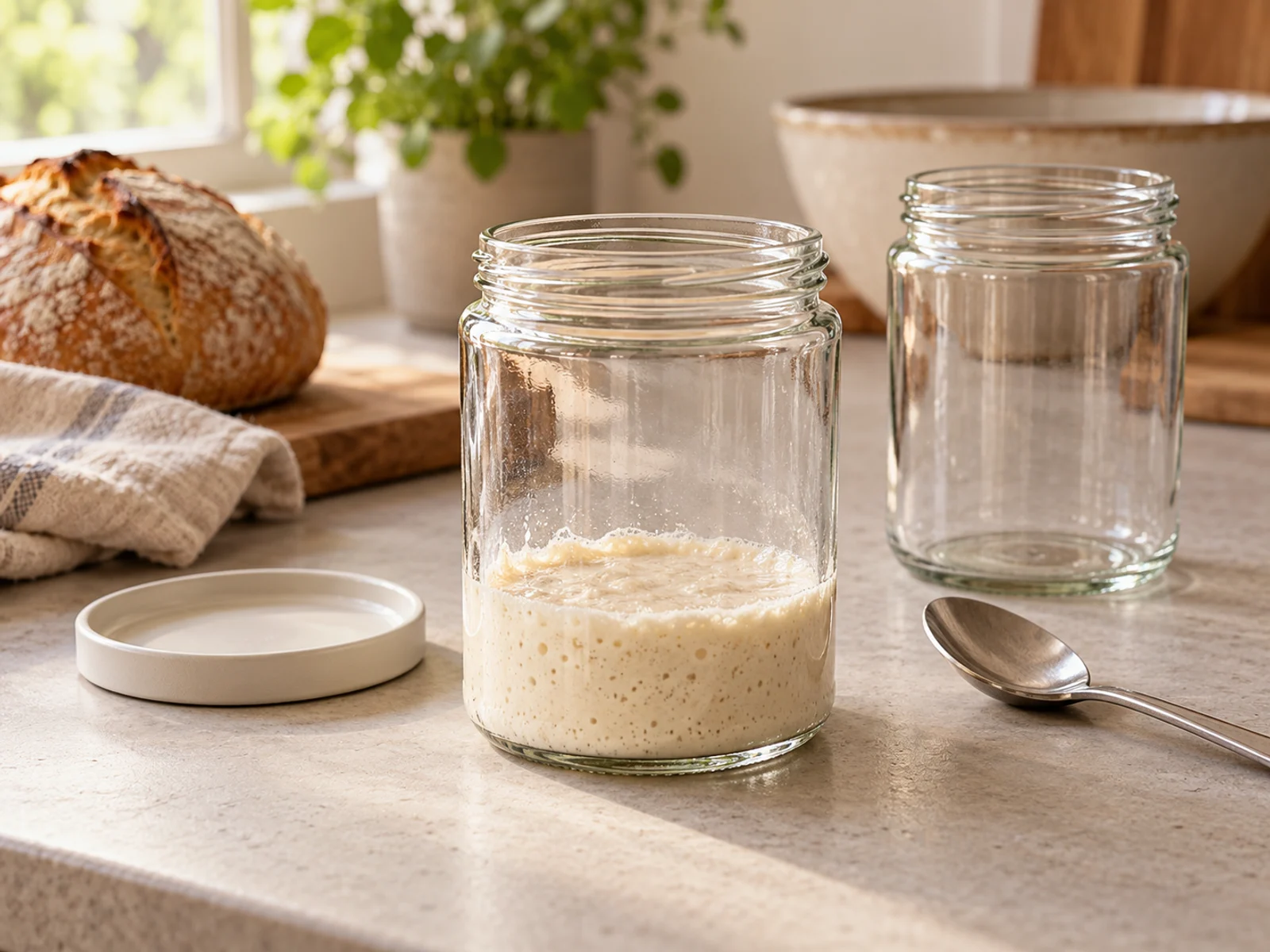
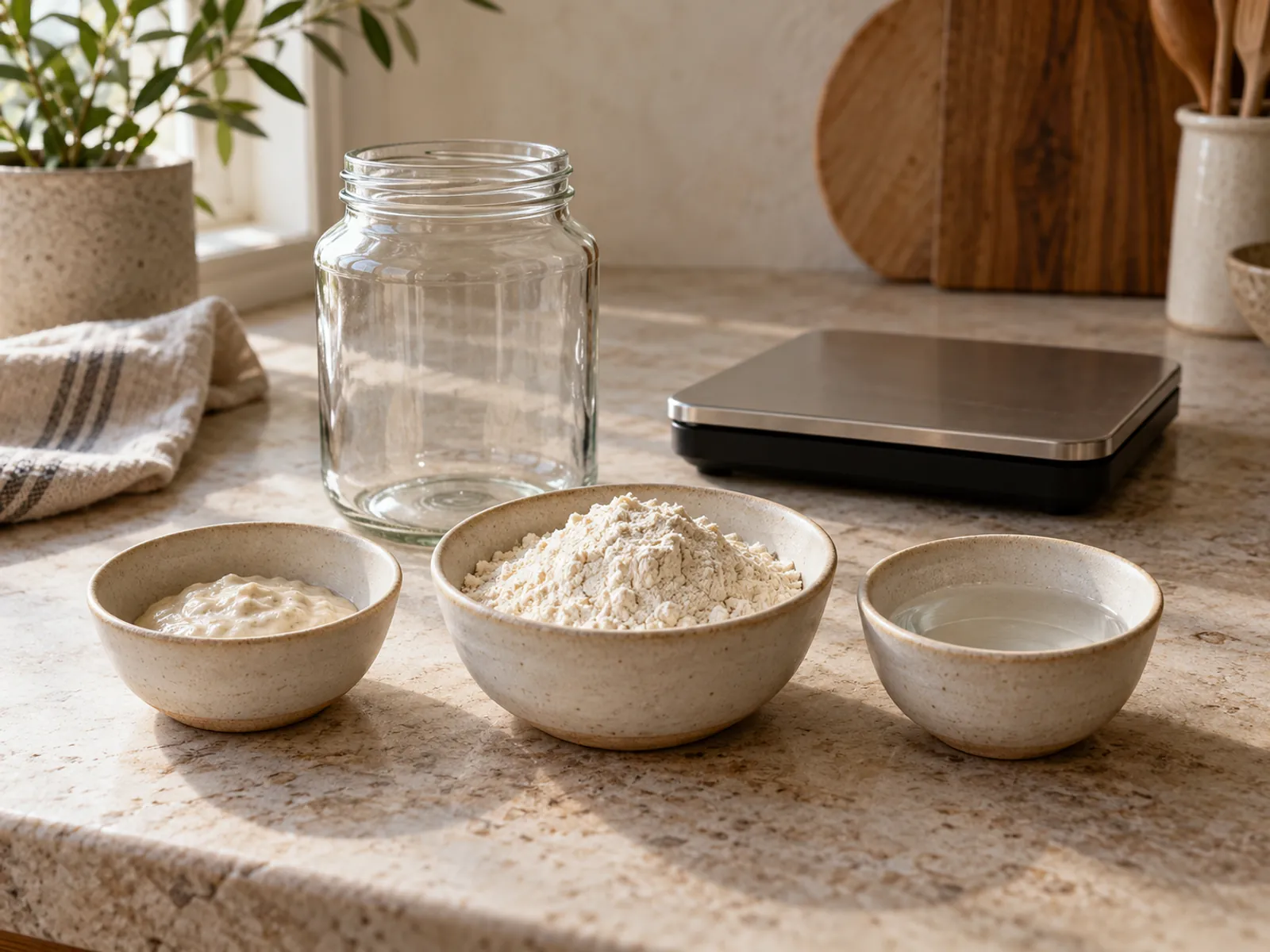
- 1Soak the flakes Put 2 tablespoons (about 15–20g) of dried flakes in a small jar. Add 50g of room-temperature water. Let them soak for 2–4 hours until soft and dissolved.
- 2First feed Add 50g flour (bread flour or all-purpose) and stir well. Cover loosely and leave at room temperature.
- 3Feed daily After 24 hours, discard down to about 20g and feed with 20g flour and 20g water (1:1:1). Repeat daily. You should see bubbles within 1–2 days.
- 4Build strength Continue daily feeds for 3–5 days total. The starter is ready when it doubles reliably within 4–8 hours after a feed, smells yeasty and mildly tangy, and has a domed, bubbly surface at peak.
Related calculator
Sourdough Starter Feeding Calculator
Exact starter, flour, water, and discard for 1:1:1, 1:5:5, or any custom feeding ratio, with a ratio chart and peak times.
Drying methods compared
Air drying (recommended) Spread on parchment at room temperature. Takes 24–48 hours. Safest method — no risk of overheating. Works everywhere.
Food dehydrator Set to the lowest temperature (below 46°C / 115°F). Done in 8–12 hours. Faster and more consistent in humid climates.
Oven — do not use Even the lowest oven setting (typically 75–80°C) is too hot and will kill the culture. Use air drying or a dehydrator instead.
Free Sourdough Baking Playbook (printable PDF)
A printable PDF companion for the sourdough calculators and guides.
Tips and troubleshooting
Dry it at peak the yeast and bacteria count is highest, so more survive dehydration.
Spread thin thick patches take much longer to dry and can grow mould before they finish.
Label and date it you will forget when you made it. Include the flour type and hydration if you want to be thorough.
Make a fresh backup regularly dehydrate a new batch every few months for the strongest possible backup.
Watch for
- If the starter develops mould or coloured spots during drying, discard it and try again — the layer was probably too thick or the room too humid.
- Do not store in a damp environment — moisture reactivates the culture, which then starves and dies without regular feeding.
- Revival taking more than 7 days with no signs of life usually means the culture did not survive. Try a fresh batch of dried flakes, or start a new starter from scratch.