Sourdough Starter Manager
Log each feed, watch your starter rise in a 3D jar and record when it peaks. After two feeds it learns your own starter’s timing, so you know when it will be ready.
- See the rise against the clock
- Learns your starter’s peak time
- Free, no account needed
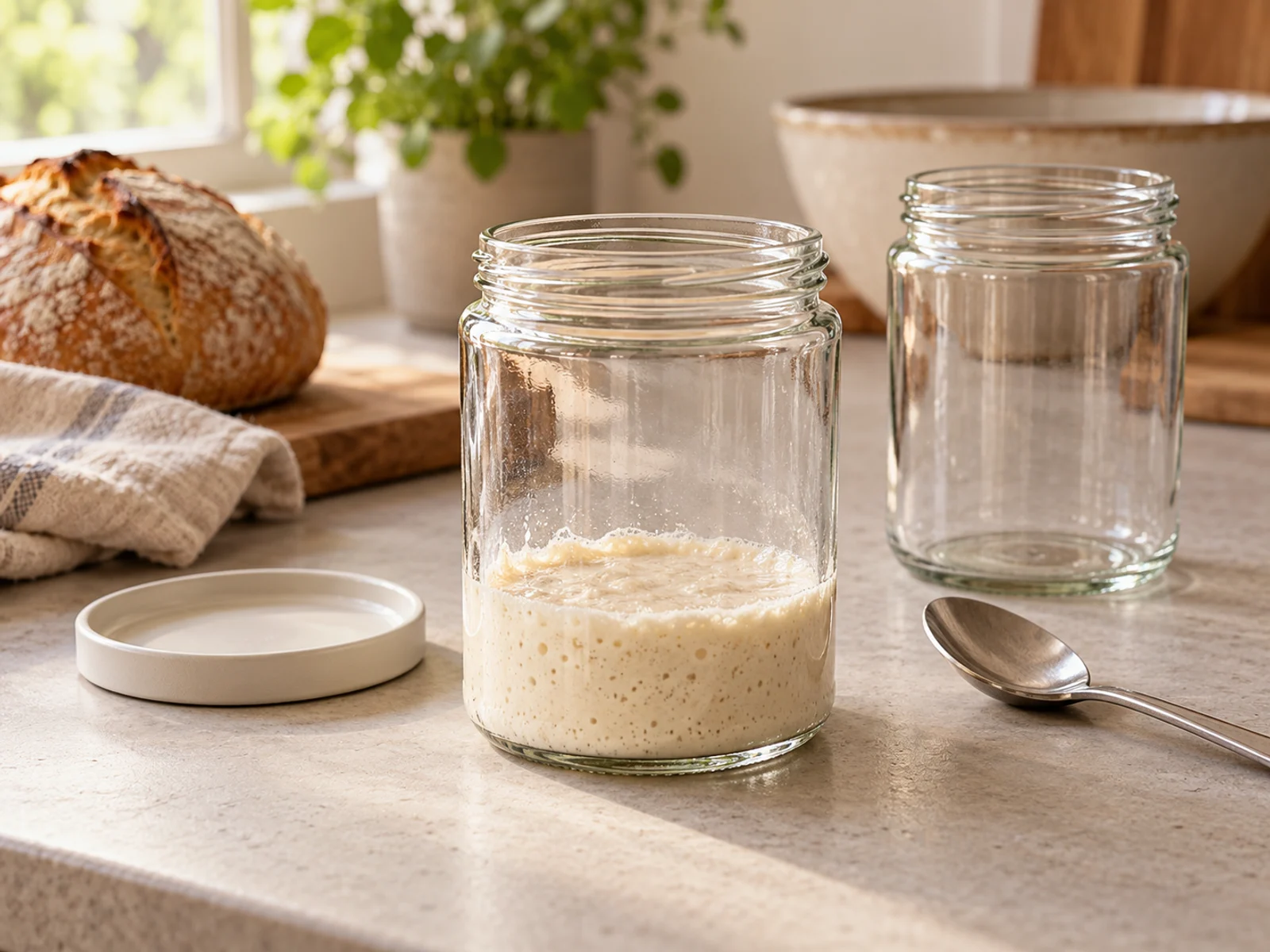
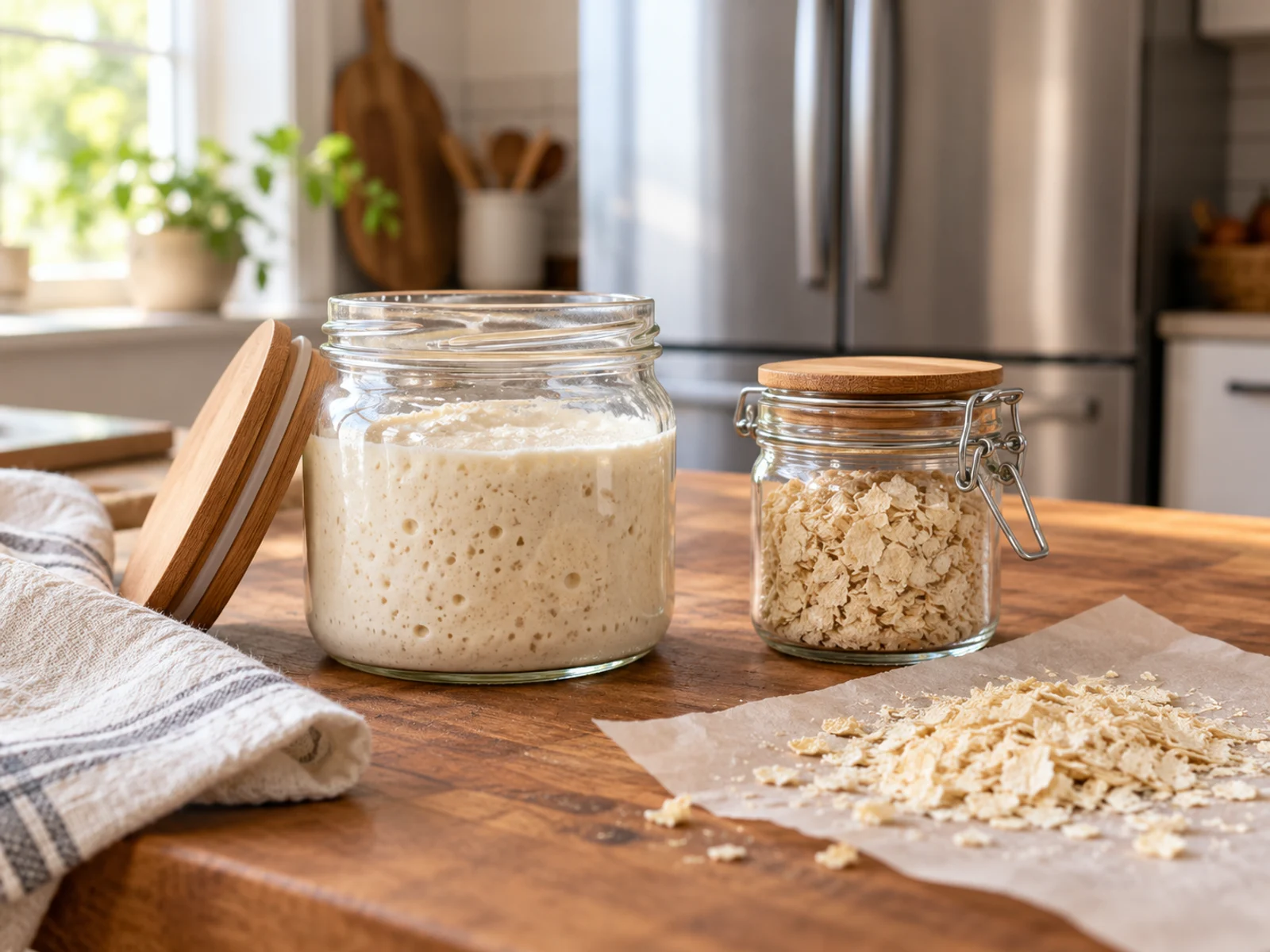
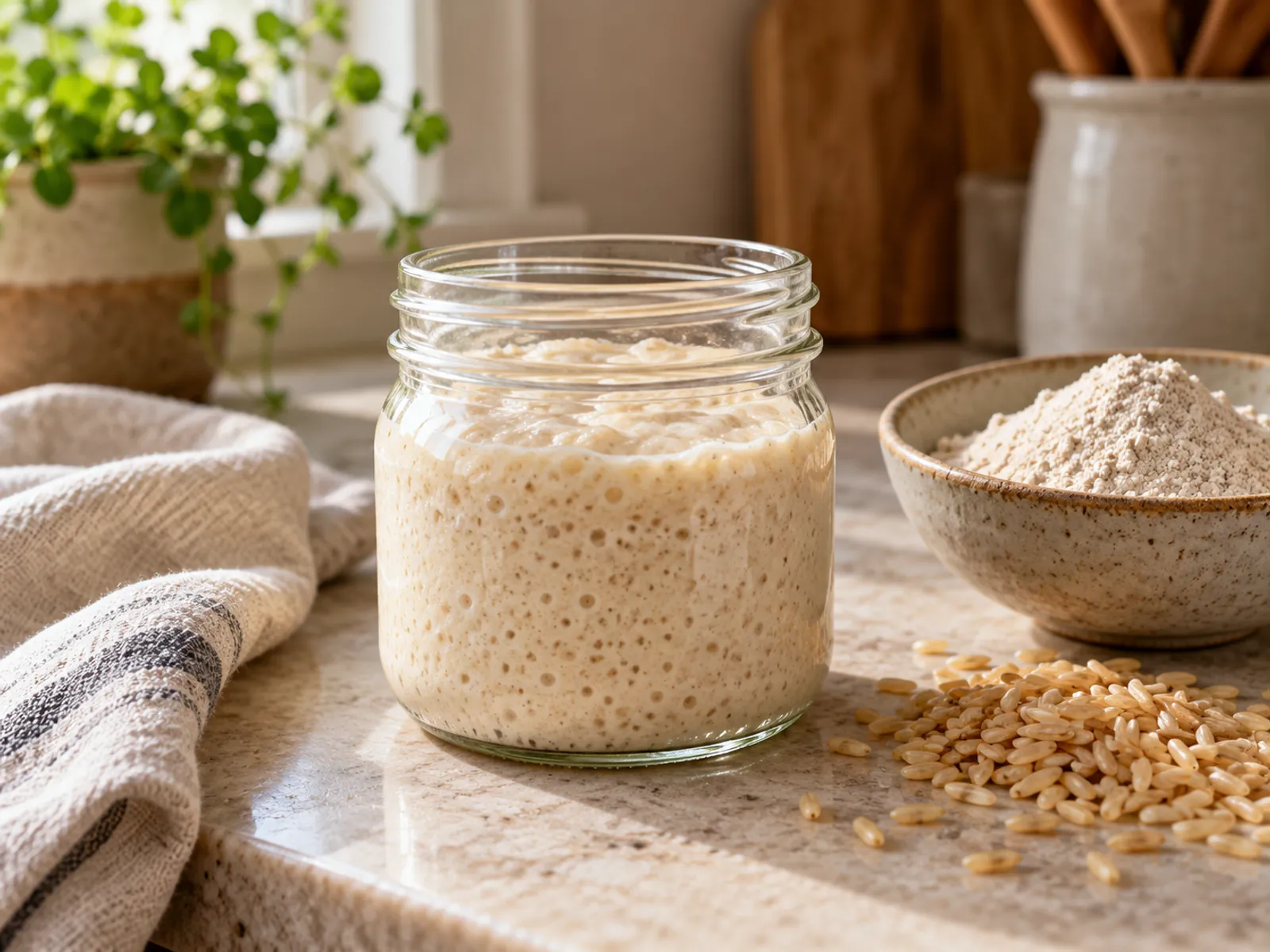
A gluten-free sourdough starter is a live culture of wild yeast and lactic acid bacteria grown entirely on gluten-free flour and water. It works exactly like a wheat starter, colonising a jar of flour and water into something that can leaven bread, but it runs wetter, rises less dramatically, and asks you to read activity by bubbles and smell rather than by a tall domed cap. Give it a warm spot and a daily feed and most cultures are baking-ready in about a week.
Which gluten-free flours work best?
Any whole gluten-free grain flour can host a culture, but they don’t behave the same. The best starters are built on a dependable base with, optionally, a faster flour mixed in to wake the culture up sooner.
| Flour | Speed to active | Behaviour | Best for |
|---|---|---|---|
| Brown rice | Medium (5–7 days) | Predictable, mild, easy to source | The default base flour |
| Buckwheat | Fast (2–4 days) | Vigorous, earthy, pronounced sour | Kick-starting a rice base |
| Sorghum | Medium-fast | Mild and sweet, drinks more water | A gentle, reliable base |
| Teff | Very fast (1–2 days) | Naturally yeast-rich, active quickly | Getting a culture going fast |
| Millet | Slow (5–7 days) | Light, mild, needs patience | Blending, not going solo |
| Oat (certified GF) | Slow | Mild, slightly sweet | Blending for flavour |
Brown rice flour is the workhorse: it ferments steadily and is the easiest to find. Buckwheat, sorghum, and teff carry more wild yeast and more early fuel than rice, so a common trick is to build on a rice base and stir in a spoonful of one of those for the first few days to get things moving.
Why gluten-free starters run wetter
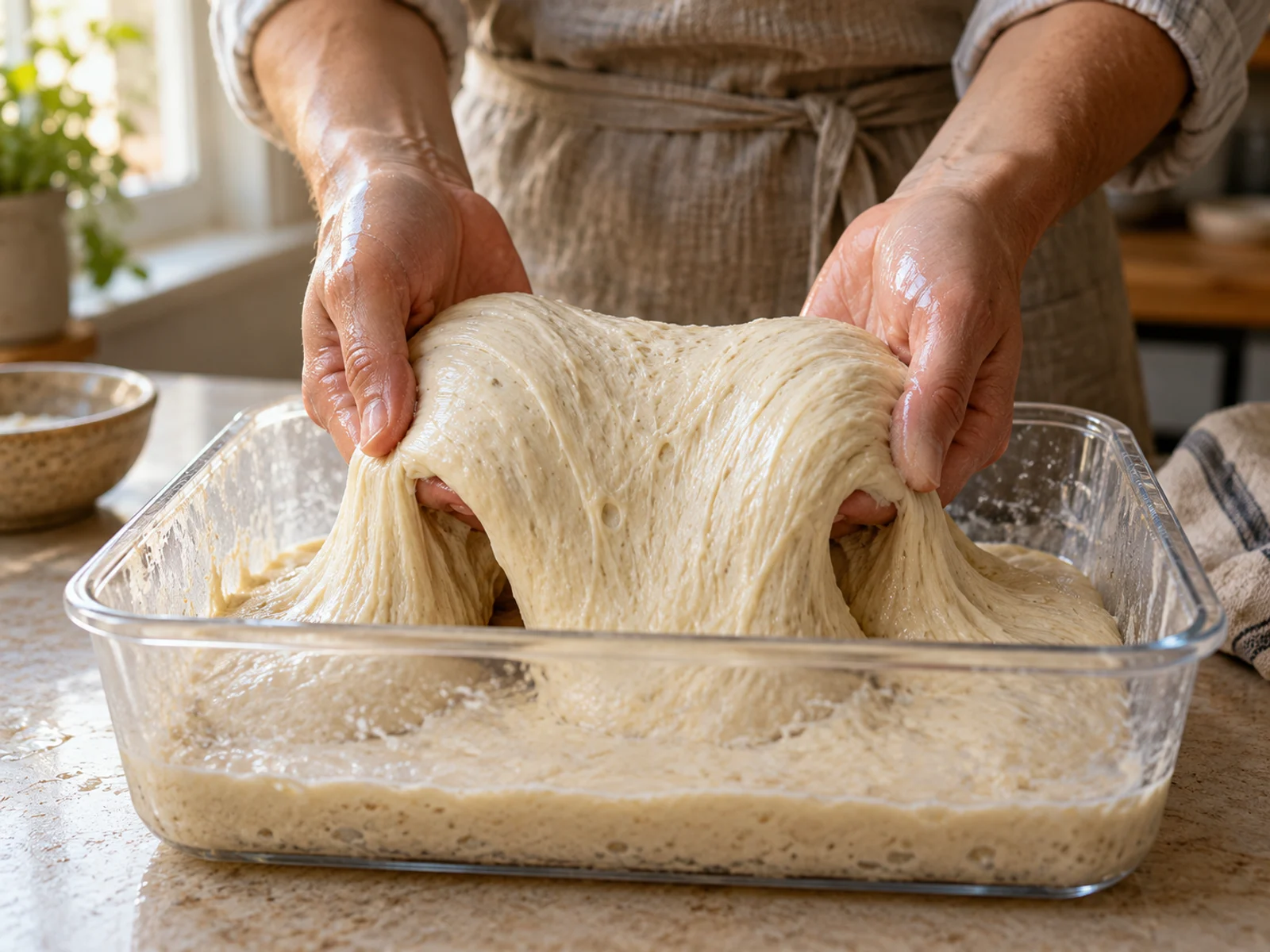
A wheat starter at 100% hydration holds together as a thick paste because gluten forms a stretchy network. Gluten-free flours have no gluten to build that structure, and several of them drink more water, so a gluten-free starter is looser by nature. Aim for a spoonable, thick pancake-batter consistency rather than a dough.
The numbers are a starting point, not a rule. Feed by eye: mix your flour and water, and if the result is stiff or claggy, add water a little at a time until it drops off the spoon like a thick batter. Buckwheat and sorghum swell and thicken as they sit, so they usually need the extra water; a plain rice starter is often happy at a straight 1:1:1 by weight. Once you find the consistency your flour likes, keep it consistent so you can read the culture. To dial in exact flour and water for any ratio and jar size, use the sourdough feeding calculator.
The 7-day build schedule
This schedule assumes a brown rice base kept warm at 24–28C / 75–82F. A cooler kitchen shifts everything later; teff or buckwheat can run a day or two ahead.
- 1Day 1: mix Stir 50g wholegrain brown rice flour and 50g room-temperature water into a clean jar to a thick batter. Mark the level, cover loosely so it can breathe, and set it somewhere warm. Nothing much happens on day 1.
- 2Day 2: first feed You may see early bubbles or a sweet, funky smell. Discard down to about 20–30g, then feed 30g flour and 30–40g water. Re-mark and cover. An early rise here is usually bacteria, not yeast: expected and harmless.
- 3Day 3: the false rise passes Activity may spike then fade. Feed as on day 2. If you want speed, stir a spoonful of buckwheat or teff into this feed to introduce more wild yeast.
- 4Day 4: the quiet spell Many starters go quiet now while the yeast establishes. This is the most common point people give up, and almost always too soon. Keep feeding once daily and hold the warmth.
- 5Day 5: twice-daily feeds Once you see any real bubbling return, switch to feeding morning and evening. Discard to 20–30g each time and feed at your chosen ratio. Twice-daily feeds build strength fastest.
- 6Day 6: building strength Expect a small but genuine rise a few hours after each feed, bubbles through the body, and a cleaner sour aroma. Keep the ratio and timing steady so you can compare feeds.
- 7Day 7: check for readiness The culture is likely ready: bubbly throughout, foamy or slightly domed on top, and pleasantly sour. Confirm it behaves the same way over three feeds in a row before you bake with it.
For the full picture of how a starter progresses through its stages, see the companion guide on how to make a sourdough starter, which covers the same false-rise and slump pattern in more depth.
Feeding cadence and keeping it alive
The rhythm is the same cycle every wheat baker uses: discard most of the jar, then feed the small amount you kept. Discarding keeps the acid load low, and too much accumulated acid stalls the yeast, which is a common cause of a sluggish gluten-free culture.
Gluten-free starters ferment quickly and can turn acidic and hungry faster than wheat, so if yours smells sharp or throws a layer of grey liquid on top, it wants feeding more often, not less. For the mechanics of ratios, timing, and amounts, the feeding a sourdough starter guide applies directly to gluten-free cultures too.
Related calculator
Sourdough Starter Feeding Calculator
Exact starter, flour, water, and discard for 1:1:1, 1:5:5, or any custom feeding ratio, with a ratio chart and peak times.
Reading activity when there's no gluten
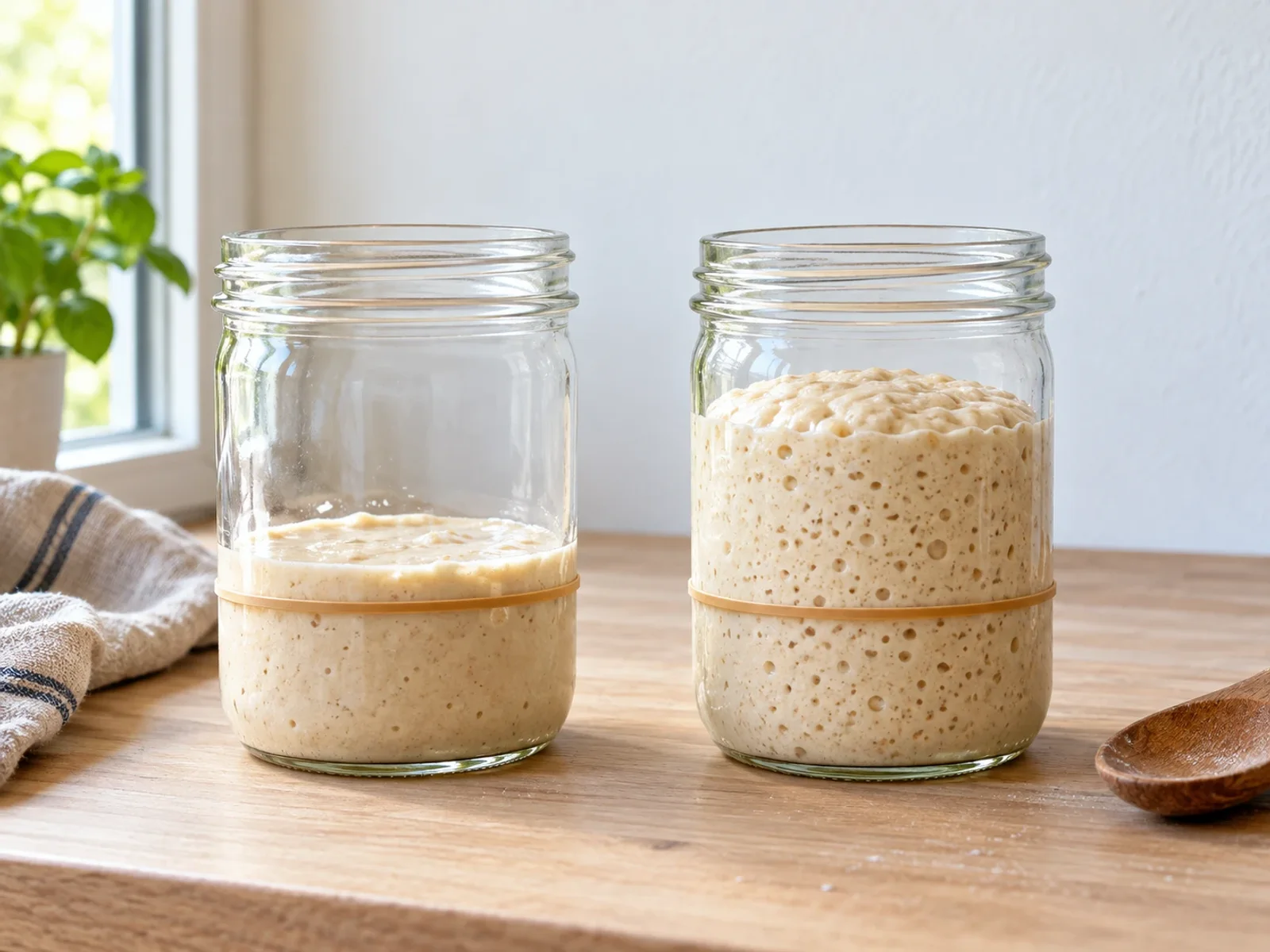
This is where gluten-free bakers get tripped up. A wheat starter announces itself by doubling and doming, because gluten traps the gas. A gluten-free starter makes just as much gas but can’t hold it, so it rarely climbs the jar the same way. You read it differently.
Because the rise is subtle, the float test is less reliable here than for wheat, and a wet gluten-free starter often sinks even when active. Trust bubbles and aroma first.
Free Sourdough Baking Playbook (printable PDF)
A printable PDF companion for the sourdough calculators and guides.
How a gluten-free starter behaves differently
If your only reference is a wheat starter, several gluten-free quirks can read as failure when they’re completely normal. Knowing them in advance keeps you from throwing out a healthy culture.
Gluten-free starters tend to ferment faster and peak sooner once established, so they can go from ready to overripe quickly. They rise less, so height is a poor gauge. And they can smell stronger, buckwheat especially, without anything being wrong. Two things carry across from wheat unchanged: warmth speeds everything up, and consistency, feeding at the same ratio and time, is what makes the culture predictable enough to plan a bake around. When you move on to baking, the same fermentation timing thinking applies, which the bulk fermentation calculator and levain calculator both help with.
You cannot convert a wheat starter
This is the rule that matters most if the starter needs to be safe for coeliac disease or a genuine gluten allergy. A gluten-free starter must be built fresh, from gluten-free flour, in clean equipment. You cannot take a wheat starter and feed the gluten out of it.
Watch for
- A wheat starter carries gluten in every gram Feeding it gluten-free flour dilutes but never removes it, so it stays unsafe for coeliacs.
- Sourdough fermentation lowers gluten but does not eliminate it a wheat, spelt, or rye sourdough is not gluten-free however long it ferments.
- Use certified gluten-free flour Standard oats, and even some rice and buckwheat, are cross-contaminated with wheat at the mill.
- Keep equipment separate a jar, spoon, and scale that have handled wheat flour or dough can transfer enough gluten to matter.
- Wheat flour dust lingers in the air and on surfaces for hours Build and feed a coeliac-safe starter in a clean space, away from wheat baking.
If the starter is only for a gluten-free preference rather than a medical need, you have more latitude, but building fresh from gluten-free flour is still the simplest way to get a clean, reliable culture.
Troubleshooting problem signs
Most gluten-free starter problems come down to temperature, feeding, or misreading a subtle rise. Work through these before deciding a culture has failed.
Watch for
- No activity after 7–10 days Too cold or too little food: move it to 24–28C / 75–82F and feed twice daily.
- Rose big on day 2–3 then stopped The normal false rise; keep feeding through the quiet days that follow.
- Smells sharp, like vinegar or nail polish Overripe and hungry; feed more often and discard more heavily.
- Thin and lifeless with grey liquid on top Hooch from a hungry starter; pour it off and feed.
- Pink, orange, or fuzzy growth Contamination, not fermentation: discard the whole jar and start fresh in clean equipment.
- Never climbs the jar Expected for gluten-free; judge by internal bubbles and smell, not height.
A pink or orange tinge or any fuzzy mould is the one sign that means start over. Everything else on this list is fixable with warmth, consistent feeding, and a little patience.