Sourdough Starter Manager
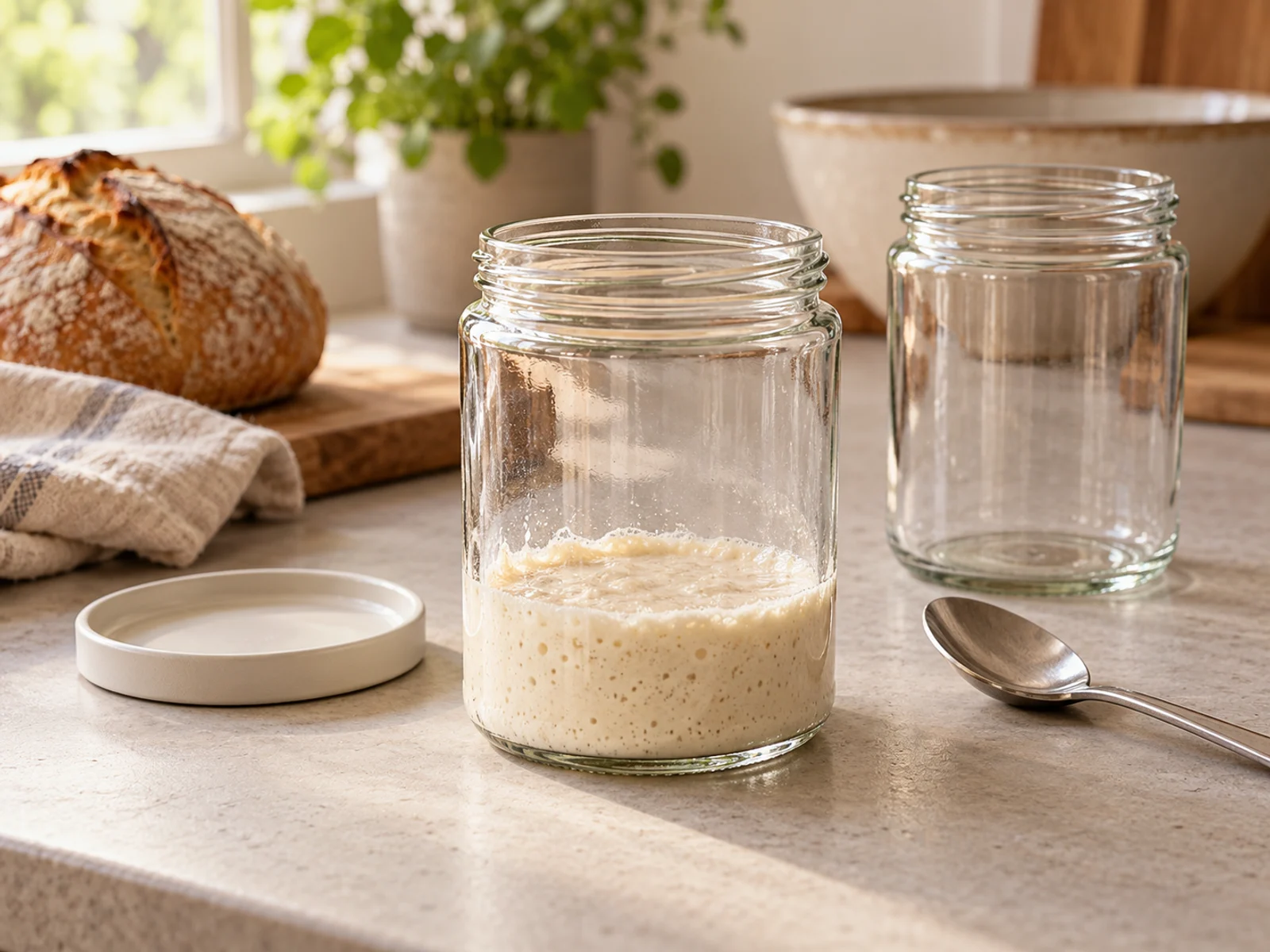
Log each feed, watch your starter rise in a 3D jar and record when it peaks. After two feeds it learns your own starter’s timing, so you know when it will be ready.
- See the rise against the clock
- Learns your starter’s peak time
- Free, no account needed
You put a day into that loaf — don’t let it go stale by day two. Sourdough actually keeps better than most bread thanks to its natural acidity, but only if you store it right. The good news is the rules are simple, and most of them are about what not to do.
The golden rules
Storage is a trade-off between a crisp crust and a soft crumb. These principles hold whichever you choose.
Day 1–2: on the counter
For the first day or two, the counter is the best place for a crusty loaf.
- 1Cool fully Let the loaf cool completely on a rack — ideally a few hours — before you cut or store it.
- 2Cut from the middle (optional) Some bakers slice from the centre and press the two halves together, protecting more crumb than cutting from an end.
- 3Store cut-side down Sit the loaf cut-face-down on a board or counter. The crust shields the top and the cut face rests on the surface, slowing moisture loss.
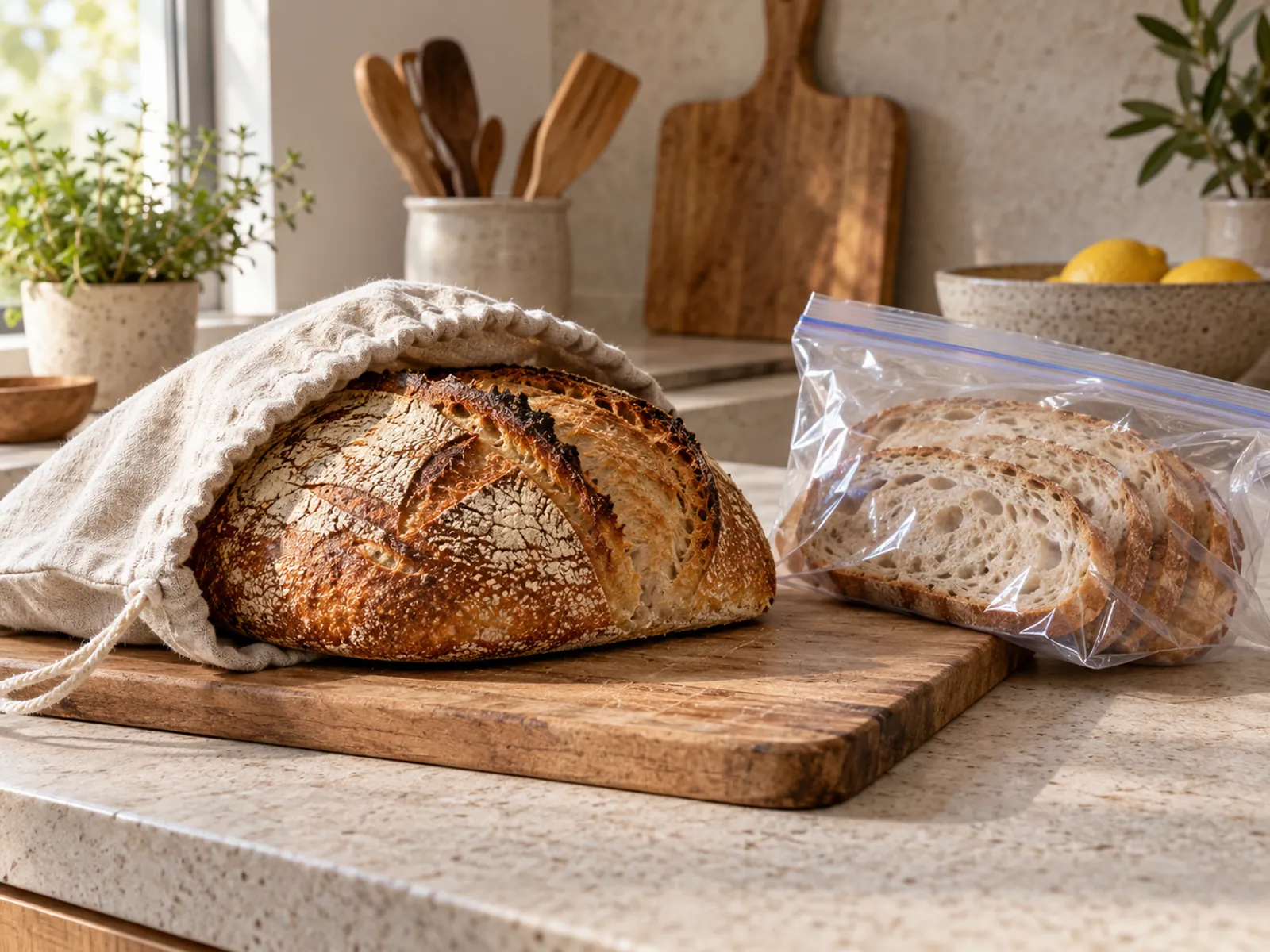
- 4Leave it unwrapped or bag it in paper Open air or a paper bag keeps the crust crackly. Add a bread box if you want a little more protection.
Crust crisp or crumb soft?
Choose your storage by what you care about most.
Freezing for the long haul
Freezing is the single best way to keep sourdough — and it locks in near-fresh quality if you do it early.
- 1Cool completely Never freeze a warm loaf; let it cool fully so no steam is trapped.
- 2Slice first Slice the loaf before freezing so you can pull out only what you need and toast from frozen.
- 3Wrap airtight Bag or wrap the slices with the air pressed out to prevent freezer burn. A whole loaf can be double-wrapped instead.
- 4Freeze up to ~3 months Label and freeze. Toast slices straight from frozen, or thaw a whole loaf and refresh it in the oven.
Free Sourdough Baking Playbook (printable PDF)
A printable PDF companion for the sourdough calculators and guides.
Reviving a stale loaf
Day-old sourdough isn’t a lost cause — a hot oven brings it back.
Lightly mist the whole loaf with water (or hold the crust briefly under a running tap), then bake at 180–200°C (360–390°F) for 5–10 minutes. The moisture turns to steam inside, re-softening the crumb, while the heat re-crisps the crust. It comes out remarkably close to fresh. One catch: refreshed bread stales again quickly, so do this just before you plan to eat it.
Common storage mistakes
Watch for
- Wrapping a warm loaf → traps steam, soggy crust and gummy crumb; always cool first
- Storing in the fridge → speeds up staling; use the counter or freezer instead
- Sealing a crusty loaf in plastic on day one → softens the crust you worked for
- Freezing without slicing → you have to thaw the whole thing to get one piece
- Refreshing too early → refreshed bread goes stale fast, so reheat just before eating
Choose storage by when you will eat it
For a plain sourdough loaf, keep the portion you will eat soon at room temperature and freeze the rest once fully cool. A breathable cover protects the loaf while sacrificing some softness; an airtight bag preserves softness while softening the crust. There is no universal number of mold-free days for a homemade loaf.
| Method | Practical planning window | Texture and next step |
|---|---|---|
| Counter, cut side protected | Today to the next day | Best crust, but exposed crumb dries quickly |
| Bread box or breathable bag | The next few days, if conditions allow | Check daily; heat and humidity shorten the useful window |
| Airtight bag | Short-term softness | Crust softens; toast or refresh for crispness |
| Refrigerator | A compromise in a hot, mold-prone kitchen | Can accelerate staling; freezing is usually better for texture |
| Freezer, well wrapped | Portion now for later meals; best quality within a few months | Toast slices from frozen or thaw a wrapped loaf |
Slice before freezing if you normally eat one or two slices at a time. Separate portions so you do not thaw and refreeze the whole loaf repeatedly. Do not seal warm bread: trapped steam produces condensation. A filled or topped bread with perishable ingredients needs its own storage instructions.
Hardening and mold are different problems. A stale, otherwise sound loaf may be toasted; visible mold means discard the loaf, not trim one slice. See King Arthur’s storage explanation and USDA mold guidance.