Scale
Choose the number and weight of dough balls.

Sourdough · Calculator
Calculate flour, water, starter or instant yeast, salt and oil for pizza dough balls. Includes 10–16-inch size presets and party quantities.
Percentages use total flour, including starter flour. Inputs outside the displayed limits are constrained in the calculation. Leavener amounts are your choice, not a guaranteed fermentation schedule.
2.3 is a starting assumption for a moderately thin round pizza. Choose a higher loading for a thicker base, then apply a size preset.
Last size preset: 12 inches. You can edit the ball weight independently.
Your dough batch
1,040 gTotal flour: 620.9 g. Starter flour and water are already included, so do not add them twice. Displayed ingredients are rounded independently.
What to do next
4 balls at 260 g
Free printable
A batch card made from your numbers, to save as a PDF or receive by email:
| Diameter | Suggested ball weight | Assumption |
|---|---|---|
| 10 inches | 181 g | Round, moderately thin base |
| 12 inches | 260 g | Round, moderately thin base |
| 14 inches | 354 g | Round, moderately thin base |
| 16 inches | 462 g | Round, moderately thin base |
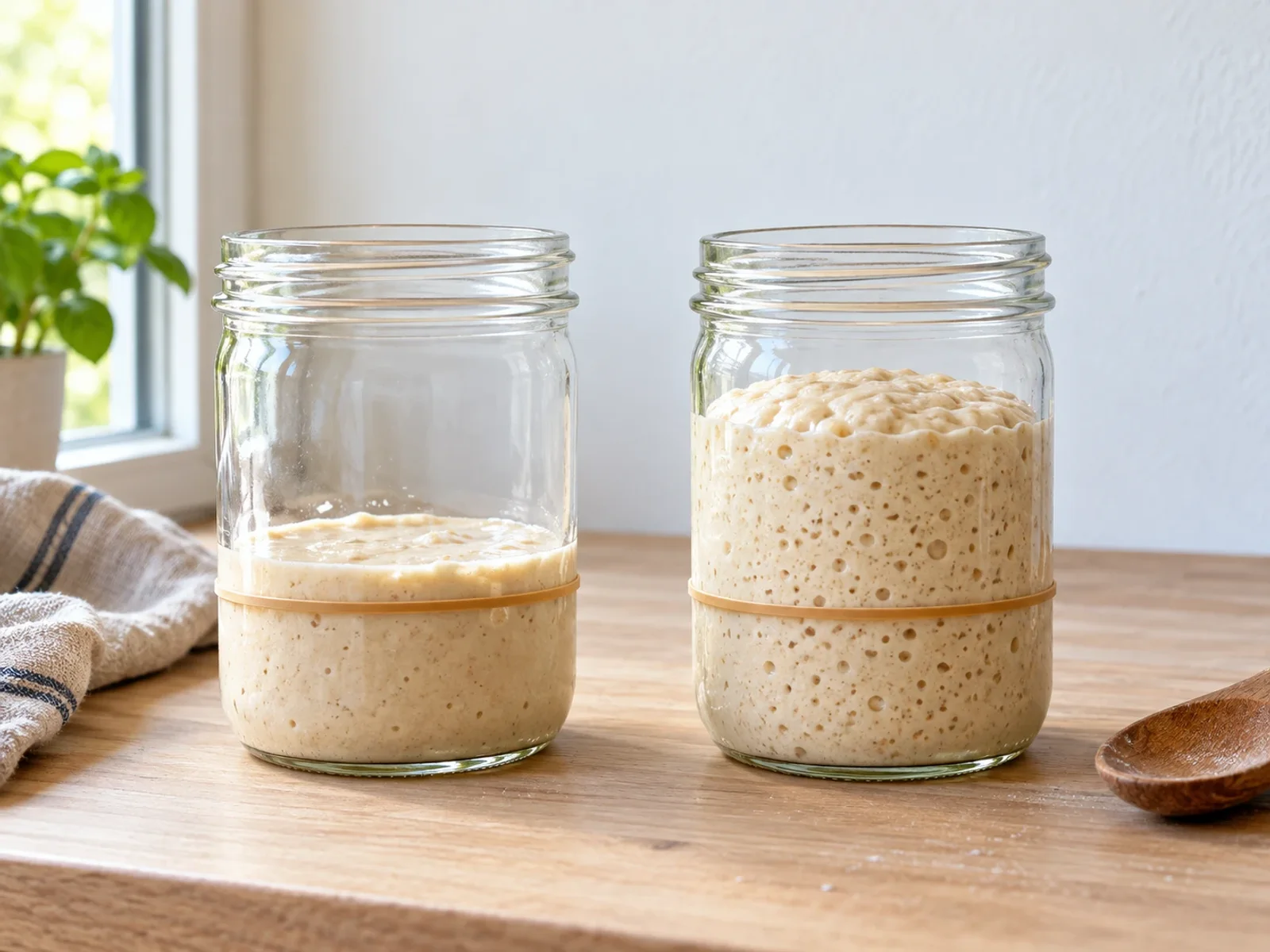
Log each feed, watch your starter rise in a 3D jar and record when it peaks. After two feeds it learns your own starter’s timing, so you know when it will be ready.
Calculator guide
Calculate flour, water, starter or instant yeast, salt and oil for pizza dough balls. Includes 10–16-inch size presets and party quantities.
Choose the number and weight of dough balls.
Includes the water and flour carried in sourdough starter.
Diameter presets assume a dough loading you can change.
Total flour = dough weight ÷ (1 + hydration + salt + oil + yeast)Use decimal fractions in the formula. Starter replaces some of the flour and water; it is not added on top of the batch total.
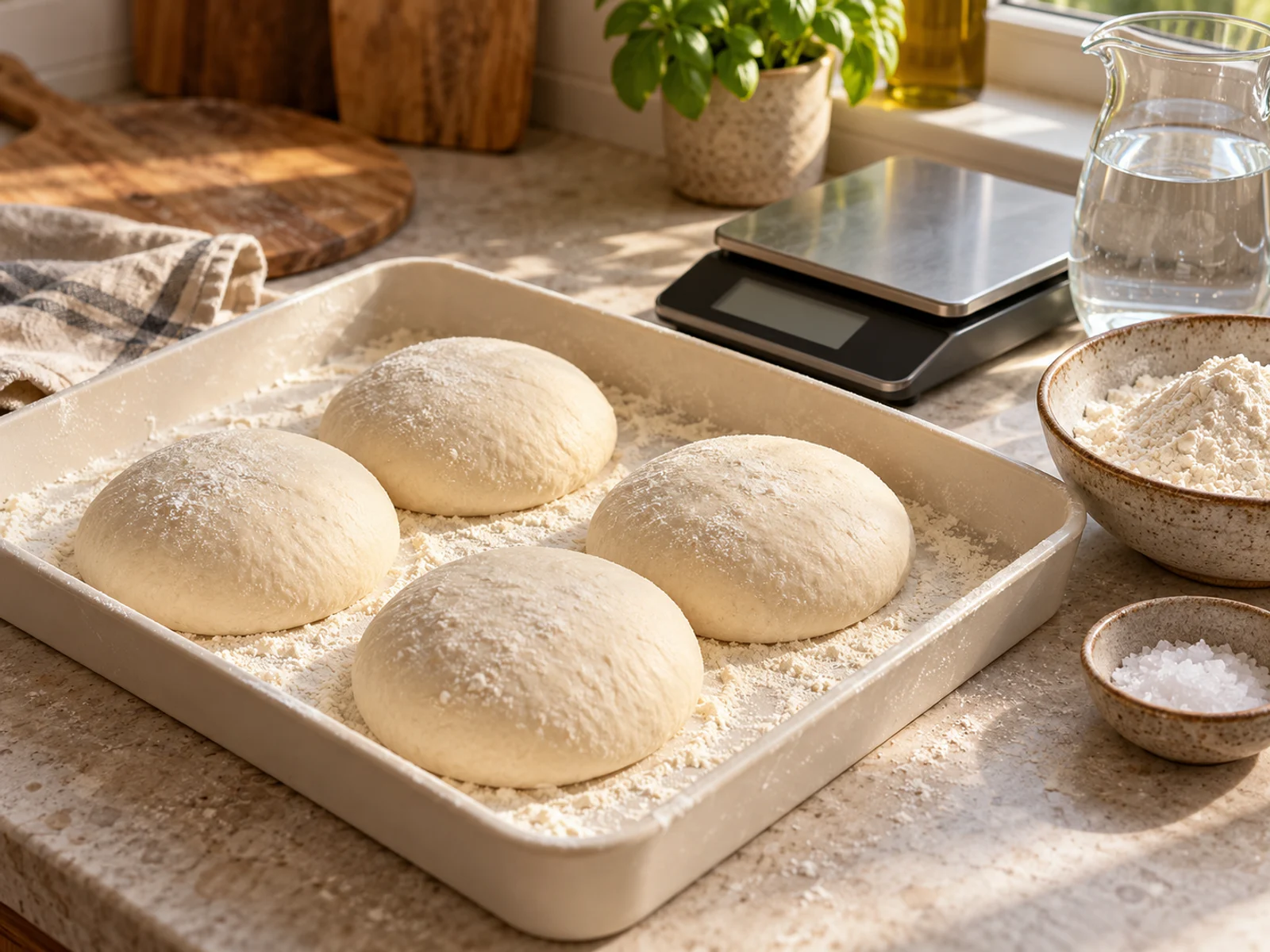
At 65% hydration, 2.5% salt, no oil and 20% starter, four balls make 1,040g dough. Total flour is about 620.9g. A 100%-hydration starter contributes about 62.1g flour and 62.1g water. Add about 558.8g flour, 341.5g water, 124.2g starter and 15.5g salt.
Weigh ingredients rather than converting each independently to cups. Keep the starter hydration setting accurate: stiff starter contains more flour per gram than a liquid starter, so it changes both additions.
A round pizza area is π × radius². At the same thickness a 16-inch pizza needs about 1.78 times as much dough as a 12-inch pizza, not one third more. The calculator uses grams per square inch to convert that area to a ball weight.
The default 2.3g per square inch gives approximately 181g for 10 inches, 260g for 12, 354g for 14 and 462g for 16. These are adjustable starting assumptions. Pan pizzas and deep bases need a different loading; a large rim also changes the balance between centre and edge.
Start with a manageable dough rather than chasing the highest hydration. A moderate 60–65% dough is easier to ball and launch than a very wet one. Higher hydration is not automatically better, particularly when your flour is weak or your oven cannot dry the base effectively.
Oil can soften the crumb and help some home-oven styles, but it is optional. Traditional high-temperature lean doughs and oiled pan doughs are different workflows. Match the ingredients to the recipe and cooking equipment instead of treating one preset as universal.
The leavener field specifies an ingredient amount, not a time-to-ready model. An active starter, a sleepy refrigerated culture and a strong commercial yeast inoculation will behave differently even at the same dough temperature. Use our bulk fermentation tool for a sourdough planning window and confirm readiness by expansion and strength.
For an overnight bake, establish fermentation before chilling, divide and ball according to your chosen method, and allow sufficient relaxation before stretching. A refrigerator slows fermentation; it does not instantly cool the centre of a large dough mass. Reserve space around covered dough balls so they can grow.
If the dough snaps back, cover it and rest before continuing. If it tears, stop pulling and protect the thin spot rather than rolling the entire ball thinner. Keep the rim airy and the centre reasonably even. Use only enough bench flour to prevent sticking.
Preheat a stone or steel according to its manufacturer, use an appropriate rack and keep wet toppings restrained. Never exceed parchment temperature limits or pour water on a hot stone. For pan-style methods and topping ideas, follow the sourdough pizza guide linked below.
A pale base can mean insufficient preheat, excess flour on the underside or an overloaded wet topping. A dense edge can come from under-fermentation, rough degassing or dough that was stretched while still tight. A spreading dough may be over-fermented or too wet for its flour.
Change one variable at a time and record dough temperature, time, ball weight and diameter. Those observations make the next preset more useful than increasing yeast, water and fermentation time together.
FAQ
Printed book · Delivered to you
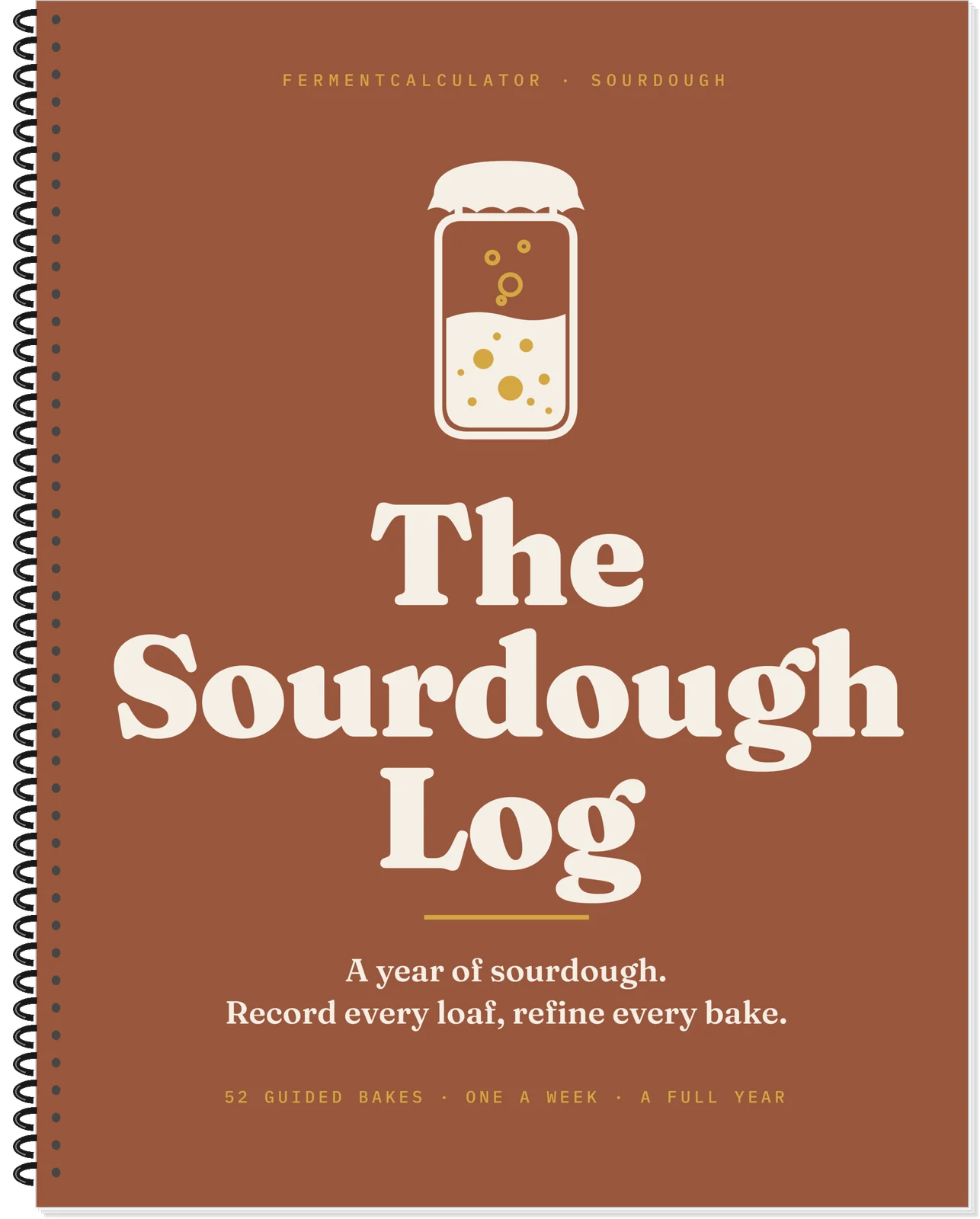
A spiral-bound book delivered to your door, ready to write in. 52 bake records in a spiral-bound journal that lies flat.
Digital download · Print at home
Download the files and print your own copy. No book is shipped. 52 guided bake spreads to download and print at home.
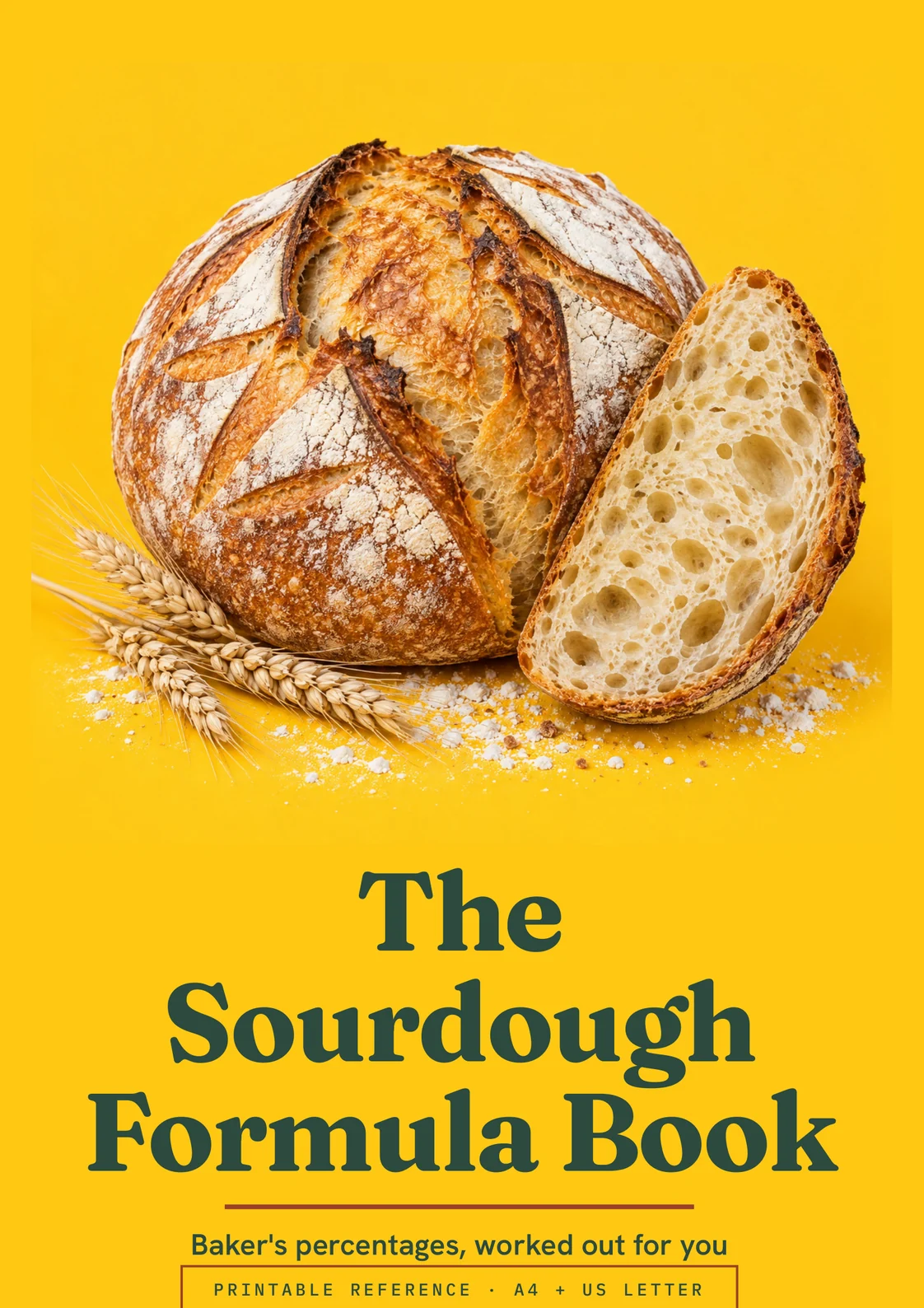
Digital download · Print at home
Download the files and print your own copy. No book is shipped. Baker's percentages, worked out for you.
One printable PDF covering core sourdough methods — hydration, starter, feeding, levain, bulk fermentation, and discard.
Calculators and guides for your next step.