Sourdough Starter Manager
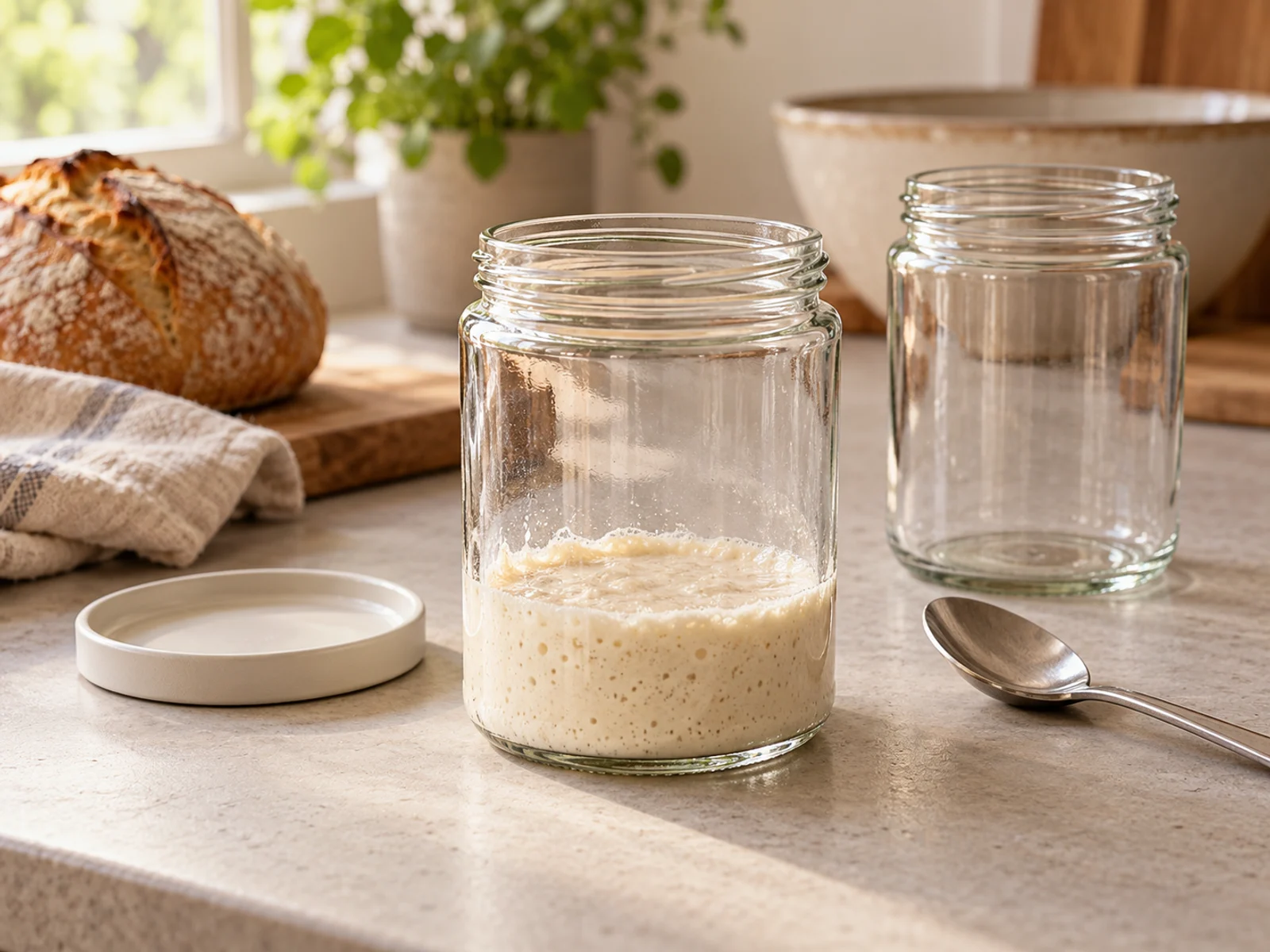
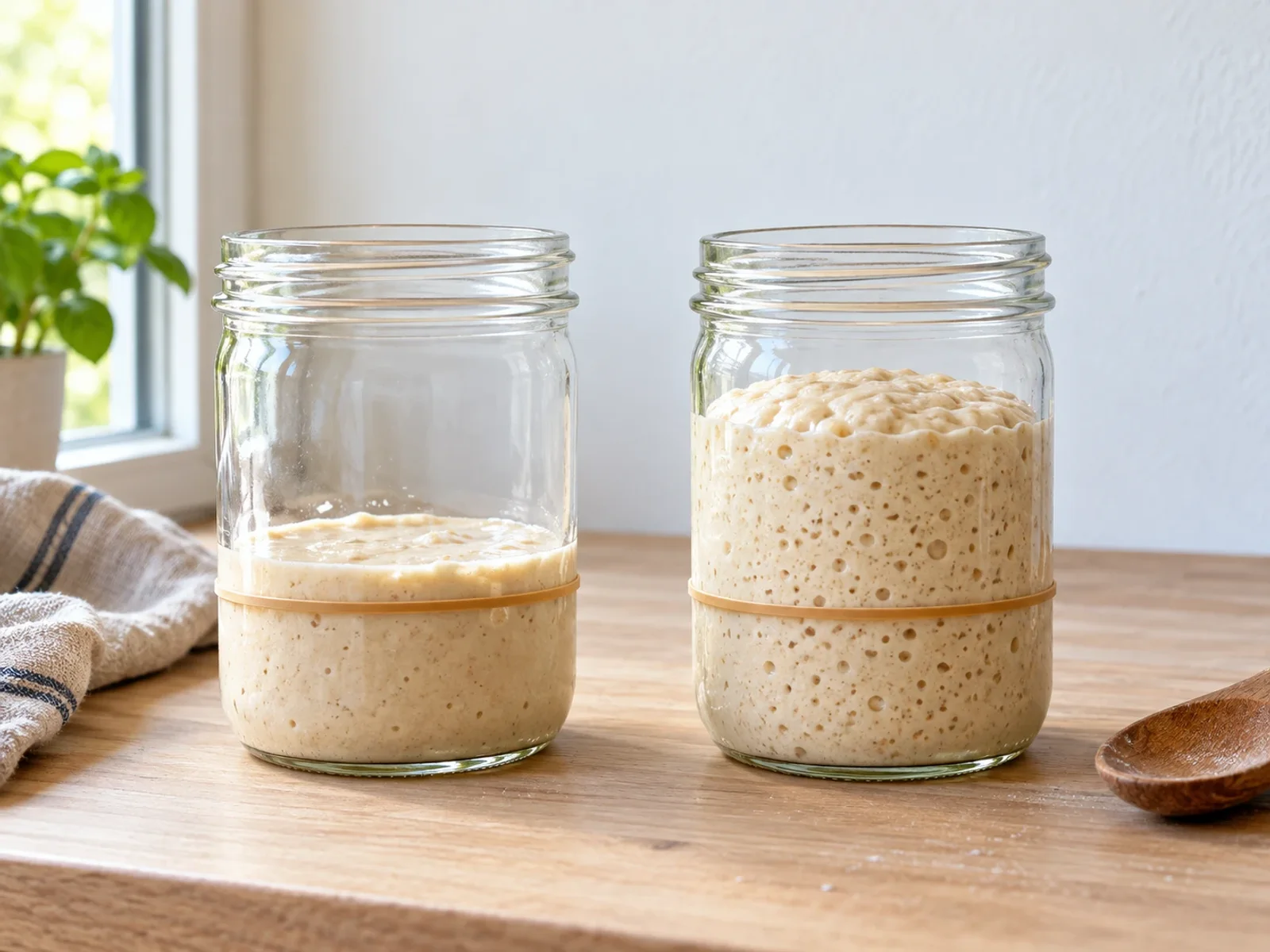
Log each feed, watch your starter rise in a 3D jar and record when it peaks. After two feeds it learns your own starter’s timing, so you know when it will be ready.
- See the rise against the clock
- Learns your starter’s peak time
- Free, no account needed
Sourdough pizza takes everything good about sourdough — the flavour, the chew, the easy digestibility — and puts it under cheese. It’s also forgiving: a pizza crust doesn’t need the perfect rise a boule does, so it’s a great way to use an active starter or a jar of discard. This guide covers both a high-hydration Detroit-style pan pizza and a gentler einkorn version.
Two ways to ferment the dough
The single biggest flavour decision is how long you ferment. Both approaches work — pick by how much time you have.
Hydration by style
Match the water to the crust you want. The pan supports wet dough, so pan styles go higher; a thin round crust stays lower to crisp up.
Detroit-style, step by step
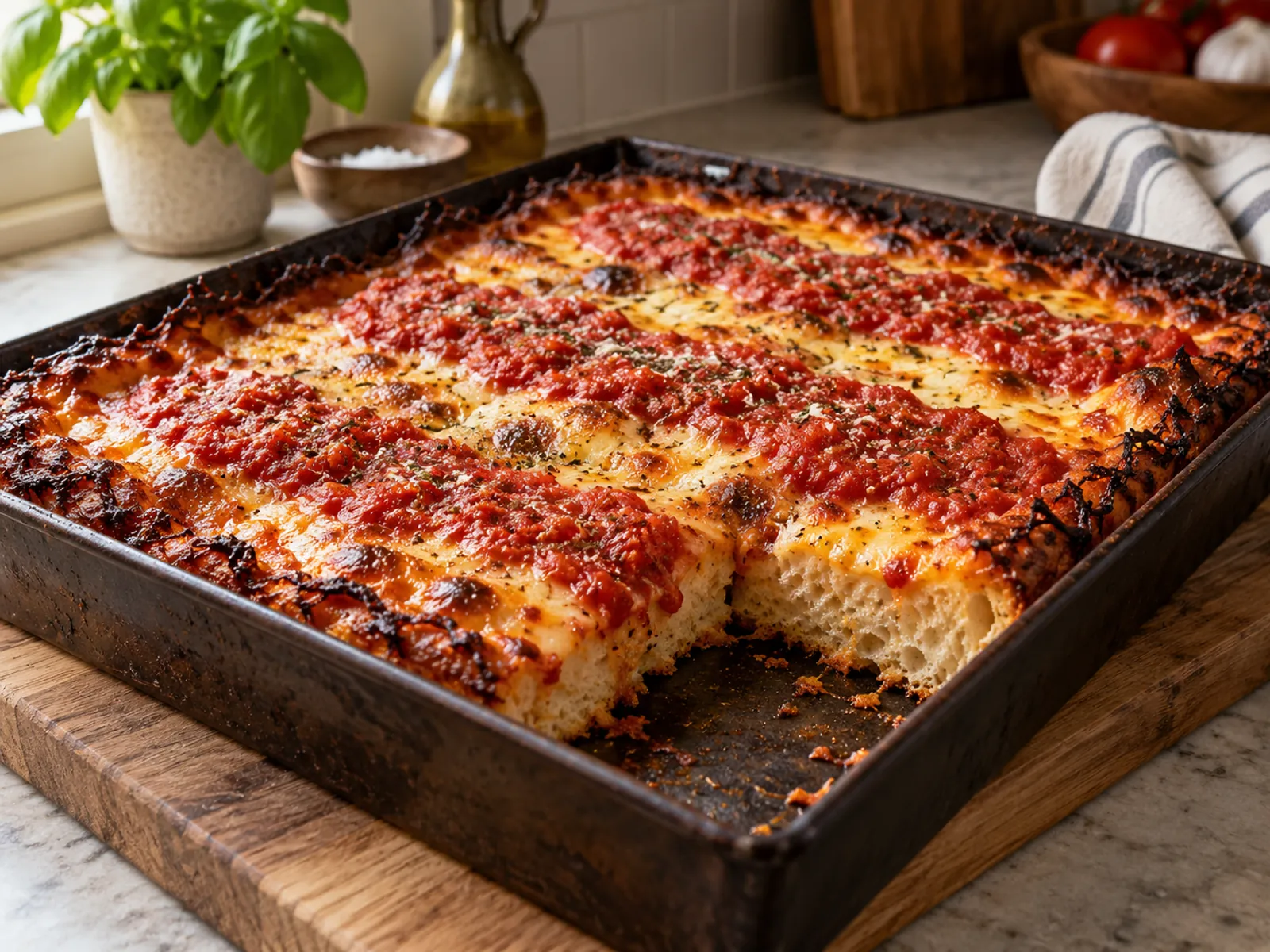
Detroit-style is the ideal sourdough pizza for home ovens: high hydration, baked in a steel pan, with those addictive caramelised cheese edges.
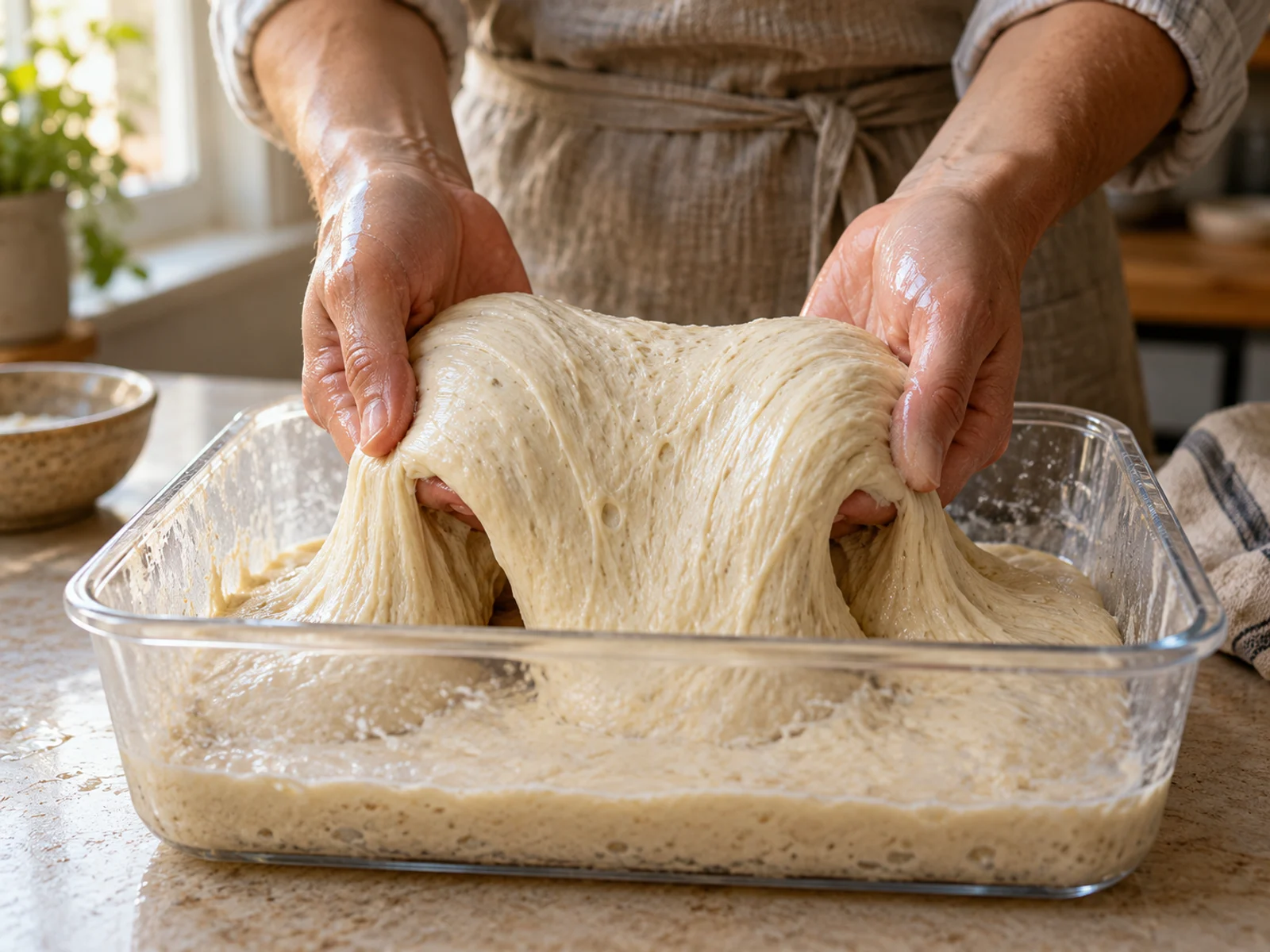
- 1Mix a wet dough Mix a 70–75% hydration dough with active starter. Give it a few folds, then bulk briefly and cold-retard 24–72 hours for flavour.
- 2Pan and rest Oil a steel Detroit pan generously, press the dough toward the edges, and let it relax and puff in the pan until light and bubbly. Re-stretch to the corners as it relaxes.
- 3Cheese to the edges Cover the dough right to the walls of the pan with brick cheese (or a low-moisture mozzarella blend). The cheese against the hot steel becomes the crispy frico crust.
- 4Sauce on top Ladle sauce in stripes over the cheese — the Detroit "racing stripes" — rather than under it.
- 5Bake hot Bake at 245–260°C (475–500°F) until the interior is set and the cheese edges are deep, crisp, and caramelised. Release with an offset spatula while hot.
Related calculator
Baker's Percentage Calculator
Turn your flour weight and ingredient percentages into exact grams for water, salt, starter, fat, and sugar — and scale any recipe.
Making it with einkorn
Einkorn makes a tender, nutty, golden crust — but its weak gluten needs a gentler plan than modern wheat.
Free Sourdough Baking Playbook (printable PDF)
A printable PDF companion for the sourdough calculators and guides.
Baking hot
Heat is everything. For thin round pizza, preheat a baking steel or stone at the oven’s maximum for 45–60 minutes and bake fast — a few minutes — so the base crisps before the toppings overcook. For Detroit and pan styles, the pizza bakes longer in its pan at a slightly lower temperature so the thick interior sets fully and the cheese edges caramelise. Whatever the style, a fully preheated surface or pan is what gives a crisp, non-soggy bottom.
Troubleshooting
Watch for
- Dense, tough crust → under-fermented dough, or over-worked; ferment longer and handle less
- Dough won't stretch / snaps back → not relaxed enough; rest it longer at room temperature
- Soggy bottom → surface or pan not hot enough, or too much sauce
- No caramelised Detroit edge → not enough cheese to the walls, or pan not oiled/hot enough
- Gummy einkorn crust → hydration too high or over-proofed; go drier and bake fully
Size your dough before adapting the pizza style
Use the pizza dough calculator to size a batch by balls and weight, or apply a 10–16-inch round-pizza preset. It counts starter flour and water in the total hydration, so you do not accidentally make a larger or wetter batch by adding the starter on top.
Round size presets use an explicit dough loading. A Detroit-style pan pizza has a different area, thickness and pan-oil workflow; do not assume that the thin round preset is its formula. For a party, set an appetite assumption and round up the number of balls, then decide how many can proof and bake comfortably with your equipment.