Sourdough Starter Manager
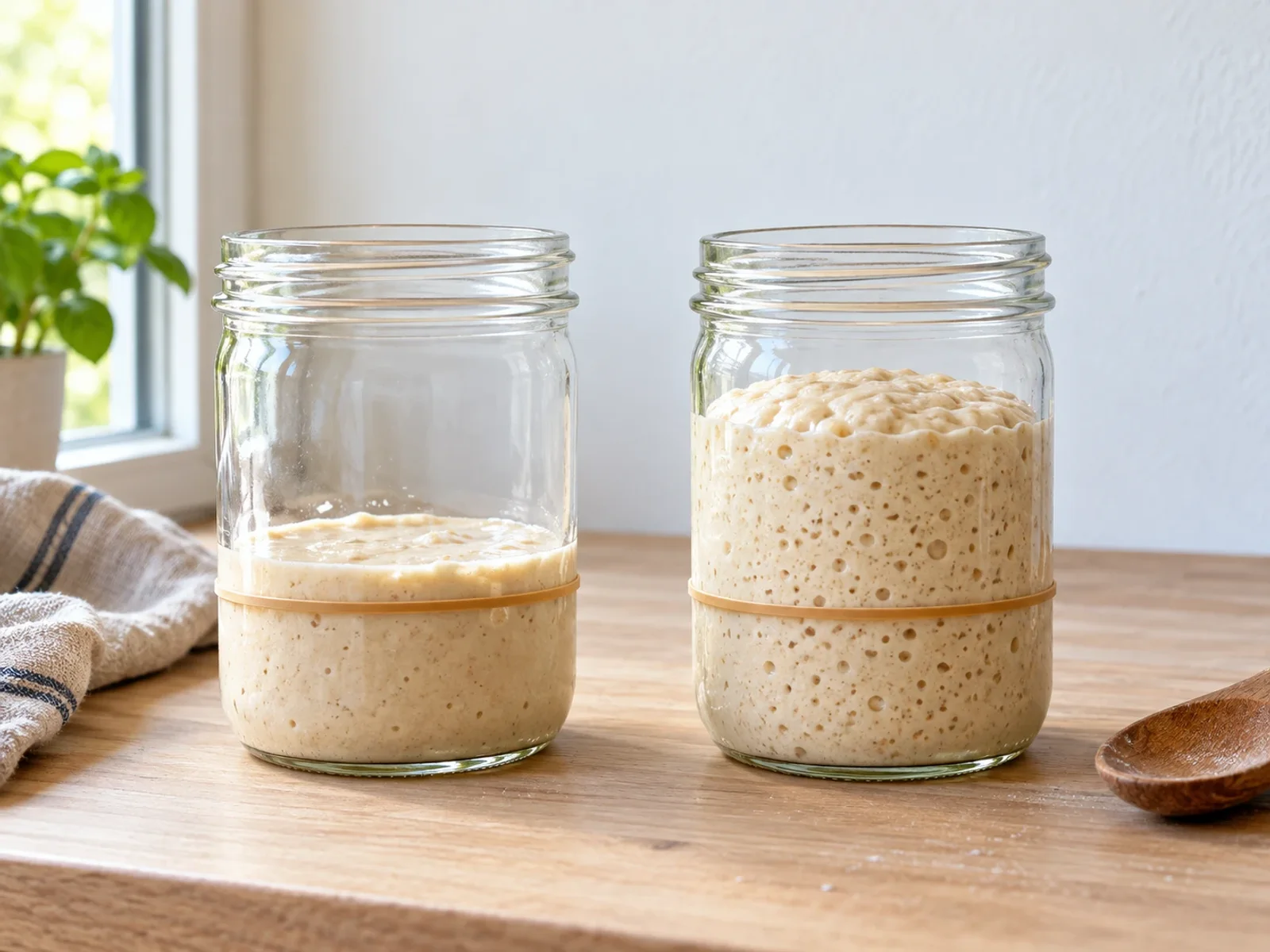
Log each feed, watch your starter rise in a 3D jar and record when it peaks. After two feeds it learns your own starter’s timing, so you know when it will be ready.
- See the rise against the clock
- Learns your starter’s peak time
- Free, no account needed
Every sourdough baker produces discard — the starter you remove before each feed. Throwing it away is like binning perfectly good batter. These recipes turn that discard into pancakes, crackers, pizza, bread, and more, with almost no extra effort.
What sourdough discard is (and isn't)
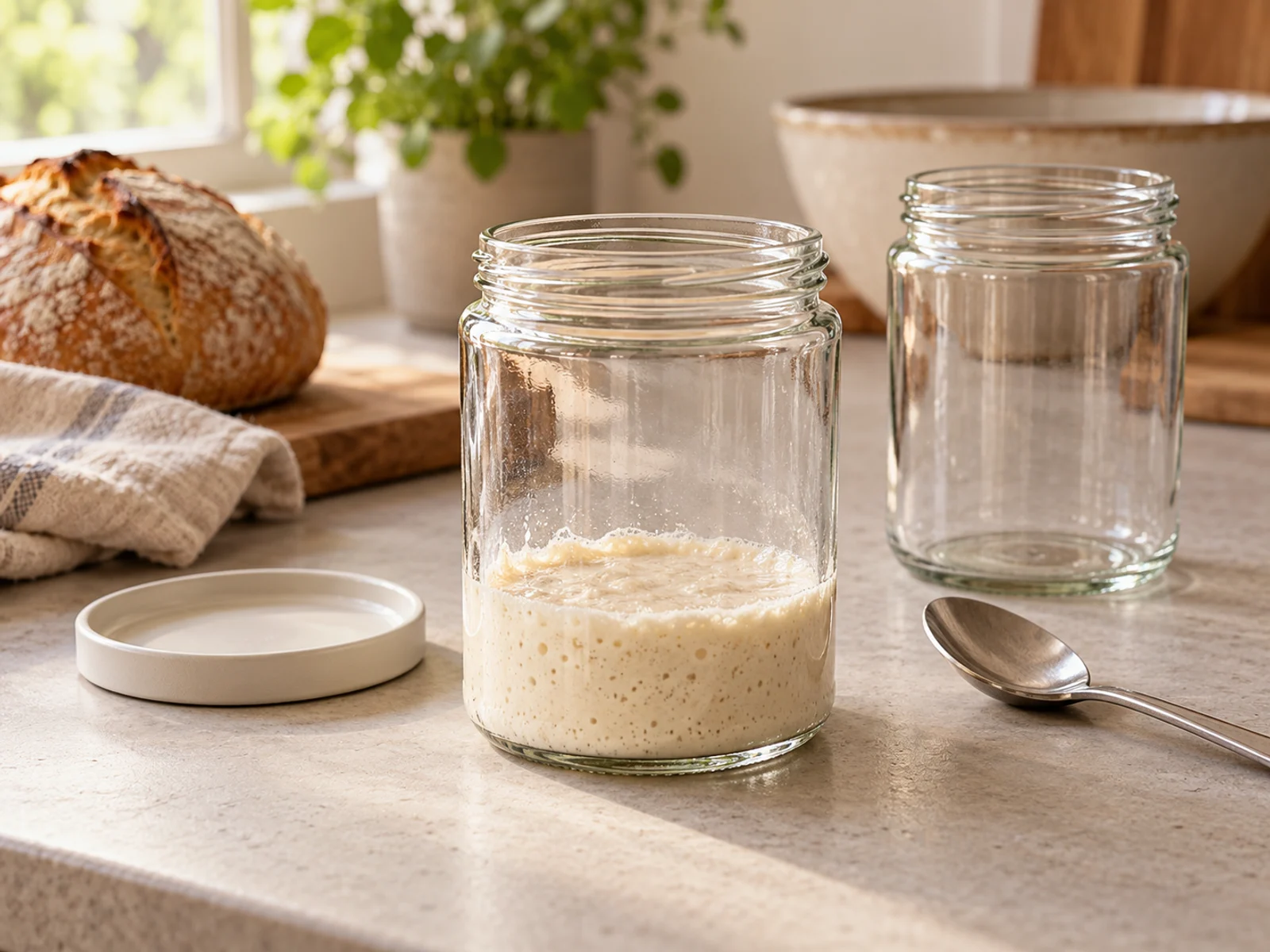
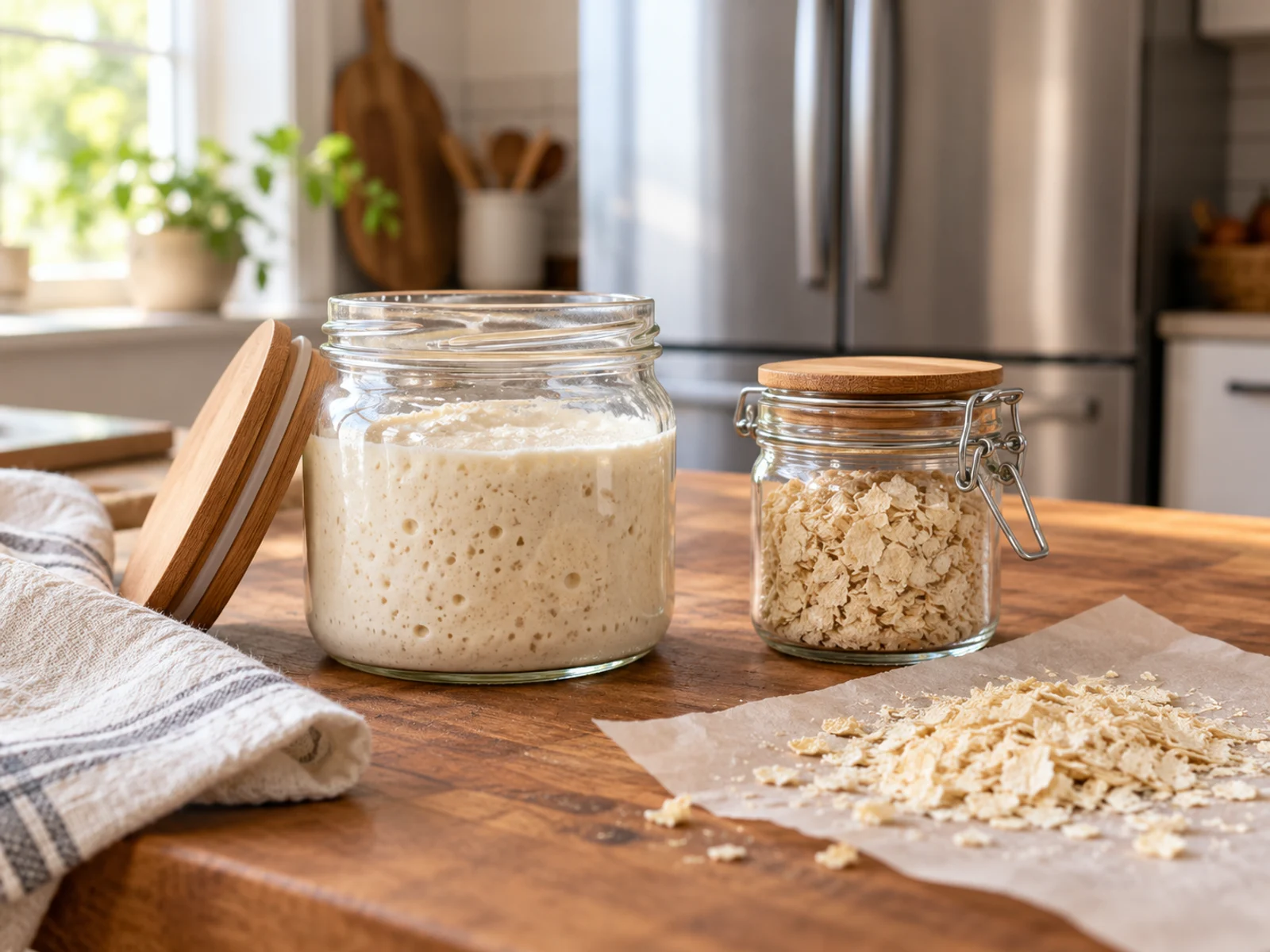
When you feed your starter, you remove most of the old culture first. That removed portion is discard. It contains flour, water, and the wild yeast and bacteria from your starter, but it has not been freshly fed so it will not leaven bread on its own.
Discard is not waste. It adds a mild tang, a tender crumb, and complex flavour to anything you stir it into. Think of it as a flavoured batter that happens to contain live cultures.
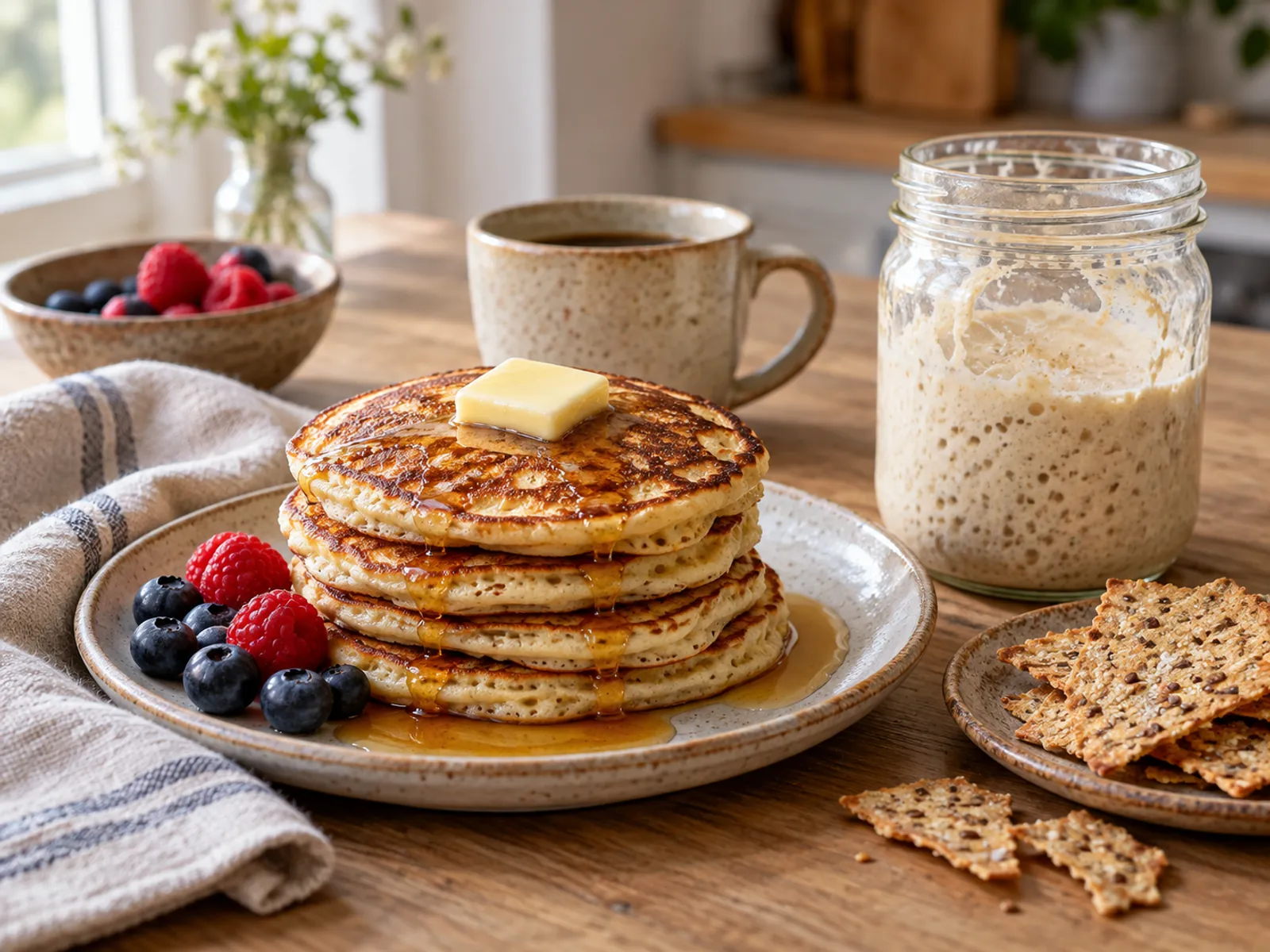
Sourdough discard pancakes
The single most popular discard recipe, and for good reason — they are better than regular pancakes.
- 1Mix the batter Whisk 200g sourdough discard with 1 egg, 1 tbsp sugar, 2 tbsp melted butter, and a pinch of salt. Add ½ tsp baking soda and stir gently until just combined — lumps are fine.
- 2Rest briefly Let the batter sit 5 minutes. The baking soda reacts with the acid in the discard, making the batter puffy.
- 3Cook on medium heat Ladle onto a buttered pan or griddle over medium heat. Flip when bubbles form and the edges set, about 2–3 minutes per side.
- 4Serve immediately Stack and serve with butter, maple syrup, fresh fruit, or whatever you like. Makes about 6–8 pancakes.
For waffles, use the same batter with an extra tablespoon of melted butter for crispness, and cook in a preheated waffle iron.
Sourdough discard crackers
Thin, crisp, and endlessly customisable. These keep for weeks in an airtight container.
- 1Make the dough Mix 200g discard with 60g melted butter, ½ tsp salt, and any seasonings — rosemary, everything bagel mix, sesame seeds, parmesan, or just salt and pepper.
- 2Roll very thin Roll the dough between two sheets of baking paper until almost translucent, about 1–2mm thick. Thinner is crispier.
- 3Score and season Score into rectangles or squares with a knife or pizza cutter. Brush with olive oil and sprinkle flaky salt.
- 4Bake until golden Bake at 180°C (350°F) for 15–20 minutes, rotating halfway through. They should be golden and crisp throughout.
Sourdough discard pizza dough
Discard pizza dough has a tangy, complex flavour that commercial yeast cannot match. It works as a same-day dough or an overnight cold ferment.
- 1Build the dough Mix 200g discard with 300g bread flour, 200ml warm water, 10g salt, and 10g olive oil. Add 3g instant yeast for a same-day dough, or skip the yeast and cold-ferment overnight.
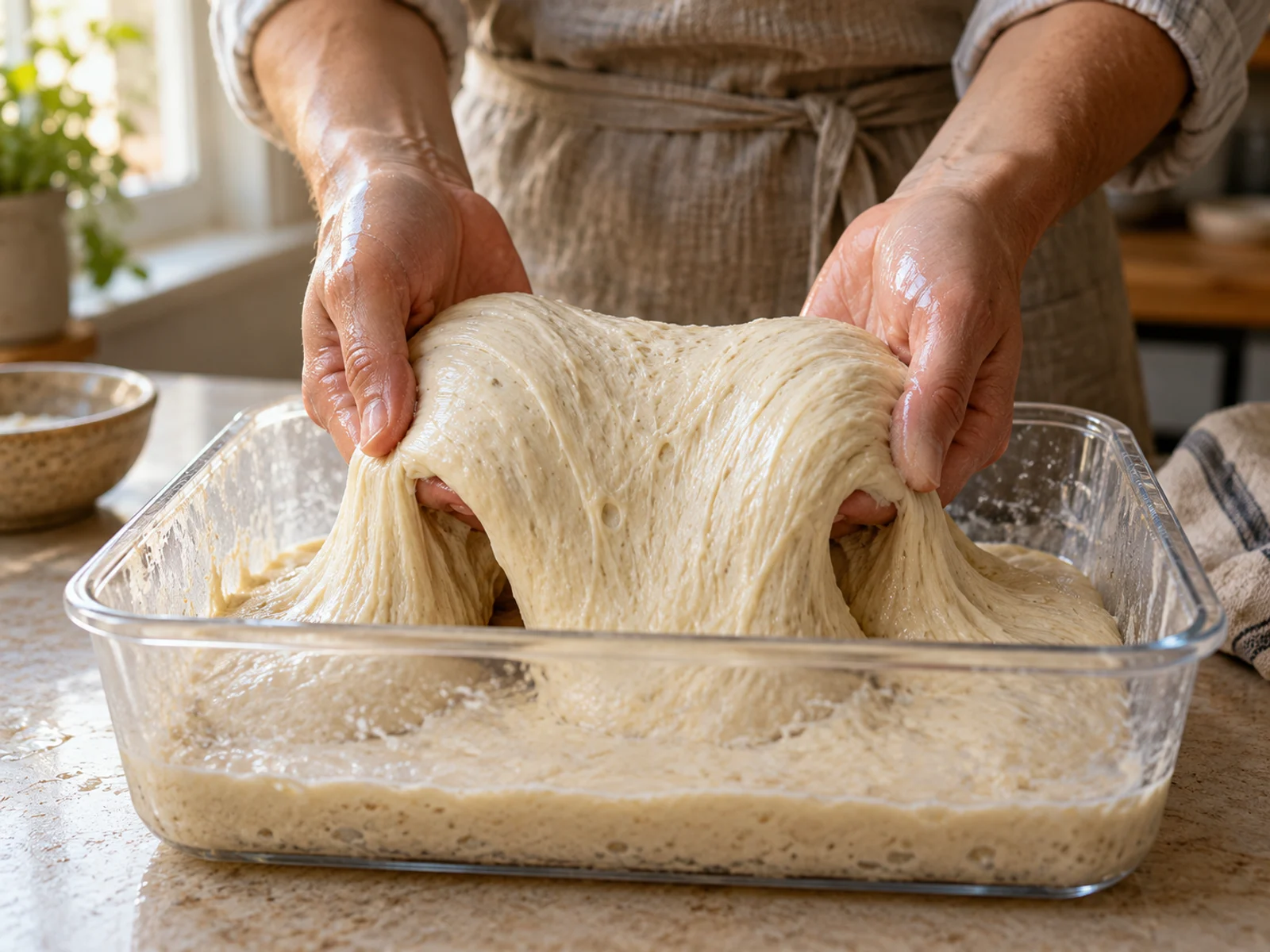
- 2Knead and rise Knead until smooth and elastic, about 8–10 minutes by hand. Cover and let rise until doubled — 2–3 hours at room temp with yeast, or 12–24 hours in the fridge without.
- 3Shape and top Divide into 2 balls. Stretch each into a round on a floured surface or peel. Top as you like.
- 4Bake hot Bake at the highest your oven goes — ideally 250°C+ (480°F+) — on a preheated stone or steel, for 8–12 minutes until the crust is blistered and the cheese is bubbling.
Sourdough discard banana bread
The discard adds moisture and a subtle tang that balances the sweetness of ripe bananas. This is a one-bowl recipe.
- 1Mash and mix Mash 3 ripe bananas in a large bowl. Stir in 150g sourdough discard, 75g melted butter, 150g sugar, 1 egg, and 1 tsp vanilla.
- 2Add dry ingredients Fold in 200g all-purpose flour, 1 tsp baking soda, ½ tsp salt, and ½ tsp cinnamon. Do not overmix — a few streaks of flour are fine.
- 3Bake Pour into a greased loaf tin. Bake at 175°C (350°F) for 55–65 minutes until a skewer comes out clean.
- 4Cool before slicing Let it cool in the tin for 10 minutes, then turn out onto a wire rack. It slices better once fully cooled.
Related calculator
Sourdough Discard Calculator
How much discard do you have? Calculate substitutions for pancakes, crackers, waffles, and more.
Sourdough discard flatbreads & naan
Quick, stovetop flatbreads that need no yeast and no oven. Ready in under 30 minutes.
- 1Make the dough Mix 200g discard with 150g flour, 1 tsp baking powder, ½ tsp salt, and 2 tbsp yoghurt or olive oil. Knead briefly until smooth.
- 2Divide and roll Divide into 4–6 balls. Roll each into a thin oval or round on a floured surface.
- 3Cook in a hot pan Heat a cast iron skillet or heavy pan over high heat. Cook each flatbread for 1–2 minutes per side until puffed and charred in spots.
- 4Brush and serve Brush with melted butter or garlic butter while hot. Serve alongside curries, stews, or dips.
Free Sourdough Baking Playbook (printable PDF)
A printable PDF companion for the sourdough calculators and guides.
Sourdough discard tortillas
Soft flour tortillas that use a full cup of discard. Adapted from King Arthur Baking’s sourdough tortillas; makes eight 7 to 8 inch tortillas.
Ingredients: 240 g all-purpose flour, 1 tsp baking powder, ½ tsp table salt, 57 g lard, butter or refined coconut oil (or 50 g vegetable oil), 227 to 241 g unfed discard, and 57 to 86 g hot water (about 43 to 49°C / 110 to 120°F).
- 1Make the dough Mix the flour, baking powder and salt, then work in the fat. Add the discard and enough hot water to make a soft, smooth dough.
- 2Divide and rest Divide into 8 pieces, round them, cover and rest 20 to 30 minutes. King Arthur says you can stretch the rest to 90 minutes or skip it.
- 3Roll thin Roll each ball into a 7 to 8 inch round on a lightly floured surface.
- 4Cook on a dry pan Heat a dry cast iron skillet or griddle over medium-high heat (about 200°C / 400°F). Cook each tortilla 60 to 80 seconds per side, until it bubbles and has a few charred spots.
- 5Store Cool completely, wrap tightly and refrigerate for up to 4 days. Reheat in a dry pan.
More ways to use sourdough discard
Once you start using discard, you will find it works in almost anything that contains flour and liquid.
How to store sourdough discard
Watch for
- Pink, orange, or fuzzy growth on discard means it has gone bad — throw it away.
- Grey liquid (hooch) on top is normal — stir it back in or pour it off.
- Discard that smells like nail polish remover (acetone) is very hungry but still safe — use it in strongly flavoured recipes like chocolate cake or crackers.
Sourdough discard peanut butter cookies
Peanut butter cookies belong in this discard collection: the starter contributes flour and water to a baked dough, while the cookie recipe controls its spread, texture and leavening. This is a different use of sourdough from relying on an active starter to raise a loaf.
For a complete published formula, Wild Thistle Kitchen’s sourdough discard peanut butter cookies uses 100 g starter, natural creamy peanut butter and melted butter. The author specifies the peanut butter type and gives mixing, baking, chilling and freezing directions. Follow that formula as written for the first batch; it is the source recipe, not a recipe tested by Ferment Calculator.
The useful lesson is to match ingredients precisely. Natural peanut butter and a sweetened, stabilized peanut spread can behave differently. Stir a separated natural peanut butter thoroughly before weighing it. Use the salt product or weight specified by the recipe instead of assuming every teaspoon of coarse salt weighs the same.
If comparing discard formulas, remember what hydration means. At 100% hydration, 100 g discard contains 50 g flour and 50 g water. At 50% hydration, the same 100 g contains about 66.7 g flour and 33.3 g water. That difference can matter in cookies: extra liquid is not the same as extra flour. This is an accounting example, not an instruction to alter a tested cookie formula without checking its assumptions.
For consistent results, record discard weight and hydration, peanut butter type, dough temperature, portion weight and whether you chilled it. Bake a small first tray following the source’s directions before portioning the rest. Let cookies cool as directed before deciding whether they spread or set as intended.
These cookies contain peanuts and commonly also wheat, egg and dairy. Do not assume swapping a nut butter, flour or egg replacement preserves the result or makes the recipe suitable for an allergy. Discard with suspected spoilage belongs in the bin, not in baking; never use baking as a way to rescue it.