Sourdough Starter Manager
Log each feed, watch your starter rise in a 3D jar and record when it peaks. After two feeds it learns your own starter’s timing, so you know when it will be ready.
- See the rise against the clock
- Learns your starter’s peak time
- Free, no account needed
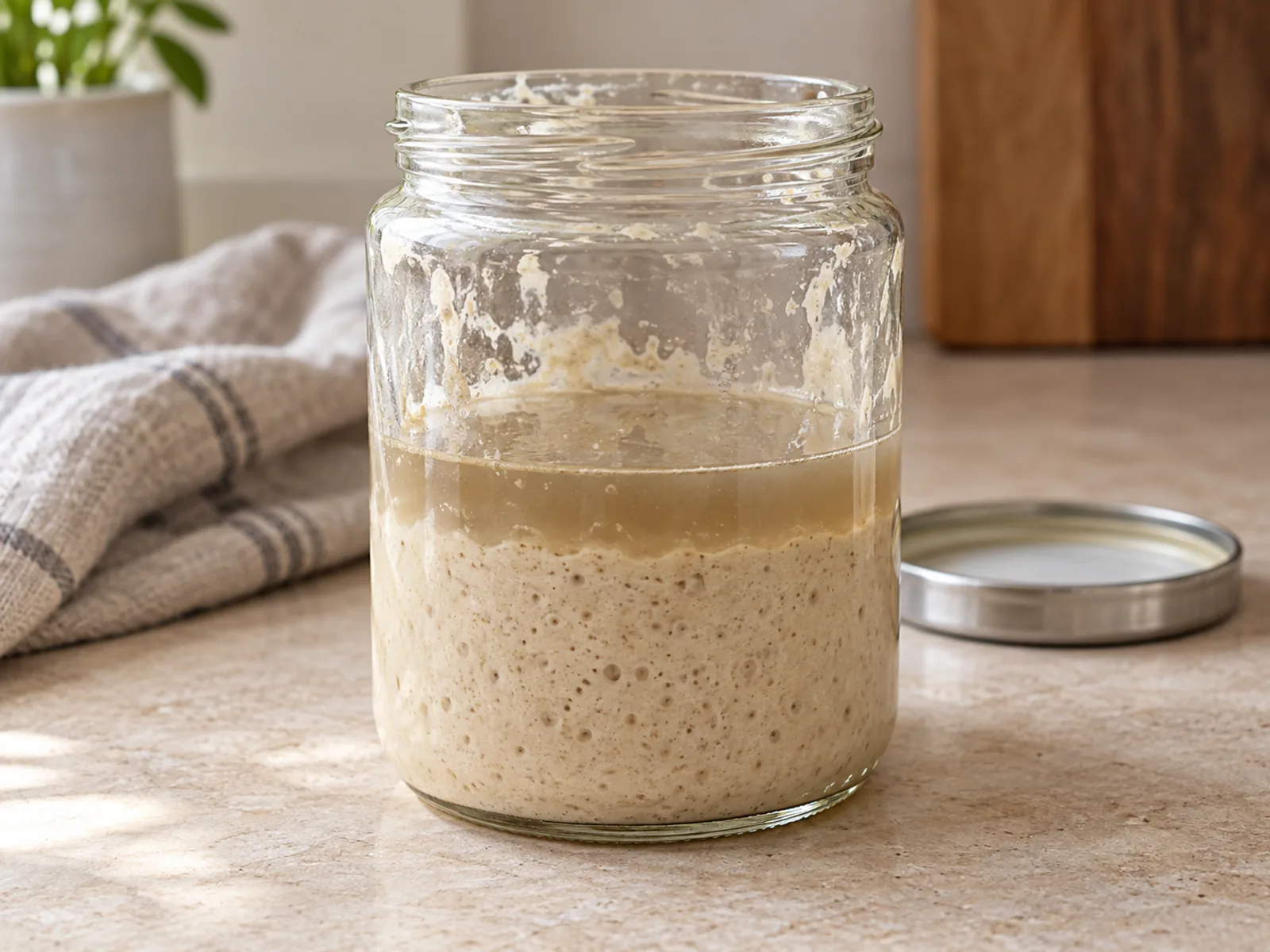
Hooch is the liquid that pools on top of a sourdough starter that has run out of food. It looks alarming, ranging from clear to grey to nearly black, and smells sharply of alcohol, but it is a hunger signal, not a sign the starter is ruined. Deal with it, feed the starter, and it bounces back.
What hooch is
Once a starter has eaten through its flour, the yeast keeps producing alcohol and the mixture separates. The liquid that rises is mostly water, with some alcohol and acids, and it darkens as it sits. You will usually see it on a starter that has gone well past its peak, or one that has been in the fridge for a week or more.
What to do with hooch
- 1Pour off or stir in Pour it off for a milder starter, or stir it back in if you like a tangier loaf.
- 2Discard Remove all but your usual seed amount, typically 20–50 g.
- 3Feed Feed at your normal ratio. If the starter has been neglected, a 1:1:1 or 1:2:2 feed at 24–26°C wakes it fastest.
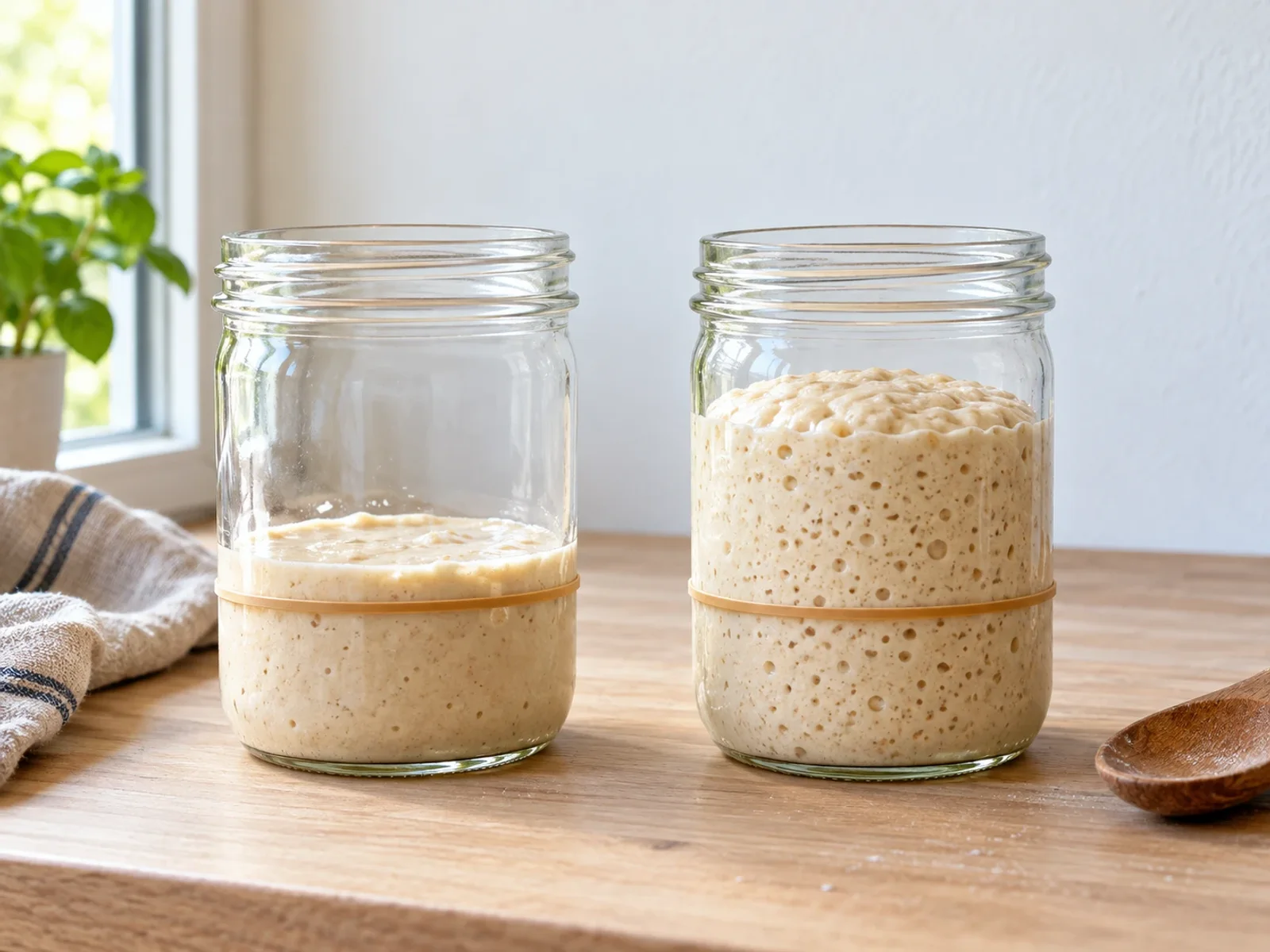
- 4Watch the rise It should rise again within one or two feeds. Use it for baking once it doubles reliably.
Related calculator
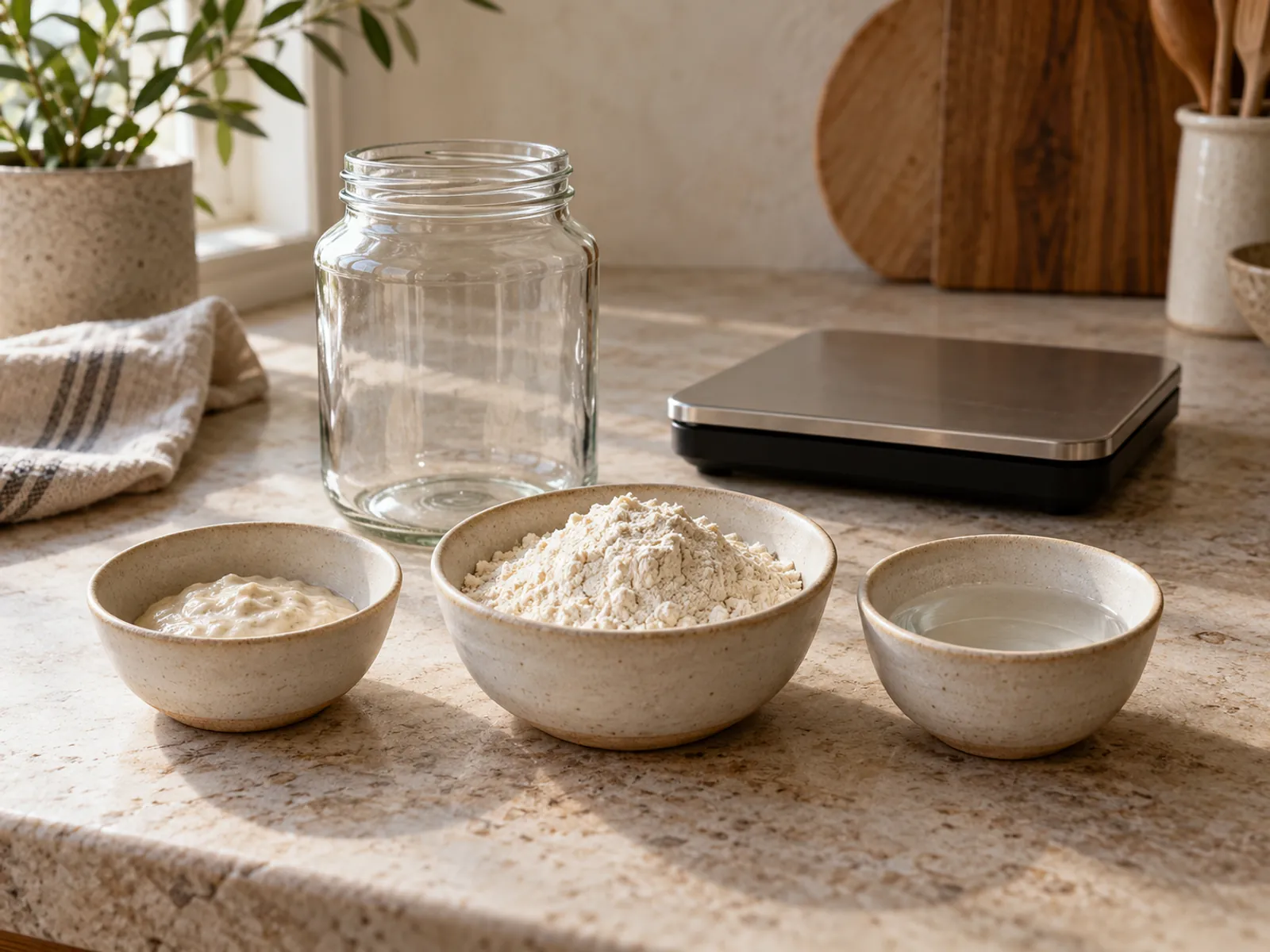
Sourdough Starter Feeding Calculator
Exact starter, flour, water, and discard for 1:1:1, 1:5:5, or any custom feeding ratio, with a ratio chart and peak times.
How to stop hooch forming
The feeding ratio chart shows how long each ratio takes to peak, and the sourdough starter manager tracks when yours actually does, so you can feed it before it runs out of food.
Free Sourdough Baking Playbook (printable PDF)
A printable PDF companion for the sourdough calculators and guides.
Hooch vs mould
Watch for
- Pink, orange or red streaks anywhere in the starter Discard it and start again.
- Fuzzy white, green or black patches on the surface That is mould, not hooch.
- A rotten or putrid smell (rather than sharp and alcoholic) Discard it.
Liquid on its own, however dark, is hooch. For more on a healthy starter, see what is an active sourdough starter, how to feed your sourdough starter and the sourdough FAQ.
When liquid is not the whole story
Check the lid, dry jar walls and surface as well as the liquid. A familiar hooch layer can coexist with an unfamiliar patch elsewhere, so do not assume that every change in an unfed jar is hunger. Fuzzy growth or pink/orange streaks require discarding the starter; scraping the top is not a rescue method.
Use our starter mold guide for the full comparison and storage guide to prevent long unplanned gaps. If the jar is otherwise normal, adjust feed size, frequency or temperature and note whether the layer returns before the next intended feed.