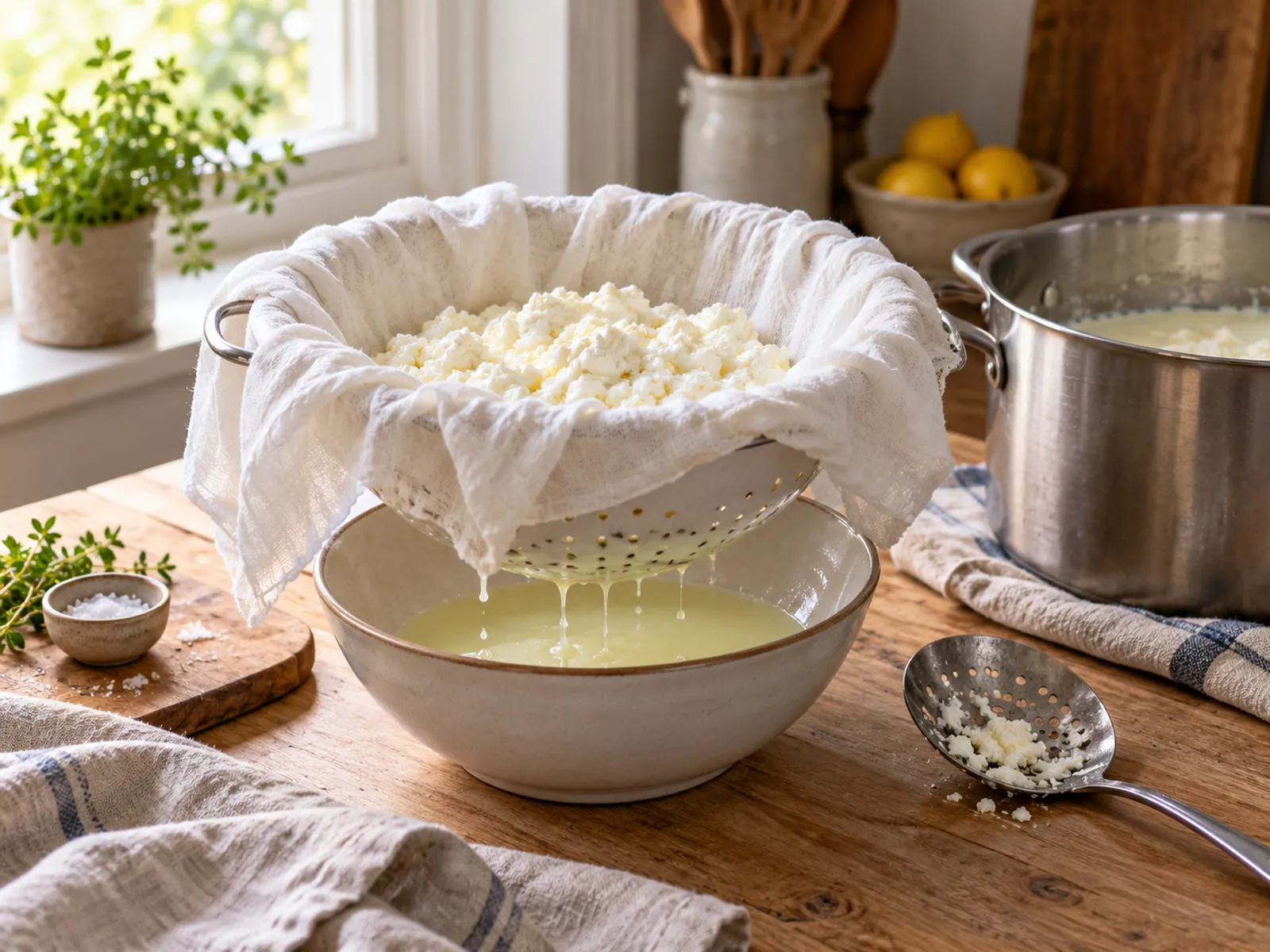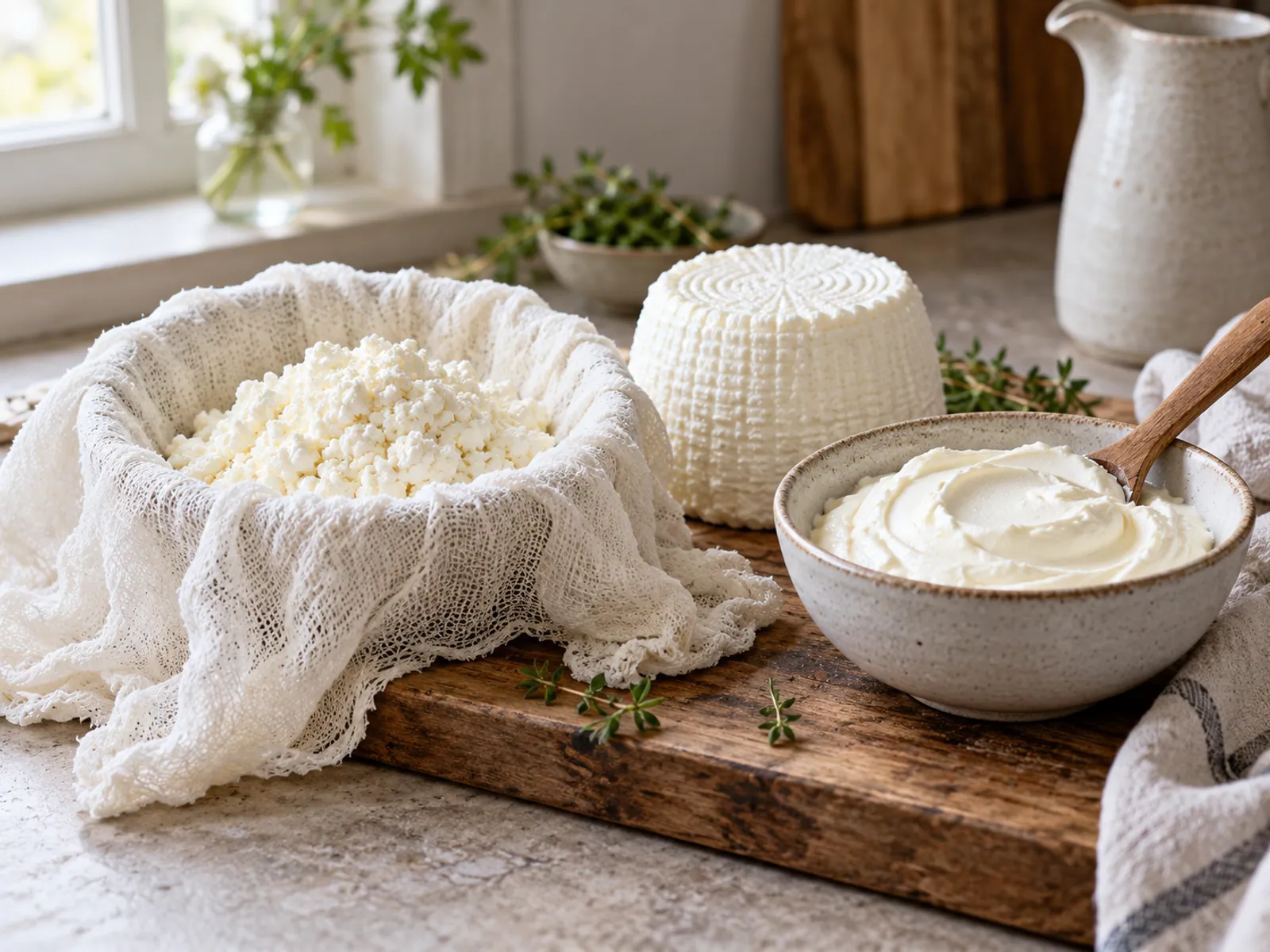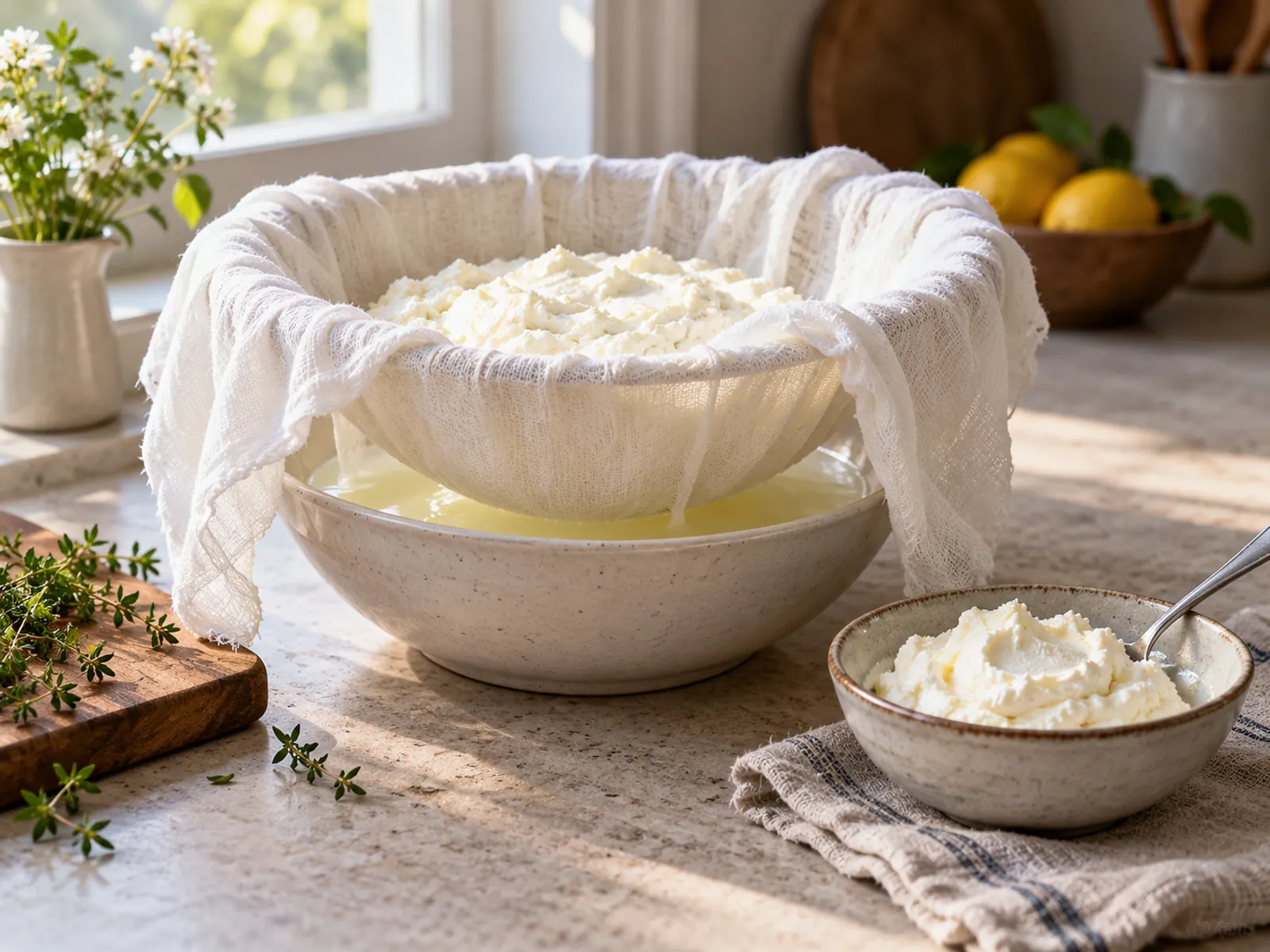

Gouda is the cheese most home cheesemakers reach for after cheddar, and the one that teaches the single technique cheddar never does: washing the curds. Instead of stacking and pressing acidity into the cheese, you rinse the curds with hot water — draining off some of the sugary whey and replacing it with warm water. That one move is why Gouda is sweet, springy, and forgiving rather than sharp. This guide covers the full make from milk to waxed wheel: the wash, pressing, brining, drying, aging levels, and what to do when a wheel comes out wrong.
What makes Gouda, Gouda
Gouda is a Dutch semi-hard cheese named for the market town of Gouda, where it was traded for centuries — the name describes the trading style, not a protected recipe, so it’s made worldwide. What actually defines it is the washed-curd method. After the curds are cut, you drain off part of the whey and replace it with hot water. This rinses lactose out of the curds, so there is less milk sugar left for the starter bacteria to convert into lactic acid as the cheese ages.
Lower acidity is the whole point. It gives Gouda its mild, sweet, faintly caramel flavor and its smooth, elastic, sliceable body — the opposite of cheddar’s tangy, close-knit crumble, which is built by driving acidity up. The hot wash water does a second job too: it warms and firms the curds, the step other recipes call “cooking.”
Ingredients and equipment
Gouda needs less exotic equipment than a bloomy or blue cheese, but it is a pressed, aged cheese, so a press and a cool, humid aging space are non-negotiable.
Step-by-step: homemade Gouda
This make uses about 8 L (2 gallons) of whole milk and produces a roughly 0.9 kg (2 lb) wheel. Scale the culture, rennet, and wash water proportionally for other batch sizes.
- 1Heat and culture Warm the milk gently to 86°F (30°C) in a water bath. Sprinkle mesophilic culture over the surface, let it rehydrate 2 minutes, then stir in. If using pasteurized milk, add calcium chloride (1/4 tsp diluted in 60 mL water). Cover and ripen at 86°F for 30–45 minutes.
- 2Add rennet and set Dilute rennet in 60 mL cool unchlorinated water, stir in gently for 1 minute, then stop all movement. Hold at 86°F for 45–60 minutes until you get a clean break — a knife lifted through the curd splits it cleanly and clear whey fills the gap.
- 3Cut the curds Cut the curd into 1 cm (about 1/2 inch) cubes. Let them rest 5 minutes, then stir gently for 5 minutes so they firm slightly and release whey.
- 4First wash Let the curds settle, then dip out about one-third of the whey (down to the curd level). Slowly stir in warm water to raise the curd mass to about 92°F (33°C). Stir gently for 10 minutes.
- 5Second wash (the cook) Dip out whey again to just above the curds. Slowly add hotter water to bring the curds to about 100°F (38°C) — no higher. Stir gently for 20–30 minutes until the curds firm up and hold their shape when squeezed.
- 6Drain and pre-press Let the curds settle for 5 minutes. Drain off the whey and gather the curds into a cheesecloth-lined mold, packing them warm so they knit together.
- 7Press in stages Press at ~4.5 kg (10 lb) for 30 minutes, flip, press at ~9 kg (20 lb) for 1 hour, flip, then ~22 kg (50 lb) for 4–6 hours (or overnight). Redress the cloth at each flip for a smooth rind.
- 8Brine Mix a saturated brine (dissolve salt into cool water until no more dissolves) and chill it to about 55°F (13°C). Float the wheel in it for roughly 3–4 hours per 0.5 kg (per pound) — an overnight brine for a 0.9 kg wheel. Flip it halfway and sprinkle salt on the exposed top.
- 9Air-dry Pat dry and set the wheel on a mat at cool room temperature, turning daily, for 1–3 days (up to a couple of weeks in a cave) until the surface is dry and slightly firm to the touch.
- 10Wax and age Coat with 2–3 layers of cheese wax or vacuum-seal, then age at 10–13°C (50–55°F) and 80–85% humidity. Turn weekly. Taste from 4 weeks; the flavor deepens the longer you wait.
Washing the curds, explained
This is the step that trips people up, so it’s worth slowing down. You are not rinsing the curds to clean them — you are diluting the whey to control how much sugar (and therefore acid) stays in the cheese. Do it in two stages, each with a temperature target, because adding all the hot water at once shocks the curds and toughens them.
Two things control the outcome. How much whey you remove sets how much lactose you rinse away — more water swapped means a sweeter, softer cheese. The final temperature sets how firm the curds cook — hotter and longer makes a drier, longer-keeping wheel; cooler makes a moister young Gouda. Keep the second wash at or below 100°F (38°C): overshoot and the curds turn rubbery and squeaky.
Related calculator
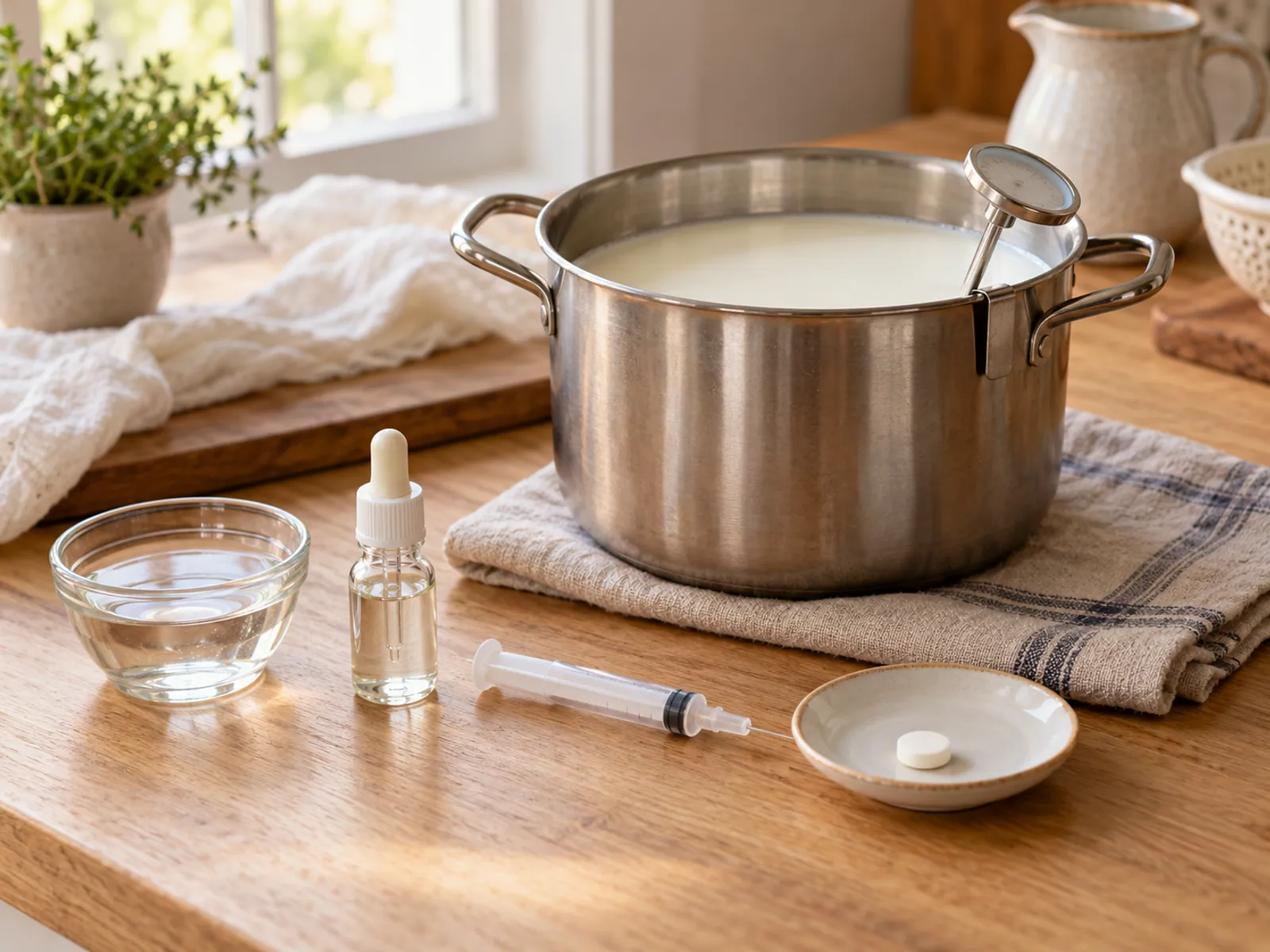
Rennet Calculator
How much rennet do you need for your batch? Calculate liquid, tablet, or powdered rennet for any milk volume.
Brining, drying, and why they matter
Gouda is salted from the outside in a saturated brine rather than mixed with salt like cheddar. The wheel floats, so salt only reaches the submerged surface — that’s why you flip it and salt the exposed top. Brining seasons the cheese, firms the rind, and draws out a little more moisture. As a rough rule, allow 3–4 hours of brine time per 0.5 kg (per pound) of cheese; a small wheel needs a few hours, a large one an overnight soak.
After brining, the wheel has to dry before it’s coated. A tacky, wet surface trapped under wax is the fastest route to unwanted mold and slip skins. Turn it daily on a mat until the rind is dry and slightly leathery to the touch — a day or two at cool room temperature, longer in a humid cave. Only then wax or vacuum-seal.
Free Cheese Rennet Reference Card (printable PDF)
A printable PDF companion for the cheese calculators and guides.
Aging levels and what to expect
Gouda spans a huge range of flavor depending only on how long you wait. The same wheel tastes completely different at 6 weeks and 18 months.
Those white crunchy specks in aged Gouda are tyrosine (an amino acid) and calcium lactate crystals. They are a sign of proper long aging — a feature, not a flaw.
Troubleshooting common problems
Watch for
- Rubbery, squeaky, bland cheese The second wash ran too hot (over 100°F / 38°C) or you swapped too much whey, leaving too little acid. Keep the cook at or below 100°F and rinse slightly less next time.
- Dry or crumbly young wheel Cooked too hard or aged too dry. Lower the cook temperature and hold aging humidity at 80–85%.
- Cracks appearing during aging The wheel dried out — humidity too low or waxed before it was sealed evenly. Vacuum-seal instead, or re-wax and store cooler and more humid.
- Mold or slime under the wax The surface was still damp when coated. Always dry the rind until leathery before waxing; brush off surface mold and re-wax if it's caught early.
- Bitter flavor Too much rennet or over-acidification. Reduce rennet by 10–15% and check your culture amount.
- Wheel won't knit / falls apart pressing Curds cooled too much before molding, or too little press weight. Work fast and warm, and build up to real pressure over several hours.
Keep exploring cheese
For the universal make-day steps behind every cheese, start with how to make cheese at home. To compare Gouda’s washed curd against the stacked-and-flipped method, see how to make cheddar cheese, or try another beginner-friendly washed-curd hard cheese in the Monterey Jack recipe. The rennet calculator sizes your dose for any milk volume and rennet type.