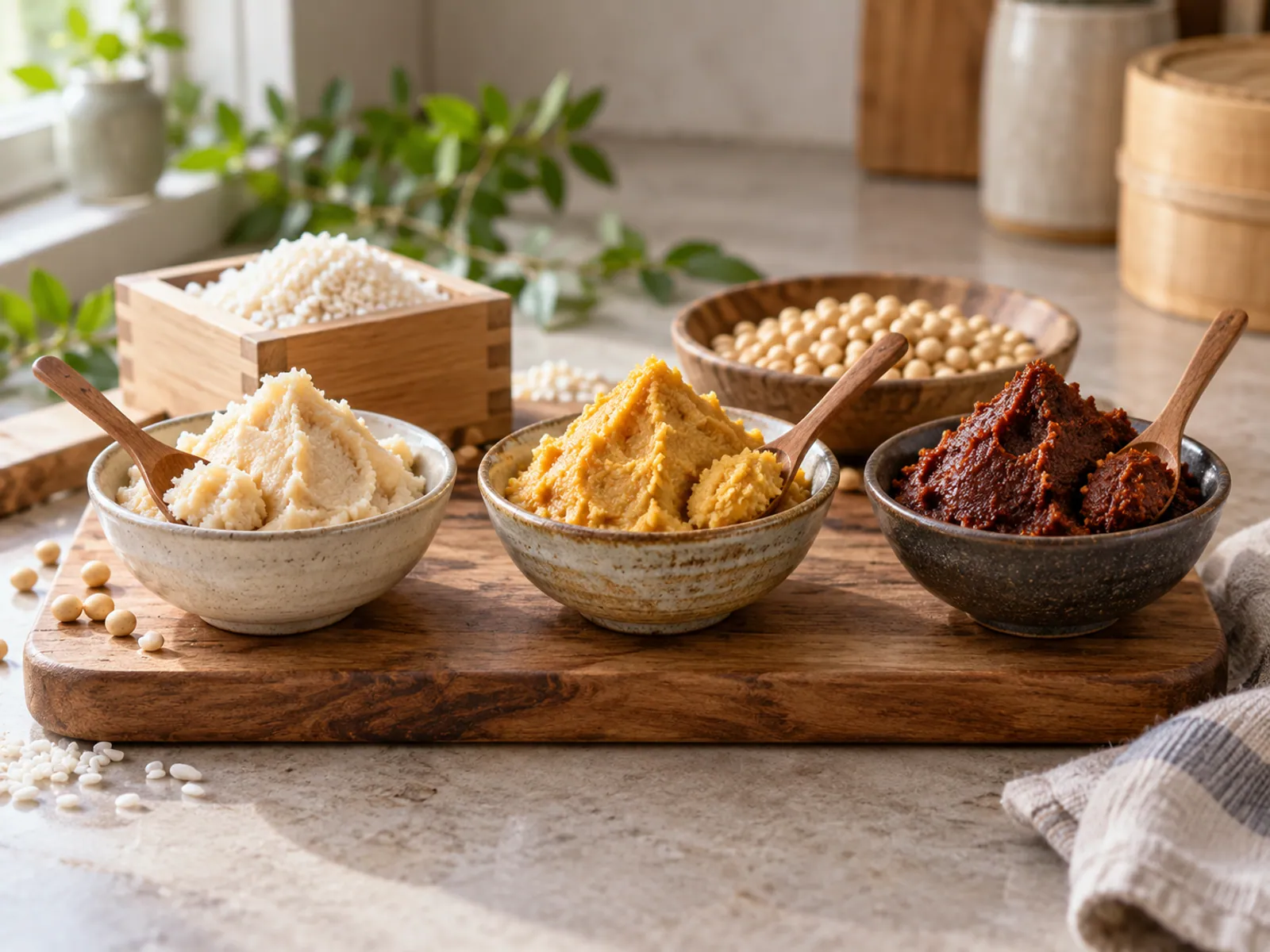
Yellow miso
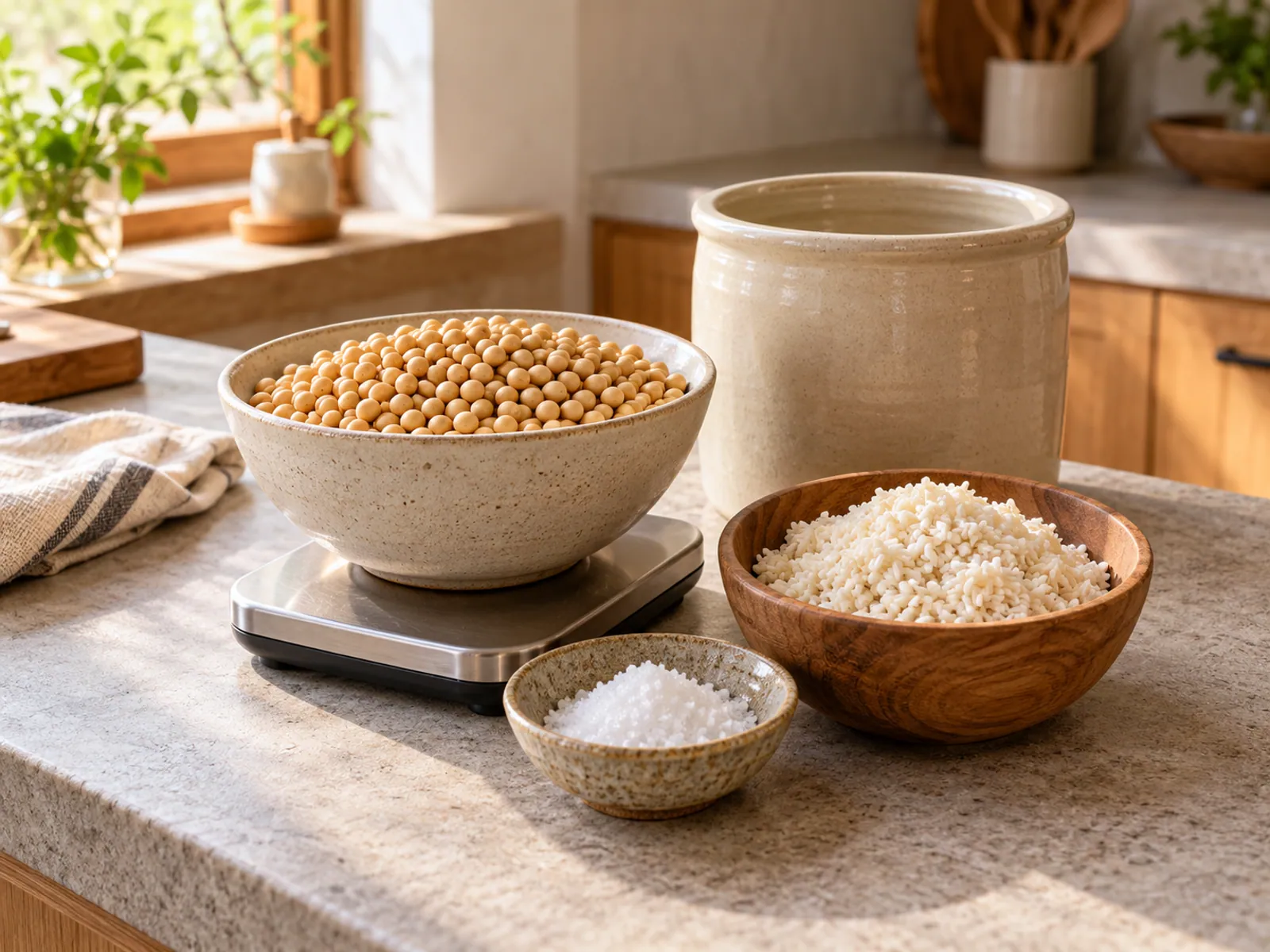
Dry soybeans to koji to salt by weight, about 11.5% salt.

Koji, Miso & Soy · Calculator
Enter your dry soybeans and pick a miso style to get the koji, salt, crock size and ageing time for a homemade batch.
Live calculator · updates as you type
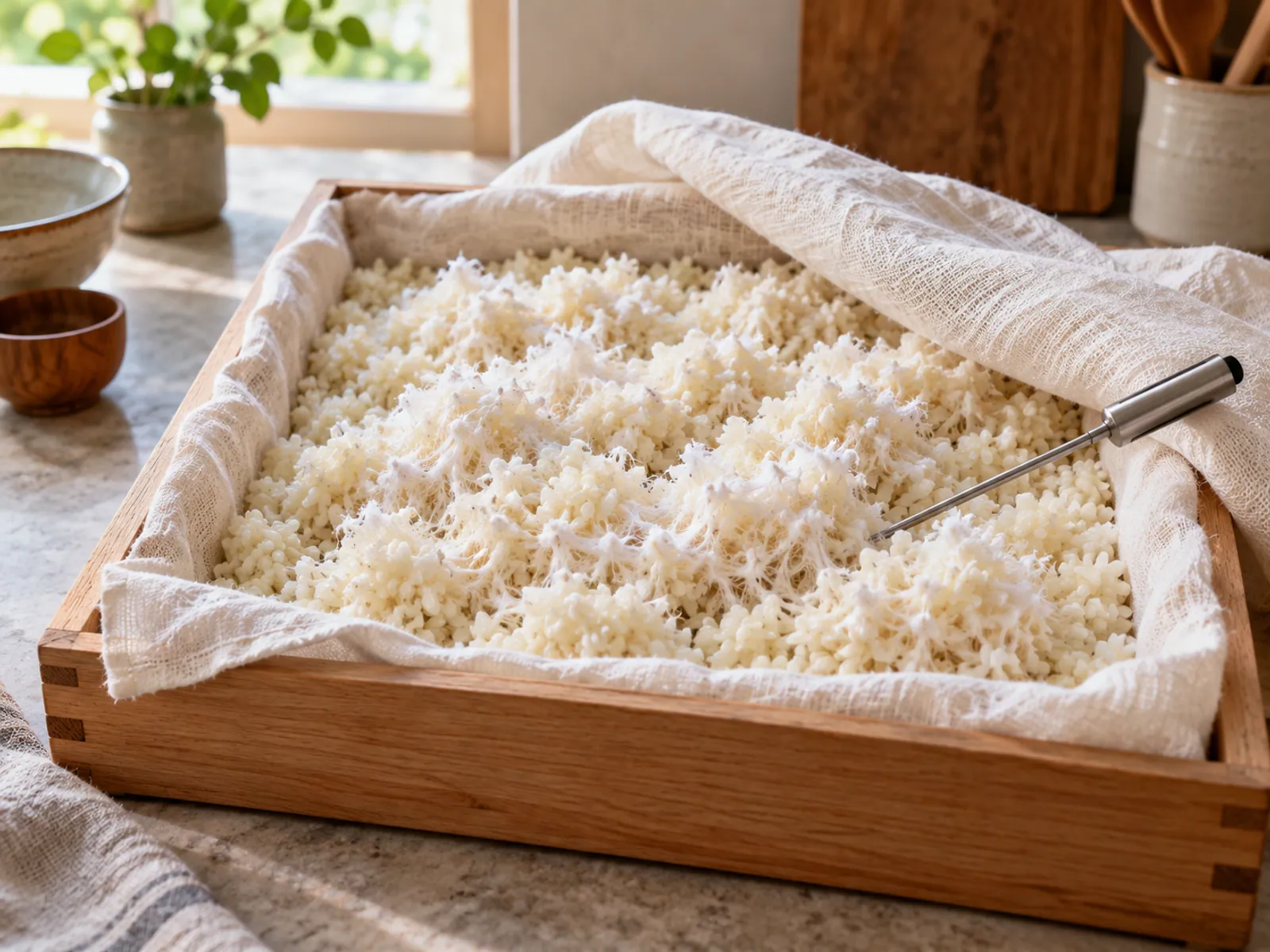
Rice koji; the all-purpose miso. Salt is a percentage of the finished paste. Weigh the soybeans dry; they roughly double after soaking and cooking. Koji is weighed as bought, fresh or dried.
Your batch
What to do next
For 1.00 kg of dry soybeans.
Free printable
A batch card made from your numbers, to save as a PDF or receive by email:
| Style | Koji | Salt and ageing |
|---|---|---|
| Sweet white | 2000 g | 268 g (6%) · 4–8 weeks |
| Yellow | 1000 g | 416 g (11.5%) · 3–6 months |
| Red | 800 g | 429 g (12.5%) · 6–18 months |
| Barley | 1000 g | 396 g (11%) · 6–12 months |
Ratios that age safely
Salt decides how long miso can age and how it tastes when it is done. The calculator gives the koji and salt for your beans; the guide below covers styles, packing and what is normal on the surface.
Dry soybeans to koji to salt by weight, about 11.5% salt.
Twice the koji, a quarter of the age: ready in 4–8 weeks.
Enough salt to age safely for a year or more.
Salt = % ÷ (100 − %) × (cooked soybeans + koji)Salt is a percentage of the finished paste. Cooked soybeans weigh about 2.2 times their dry weight; koji is weighed as bought. Sprinkle about 1% extra salt on the surface before sealing.
Choose a miso style, then enter the weight of your soybeans before soaking. The style sets the koji ratio and a standard salt level; you can change the salt percentage within a safe range.
The calculator returns the koji and salt to buy, the salt to sprinkle on the surface, the finished weight of the batch, the crock size and how long to age it.
1 kg dry soybeans, yellow miso, 11.5% saltCooked soybeans ≈ 2.2 kg; koji 1 kgSalt = 11.5 ÷ 88.5 × 3.2 kg ≈ 416 g; about 3.6 kg misoMore koji and less salt give a sweet miso that is ready fast; less koji and more salt give a deep miso that needs time.
Miso ages at room temperature for months, and salt is what lets the koji enzymes and salt-tolerant yeasts and lactic acid bacteria work while keeping spoilage organisms out. Long-aged miso below about 10% salt is the common cause of sour, off-smelling batches. Low-salt white miso is safe because it is short-aged and then refrigerated.
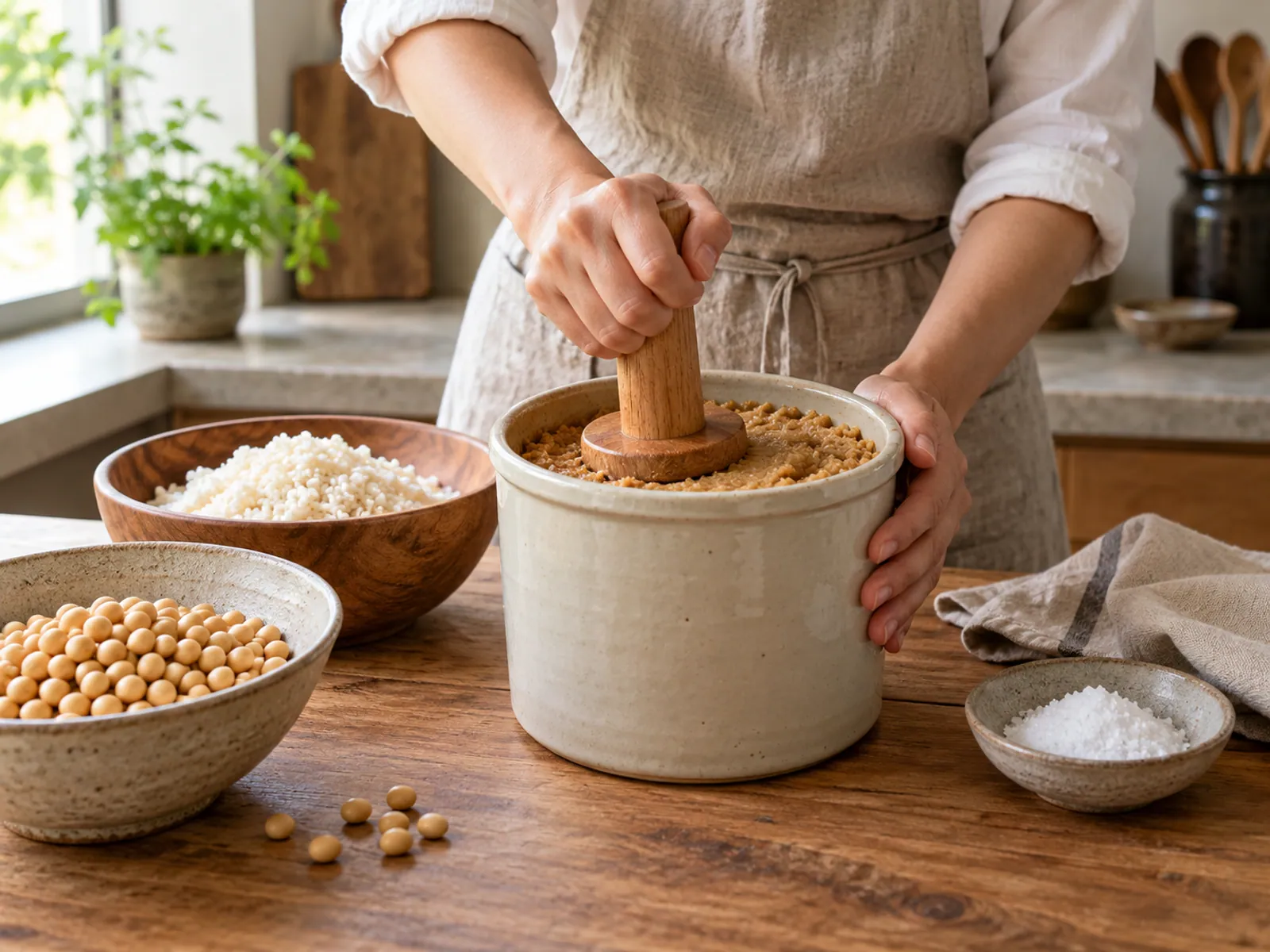
Form the paste into fist-sized balls and throw them into the crock to drive out air, pressing each layer down. Smooth the top, sprinkle the surface salt, cover the paste with plastic wrap pressed onto the surface, and weigh it down with about 20–30% of the miso weight. Store somewhere cool and dark.
A dark liquid (tamari) pooling on top is normal and good; stir it back in or save it. A thin white film is usually kahm yeast and can be scraped off. Fuzzy, coloured mould on the surface is removed with a generous margin; the salty paste beneath is normally fine. Pink, slimy or rotten-smelling miso throughout should be discarded.
FAQ
Calculators and guides for your next step.