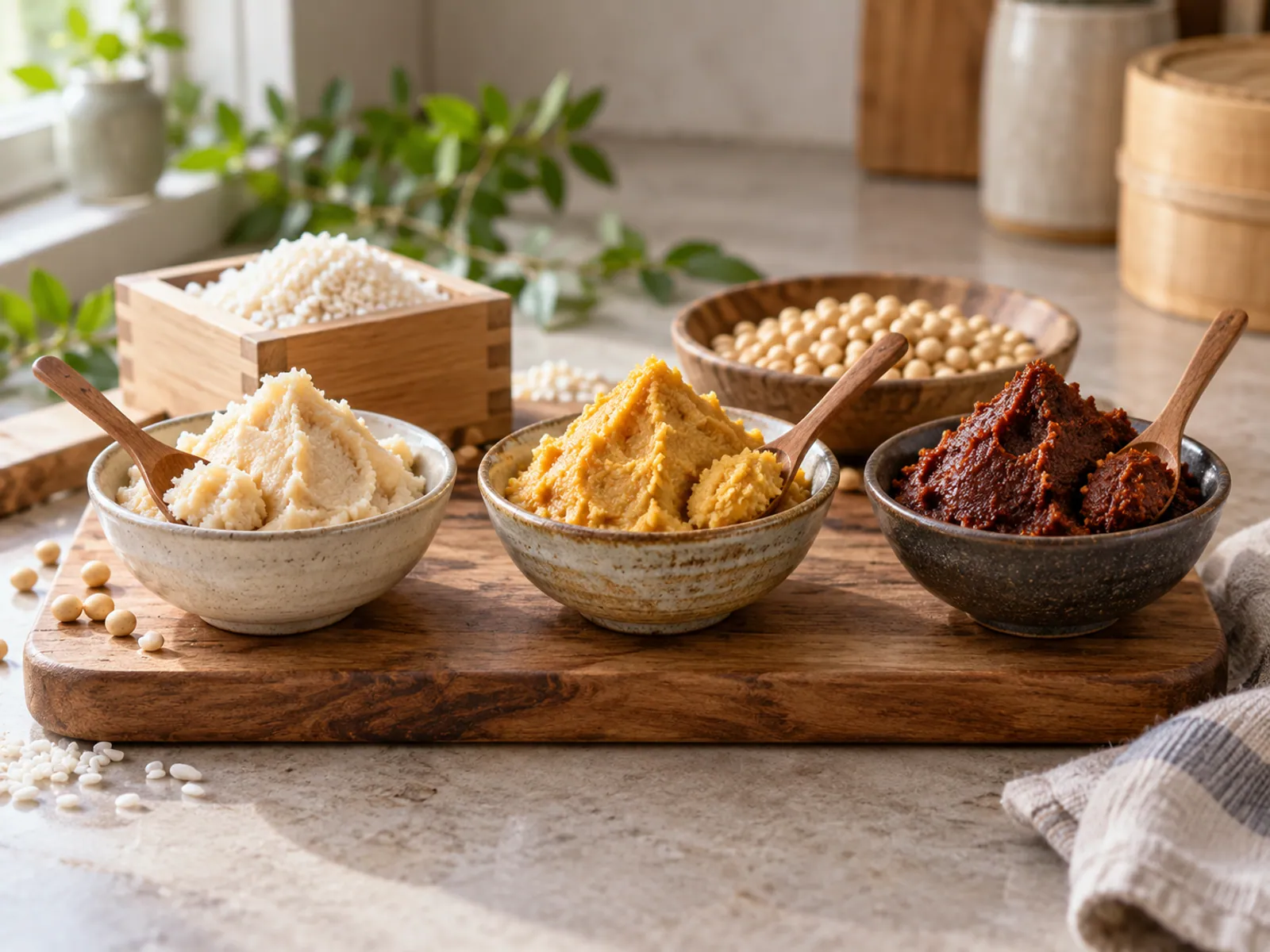
Miso is one of the world’s great fermented foods — a paste made from soybeans, salt, and koji (a mould culture) that transforms simple ingredients into an intensely savoury, umami-rich seasoning. The colour of miso tells you almost everything: lighter means younger and milder; darker means longer-aged, saltier, and more complex.
Types of miso
How miso is made
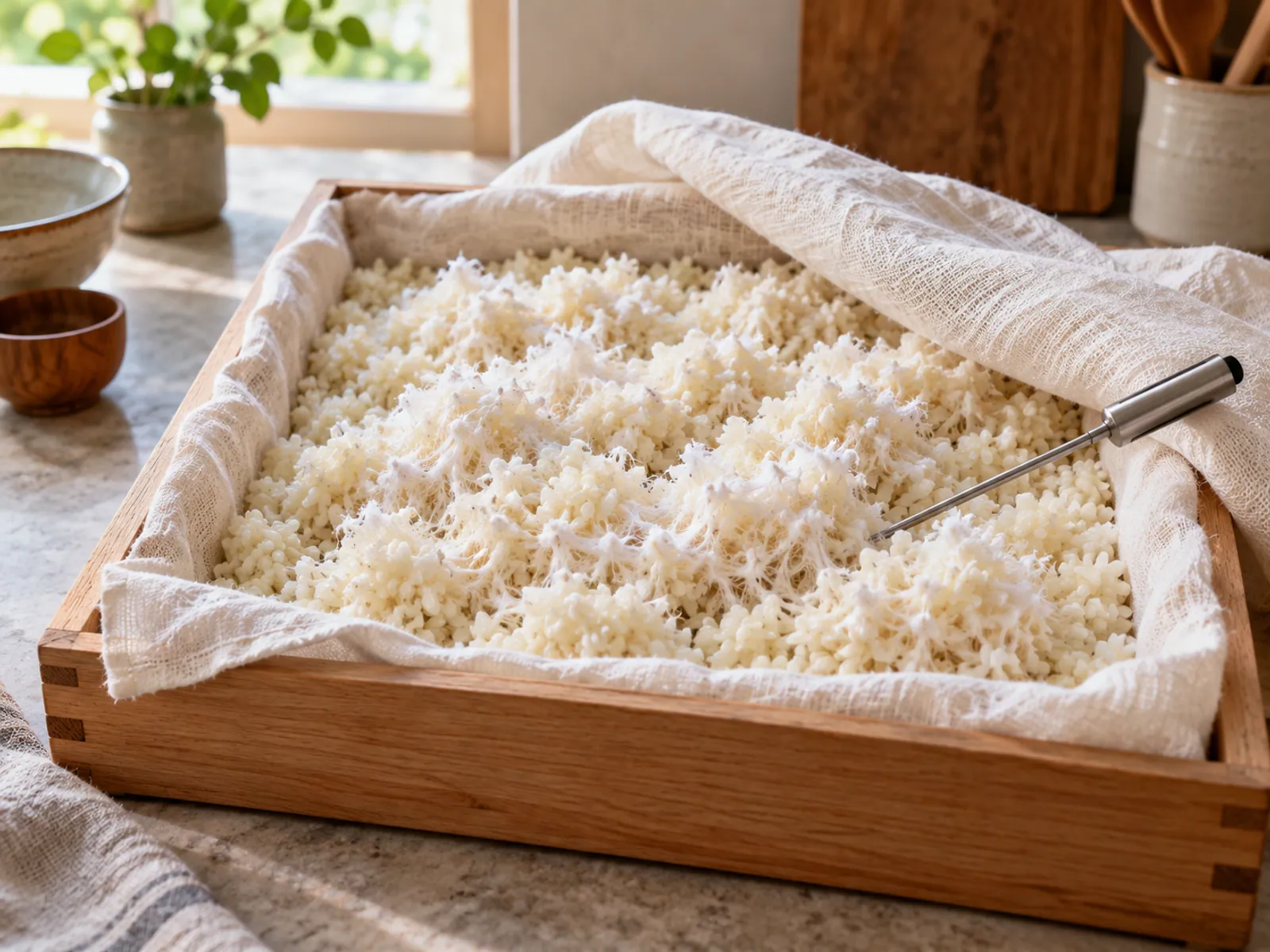
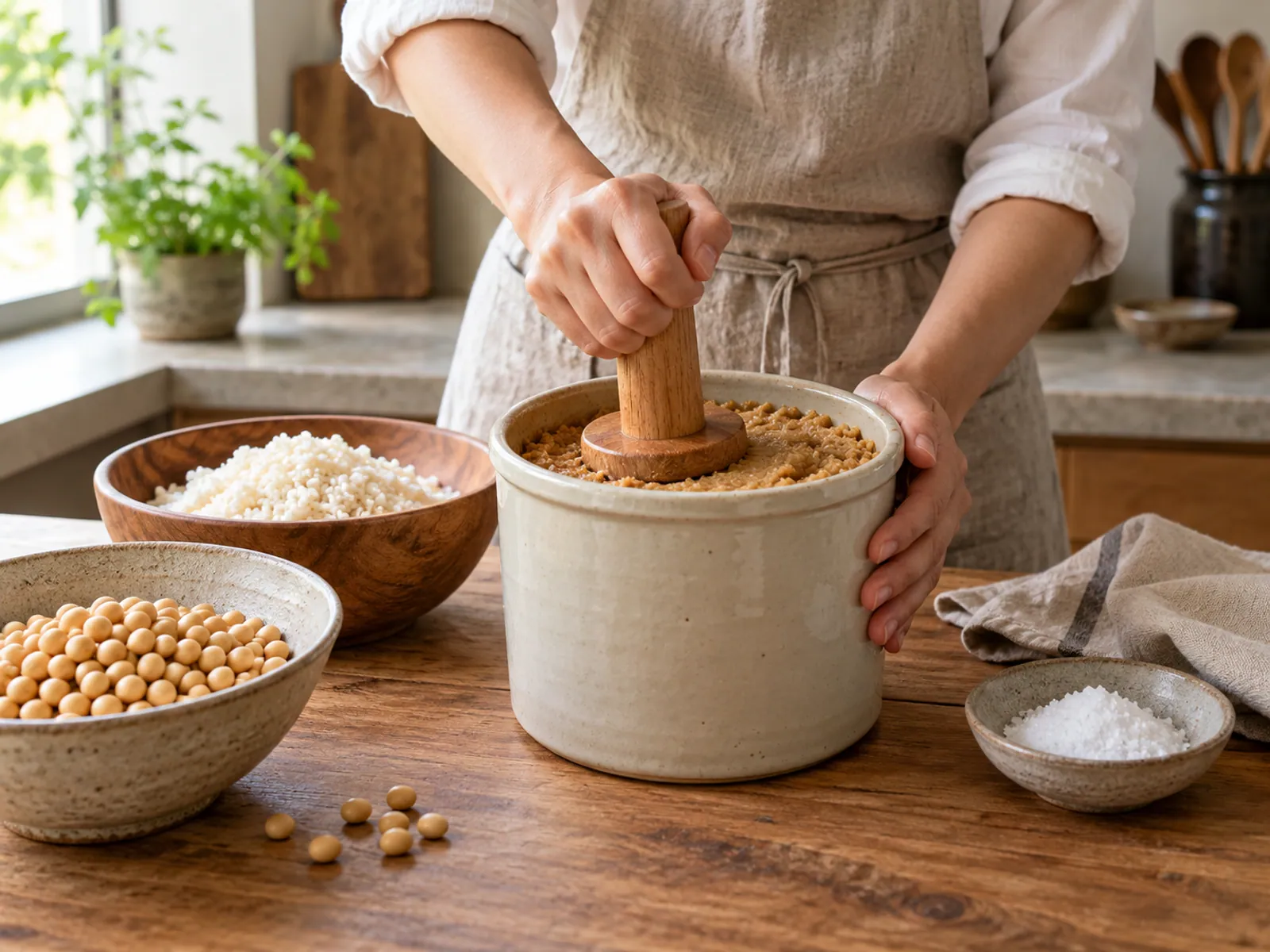
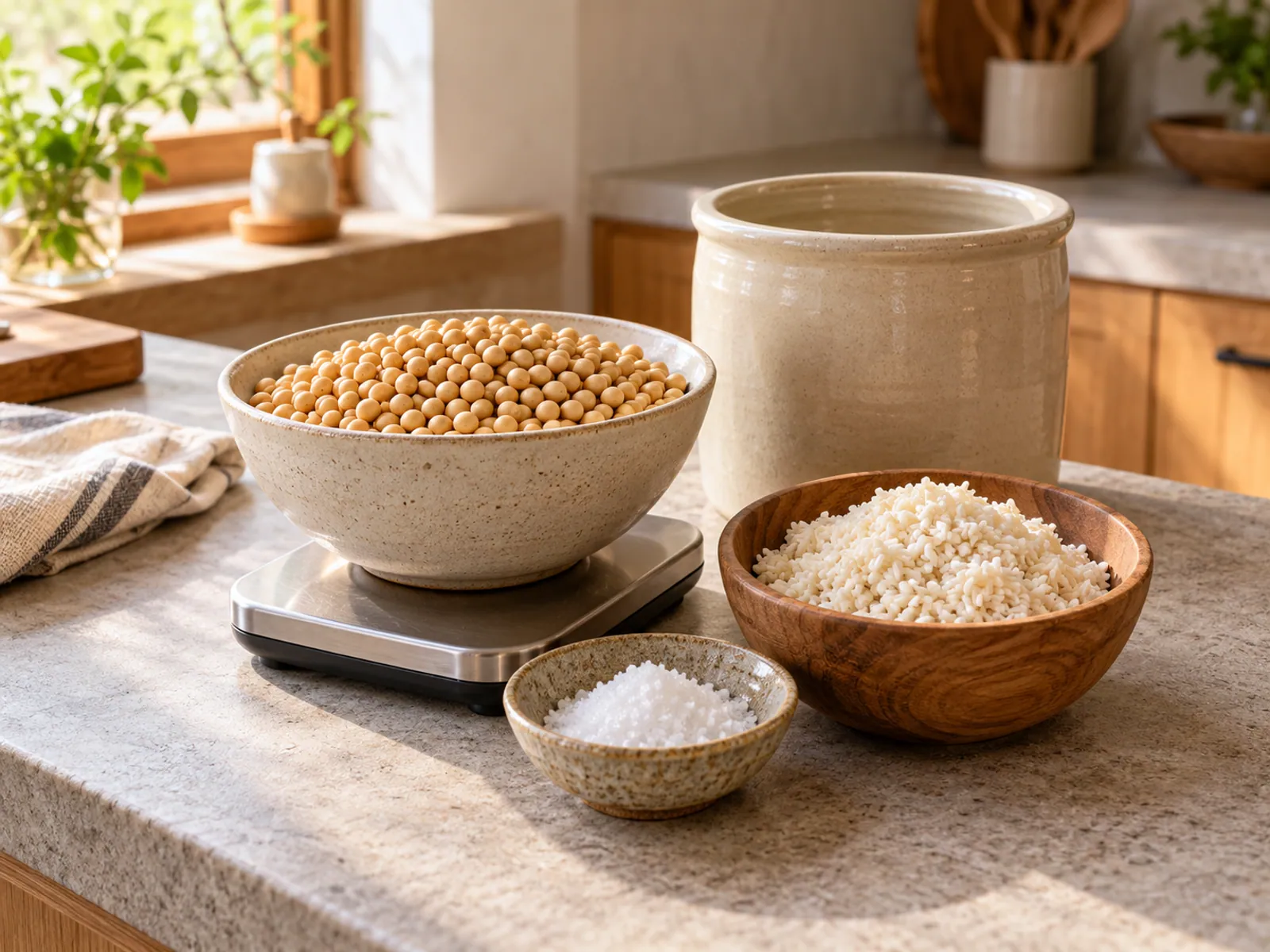
Every miso is the same four steps: grow koji (Aspergillus oryzae) on rice, barley or soybeans; cook and mash soybeans; mix them with the koji and salt; then pack the paste into a crock and let the koji enzymes break protein into amino acids and starch into sugar. The type of koji, the koji-to-soybean ratio, the salt and the ageing time are what turn the same method into white, yellow or red miso.
The full home method, from soaking the beans to packing the crock, is in how to make miso. If you are growing your own koji first, start with how to make koji.
Related calculator
Miso Salt Calculator
Soybeans, koji and salt for any batch of homemade miso, by style from sweet white to long-aged red, with ageing times.
How to cook with miso
What to look for when buying
Watch for
- Shelf-stable miso in squeeze bottles is usually pasteurised — no live cultures. Fine for cooking, but not a probiotic source.
- Miso is high in sodium — 1 tablespoon of red miso contains about 600–900mg sodium. Use it as a seasoning, not a main ingredient.