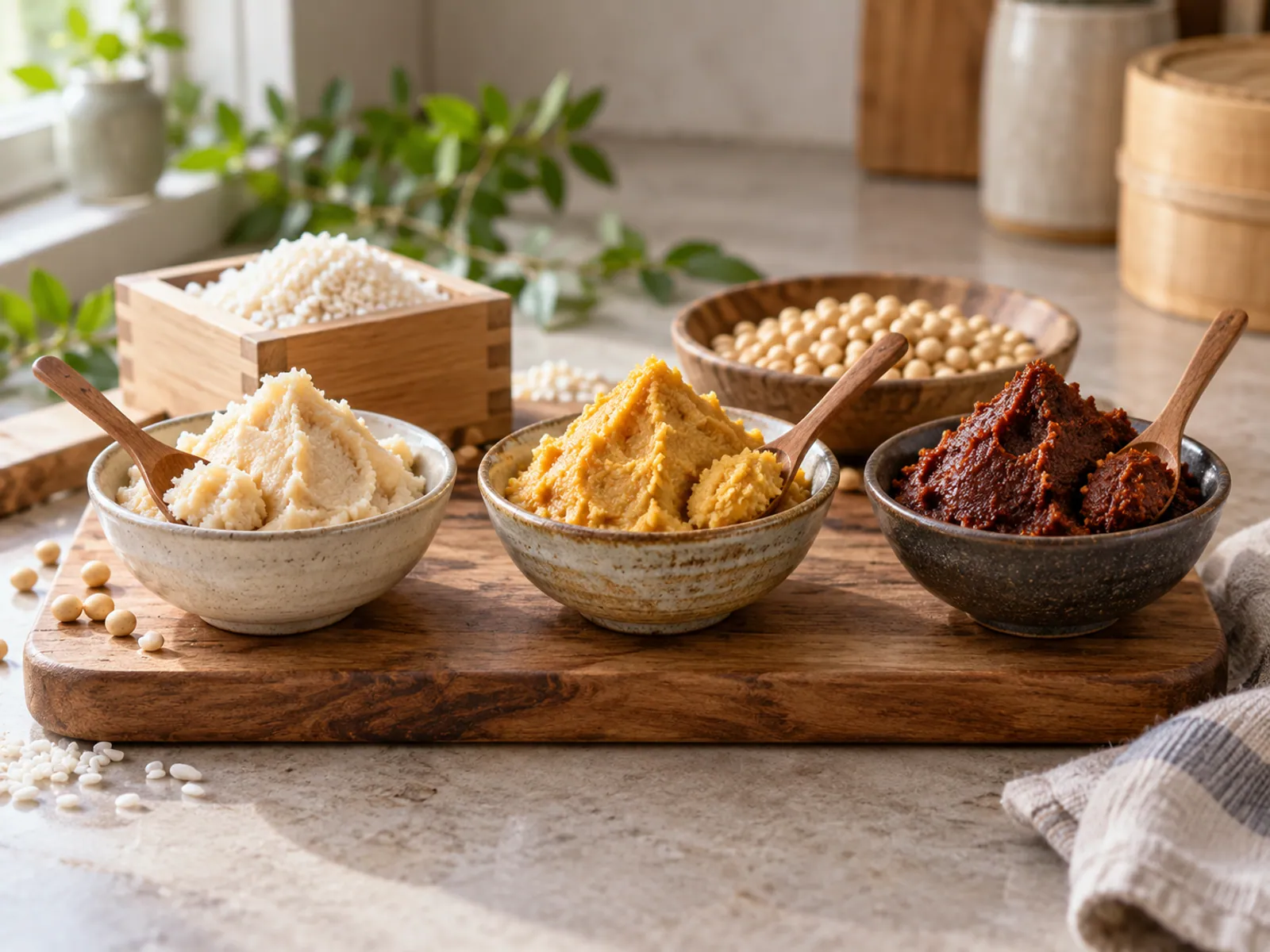
Homemade miso is one of the most rewarding ferments there is. The work takes an afternoon, the waiting takes months, and the result is richer and more alive than almost anything you can buy. You need three ingredients: soybeans, koji and salt. The salt level and the amount of koji decide which kind of miso you end up with, from sweet white to deep red; the differences between them are in types of miso.
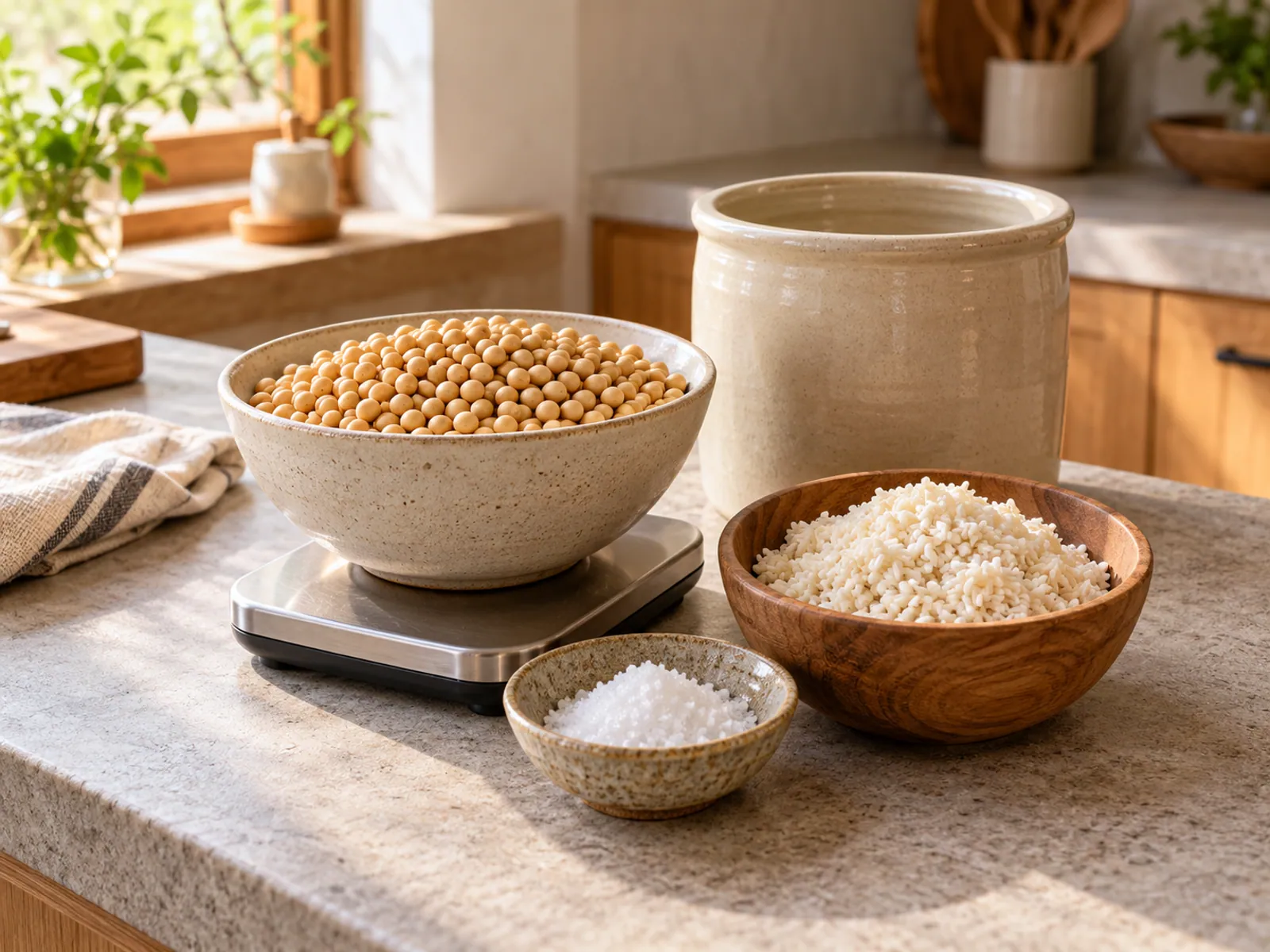
Ingredients for yellow miso
1 kg dry soybeans (about 2.2 kg cooked)
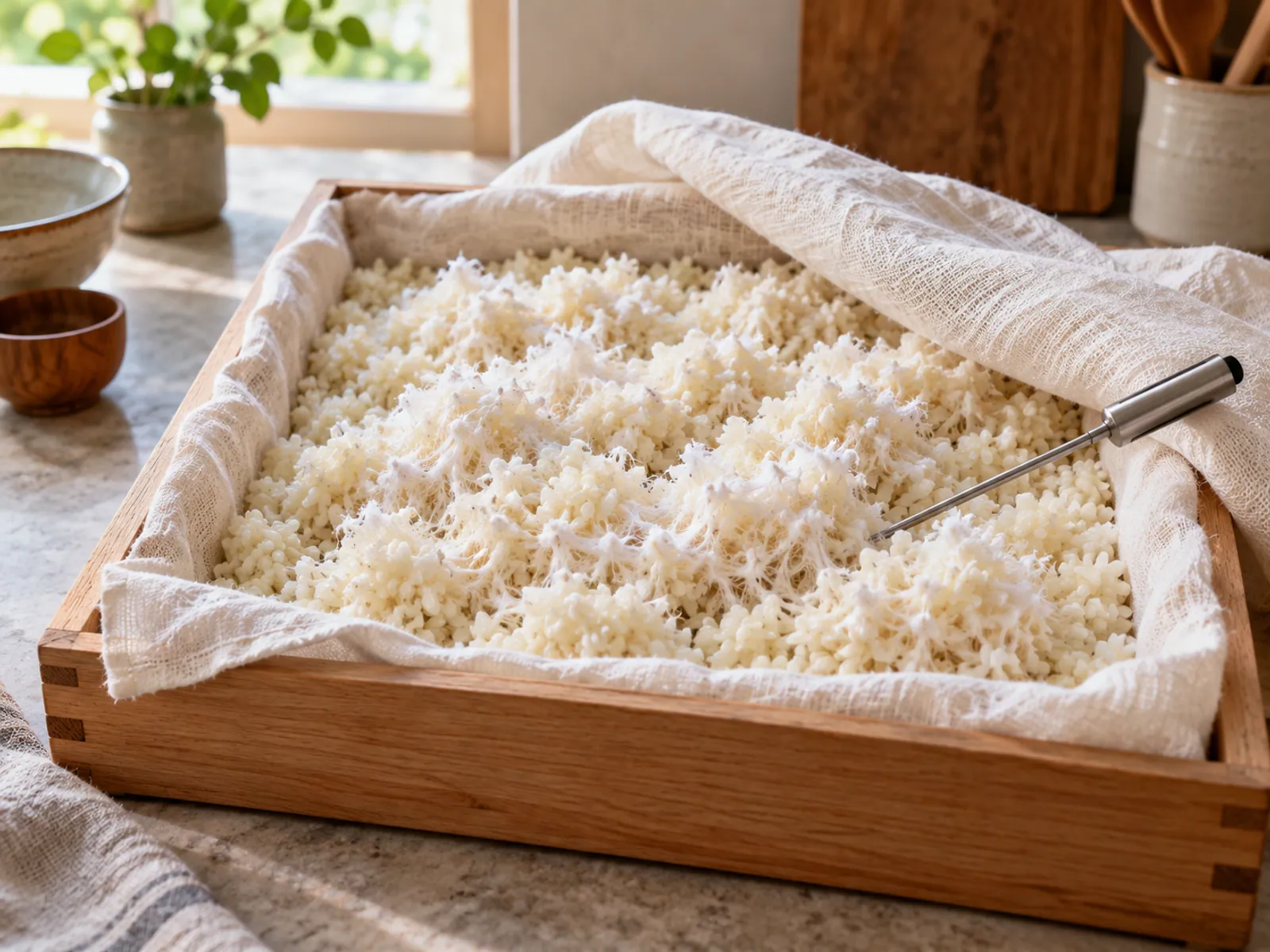
1 kg rice koji, fresh or dried
~420 g salt, plus about 30 g for the surface
That makes about 3.6 kg of miso and needs a 4–5 litre crock. To scale the batch or change the style, use the calculator.
How to make miso
- 1Soak the beans Rinse the soybeans and soak them in plenty of water for 18–24 hours. They will more than double in size, and a soaked bean should split easily along its seam.
- 2Cook until very soft Simmer in fresh water for 3–5 hours, skimming the foam, or pressure-cook for about 30–40 minutes. A bean should crush easily between your thumb and little finger. Keep a cup of the cooking liquid.
- 3Mix the koji and salt While the beans cook, rub the koji and salt together in a large bowl until the grains are separated and evenly coated. Set aside about 30 g of salt for the surface.
- 4Mash and cool Drain the beans and mash them to a coarse or smooth paste, as you prefer. Let the paste cool below 35°C; hotter beans damage the koji enzymes.
- 5Combine Mix the bean paste into the salted koji thoroughly. Add some of the reserved cooking liquid if needed: the paste should feel like firm clay or stiff mashed potato and hold a ball without cracking. A spoonful of unpasteurized miso from a previous batch helps it get going.
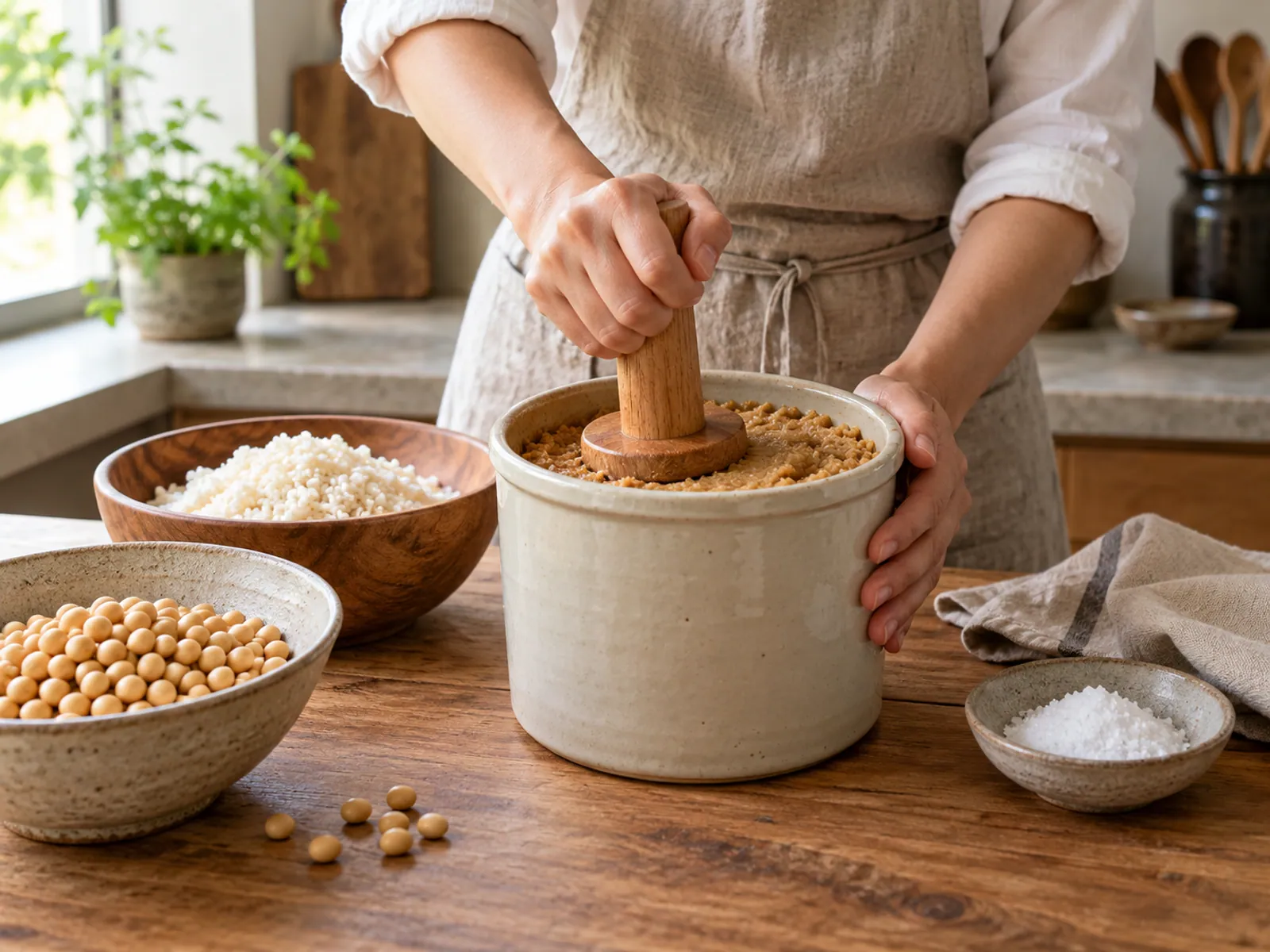
- 6Pack the crock Wipe a crock or food-grade tub with a little spirit such as vodka. Form the paste into fist-sized balls and throw them in, pressing each layer down hard to drive out air.
- 7Seal Smooth the top, wipe the sides clean, sprinkle the reserved salt over the surface, and press plastic wrap directly onto it. Add a plate and a weight of about 20–30% of the miso weight, then cover the crock with a lid or cloth. Label it with the date.
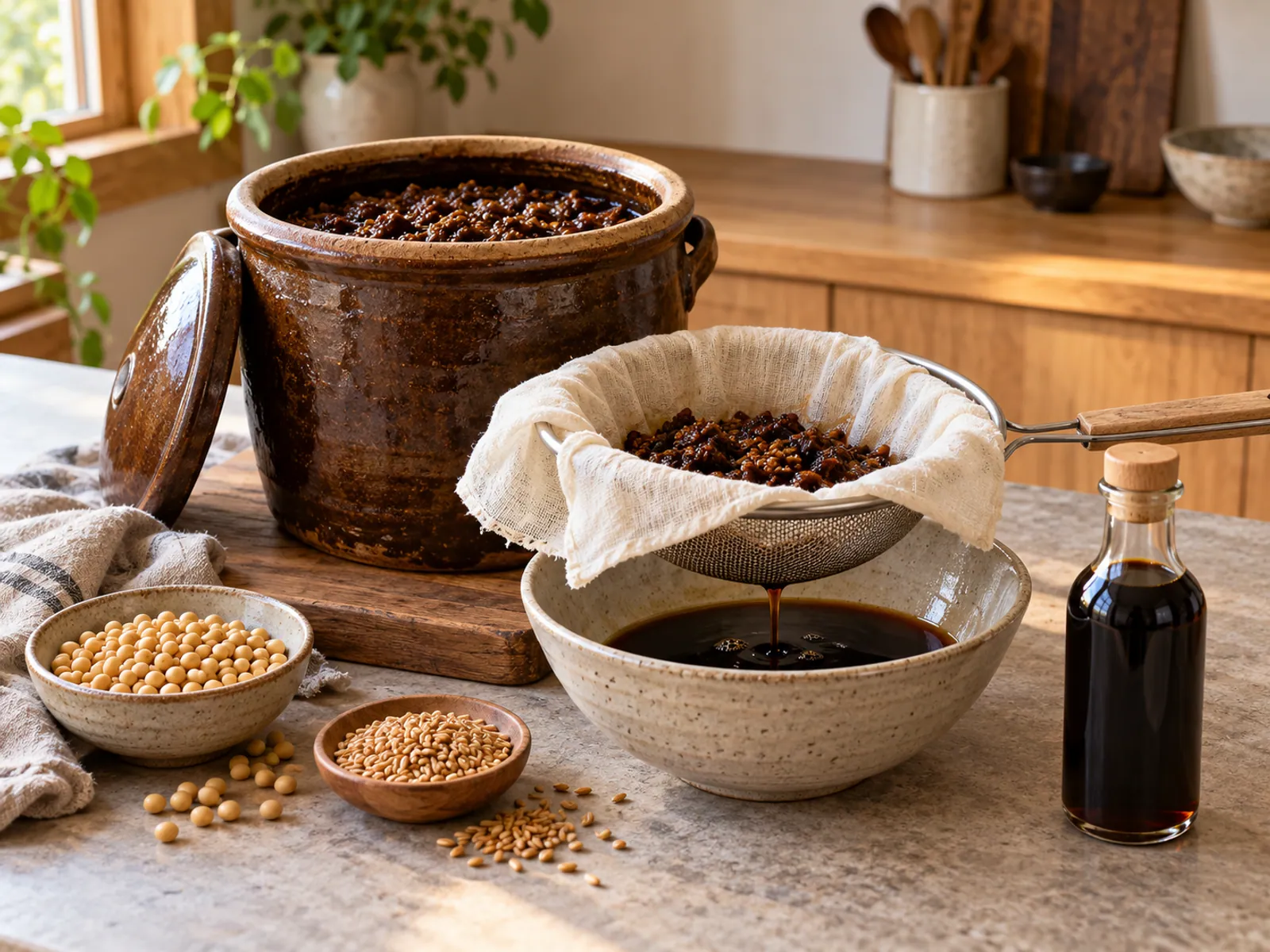
- 8Age Store somewhere cool and dark. Check after a month; tamari on top means it is working. Taste from the middle when your style is due.
Related calculator
Miso Salt Calculator
Soybeans, koji and salt for any batch of homemade miso, by style from sweet white to long-aged red, with ageing times.
Changing the style
Sweet white twice as much koji as soybeans and about 6% salt. Age 4–8 weeks somewhere warm, then refrigerate.
Yellow equal koji and soybeans, 11–12% salt, 3–6 months. The recipe above.
Red less koji, 12–13% salt, 6–18 months or more for a dark, deep miso.
Barley barley koji instead of rice koji, about 11% salt, 6–12 months.
To grow the koji yourself rather than buy it, see how to make koji.
While it ages
Watch for
- Tamari pooling on top is normal. Keep the surface covered so it does not dry out.
- White film Usually yeast. Scrape it off with a clean spoon.
- Fuzzy mould at the edges or surface Remove it with a margin of miso. The salty paste underneath is normally fine.
- Pink, slimy or rotten all the way through Discard. This usually means too little salt or air pockets.
- Once it tastes ready, move it to the fridge or a cool place to slow it down.