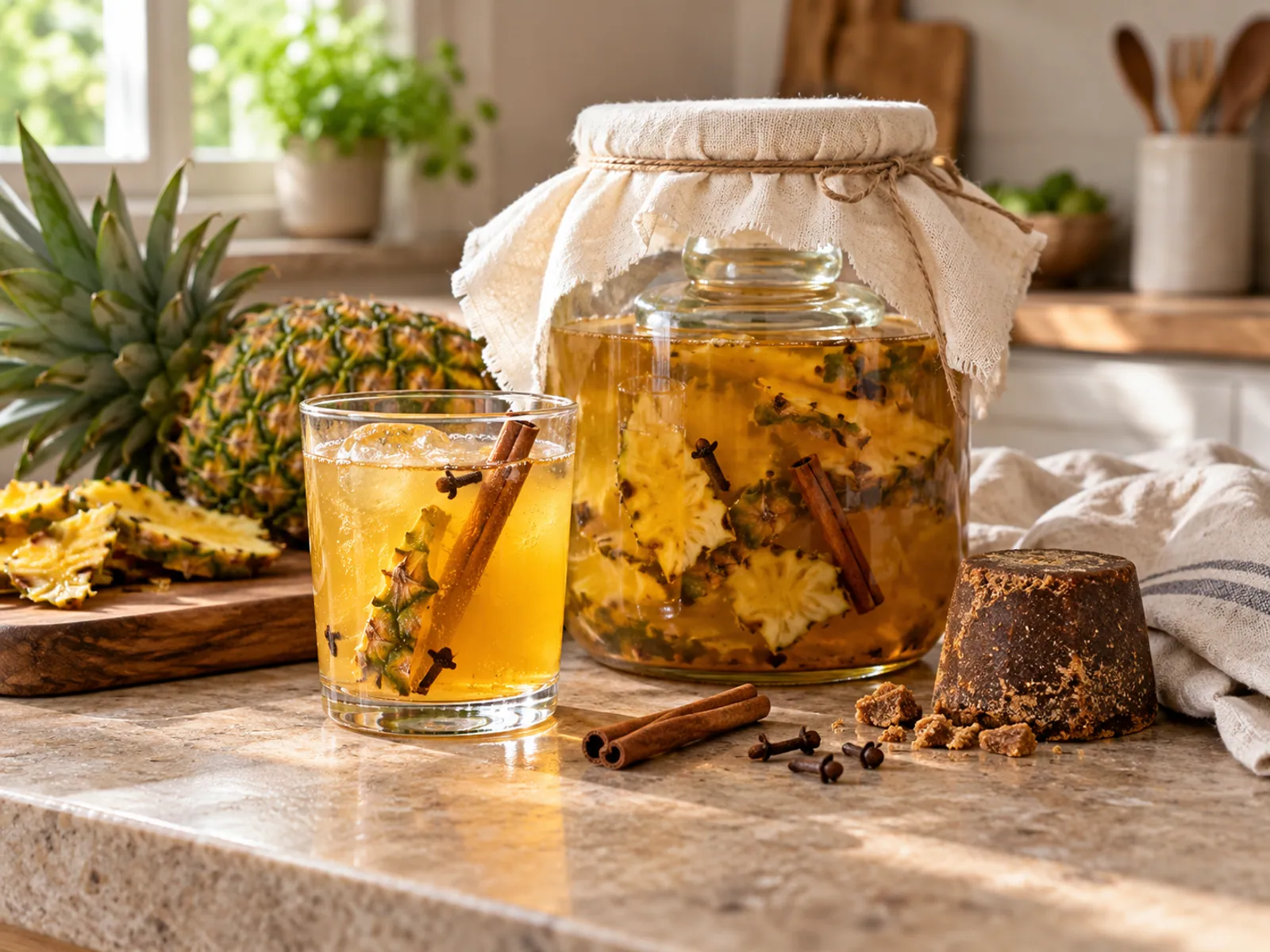
Tepache is the street drink of Mexico: sweet, spiced and barely fizzy, made from the parts of a pineapple most people throw away. The wild yeast on the rind does all the work, so there is no starter to maintain, and a batch is ready in two or three days.
Tepache recipe
- 1Prepare the pineapple Rinse the pineapple briefly but do not scrub it; the yeast is on the skin. Cut off the top, then the rind in thick strips, and the core. Eat the fruit.
- 2Make the syrup Dissolve 200–250 g of piloncillo (or dark brown sugar) in 500 mL of hot water with 1 cinnamon stick and 3 cloves. Add 1.5 litres of cold water and let it cool to room temperature.
- 3Combine Put the rind and core in a large jar or crock and pour the syrup over. Weigh the rind down so it stays under the liquid. Cover with a cloth.
- 4Ferment Leave at room temperature. After about a day, skim off any white foam. Taste daily from day 2.
- 5Strain and serve When it is fizzy and tangy, strain into a jug or bottles and refrigerate. Serve cold over ice, with a pinch of chilli salt on the rim if you like.
Making tepache fizzy
Tepache may be only lightly fizzy after its initial fermentation. For stronger carbonation, use a complete bottle-conditioning method and equipment rated for the intended pressure. Remaining sugar, culture and temperature make pressure unpredictable from a fixed number of hours. An ordinary storage jar is unsuitable, and chilling does not undo excess pressure. The ginger bug soda calculator provides context for its own method; its timing is not a pressure guarantee for a different drink.
Variations
Troubleshooting
Watch for
- Fuzzy, coloured mould Discard. Keep the rind submerged and the batch covered.
- Not fizzy on schedule Compare temperature, ingredients and culture with the method. Extra starter or warmth is not an automatic fix.
- More sour than expected Separate flavor preference from spoilage checks. Do not dilute a questionable batch to make it drinkable.
- Unexpected slime or ropiness Do not assume it is a harmless phase; discard a batch with suspected spoilage.
One pineapple is not a fixed batch weight
A large pineapple can provide far more rind and core than a small one. Record the weight you actually use, the starting water and the sugar quantity if you want to reproduce a favorite batch. Pineapple flesh also contributes sugar, so a batch made with lots of attached flesh differs from one using mostly pared rind.
Use sound fruit and clean preparation equipment. Fermentation is not a way to salvage moldy or spoiled pineapple. Choose a vessel with enough room for the liquid, solids and required headspace; a “2 L batch” does not necessarily fit in a 2 L jar once the rind is included.
The recipe’s 200–250 g added sugar in 2 L starting water corresponds to 100–125 g per litre of that water. This describes the input, not the sugar remaining in the glass or the final alcohol content. Piloncillo and dark brown sugar give a deeper caramel character; record which you use because the flavor is part of the result.
Serving variations and the vinegar boundary
Try cinnamon-led tepache over ice, or add ginger, citrus or a small chilli-salt accent to a serving. Compare these in the glass before changing a whole fermentation batch. Serving over ice dilutes the drink; it does not change how the original batch fermented.
Tepache and pineapple vinegar are related through fermentation, but turning one into the other is a separate controlled process. A sour or boozy batch has not automatically become sound vinegar, and suspected spoilage is not a reason to leave it fermenting longer. If you want vinegar, use the fruit-scrap vinegar guide and its process checks; do not use homemade vinegar for canning without a suitable tested method.
Keep finished tepache refrigerated as the recipe directs. A short fermentation, sweet taste or lack of fizz cannot establish that it is alcohol-free. For someone who must avoid alcohol, an unmeasured homemade batch is not a reliable substitute for a drink with a known specification.
Troubleshooting with a batch record
Record the fruit weight, sugar type and weight, starting water, vessel and actual room temperature. Note whether you used an added culture; that is a different variable from a wild-fermented batch. Check the full method before changing culture or temperature because the drink is quieter than expected.
Foam from gas and a persistent surface film are not the same observation. Do not classify unfamiliar growth from color alone. Fuzzy growth, unexpected slime or suspected spoilage requires a discard decision rather than dilution, extra sugar or a new starter. The fermentation FAQ separates normal process observations from unsupported rescue advice.