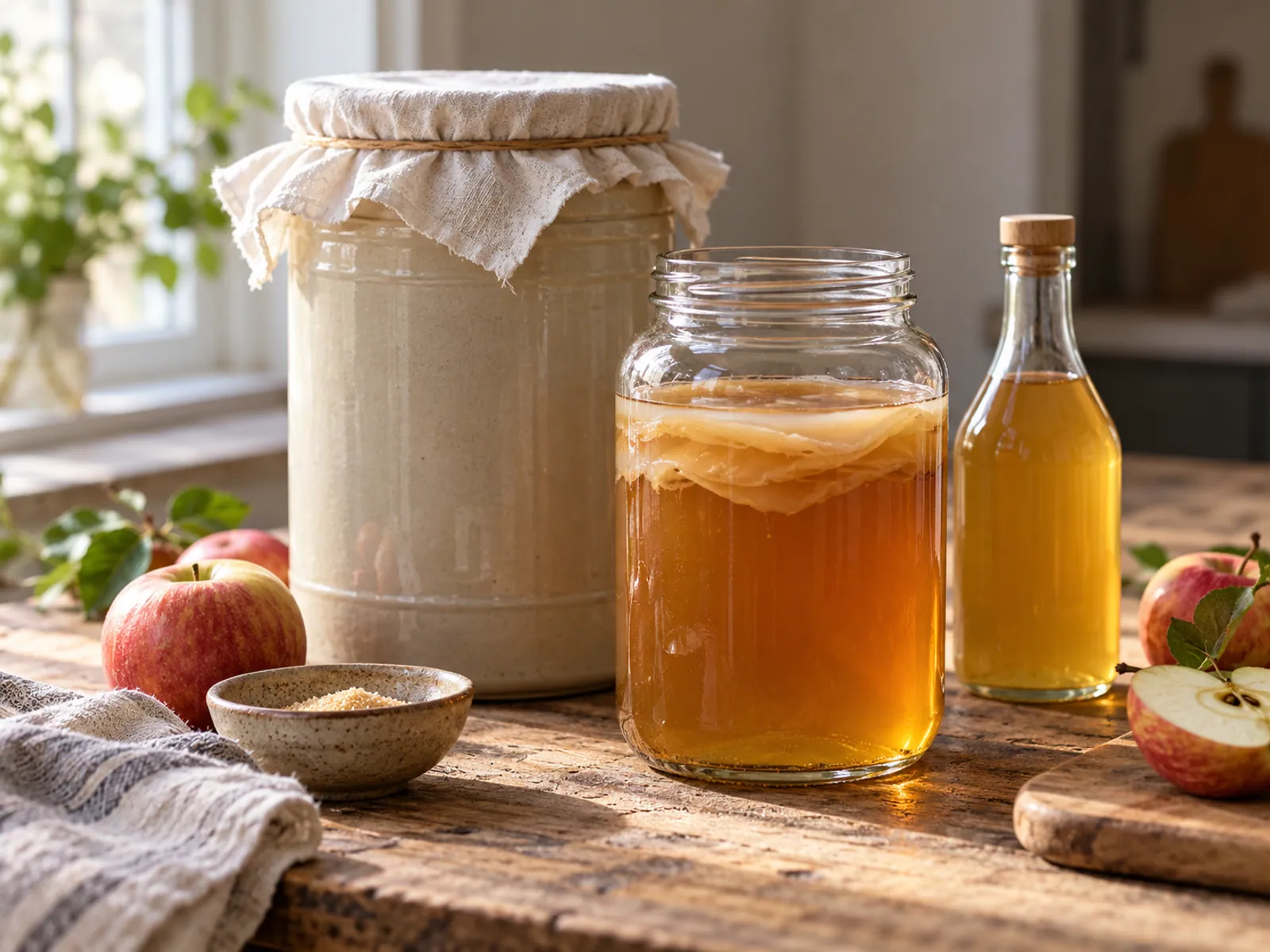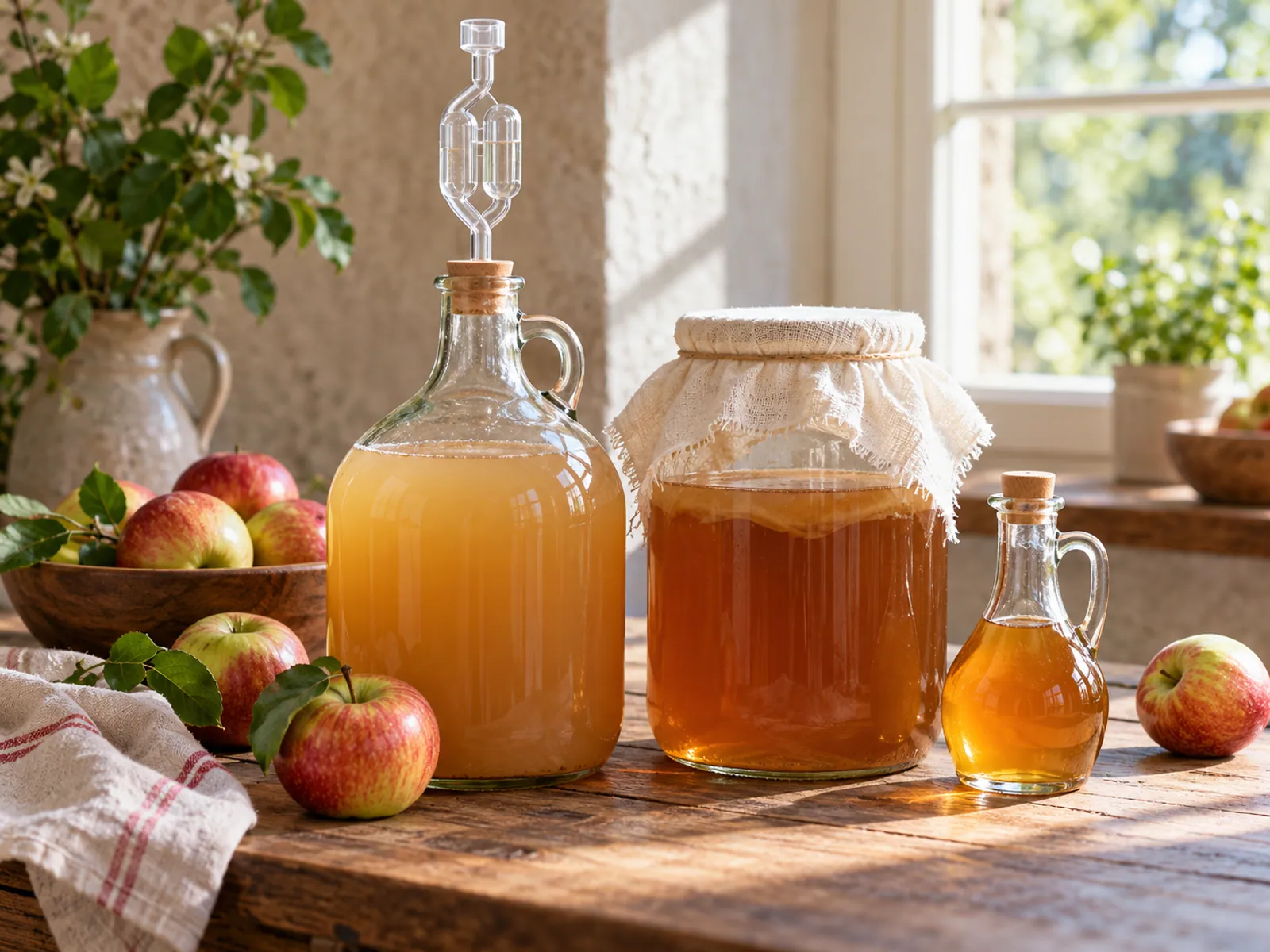
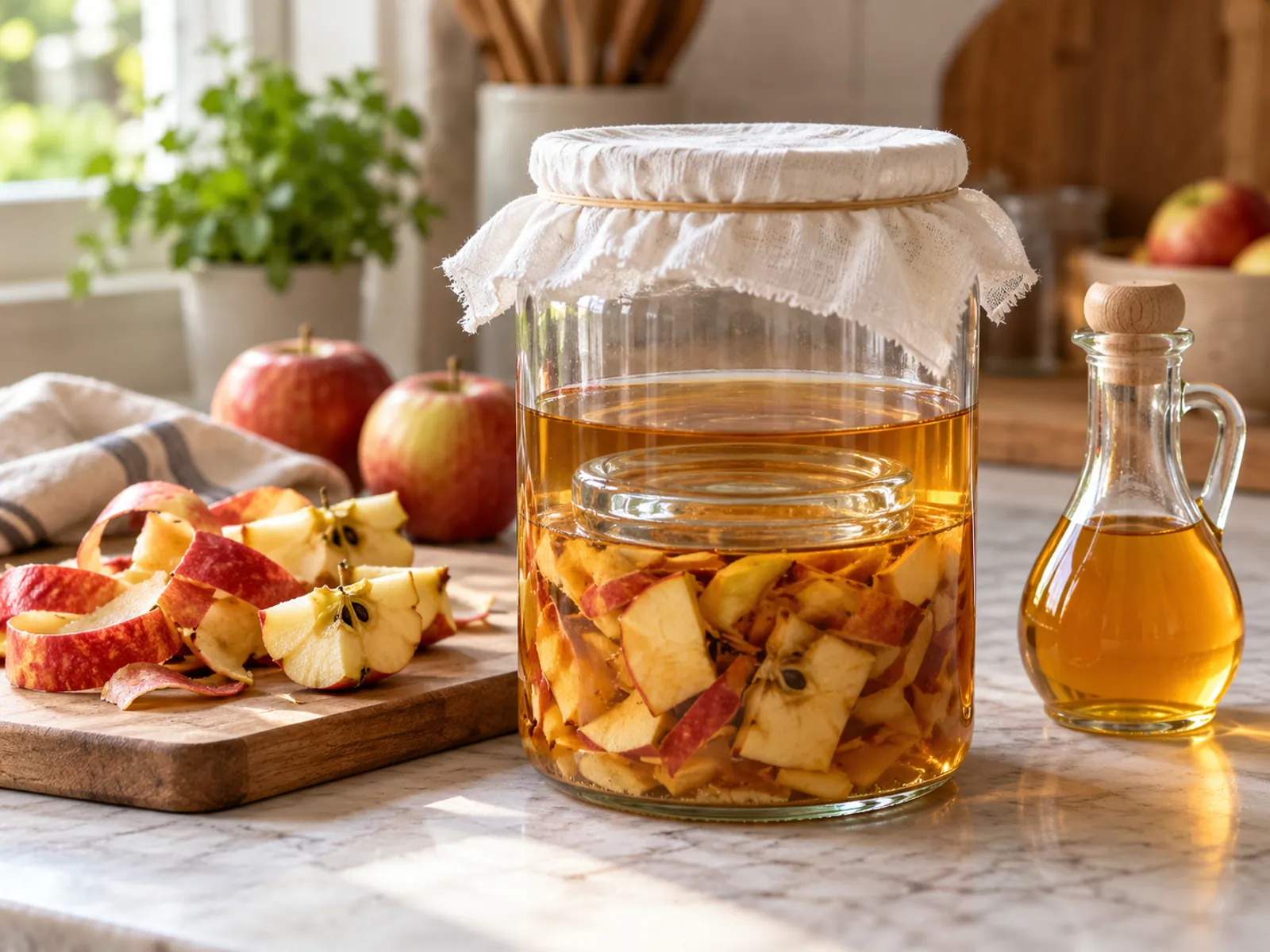
Fruit scrap vinegar is what happens when you take the peels and cores you would throw away, add sugar and water, and let wild yeast and bacteria do the rest. It makes a light, fruity vinegar for dressings and drinks, and it is the cheapest way to try making vinegar at all.
Fruit scrap vinegar recipe
¾ jar loosely packed fruit scraps
75–100 g sugar per litre of water
5–10 wks for both fermentations
- 1Pack the jar Fill a wide glass jar about three-quarters full with clean scraps. Fresh scraps are best; you can collect them in the freezer until you have enough.
- 2Add sugared water Dissolve 75–100 g of sugar per litre of unchlorinated water and pour it over the scraps until they are covered by a few centimetres. A splash of raw vinegar (about 50 mL per litre) is optional but protects against mould.
- 3Weigh down and cover Keep the scraps submerged with a fermentation weight or a small bag of water. Cover with cloth and a rubber band.
- 4Stage one: 1–2 weeks Stir daily. It will bubble and start to smell sweet and boozy. When the bubbling slows and the scraps start to sink, strain them out and compost them.
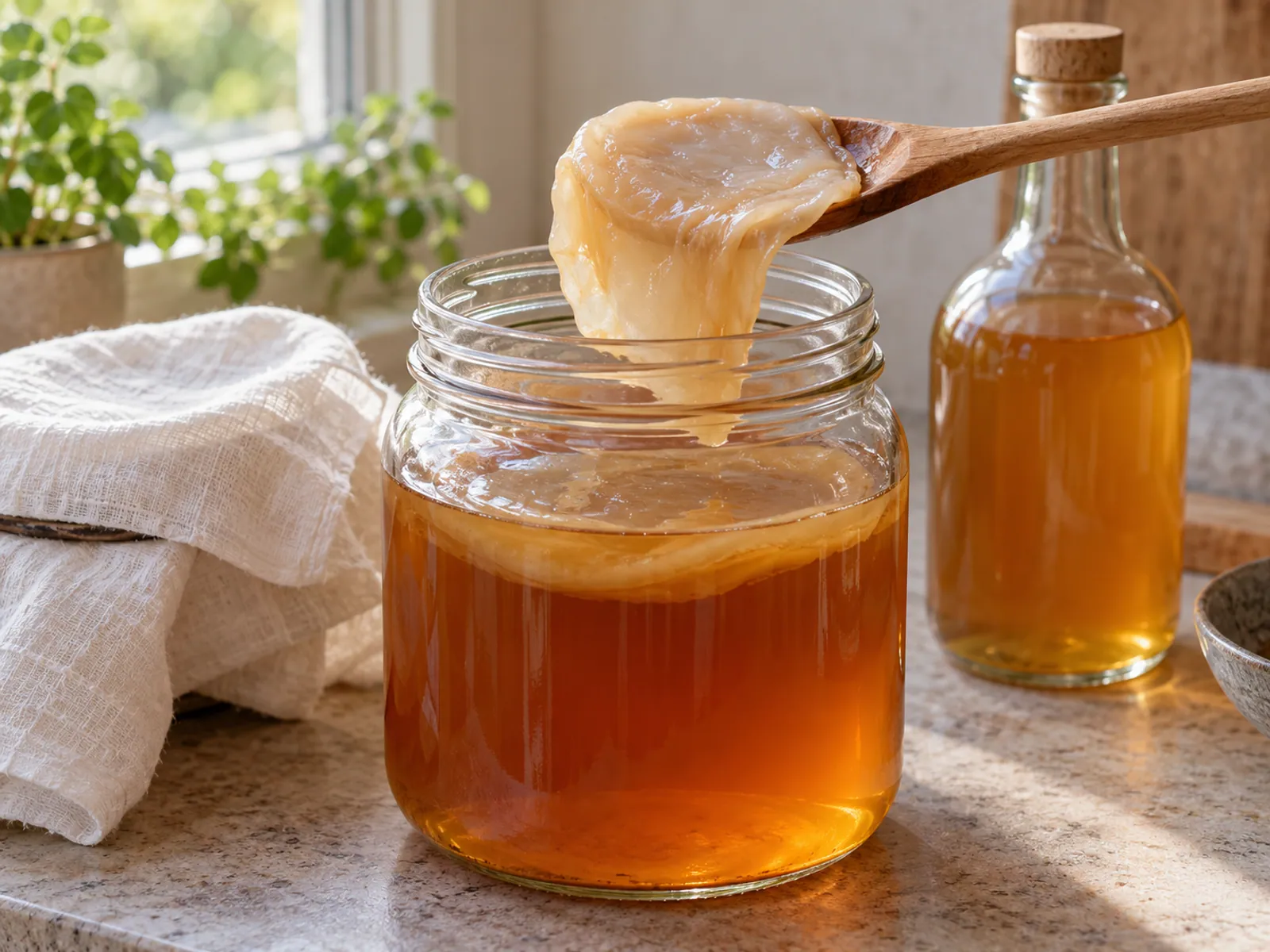
- 5Stage two: 3–8 weeks Return the strained liquid to a clean wide jar, add a splash of raw vinegar if you have it, cover with cloth and leave undisturbed at 20–30°C. A mother forms on top.
- 6Bottle When it tastes clearly sour with no alcohol, strain and bottle.
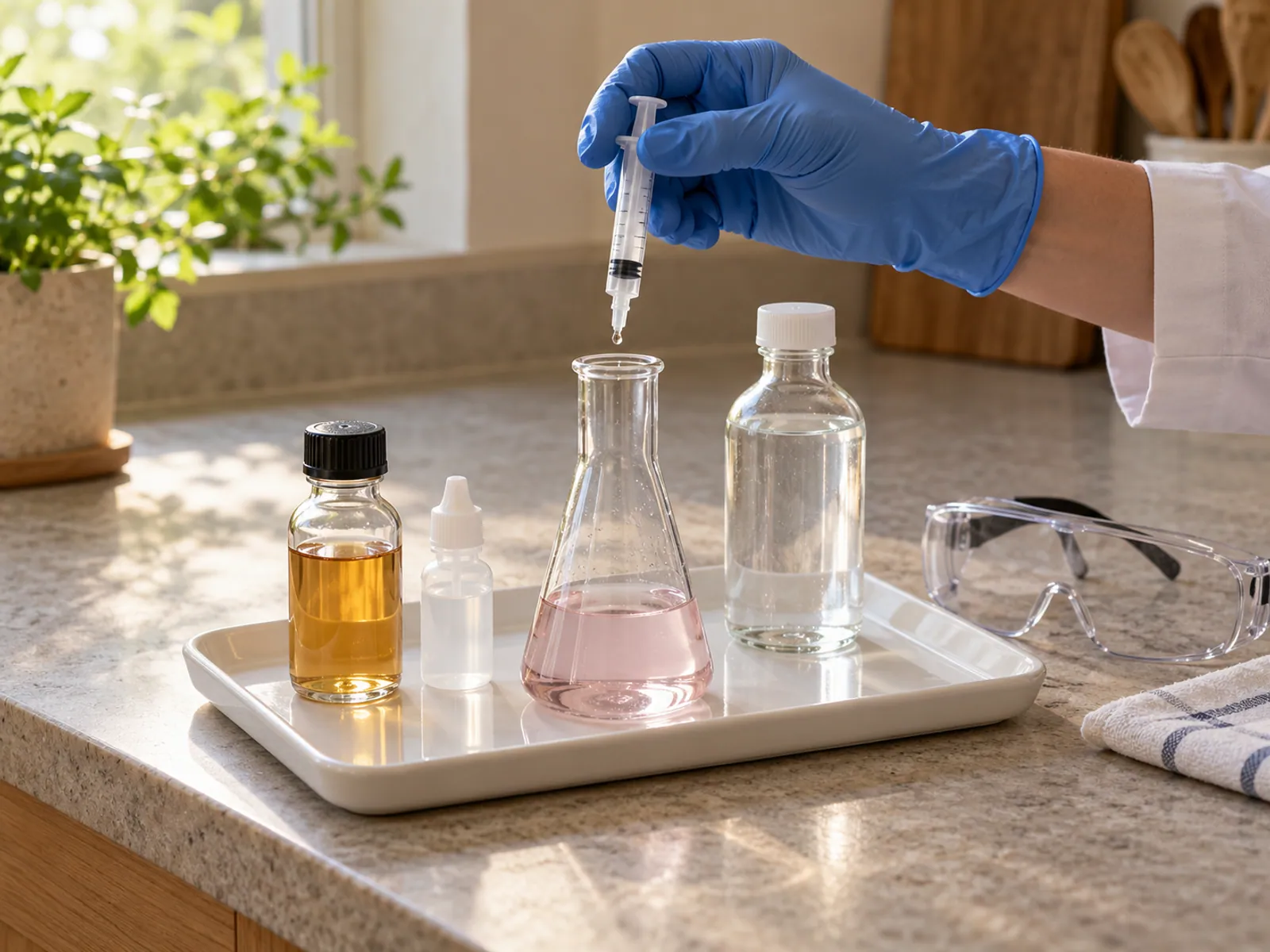
Related calculator
Vinegar Acidity Calculator
Work out the acidity of homemade vinegar from a titration test, and how much water dilutes it to a target strength.
Which scraps work best
Apples and pears the most reliable. Mild, fruity and the closest to cider vinegar.
Pineapple fast and aromatic. The first stage is essentially tepache; leave it going and it turns to pineapple vinegar.
Stone fruit and grapes peach, plum, apricot and grape scraps give colour and perfume.
Use sparingly citrus peel adds bitterness and its oils slow fermentation; banana peel goes slimy. Avoid anything mouldy or bruised to the point of rot.
Troubleshooting
Watch for
- Fuzzy mould Discard everything. Keep scraps fully submerged next time and add raw vinegar at the start.
- White, flat film in stage one Usually kahm yeast. Skim it off and stir.
- Never gets sour Too little sugar, so too little alcohol. Use the full 100 g per litre and add raw vinegar in stage two.
- Too weak for pickling Expected for scrap vinegar. Keep it for dressings and drinks.
For a stronger, more consistent vinegar from the same fruit, start from juice: see how to make apple cider vinegar.