Sourdough Starter Manager
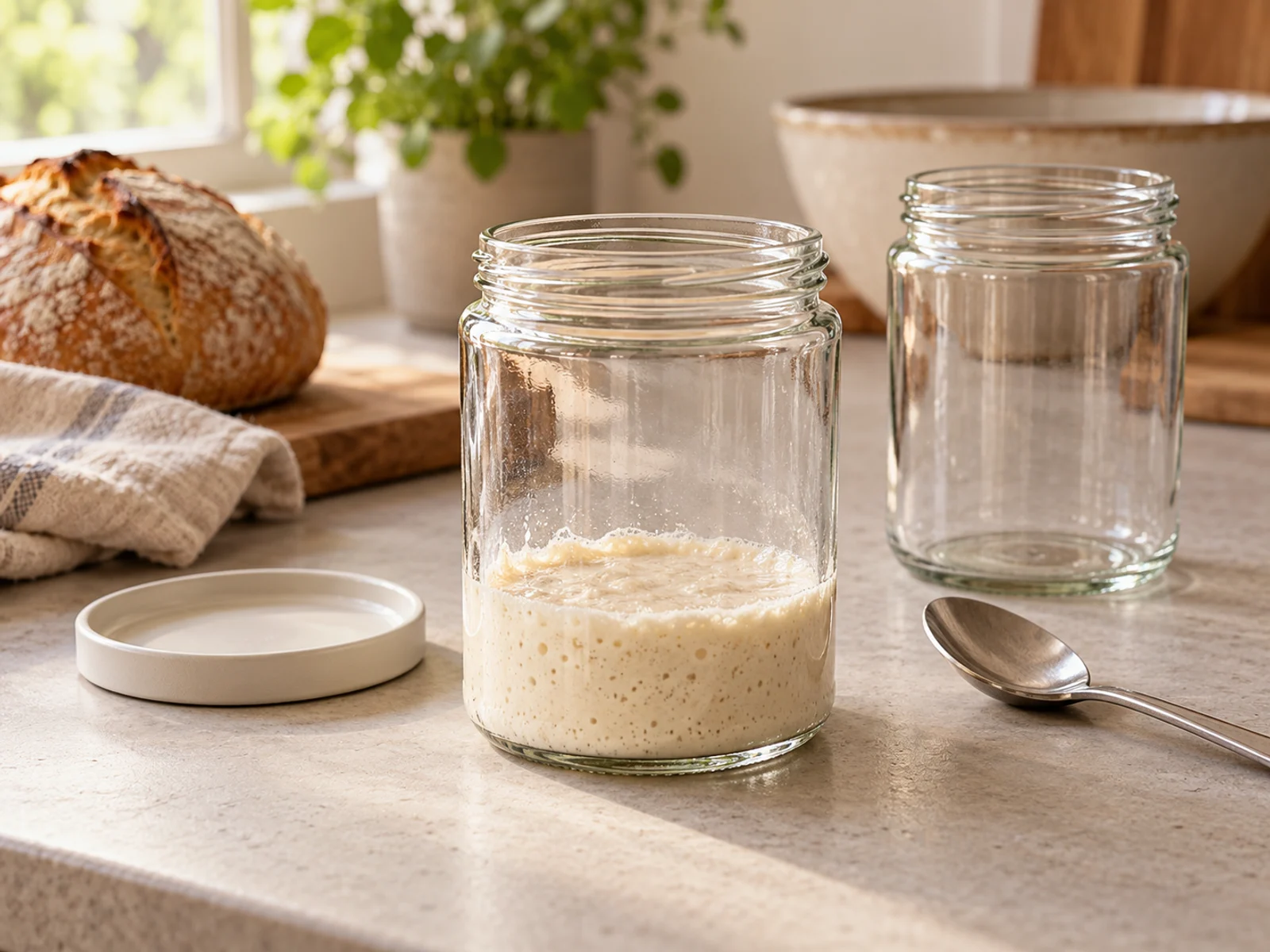
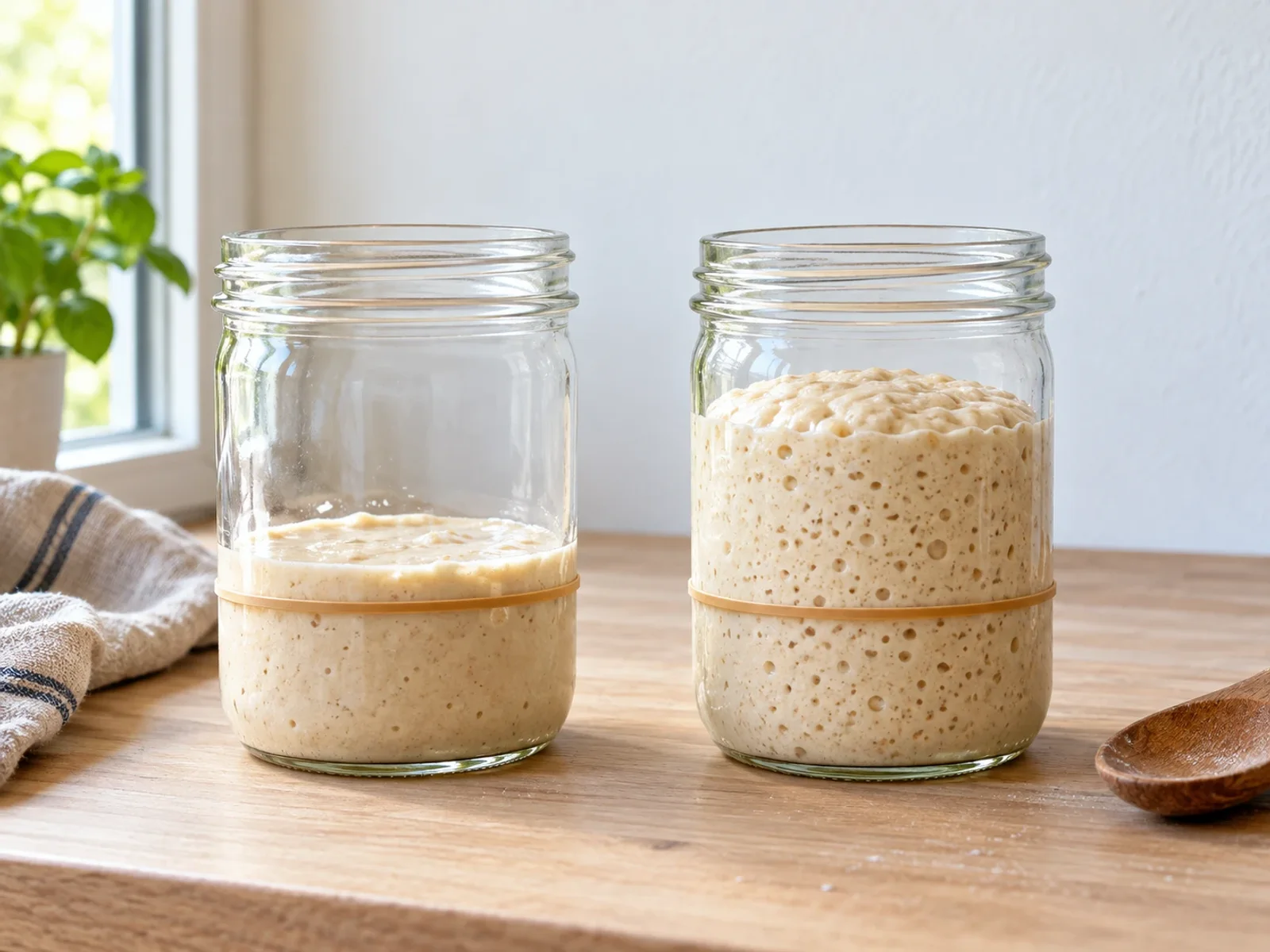
Log each feed, watch your starter rise in a 3D jar and record when it peaks. After two feeds it learns your own starter’s timing, so you know when it will be ready.
- See the rise against the clock
- Learns your starter’s peak time
- Free, no account needed
Define the style before choosing a recipe
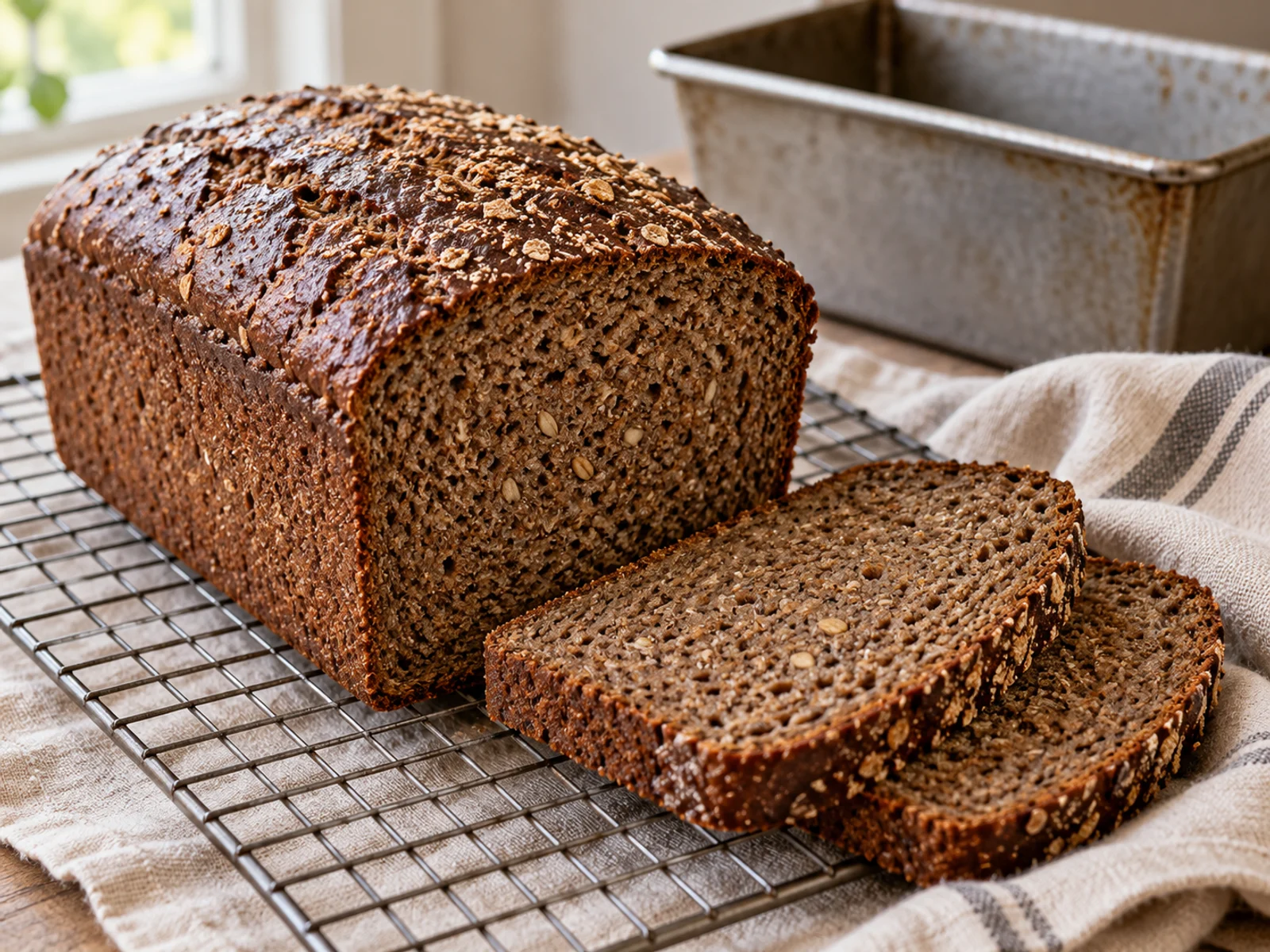
“Black bread” can describe several different loaves. Dark colour may come from whole rye, a long bake, malt or added colour ingredients. It does not specify one hydration, sourdough percentage or national recipe. This version is a rye-dominant sourdough pan loaf for a normal home oven.
Traditional Westphalian pumpernickel uses a different long, enclosed baking process and coarse rye ingredients. Do not expect the same colour or texture from a shorter home bake. This recipe deliberately uses no coffee, cocoa or molasses to imitate that colour.
Expect close, moist slices rather than an open wheat crumb. A dense rye loaf can be properly fermented and well baked; it should not automatically be diagnosed with the white-sourdough crumb chart.
Formula with the starter counted
| Ingredient to add | Weight | Contribution |
|---|---|---|
| Whole rye flour | 360g | Plus 120g rye flour in starter |
| Strong white bread flour | 120g | 20% of total flour |
| Water | 360g | Plus 120g water in starter |
| Ripe rye starter at 100% hydration | 240g | 120g flour and 120g water |
| Salt | 12g | 2% of total flour |
| Total dough | 1,092g | One well-supported pan loaf |
Total flour is 600g: 480g rye and 120g wheat. Total water is 480g, or 80% hydration. Prefermented flour is 20% of all flour; starter mass is 40% of all flour. These are different percentages. Use a loaf pan around 23 × 13cm (9 × 5 inches) with enough headroom; divide between smaller pans if necessary.
Prepare a ripe rye build
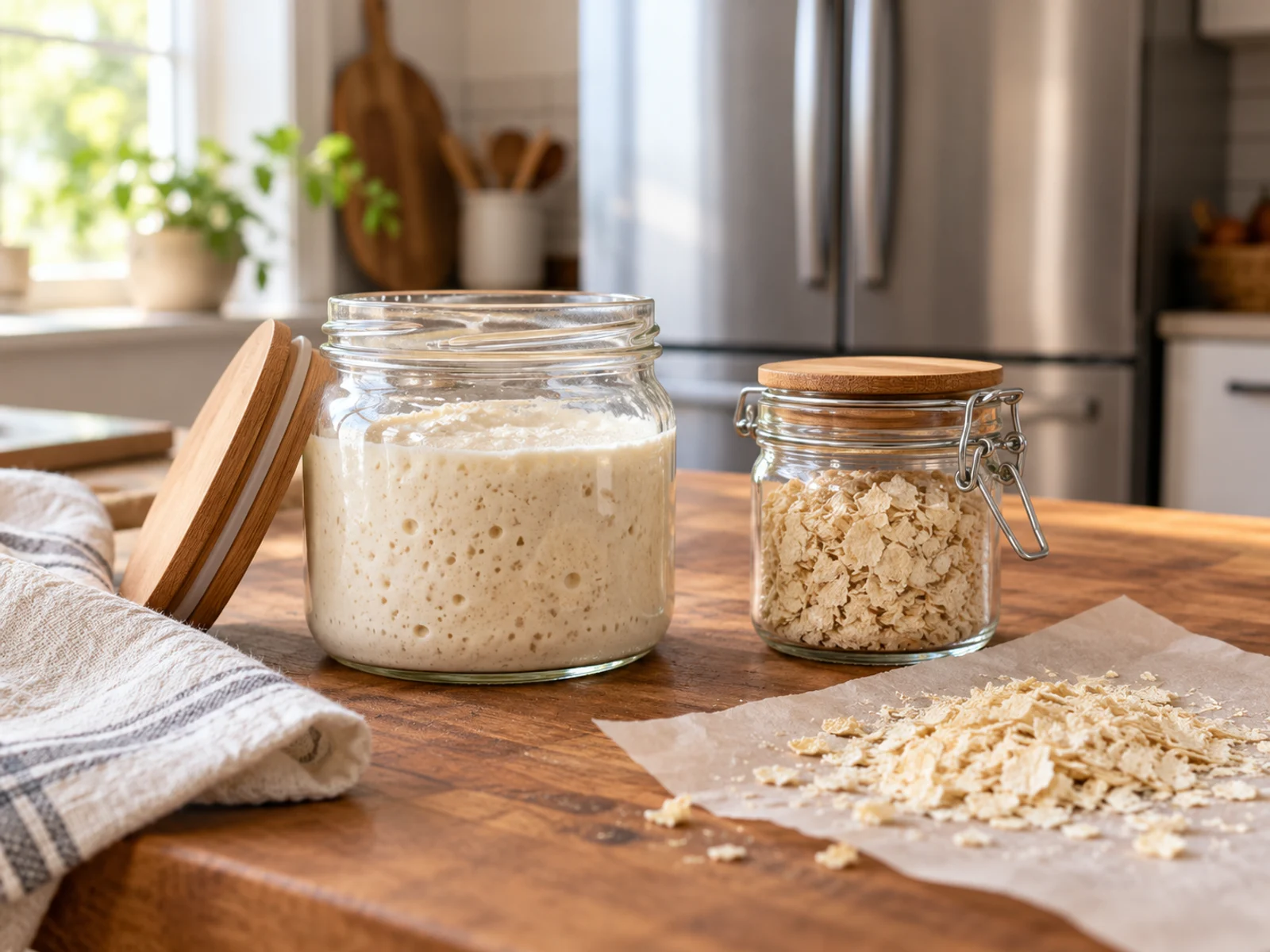
If maintaining a 100%-hydration rye culture, one build for the listed 240g is 20g ripe rye starter plus 110g rye flour and 110g water. Allow it to become aerated and ripe at a consistent moderate temperature. The time depends on the seed and temperature, so start the build early enough to observe it rather than assuming a particular overnight deadline.
Do not replace the ripe build with unfermented flour and water plus a token amount of old starter. The fermented portion has a structural role in a rye-rich dough as well as providing leavening. If your only starter is wheat, refresh it with rye over prior feeds before calling this an all-rye build; otherwise the grain calculation changes slightly.
Keep some culture separately for maintenance. Inspect it before use and follow the starter storage guide if it has been refrigerated for a long period.
Related calculator
Bulk Fermentation Time Calculator
Enter dough temperature, starter %, flour blend, hydration and target rise to estimate bulk fermentation time — with fold times and a full bake schedule on the clock.
Mix, rest briefly and pan
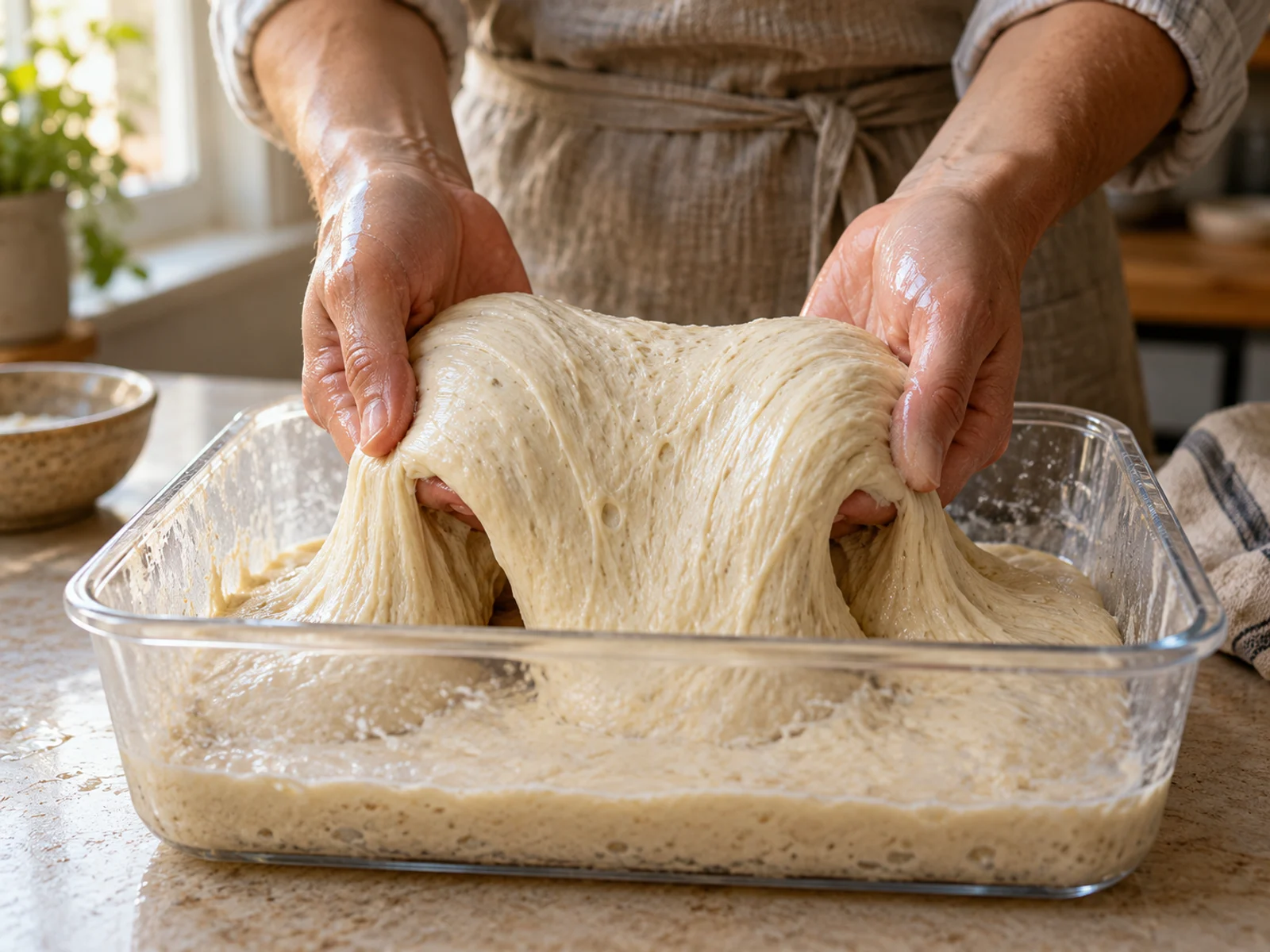
Grease the pan and use suitable parchment if needed for release. Mix ripe starter, water, both flours and salt thoroughly until no dry flour remains. The result will be a sticky cohesive paste. Do not add enough wheat flour to make it behave like a kneadable white loaf; that creates a different formula.
Let the mixture stand briefly to hydrate, then scrape into the pan. Smooth the surface with a wet scraper and mark the starting height on the outside. Cover so the top does not dry while leaving space above it.
This dough does not need repeated coil folds. The modest wheat portion does not transform an 80%-rye mixture into a strong white dough. Even filling and good fermentation control are more useful than trying to pull a windowpane.
Free Sourdough Baking Playbook (printable PDF)
A printable PDF companion for the sourdough calculators and guides.
Proof for expansion without collapse
Let the panned dough develop visible expansion and small surface signs rather than waiting for a dramatic doubling. Around a one-third to one-half increase is a practical observation range for a first trial, but flour, starter ripeness and pan geometry influence what you see.
Begin checking early in warm conditions. A proof of roughly 1½–3 hours at a moderate room temperature can be a planning range for an active build, not a promise. If the dough is barely changing, check the starter and actual dough temperature instead of baking simply because the clock reached three hours.
If the surface has risen and then sinks, it has gone too far. Bake promptly and record the earlier peak for the next attempt. The wheat-protein presets in the bulk calculator do not apply to this rye paste.
Bake thoroughly and let the crumb settle
Preheat a conventional oven to about 240°C / 465°F. Bake the loaf for around 15 minutes, then reduce to 200°C / 390°F and continue for about 55–70 minutes. Oven performance and pan shape vary, so use crust colour and a centre check rather than time alone. Shield the top with foil if it is colouring too quickly.
A centre near 97–99°C / 207–210°F is a useful completion check for this moist loaf at ordinary elevations. Remove from the pan carefully; if the sides are damp, return the loaf briefly to the oven without the pan. Cool on a rack until no warmth remains.
Wait until the next day before slicing, preferably 24 hours for a clean assessment of a rye-rich crumb. Early slicing can make a properly baked loaf appear sticky and damage its structure. Keep it protected after cooling; do not seal a warm loaf into a condensation-filled bag.
Rye troubleshooting and substitutions
If slices smear on the knife the next day, assess bake completion, the starter build and water absorption. If the loaf collapsed, review proofing and dough consistency. If the crumb is dry and crumbles, check whether flour was added by feel during mixing or whether the bake was excessive.
Fine rye flour and coarse rye meal absorb differently. Do not replace a large flour portion with dry cracked grain without a separately designed soak. Seeds, syrup and scalded grain likewise change the formula; use a recipe written for those additions instead of improvising a large handful.
This is a researched and arithmetic-checked home-batch formula, not an in-house test-bake claim. For a different whole-rye/chopped-grain method see King Arthur’s Vollkornbrot. For why rye acidification matters see the baking-technology explanation from IREKS. Freeze surplus cooled slices for later meals and consult bread storage.