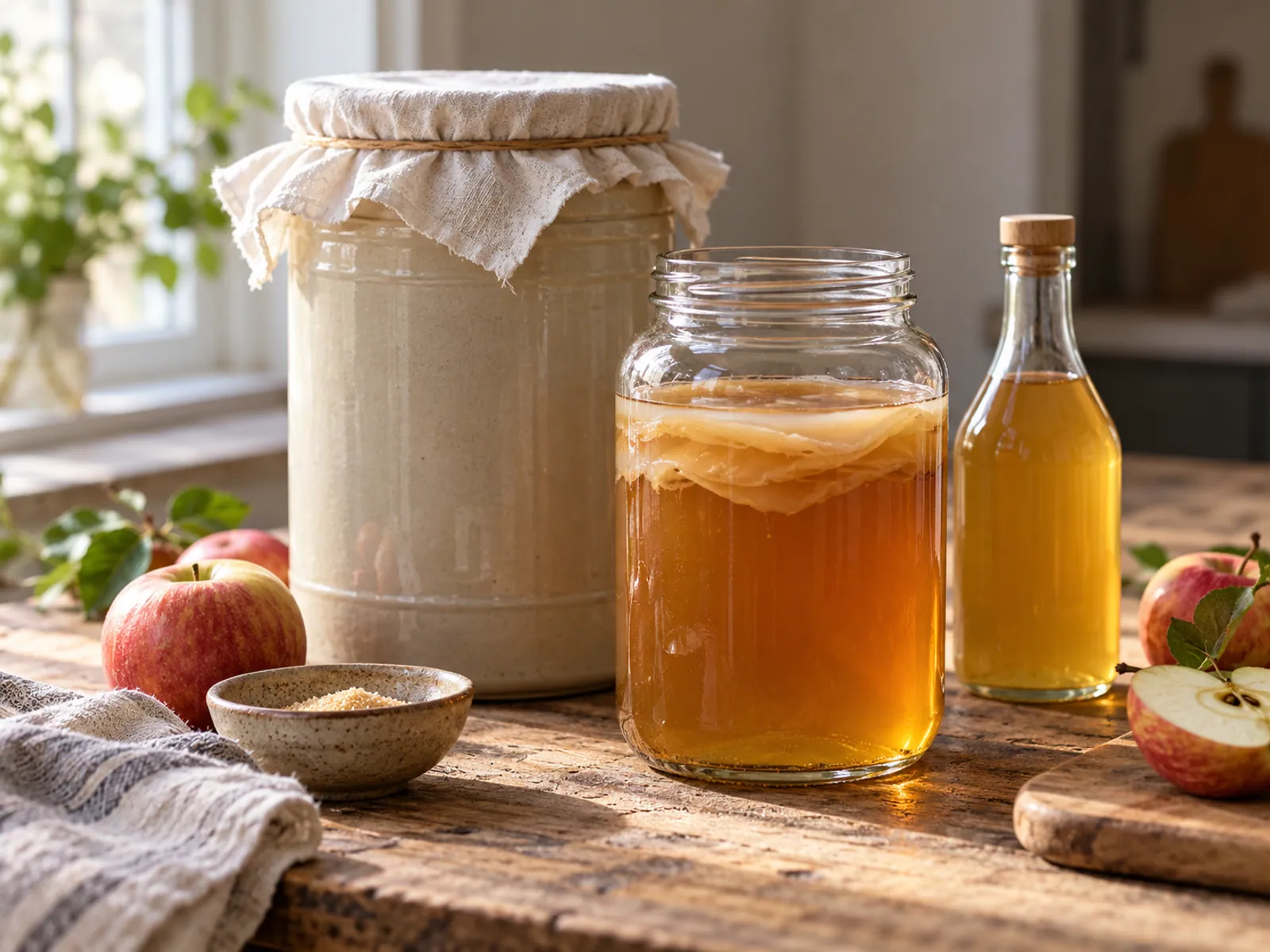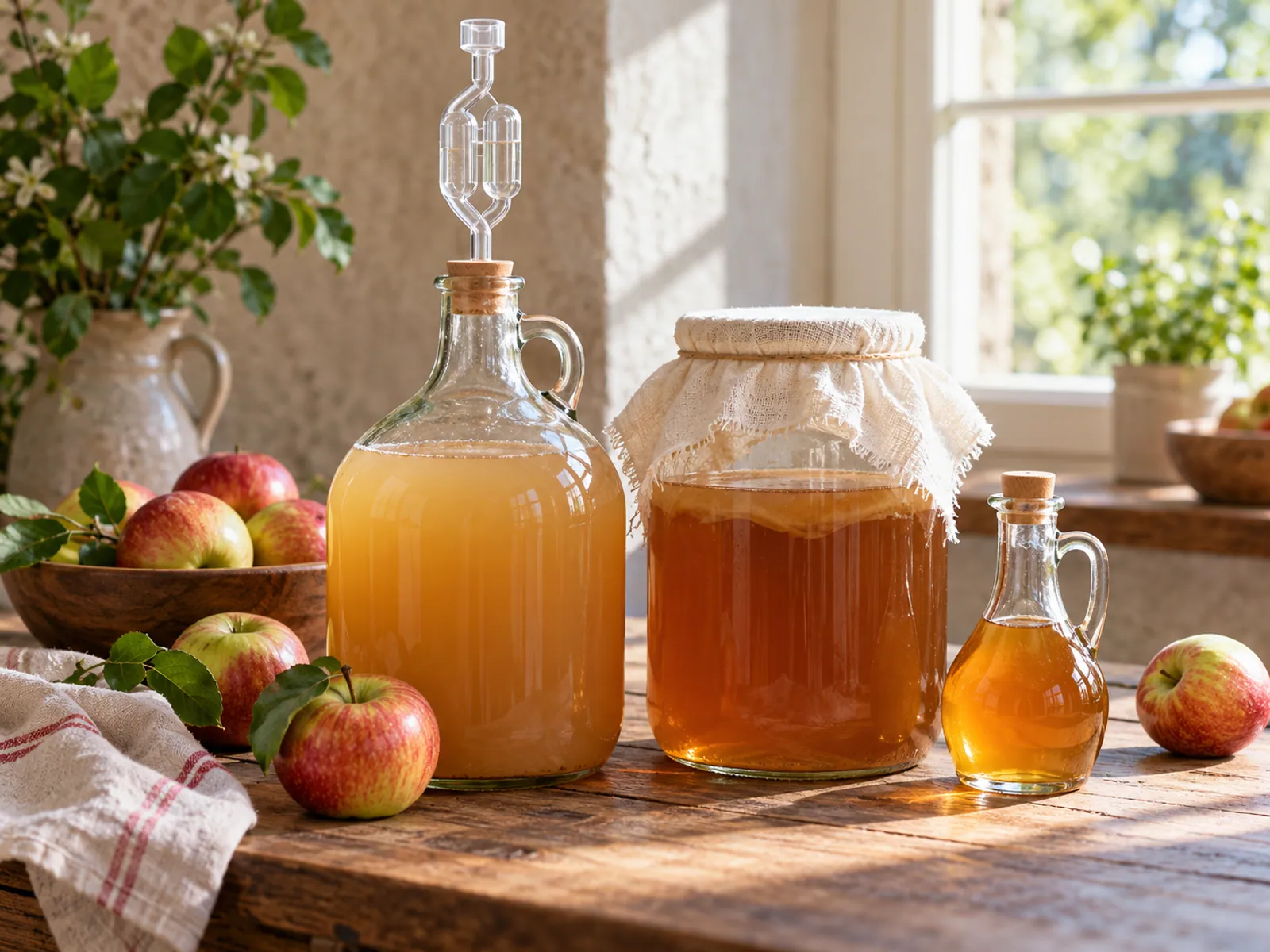
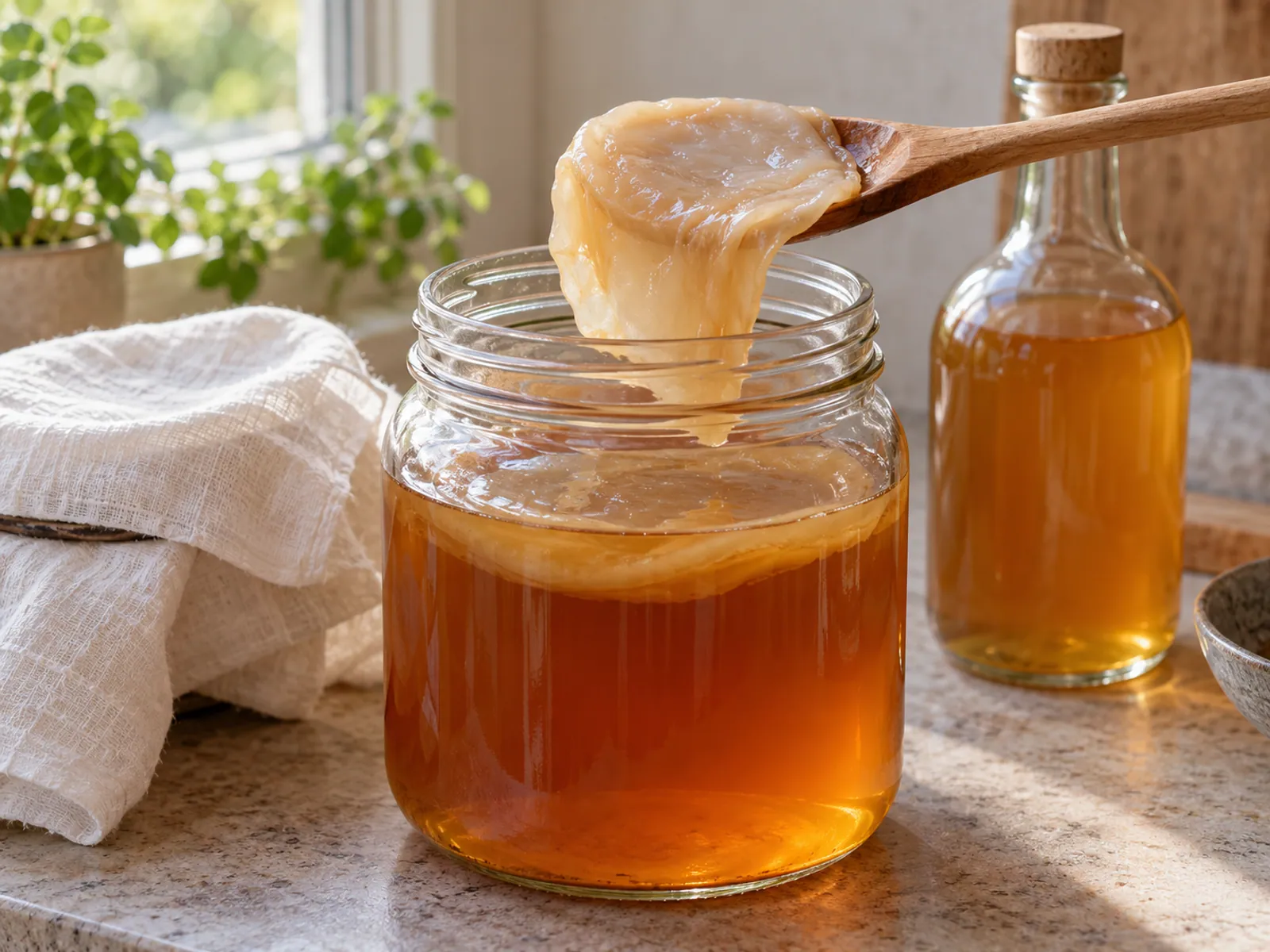
The mother of vinegar is the slippery, pancake-like mass that floats on top of a vinegar crock or drifts at the bottom of a bottle of raw cider vinegar. It looks alarming the first time you see it, but it is simply the home of the bacteria that make vinegar, and it is the easiest way to start your next batch.
What a vinegar mother is
Acetic acid bacteria need oxygen to turn alcohol into acetic acid. To stay at the surface, where the air is, they produce strands of cellulose that knit together into a floating mat. That mat, with the bacteria living in and on it, is the mother.
The same kind of mat forms on kombucha, where it is called a SCOBY. The two are cousins rather than twins; the kombucha mother guide explains how the kombucha version differs.
How to grow a vinegar mother
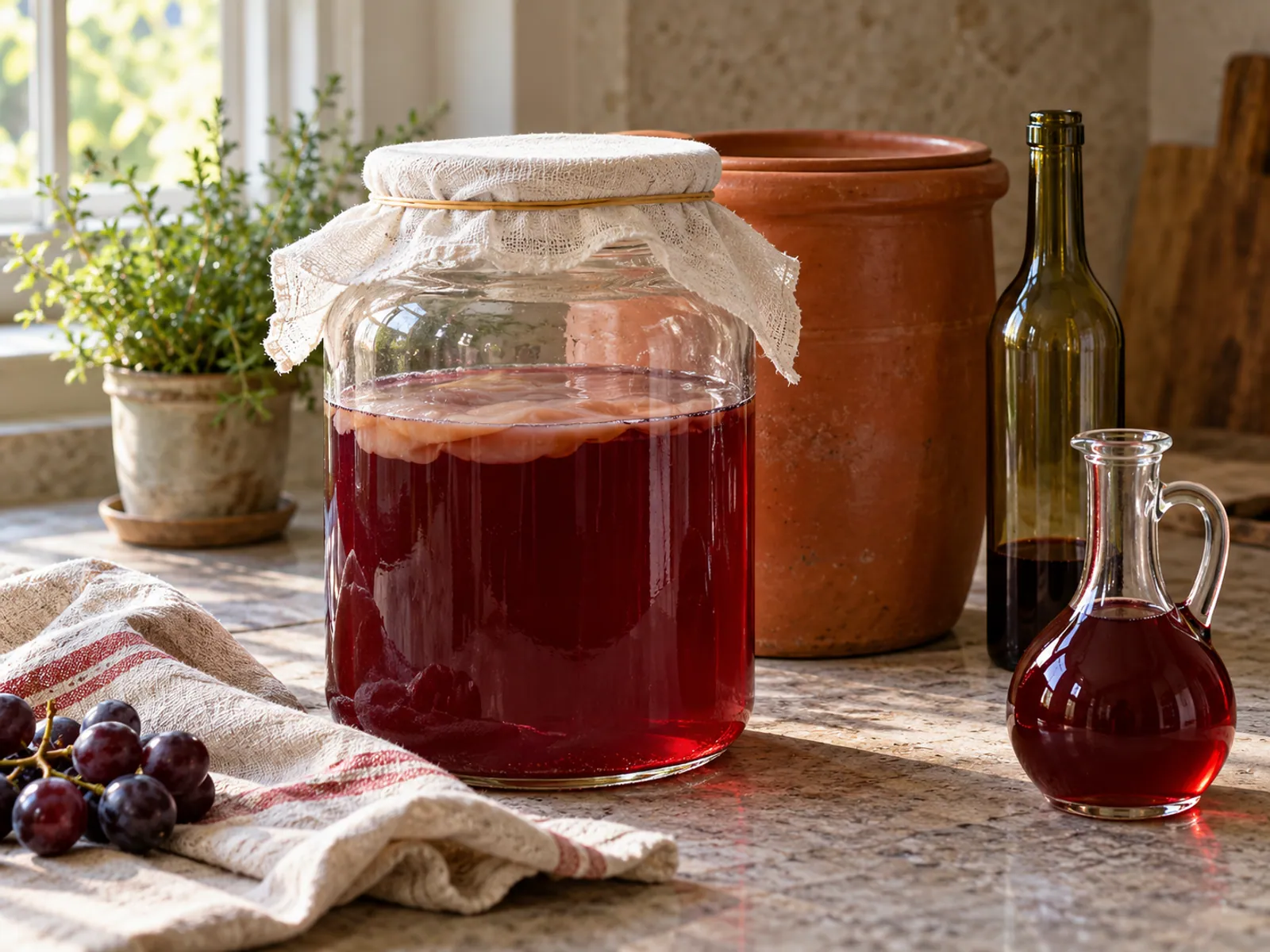
- 1Mix the base In a wide glass jar, combine 1 part raw, unpasteurized vinegar (the cloudy kind with sediment) with 3 parts wine or hard cider. Low-sulfite wine works best.
- 2Cover and leave Cover with tightly woven cloth and a rubber band. Keep it somewhere dark at 20–30°C and do not move it.
- 3Watch the surface A faint, cloudy skin appears in 1–3 weeks and thickens over the following weeks. That skin is your new mother.
- 4Use it Lift it out with clean hands or a wooden spoon and add it, with a cup of its vinegar, to a new batch.
Mother or mould?
Keeping a mother between batches
A spare mother lives happily in a jar of finished vinegar, sometimes called a mother hotel. Cover it with cloth or a loose lid and keep it at room temperature, away from your other ferments. Every couple of months add a splash of wine or cider to feed it. It will keep growing new layers; peel off the oldest and discard or share them.
Watch for
- Do not refrigerate a mother you want to keep active; cold slows the bacteria right down.
- Keep vinegar mothers away from kombucha, sourdough and vegetable ferments. Acetic acid bacteria travel on fruit flies and can sour them.
- A mother that has turned black, slimy and foul-smelling has died. Discard it and grow a new one from raw vinegar.
For the full process of using your mother, see how to make apple cider vinegar and how to make wine vinegar.