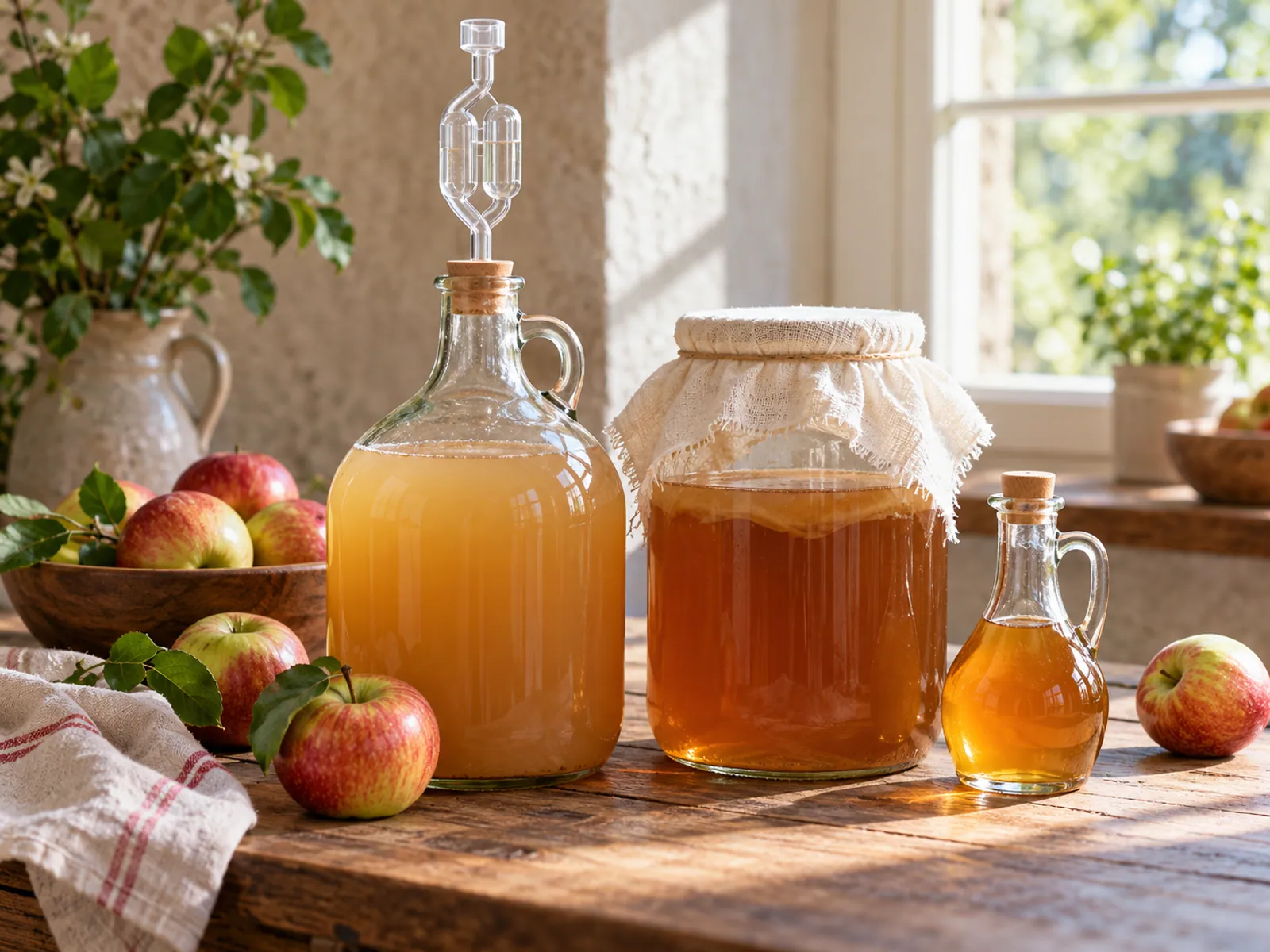
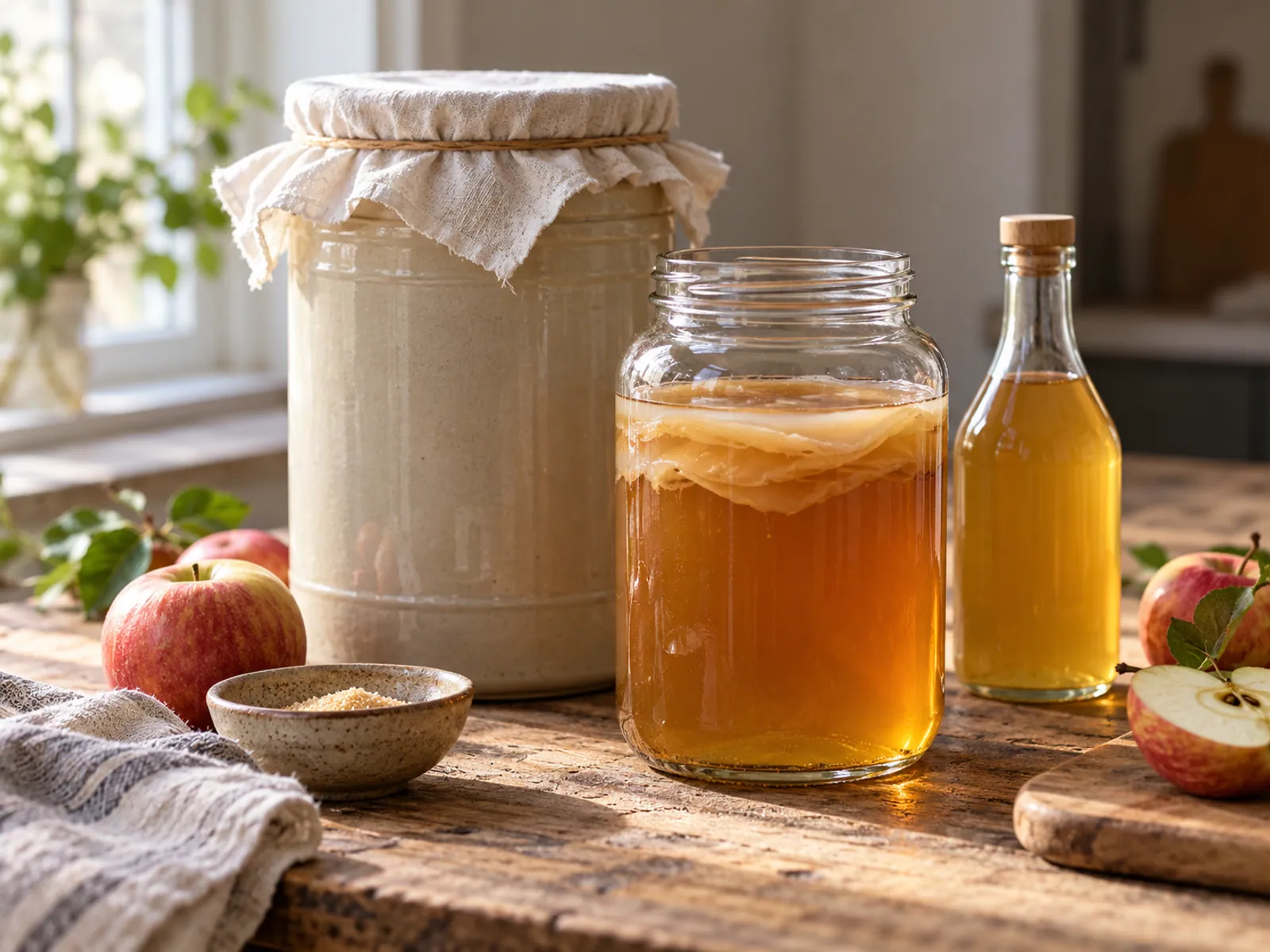
Vinegar is one of the oldest fermented products in the world, and its production is surprisingly simple. Every vinegar, from balsamic to plain white distilled, follows the same basic biology: yeast turns sugar into alcohol, then bacteria turn that alcohol into acetic acid. The difference between a mass-produced gallon jug and an aged artisan bottle comes down to method, ingredients, and time. This guide covers the science, the production methods and the main types; the step-by-step recipes live on their own pages, linked below.
The two-stage process
Vinegar production requires two separate fermentations, each driven by a different microorganism.
The chemical equation for the second stage is simple: ethanol + oxygen becomes acetic acid + water. By weight, 1 g of ethanol can make about 1.3 g of acetic acid, which works out to roughly 1% acidity for every 1% ABV. Some alcohol always evaporates, so expect a little less: a 6% ABV cider usually finishes around 4.5-5.5%. Liquids above about 10% ABV slow the bacteria down, which is why strong wine is diluted before it is turned into vinegar.
You can skip stage one by starting with a pre-made alcoholic liquid like wine, hard cider, or beer. Most home vinegar makers take this shortcut because it saves time and produces more consistent results. Use the ABV calculator to check the strength of a cider or wine you fermented yourself before it goes into the vinegar jar.
Acetobacter and the mother of vinegar
Acetobacter is a genus of acetic acid bacteria found naturally on fruit skins, in unpasteurized alcoholic drinks, and in the air around fermenting liquids. They need oxygen to work, which is why vinegar is made in wide, open vessels covered only with cloth.
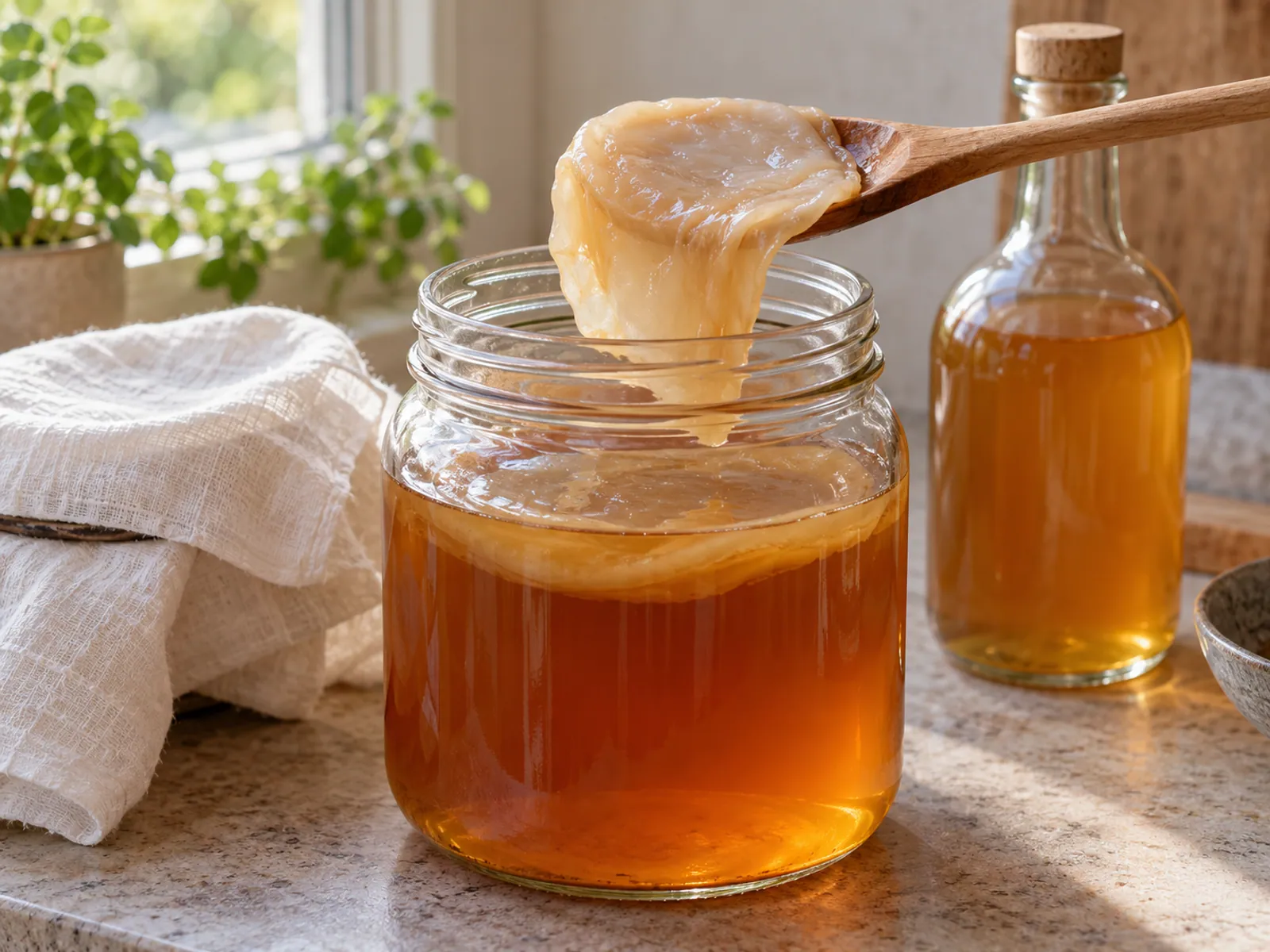
As the colony grows it spins a floating mat of cellulose, the mother of vinegar, which holds the bacteria at the surface where the air is. A piece of mother or a splash of raw, unpasteurized vinegar added to a new batch gives it a strong colony and a faster, more predictable start.
What the mother looks like, how to grow one from scratch, how to tell it from mould, and how to keep it between batches are covered in the vinegar mother guide.
The Orleans method (slow process)
The Orleans method, also called the slow process or surface method, is the oldest documented technique for vinegar production. It originated in the French city of Orleans, which was the center of European vinegar trade for centuries.
- 1Fill a barrel or crock partway The vessel is filled to about two-thirds capacity with wine (or another alcoholic liquid). The remaining headspace provides the air contact Acetobacter needs.
- 2Add a starter A portion of raw vinegar or a piece of mother is added to inoculate the liquid with Acetobacter. Small holes or vents near the top of the barrel allow air circulation.
- 3Wait The bacteria form a mother on the surface and slowly convert alcohol to acetic acid. This takes 3-6 months at cellar temperatures.
- 4Draw off and replenish Finished vinegar is drawn from a spigot near the bottom. Fresh wine is added gently (without disturbing the mother) to keep the process going continuously.
The Orleans method produces the highest quality vinegar because the slow, cool fermentation preserves volatile aromatic compounds that faster methods drive off. Traditional balsamic vinegar of Modena and many premium wine vinegars still use variations of this approach. The downside is time. Commercial producers cannot afford to wait months for each batch.
Industrial methods
Modern vinegar production uses two faster alternatives to the Orleans method. Both increase the rate of oxygen transfer to the bacteria, dramatically shortening production time.
Speed comes at a cost. Fast fermentation generates heat and drives off delicate aromatic compounds. This is why a slowly made wine vinegar smells and tastes more complex than an industrial one made from the same wine. Temperature control during submerged fermentation helps, but the flavor difference remains noticeable.
Related calculator
Vinegar Acidity Calculator
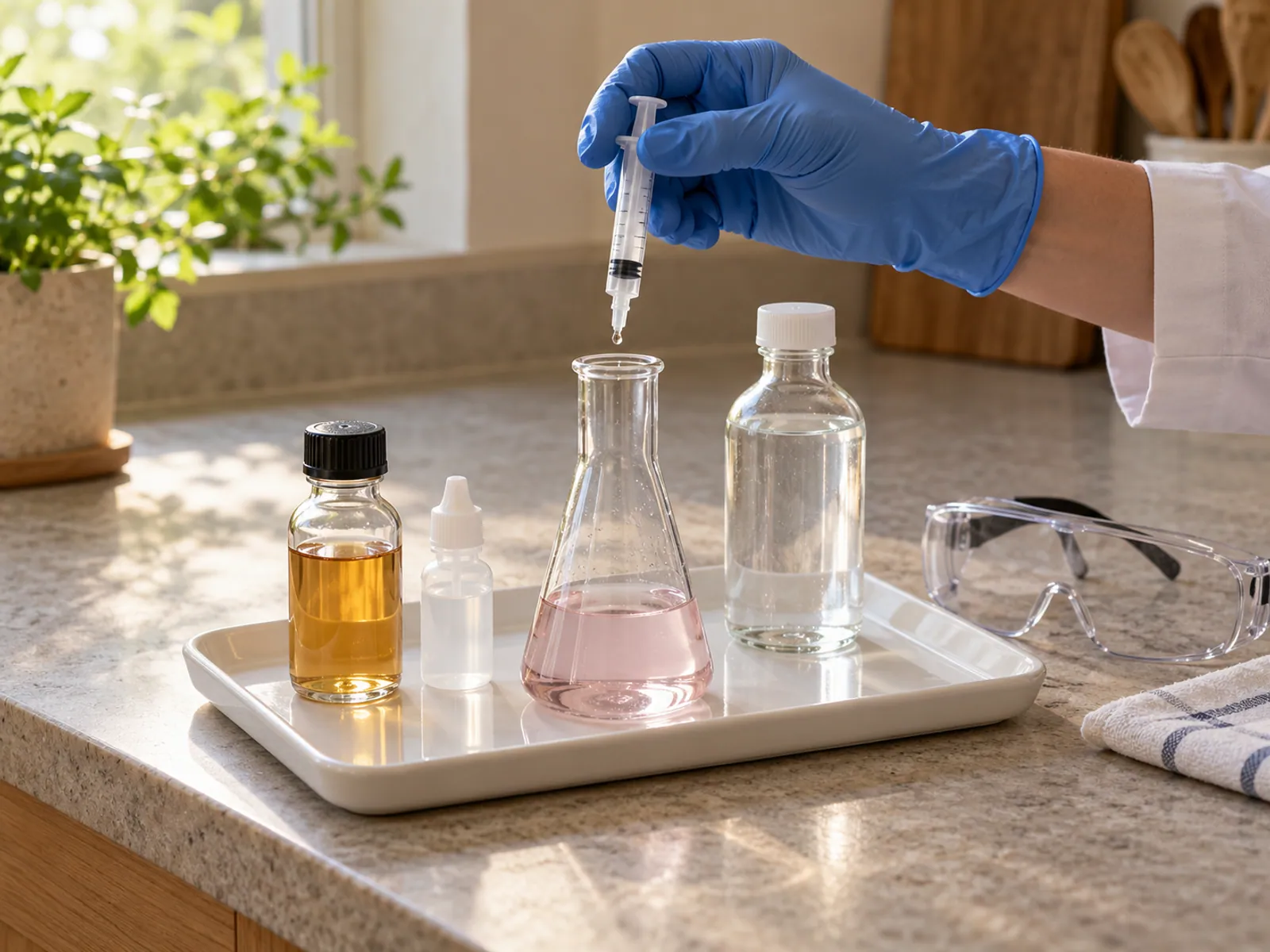
Work out the acidity of homemade vinegar from a titration test, and how much water dilutes it to a target strength.
Types of vinegar
Every type of vinegar starts from a different sugar or alcohol source. The base liquid determines the final flavor profile.
Making apple cider vinegar at home
Apple cider vinegar is the best first project. Ferment fresh or pasteurized apple juice into dry hard cider, add raw vinegar as a starter, cover with cloth and leave it at 20-30°C (68-86°F) for 3-6 weeks, tasting until the alcohol is gone. The full method, quantities, timings and troubleshooting are in how to make apple cider vinegar.
No juice? Peels and cores fermented with sugar water work too: see fruit scrap vinegar. If the cider stage is the part you want to get right, start with how to make hard cider.
Making wine vinegar
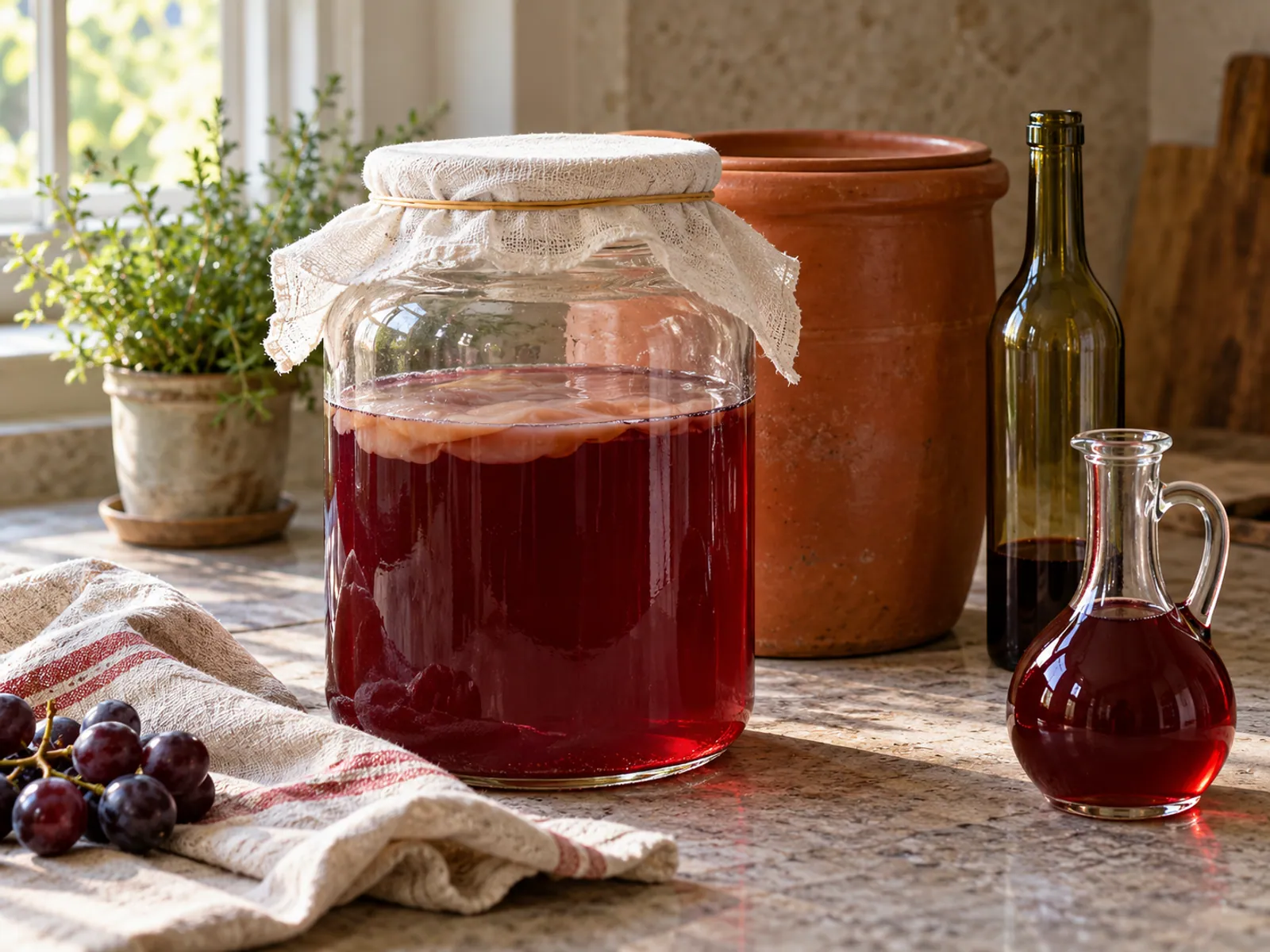
Wine vinegar skips the first fermentation because the wine already contains alcohol. Dilute strong wine to about 7-9% ABV, add raw vinegar or a mother, cover with cloth and wait 4-8 weeks. Low-sulfite wine works best, and a crock with a tap lets you keep a continuous supply going. The full method is in how to make wine vinegar.
Over-fermented kombucha turns into vinegar the same way: see kombucha vinegar.
Testing pH and acidity
Acidity and pH are related but not the same thing. pH measures hydrogen ion concentration on a logarithmic scale. Acidity (often called titratable acidity) measures the total amount of acid present. For vinegar, the acidity percentage is the number that matters most.
Watch for
- Do not use homemade vinegar for canning unless you have verified the acidity is at least 5% using a titration kit
- A vinegar that smells like nail polish remover (ethyl acetate) needs more time to mature. The smell usually fades.
- If your vinegar develops a foul, rotten smell rather than a sharp, clean sourness, discard it and start over with fresh ingredients
- Always store finished vinegar in glass bottles with tight caps. Leaving it uncapped allows further evaporation and concentration.