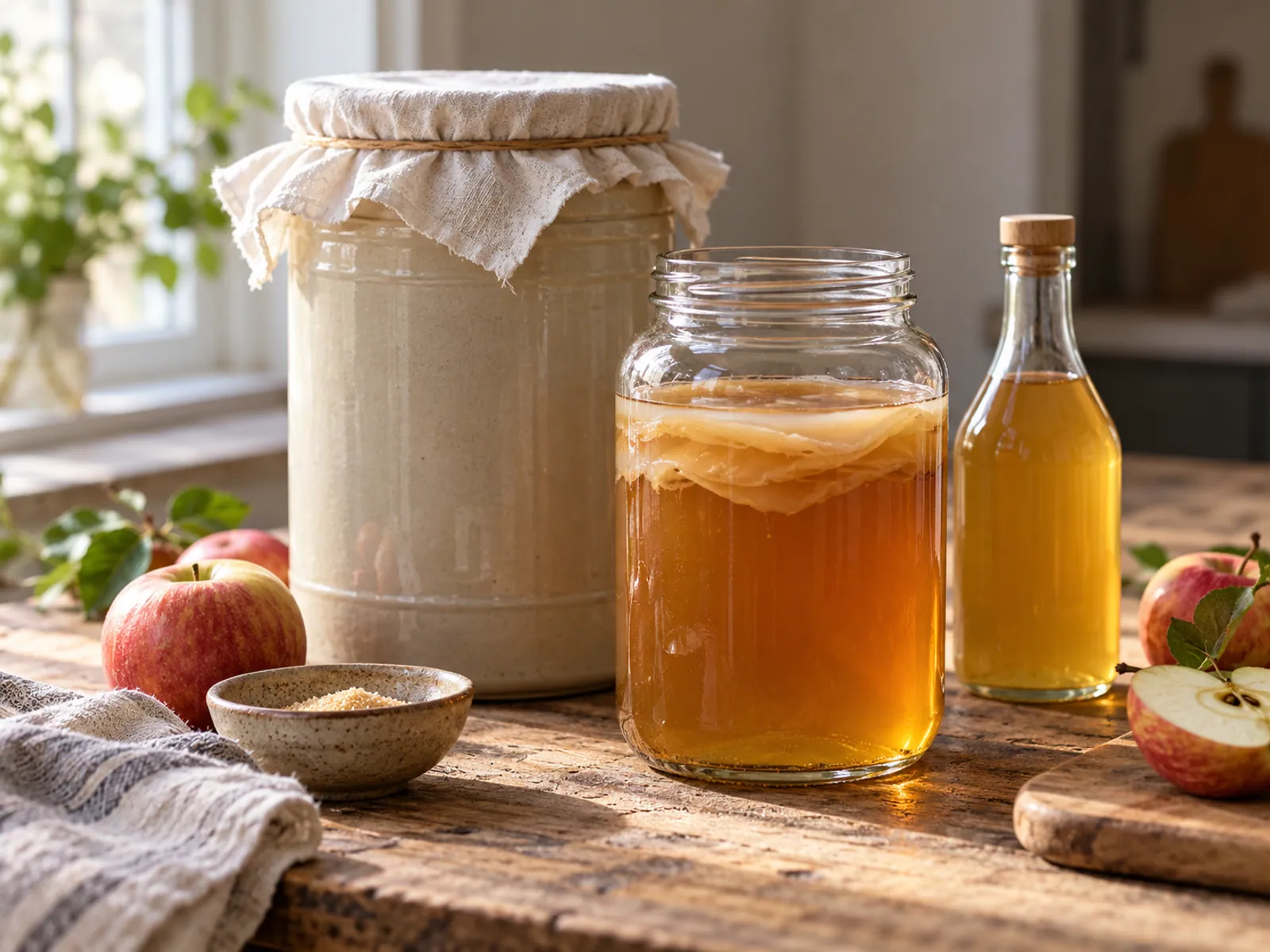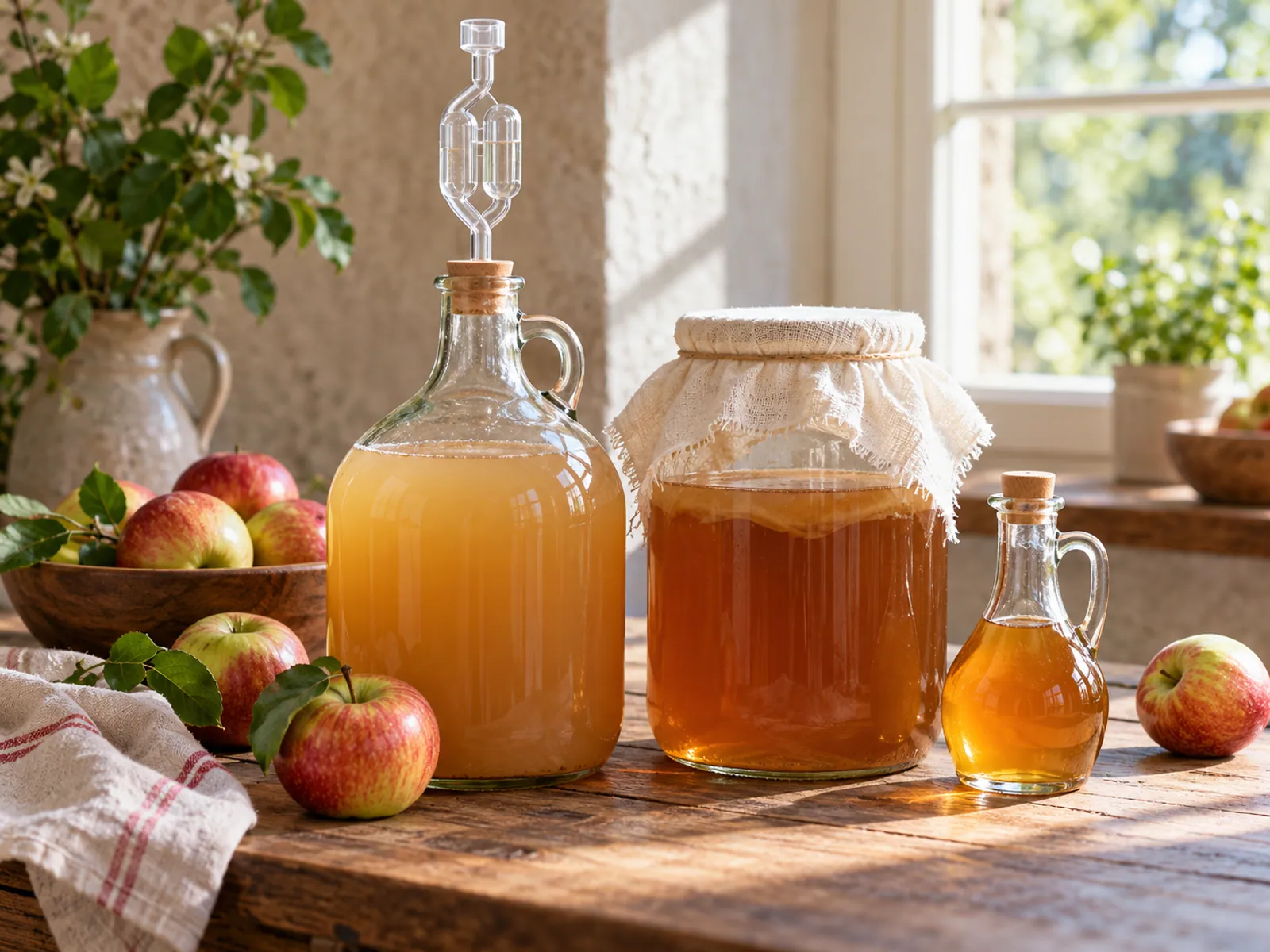
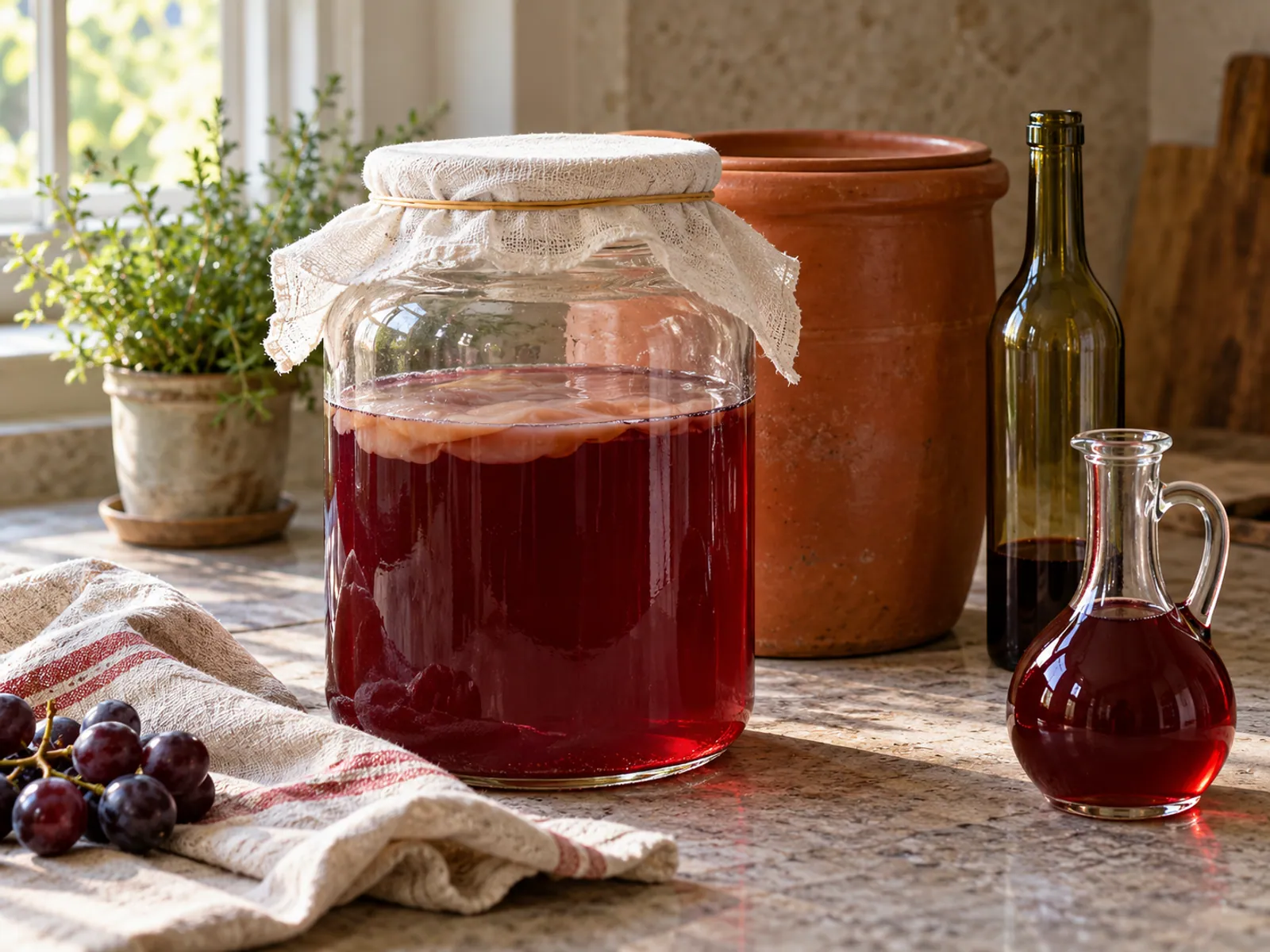
Wine vinegar is the easiest vinegar to make because the first fermentation is already done: the wine is the alcohol. All you add is a starter, air and patience. A slowly made homemade red wine vinegar is rounder and more aromatic than most bottles you can buy, and it is a far better fate for the end of a bottle than the sink.
Wine vinegar recipe
- 1Air the wine Leave the opened wine out for a day, or pour it between two jugs a few times, so some of the sulfite dissipates.
- 2Dilute and add starter In a wide glass jar or lead-free crock, combine the wine, the water and 200–250 mL of raw, unpasteurized wine vinegar, or a mother with a cup of its vinegar. Fill the vessel no more than three-quarters full.
- 3Cover Secure tightly woven cloth over the top with a rubber band. Keep it somewhere dark and still at 21–29°C (70–85°F).
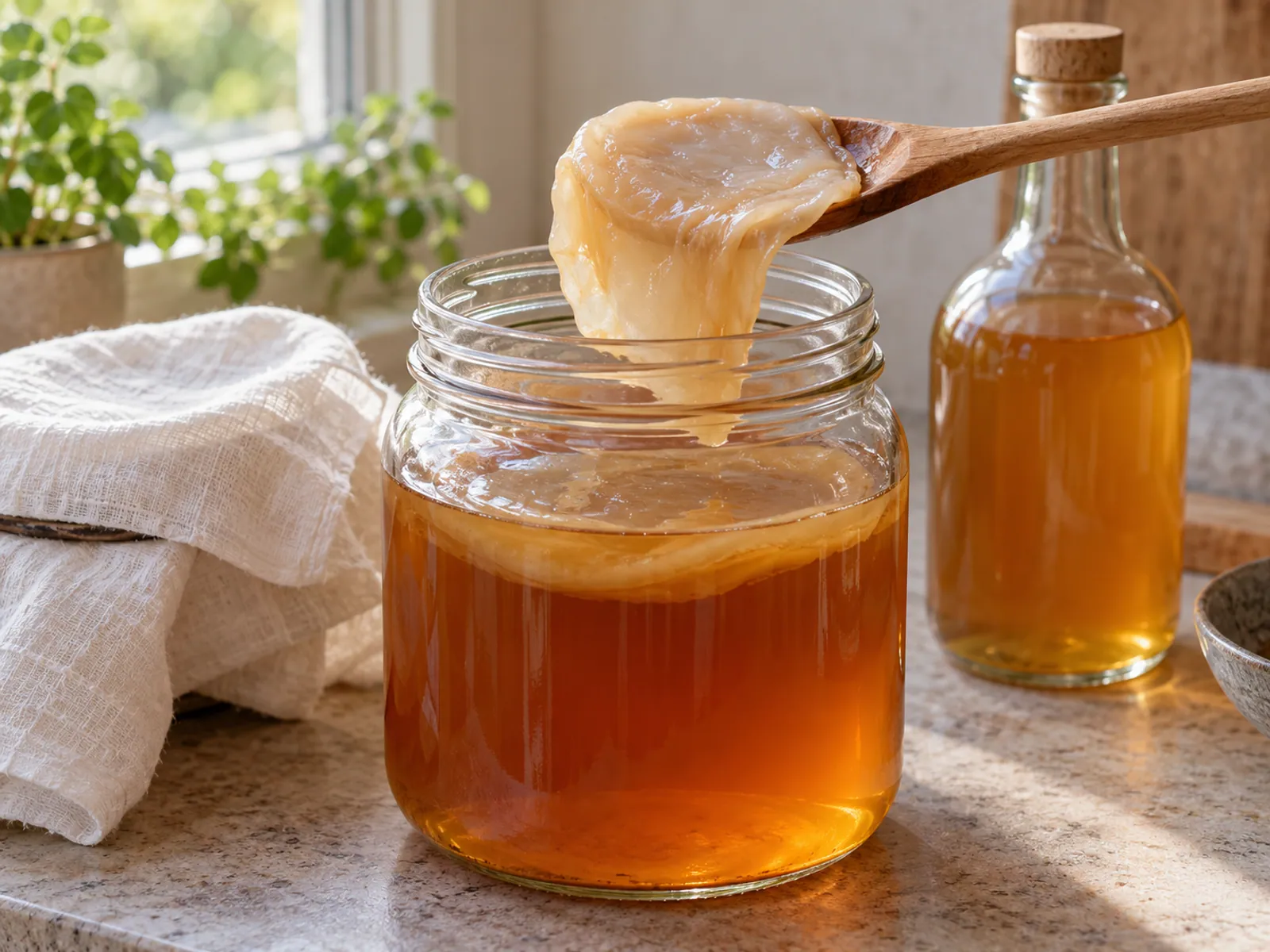
- 4Wait A film forms within 1–2 weeks and thickens into a mother. Leave it undisturbed. From week four, taste from below the mother with a straw.
- 5Bottle and age When it is sharply sour with no alcohol, strain into bottles and cap. Like wine, it mellows and rounds out over a few months in a cool cupboard.
Which wine to use
Related calculator
Vinegar Acidity Calculator
Work out the acidity of homemade vinegar from a titration test, and how much water dilutes it to a target strength.
Keeping a continuous vinegar crock
Once a batch is established, you can keep it going for years, in the spirit of the Orleans method. A crock or glass dispenser with a tap near the bottom makes it easy.
- 1Draw off When the vinegar is ready, draw off a quarter to a third from the tap, leaving the mother and the rest in place.
- 2Top up Add the same volume of diluted wine, pouring it gently down the side or through a funnel so the mother is not swamped.
- 3Repeat The established colony converts new wine in a few weeks. Thin out the mother when it gets too thick to leave room for air.
Troubleshooting
Watch for
- Nothing happens for weeks The wine was high in sulfites or too strong. Air it, dilute it, and add more raw vinegar.
- Smells of nail polish Ethyl acetate, normal in the middle of acetification. It fades as the alcohol is used up.
- Fuzzy mould on top Discard and restart with more starter vinegar so the liquid is acidic from the beginning.
- Tastes harsh Young vinegar. Bottle it and age it for two to three months.
For a vinegar from apples instead of grapes, see how to make apple cider vinegar. For what the film on top is and how to look after it, see the vinegar mother guide.