Dairy-free yogurt is plant milk cultured with live bacteria until it thickens and turns tangy, exactly like dairy yogurt but with no milk involved. The catch is that plant milks lack casein, the protein that gives dairy yogurt its body, so your two biggest decisions are which base to start from and how you thicken it. Get those right and the fermentation itself is simple.
Dairy-free is not lactose-free
These two terms get used interchangeably, but they solve different problems, and picking the wrong one is a common mistake.
If your only issue is digesting lactose, you may not need to go fully plant-based at all. See the lactose-free yogurt guide for the dairy route that keeps the traditional texture. This guide is for going completely dairy-free.
Choosing a plant milk
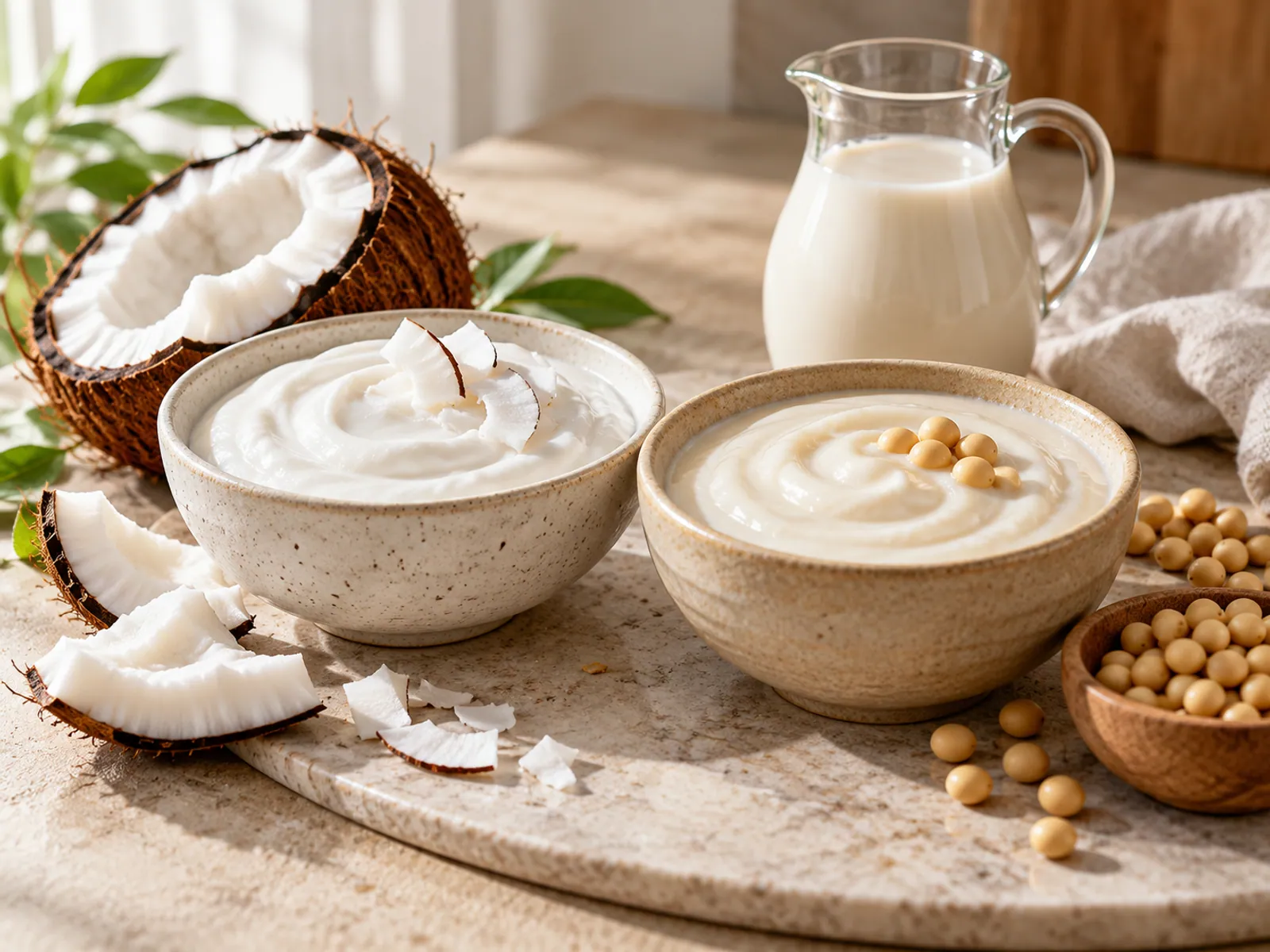
Every plant milk cultures a little differently, driven mostly by protein and fat. Protein builds the gel that sets the yogurt; fat carries flavor and richness. Soy leads on protein, coconut leads on fat, and the rest sit lower on both and lean on added thickeners.
| Plant milk | Protein | Fat | Sets on its own? | Flavor | Thickener needed |
|---|---|---|---|---|---|
| Soy | High | Medium | Yes, firmly | Neutral, slightly beany | None to light |
| Coconut (full-fat) | Low | Very high | Partly, rich but loose | Sweet, coconut-forward | Light |
| Cashew | Low | High | Somewhat, creamy | Mild, buttery | Light to moderate |
| Oat | Low | Low | No | Mild, naturally sweet | Moderate |
| Almond | Very low | Low | No | Nutty, thin | Moderate to heavy |
Use unsweetened, additive-free milk where you can. Gums and oils added for a smooth drinking texture can interfere with a clean set. For a shortcut to richness, blend a low-protein milk with full-fat coconut milk at roughly 50/50: the coconut fat carries the body while the other milk softens the coconut flavor.
Picking a starter culture
Your starter is the live bacteria that turn sugars into lactic acid, and not every yogurt culture is vegan. Many commercial dairy starters are grown on a milk medium, so a strict plant-based cook should reach for one labeled accordingly.
Whatever you use, keep a couple of tablespoons of a successful batch to inoculate the next one. Plant bases hold a culture less faithfully than dairy, so refresh from a fresh starter every few generations if the set starts slipping.
Fermentation temperature and time
Yogurt bacteria are thermophilic: they want steady, bath-like warmth, warmer than the room-temperature ferment kefir prefers. Hold the milk in the target band and give it time to sour and set.
A yogurt maker, an Instant Pot on the yogurt setting, or an oven with the light on all hold this range. Soy usually sets on the faster end; coconut and nut milks run slower. Longer fermentation means more tang and more of the whey separating out, so taste from around hour six and pull it when the flavor is where you like it. Push much past 43C / 110F and you risk stalling or killing the culture.
Related calculator
Yogurt Starter Calculator
Calculate how much yogurt starter culture you need per litre or gallon of milk. Works with freeze-dried and fresh cultures.
How to make dairy-free yogurt
- 1Warm the milk Heat your plant milk to about 82C / 180F, then let it cool to the culturing band. This step is optional for soy but improves set and kills off competing microbes in fresh homemade milks.
- 2Whisk in your thickener If your base needs help, whisk in tapioca starch, agar, or pectin while the milk is hot so it activates. Skip this for soy or full-fat coconut if you like a softer set.
- 3Cool to culturing temperature Let the milk drop to 38–43C / 100–110F. Too hot and you kill the starter; test with a thermometer or the wrist.
- 4Stir in the starter Whisk in your vegan culture or a spoonful of live plant yogurt until fully dispersed. Lumps of undissolved culture make for uneven setting.
- 5Incubate undisturbed Hold at temperature for 6–12 hours without stirring or jostling. Movement breaks the forming gel and gives you a looser yogurt.
- 6Chill to finish the set Refrigerate for at least four hours, ideally overnight. Plant yogurt firms up noticeably as it cools, so judge final thickness cold, not warm.
Free Kefir Ratio Reference Card (printable PDF)
A printable PDF companion for the kefir calculators and guides.
Thickening techniques
This is where most dairy-free yogurt is won or lost. Because plant milks have no casein gel, a thickener does the structural work casein would in dairy. Add it to the milk before fermenting, not after, and always heat the milk to activate it.
You can also thicken by adding protein rather than starch: a scoop of unsweetened plant protein powder, or a spoonful of ground cashews or coconut cream, gives more of the milk something to build a gel around. And the simplest thickener of all is straining: line a sieve with cloth and let the finished yogurt drain in the fridge for a few hours to pour off whey and concentrate it into a Greek-style set.
Fixing thin, separated, or sour batches
Most dairy-free yogurt problems trace back to the base, the thickener, or the fermentation window. Match the symptom to the cause before you change your whole method.
Watch for
- Fuzzy mold, pink or orange patches, or a rotten smell mean discard the batch, not stir it in
- Milks with added gums or oils can refuse to set cleanly; switch to a plain unsweetened base
- Adding the starter to milk hotter than 46C / 115F kills the culture before it can work
For dialing in ratios of starter to milk across cultured plant-milk ferments, the milk kefir calculator is a handy companion, and the same logic carries over to yogurt.
Beyond yogurt: other plant ferments
The same skills unlock a whole shelf of dairy-free ferments. Once you can set a plant milk, straining it further and pressing it turns yogurt-style culture into spreadable cheese: see the vegan cream cheese guide for the next step up in thickness.
If you would rather drink your culture than spoon it, oat milk kefir is the plant-based route to a tangy, pourable ferment, with the same carb and thickening rules in play. And if you are curious how the plant versions compare to the original, the homemade yogurt guide walks through the classic dairy method side by side.