Real soy sauce is a long ferment: a koji grown on soybeans and wheat, drowned in strong brine and left for months while enzymes, yeasts and bacteria turn it dark and savoury. It is the most demanding koji project, but it is the same skills as growing koji and making miso, with more patience.
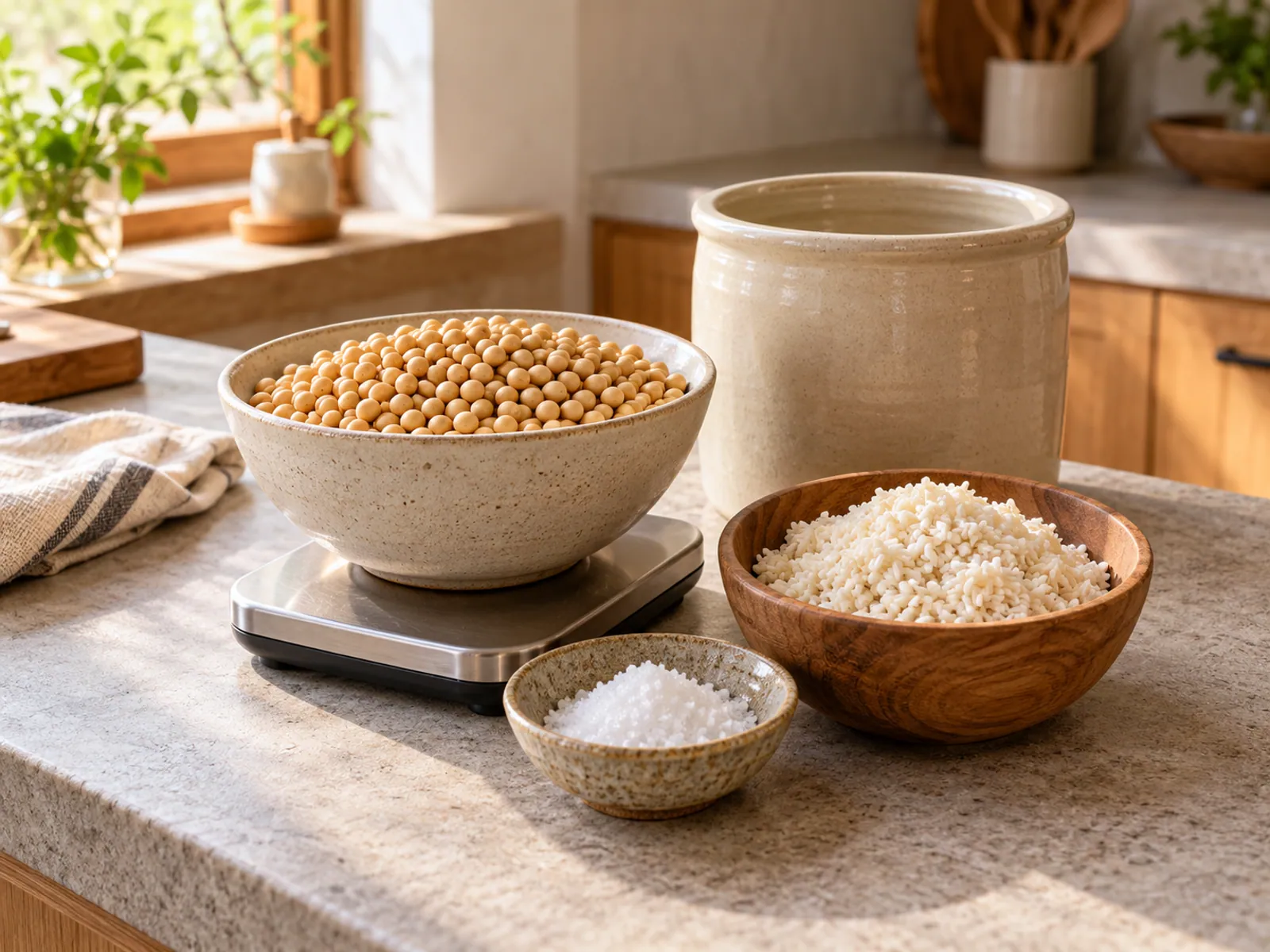
Ingredients
You also need shoyu koji spores, a steamer, an incubator that holds 28–32°C, and a food-grade crock or tub with a lid.
Stage one: soy sauce koji
- 1Prepare the soybeans Soak the soybeans for 12–24 hours, then steam them for 1–2 hours or pressure-cook until soft. They should be cooked but not mushy.
- 2Roast the wheat Toast the wheat berries in a dry pan or oven until deep golden and fragrant, then crack them coarsely in a grain mill or blender.
- 3Mix and inoculate While the beans are still warm (about 35°C), toss them with the cracked wheat so it coats them and absorbs surface moisture. Mix in the spores at the supplier’s rate.
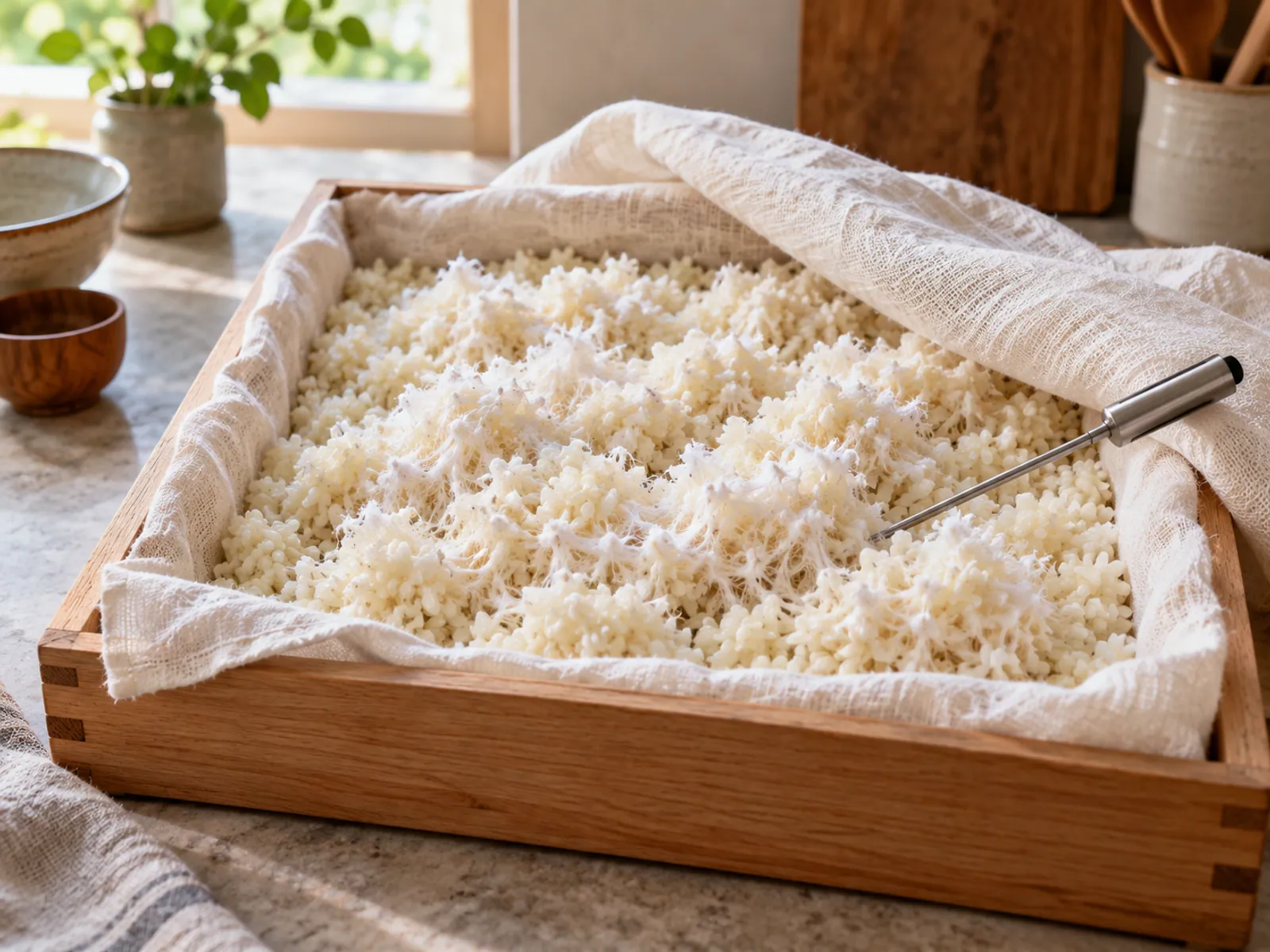
- 4Grow the koji Spread 3–5 cm deep in cloth-lined trays and incubate at 28–32°C with high humidity for about 48 hours, breaking up and furrowing it at around 18 and 30 hours to release heat. It is ready when covered in mould and turning yellow-green.
Related calculator
Miso Salt Calculator
Soybeans, koji and salt for any batch of homemade miso, by style from sweet white to long-aged red, with ageing times.
Stage two: brining and ageing
- 1Make the brine Dissolve 250 g of salt per litre of water, which is about 20% by weight. You need roughly 1.2–1.3 litres of brine per litre of koji.
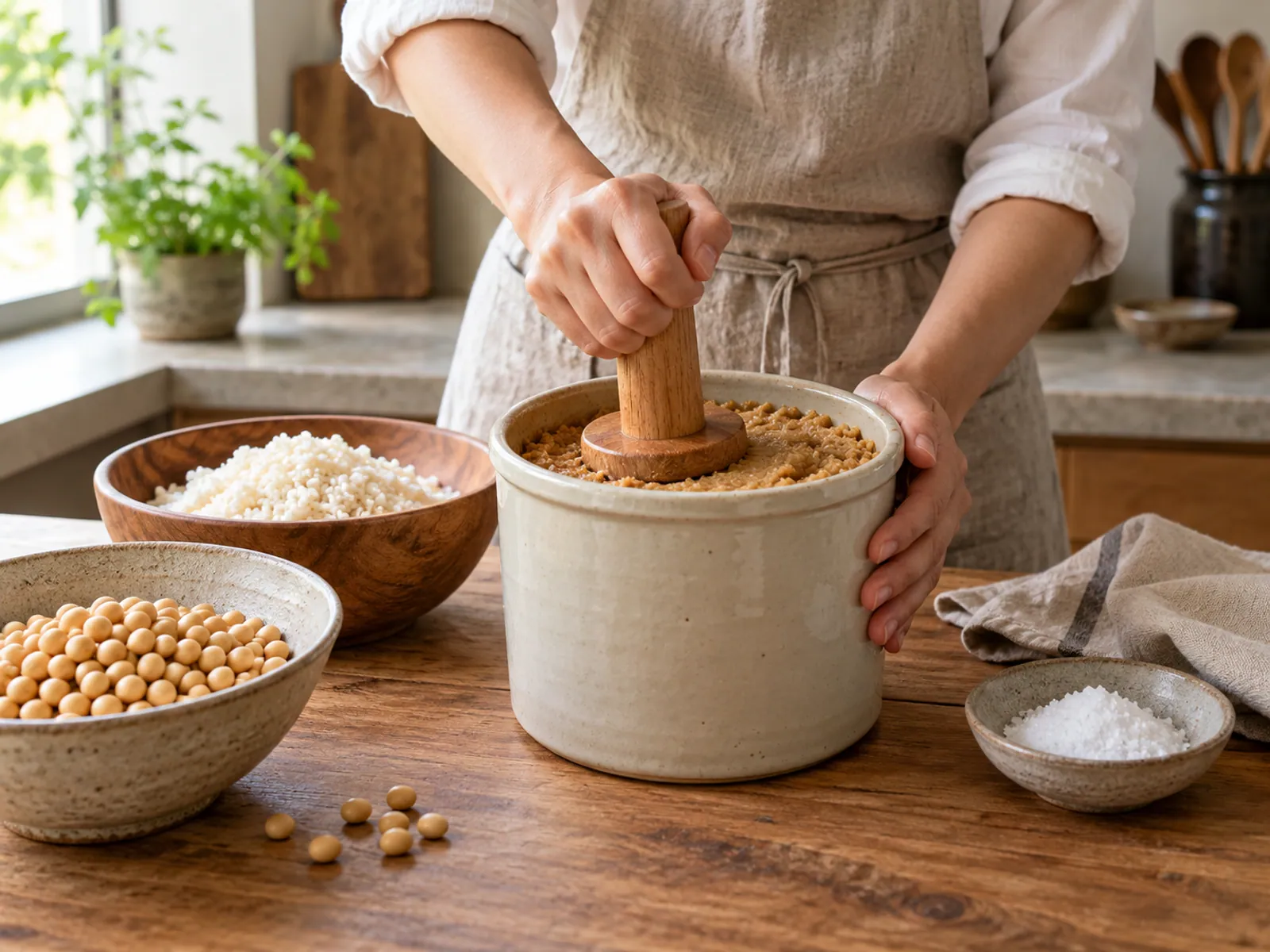
- 2Combine Put the koji in the crock and pour over the brine. Stir well. This mash is the moromi.
- 3Stir Stir daily for the first two weeks, then weekly. Stirring brings oxygen to the yeasts and keeps the surface from moulding. Keep it covered between stirs.
- 4Age Leave it at room temperature for at least 6 months, ideally a year or more. It darkens from tan to deep red-brown and smells increasingly of soy sauce.
Stage three: pressing and bottling
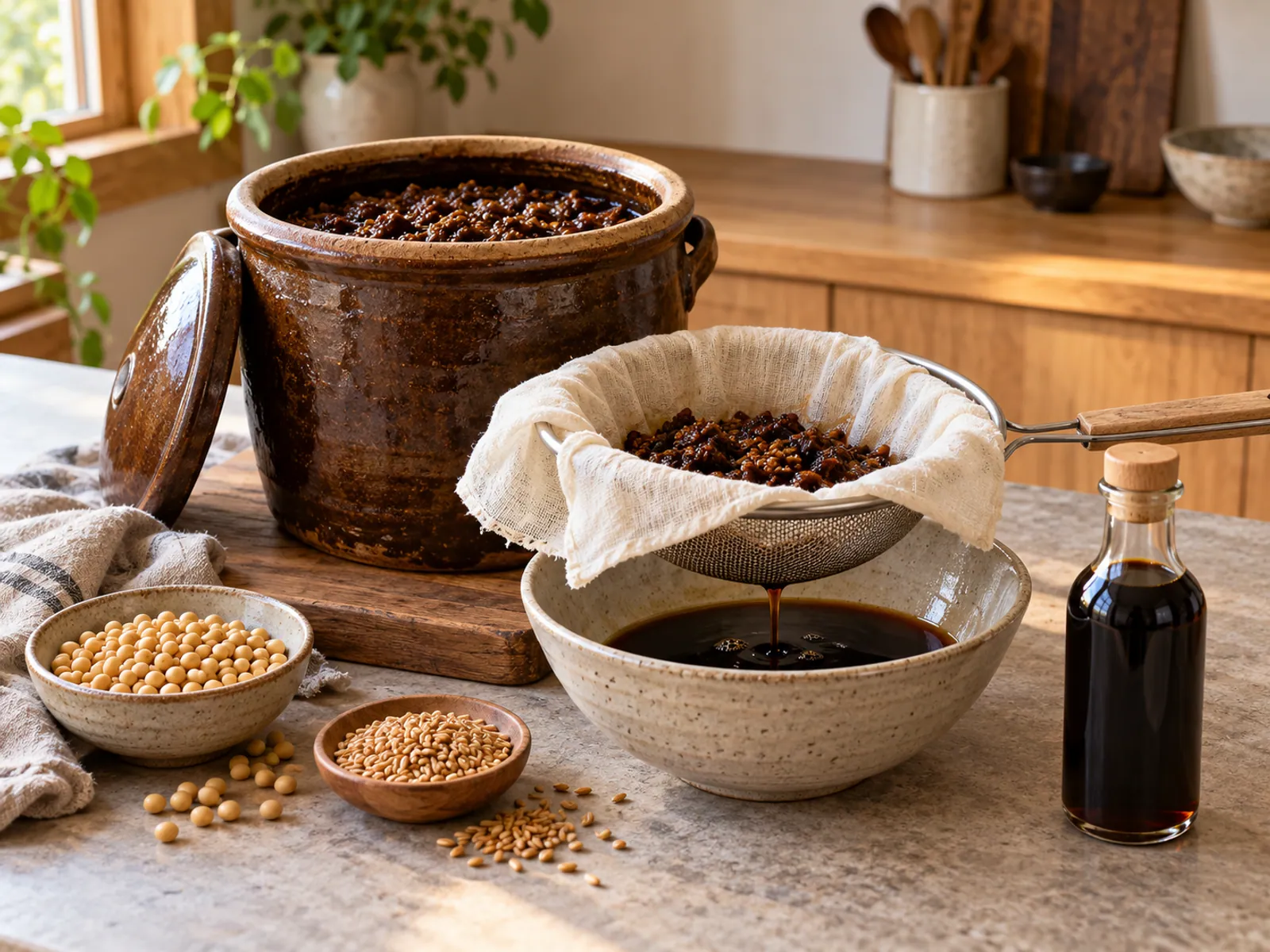
- 1Press Ladle the moromi into a strong cloth bag and press it, slowly, with weights or a cheese or fruit press. Collect the dark liquid.
- 2Settle Let the raw soy sauce stand for a few days so oil rises and sediment sinks. Skim the oil and pour the clear sauce off the sediment.
- 3Heat Heat it to about 80°C for 15–20 minutes. This stops the enzymes and microbes and deepens the colour and aroma.
- 4Bottle Bottle while hot, cap and store in a cool place. Keep opened bottles in the fridge.
The pressed cake (shoyu kasu) is still salty and savoury; use it in pickles and marinades.
The tamari shortcut
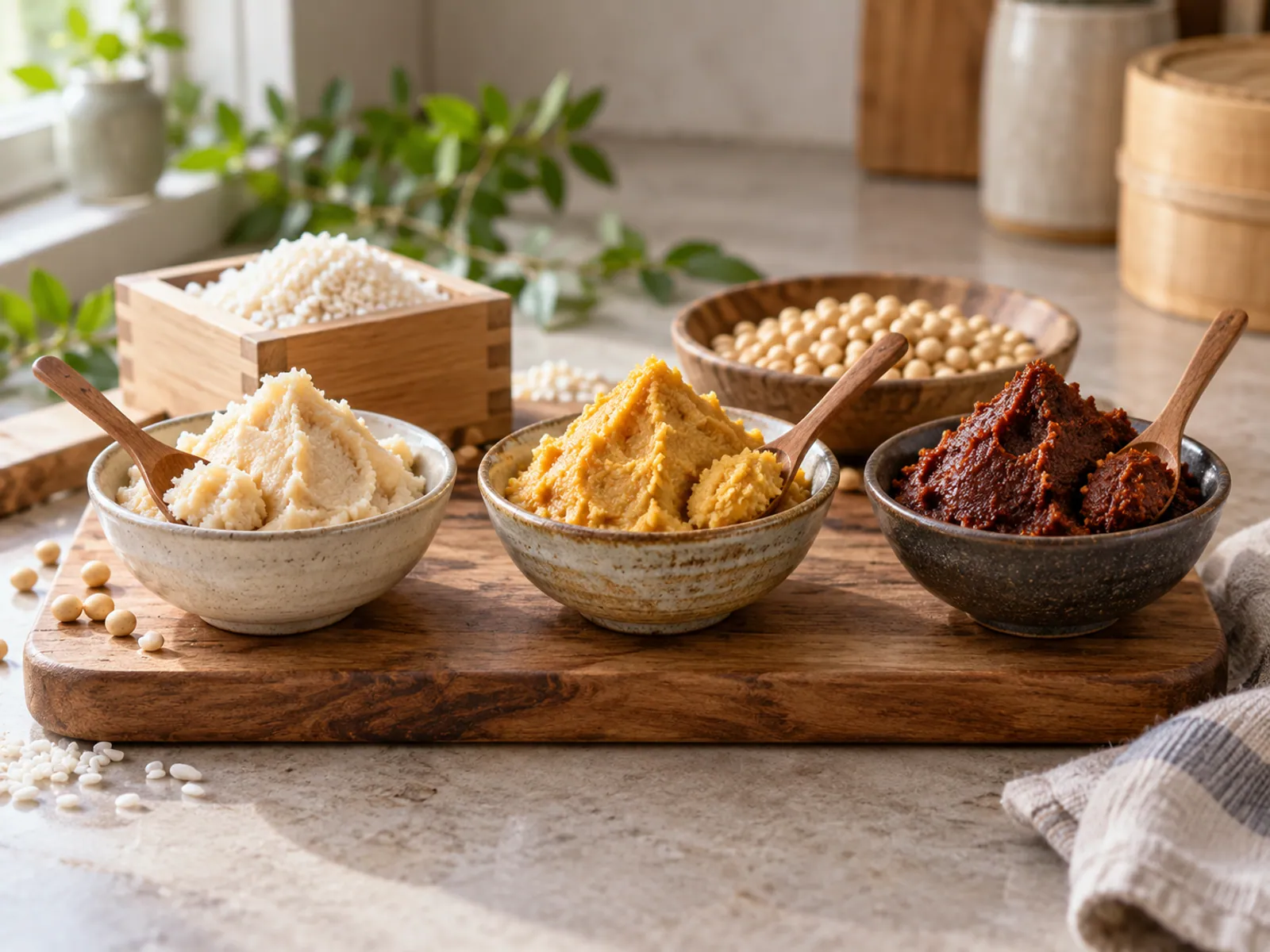
If a year is too long, homemade miso gives you a little tamari as it ages: the dark liquid that pools on top. Collect it with a spoon or by making a well in the miso, and use it as a rich, mostly soy-based sauce.
Watch for
- Never cut the salt in the moromi. It is what keeps a months-long ferment safe.
- Fuzzy mould on the surface means it needs more frequent stirring. Skim it off and stir.