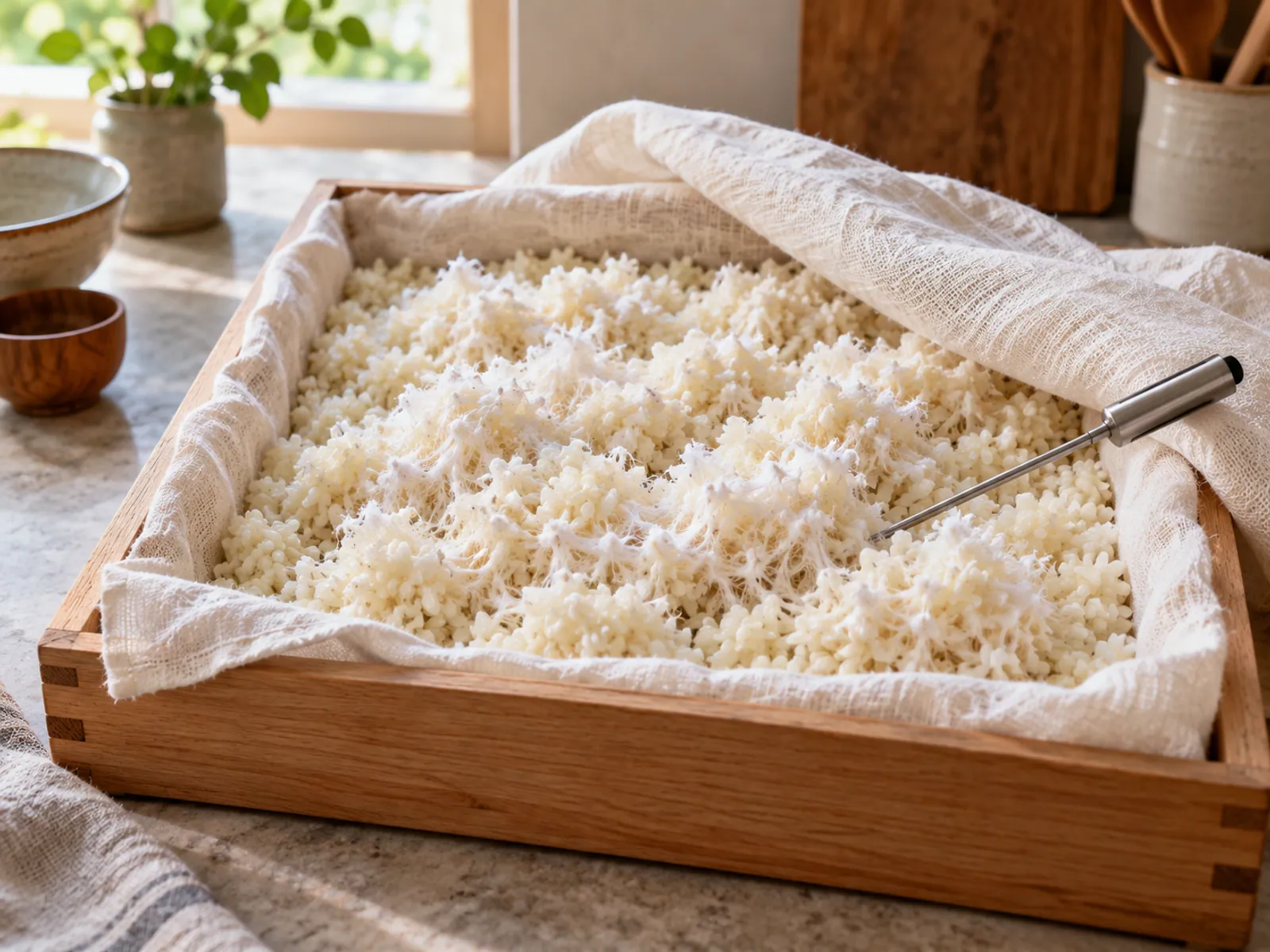

Natto is the polarising Japanese breakfast of sticky, stringy fermented soybeans: earthy, savoury and slightly pungent. It is made by a bacterium, Bacillus subtilis natto, rather than a mould, and it is one of the quickest of the soy ferments: a day in the warm and a day in the fridge.
What you need
500 g small dry soybeans
1 pinch natto spores, or 1 tbsp store-bought natto
~40°C for 22–24 hours
How to make natto
- 1Soak Rinse the soybeans and soak them for 12–24 hours until they have roughly tripled in volume.
- 2Steam Steam for 3–6 hours or pressure-cook for about 40–45 minutes, until a bean crushes easily between your fingers. Steaming gives better natto than boiling.
- 3Inoculate hot Dissolve the spores (follow the packet; a tiny amount covers a kilo) or 1 tablespoon of natto in 2 tablespoons of boiled water. Pour it over the beans while they are still hot and mix gently. The heat helps the natto bacteria outcompete others.
- 4Spread and cover Spread the beans 2–3 cm deep in a clean shallow dish. Cover with cheesecloth, then foil or a lid with a few holes. Natto needs some air.
- 5Ferment Hold at 38–42°C for 22–24 hours. The beans develop a grey-white film and smell earthy and slightly of ammonia.
- 6Age in the fridge Refrigerate for at least 24 hours. This develops the strings and softens the ammonia.
How to tell it worked
Good natto A thin white-grey bloom on the beans; long, sticky strings when you stir; a nutty, earthy smell with a light ammonia note.
Bad natto No strings and a sour or rotten smell, or coloured mould. It was too cool, contaminated, or the starter failed. Discard it.
Watch for
- Very strong ammonia Too long or too hot. Ferment for less time next batch.
- Dry, hard beans The cover let too much moisture out. Cover more closely.
- If you take warfarin or another vitamin K antagonist, ask your doctor before eating natto.
How to eat natto
The classic stir 40–50 times with a little soy sauce and hot mustard until frothy and stringy, then pile on hot rice with spring onions.
With egg stir in a raw or soft-cooked egg yolk for a richer bowl.
Mixed in add to omelettes, fried rice, toast or noodles.
For the mould-based soy ferments, see how to make tempeh and how to make miso.