Tempeh comes from Java, where it has been made for centuries by wrapping cooked soybeans in leaves and letting a mould knit them into a firm, nutty cake. At home, perforated zip bags stand in for the leaves and an oven with the light on stands in for the tropics. Unlike tofu, it is a true ferment; see is tofu fermented? for how the two differ.
What you need
500 g dry soybeans (makes about 900 g tempeh)
2 tbsp vinegar for the cooking water
24–48 h at 30–32°C
You also need tempeh starter, two or three zip bags, a skewer to make holes, and somewhere warm: an oven with the light on, a proofing box, a dehydrator on low, or a cooler with a bottle of warm water.
How to make tempeh
- 1Soak and dehull Soak the soybeans for 12–24 hours. Squeeze and rub them between your hands in the water so the skins slip off and the beans split; skim off the floating hulls. Most hulls need to go, or the mould cannot reach the bean. Dehulled split soybeans save this step.
- 2Cook Boil the split beans in fresh water with 2 tablespoons of vinegar for 30–45 minutes, until tender but still firm.
- 3Dry Drain well, then spread the beans on a clean towel and pat or fan them until the surfaces are dry. Wet beans are the main cause of failed tempeh.
- 4Inoculate When the beans have cooled to about 35°C, sprinkle on the starter and mix thoroughly so every bean is coated.
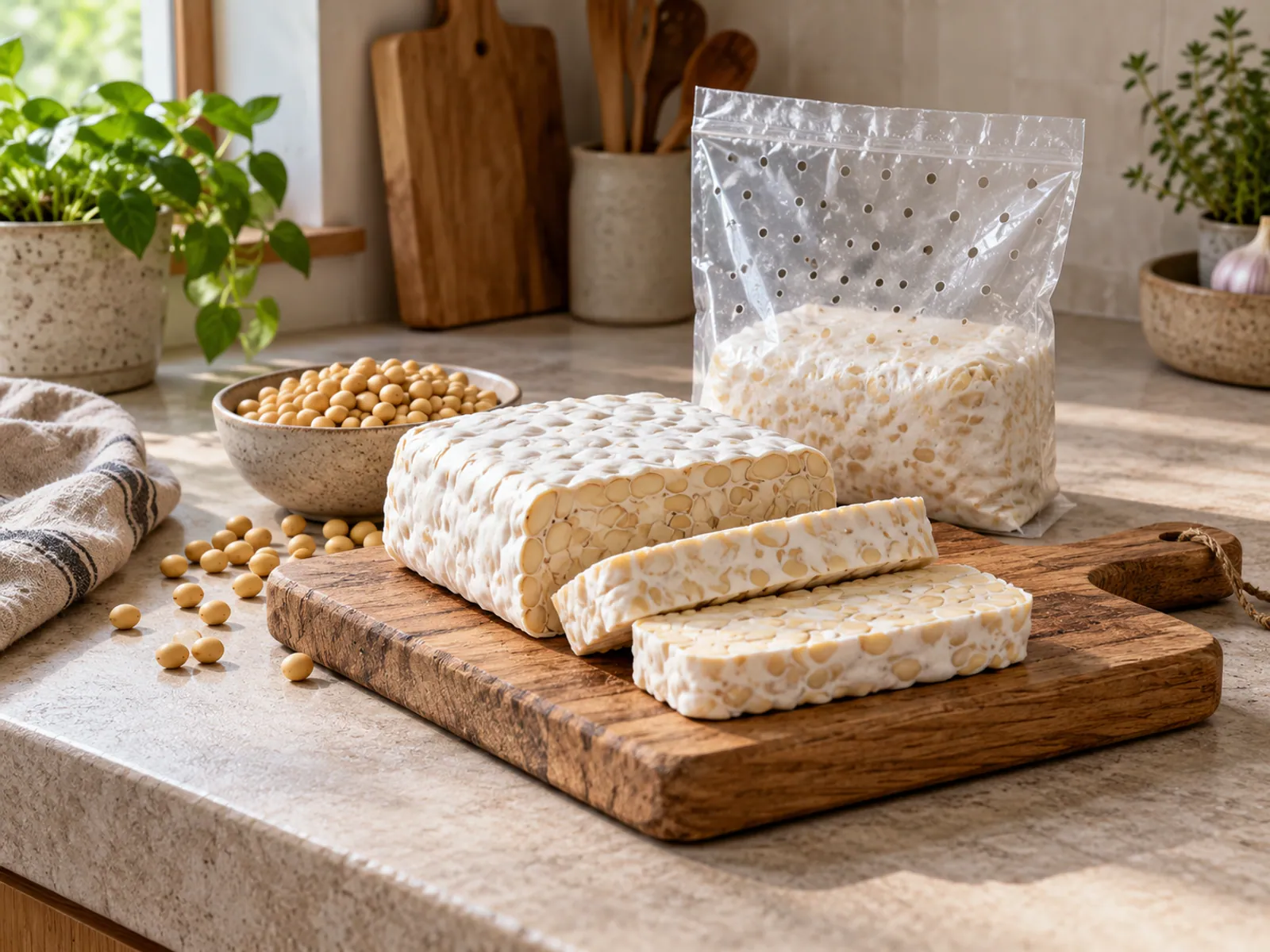
- 5Pack Prick zip bags all over with a skewer, about every 2–3 cm. Fill them with beans, flatten to an even 2–3 cm thick, and seal.
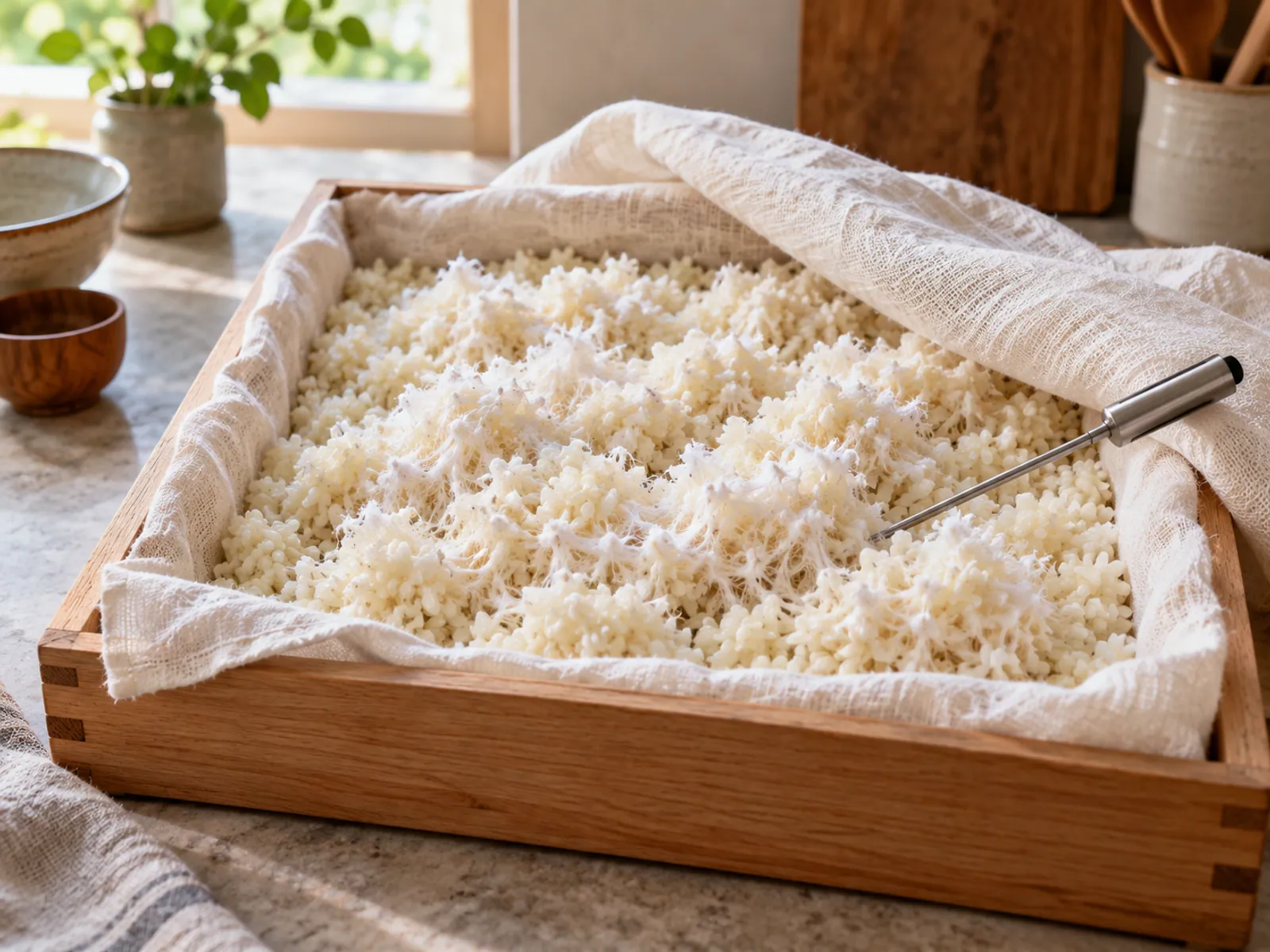
- 6Incubate Keep at 30–32°C. After 12–18 hours you will see white threads and the bags will feel warm: reduce or switch off the heat so the tempeh stays below about 35°C.
- 7Finish At 24–48 hours the beans are bound into a solid white cake that holds together when you lift it, smelling of mushrooms or fresh bread. Refrigerate to stop it.
Good tempeh and bad tempeh
Good Firm, sliceable cake with dense white mycelium; mushroomy, nutty smell; some black or grey spots near the holes from sporing.
Bad Wet or slimy beans, a sour or strongly ammonia smell, loose beans after 48 hours, or pink, yellow or green mould. Discard it.
Watch for
- Not binding The beans were too wet, too cold, or not dehulled enough.
- Strong ammonia It over-fermented or got too hot. Shorten the time and watch the heat after the first day.
- Patchy growth The starter was not mixed evenly, or the bags had too few holes.
Storing and cooking tempeh
Fridge about 5–7 days, wrapped.
Freezer up to 3 months. Steaming before freezing stops it maturing further.
Cooking always cook tempeh. Steam it for 10–15 minutes, then fry, bake, crumble into sauces or marinate.
For the other soy ferments, see how to make natto and how to make miso.