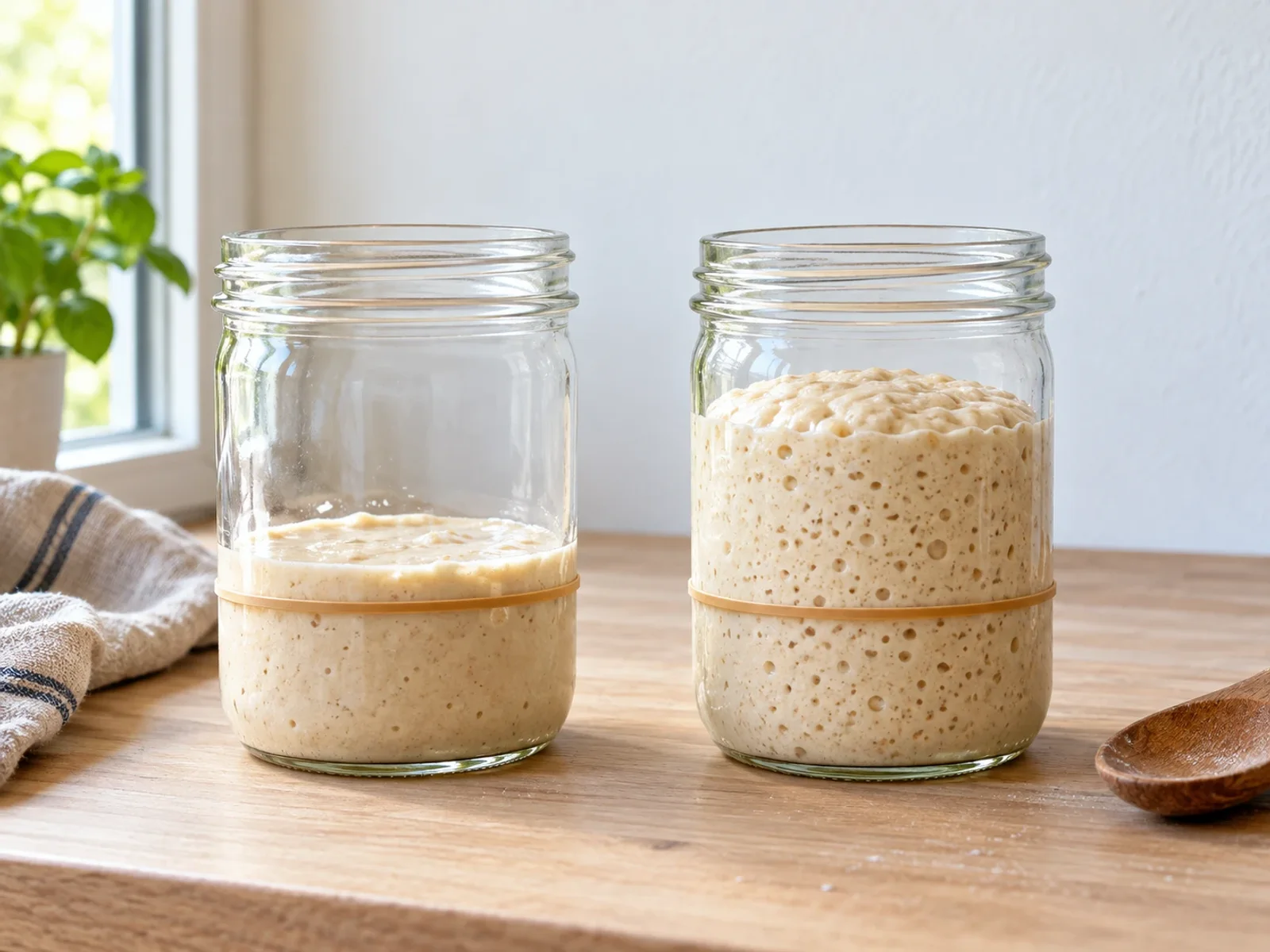
Sourdough Starter Manager
Log each feed, watch your starter rise in a 3D jar and record when it peaks. After two feeds it learns your own starter’s timing, so you know when it will be ready.
- See the rise against the clock
- Learns your starter’s peak time
- Free, no account needed
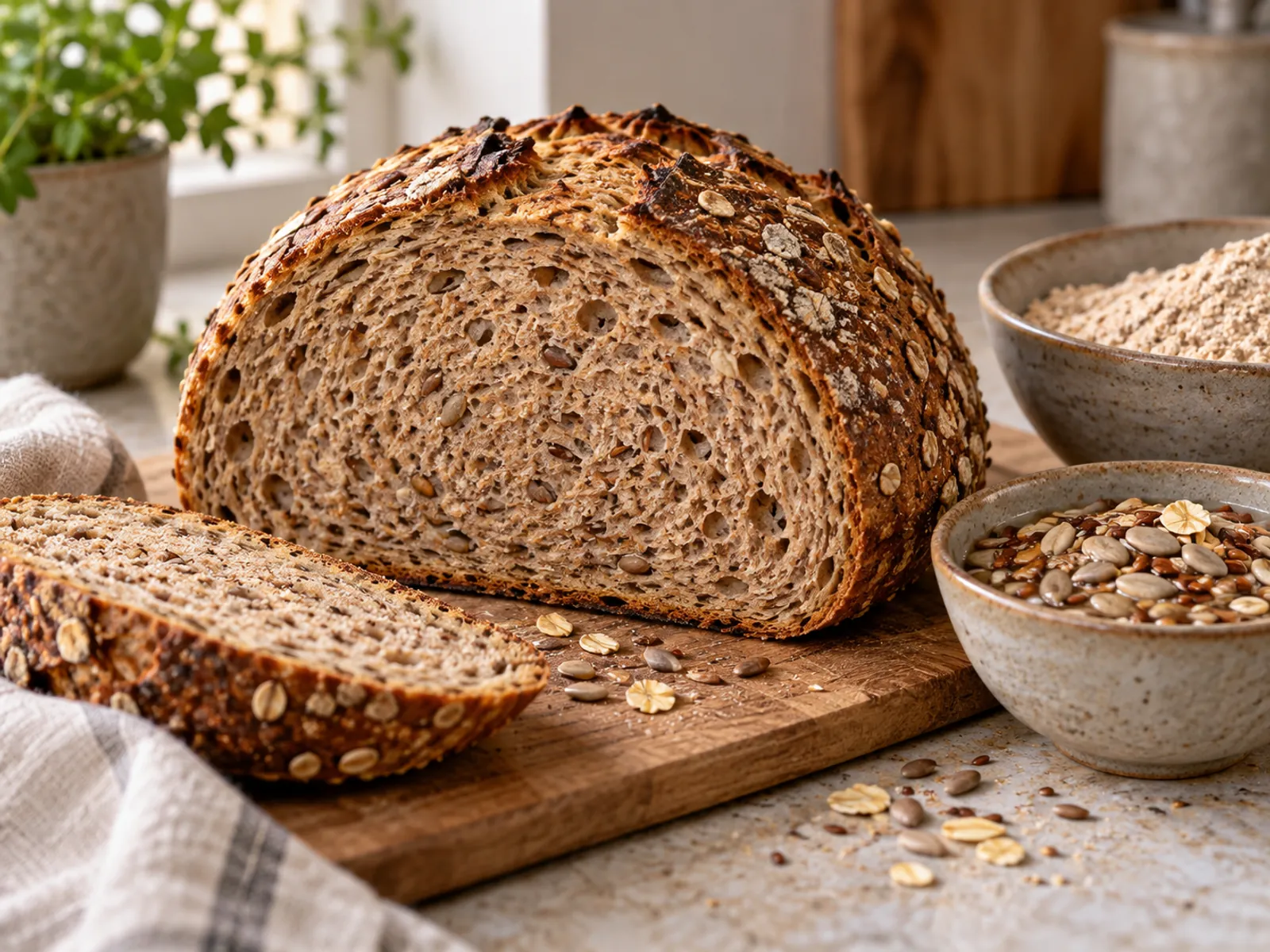
Whole wheat and multigrain sourdough are some of the most rewarding breads you can bake — deeply flavoured, nutritious, and satisfying. They’re also where a lot of bakers get a heavy, dense brick, because whole grain flour behaves very differently from white. Get the water and the timing right and the density problem disappears.
Why whole grain behaves differently
White flour is just the starchy endosperm. Whole wheat keeps the bran and germ too — and those extra parts change everything about how the dough handles.
Add more water
This is the single biggest fix for dense whole grain bread. Bran soaks up water, so a whole grain dough that feels “right” at mixing is usually too dry once the bran finishes drinking. Push the hydration up:
Because the bran keeps absorbing for a while, rest the dough 30–60 minutes after mixing before you decide it needs adjusting. A whole grain dough should feel tacky and supple, not stiff.
Autolyse longer to soften the bran
An autolyse — resting flour and water together before adding starter and salt — matters even more for whole grain. Where a white dough might autolyse 30–60 minutes, whole wheat benefits from 1–2 hours (or a longer fermentolyse that includes the starter). The extended soak hydrates the bran, softens its sharp edges, and lets the gluten develop despite the interference. The result is a more extensible dough and a lighter crumb.
Building a multigrain soaker
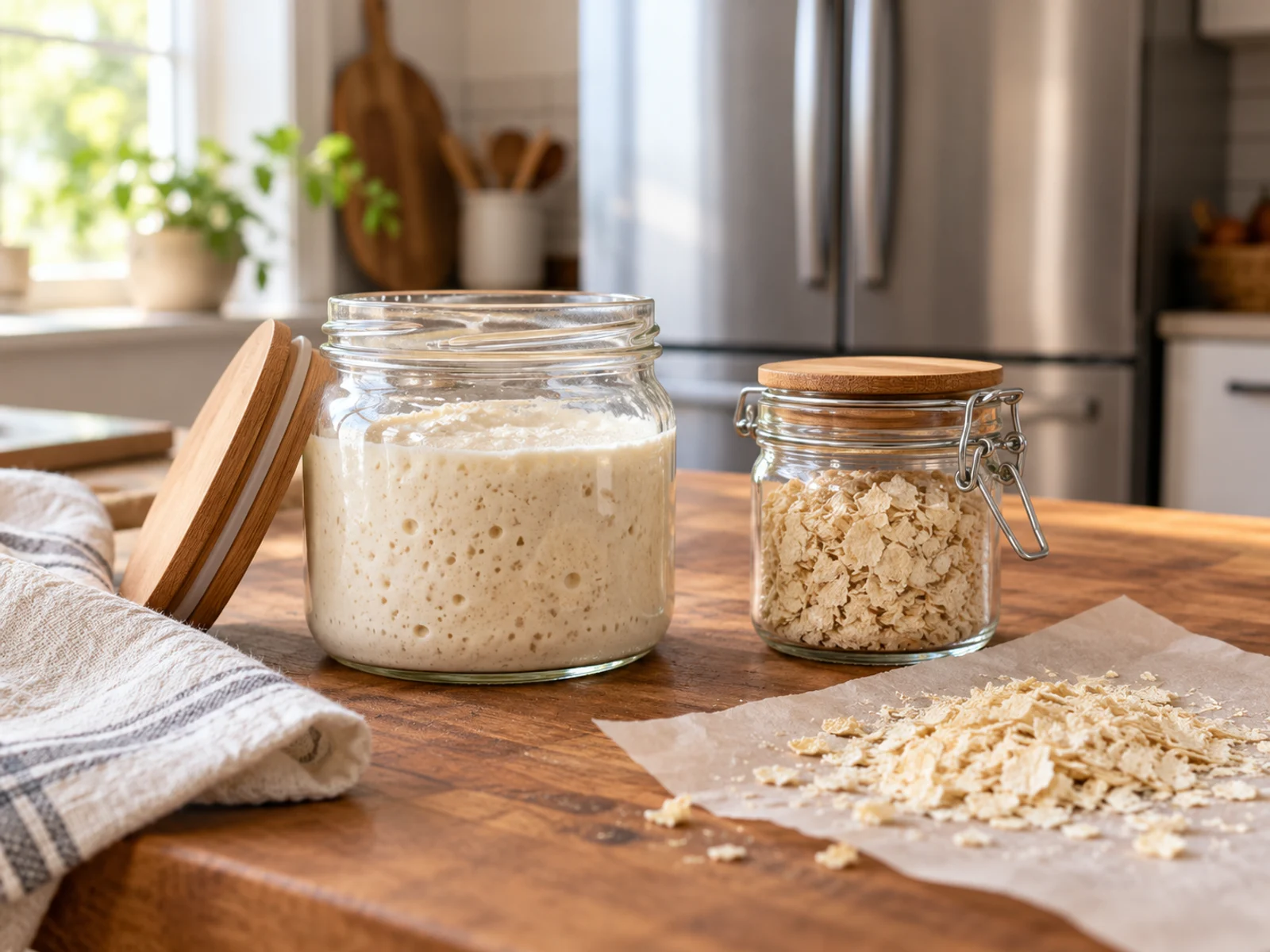
For multigrain loaves, always pre-soak the add-ins. Dry seeds and grains pull water out of the dough and cut the crumb, giving a dry, heavy loaf.
- 1Choose your mix Oats, flax, sunflower, pumpkin, millet, sesame, cracked rye or wheat berries all work. Aim for 15–25% of the flour weight.
- 2Cover with water Combine the grains and seeds with roughly equal weight of water (or leftover cooking water for extra flavour).
- 3Soak a few hours to overnight Hard grains like rye berries need longer; soft seeds like flax just need a couple of hours.
- 4Drain and fold in Drain off excess water and add the soaker during your folds, not at initial mix, so it distributes evenly without tearing the dough.
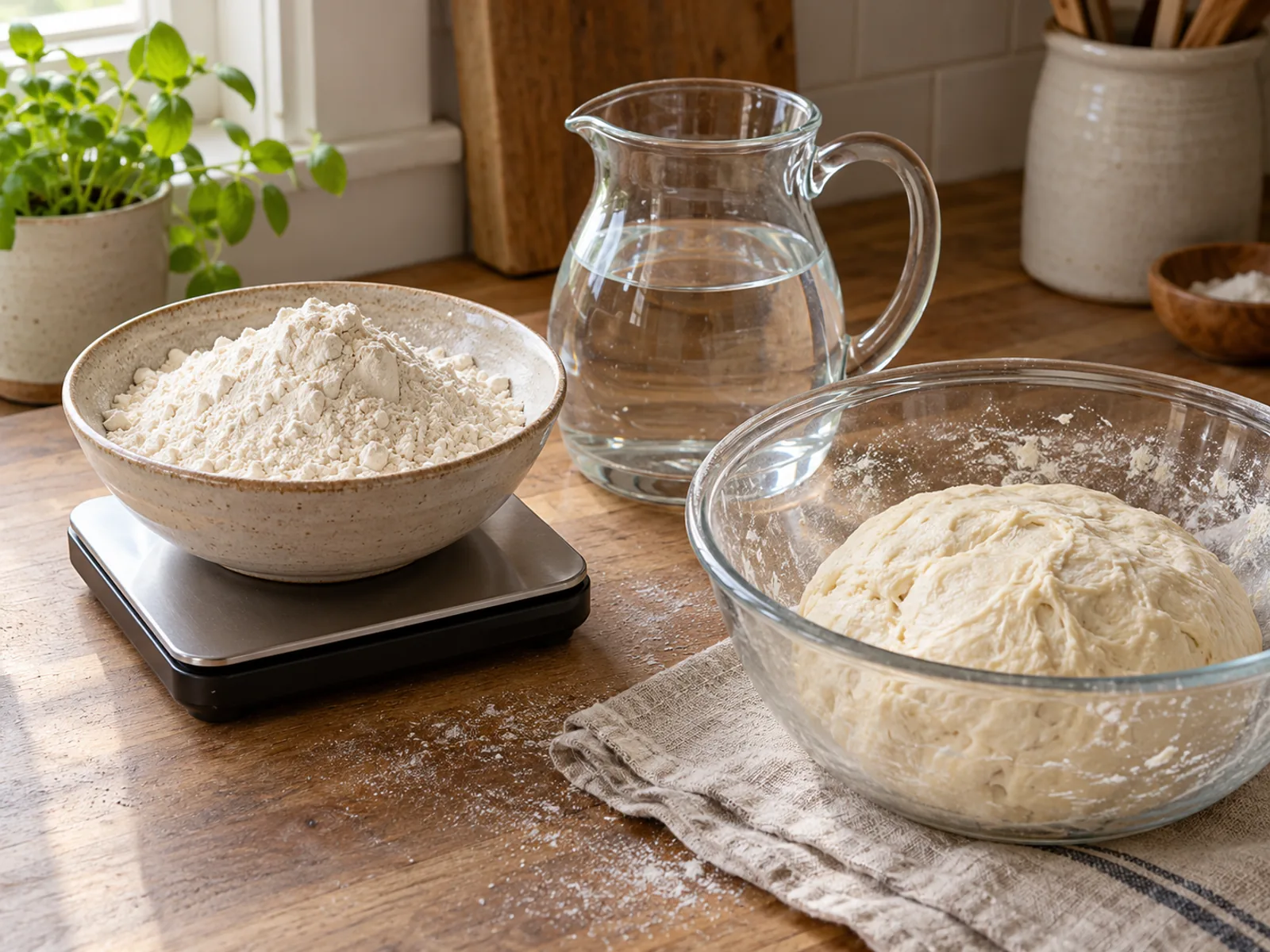
Related calculator
Sourdough Hydration Calculator
Enter your total dough weight and hydration percentage to calculate exact flour and water weights for a sourdough formula.
Mixing and bulk fermentation
Whole grain dough is more fragile, so handle it with a little more care and watch the bulk closely.
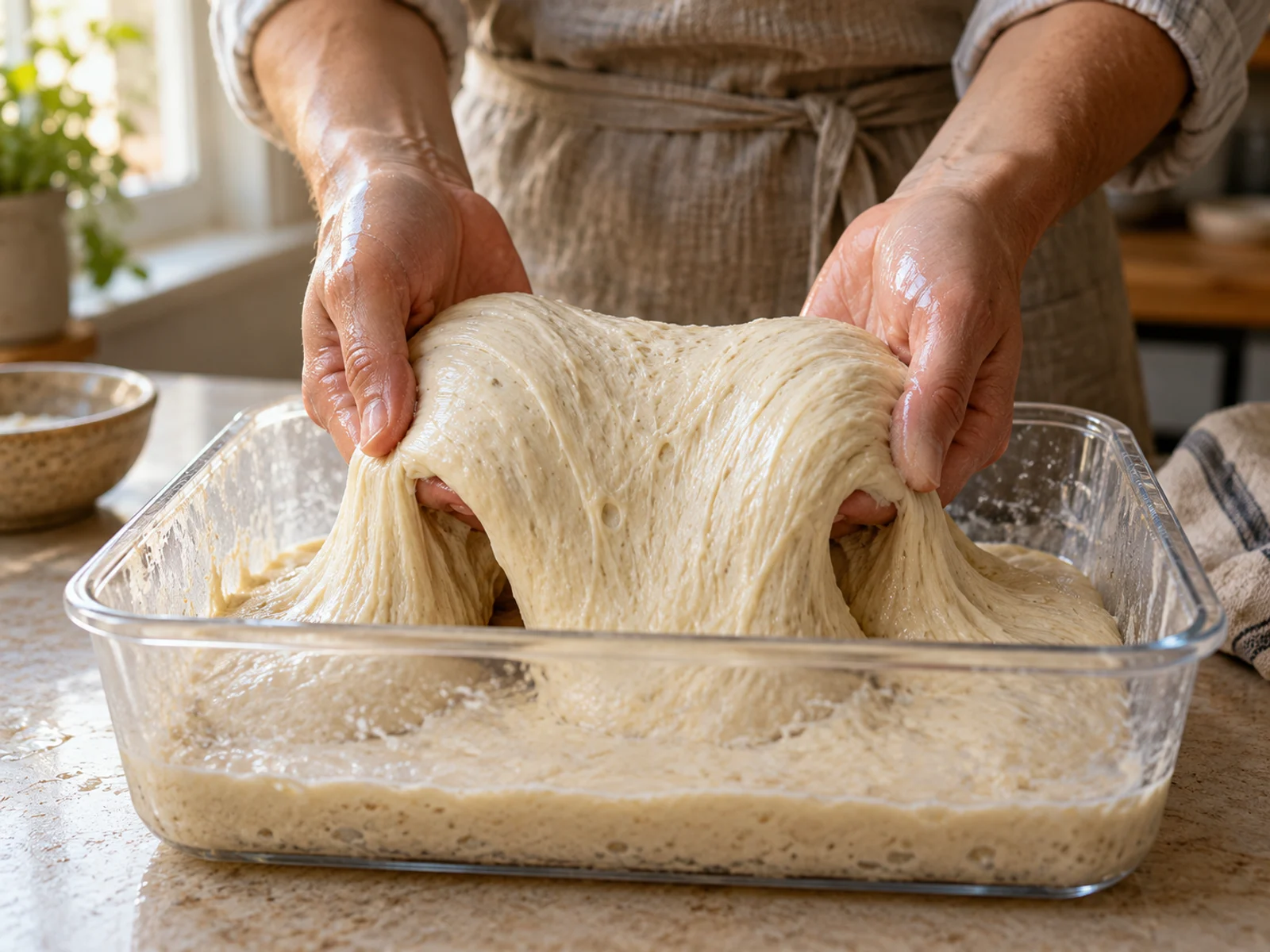
- 1Mix gently Combine after the autolyse until cohesive. The dough will feel stickier than white — resist the urge to add flour.
- 2Use stretch-and-folds Build strength with 3–4 sets of gentle stretch-and-folds over the first couple of hours rather than heavy kneading.
- 3Watch for a 30–50% rise Whole grain ferments fast. Look for a 30–50% rise, not a doubling — often 3–5 hours at warm room temperature.
- 4Cold retard for flavour A final proof in the fridge deepens the flavour, firms the dough, and makes a fragile whole grain loaf far easier to score and load.
Free Sourdough Baking Playbook (printable PDF)
A printable PDF companion for the sourdough calculators and guides.
50/50 vs 100% whole wheat
If you’re new to whole grain, start with a blend — it’s dramatically more forgiving.
Fixing a heavy, dense loaf
Watch for
- Dry, dense crumb → not enough water; raise hydration and autolyse longer
- Gummy centre → underbaked or sliced warm; bake to 96°C+ internal and cool fully
- Flat, spreading loaf → over-proofed; shorten the bulk and cold-retard the final proof
- Grains poking through and tearing → soak them first and add during folds
- No rise at all → starter not at peak, or the bulk was too cold
When in doubt, add water and shorten the bulk. Under-hydration and over-fermentation are behind the vast majority of dense whole grain loaves.
A practical whole-grain substitution trial
For a loaf with 500g total flour, a 50/50 mix uses 250g whole wheat and 250g white flour, including any flour in the starter. At 75% hydration, total water is 375g. If using 100g starter at 100% hydration made with white flour, add 250g whole wheat, 200g white flour and 325g water; the starter supplies the remaining 50g white flour and 50g water.
For a first substitution, keep some water back and add it only after the bran has hydrated. Whole-grain flour often needs more water, but different grinds and wheat types vary substantially. Record actual water used rather than assuming that every bag requires the same extra percentage.
A multigrain soaker is another ingredient system: account for the dry grain and retained soak water separately. Do not add a wet handful to a white recipe and expect unchanged handling. Use international flour comparisons to avoid confusing refined national type labels with whole grain, and autolyse guidance for an optional rest.